
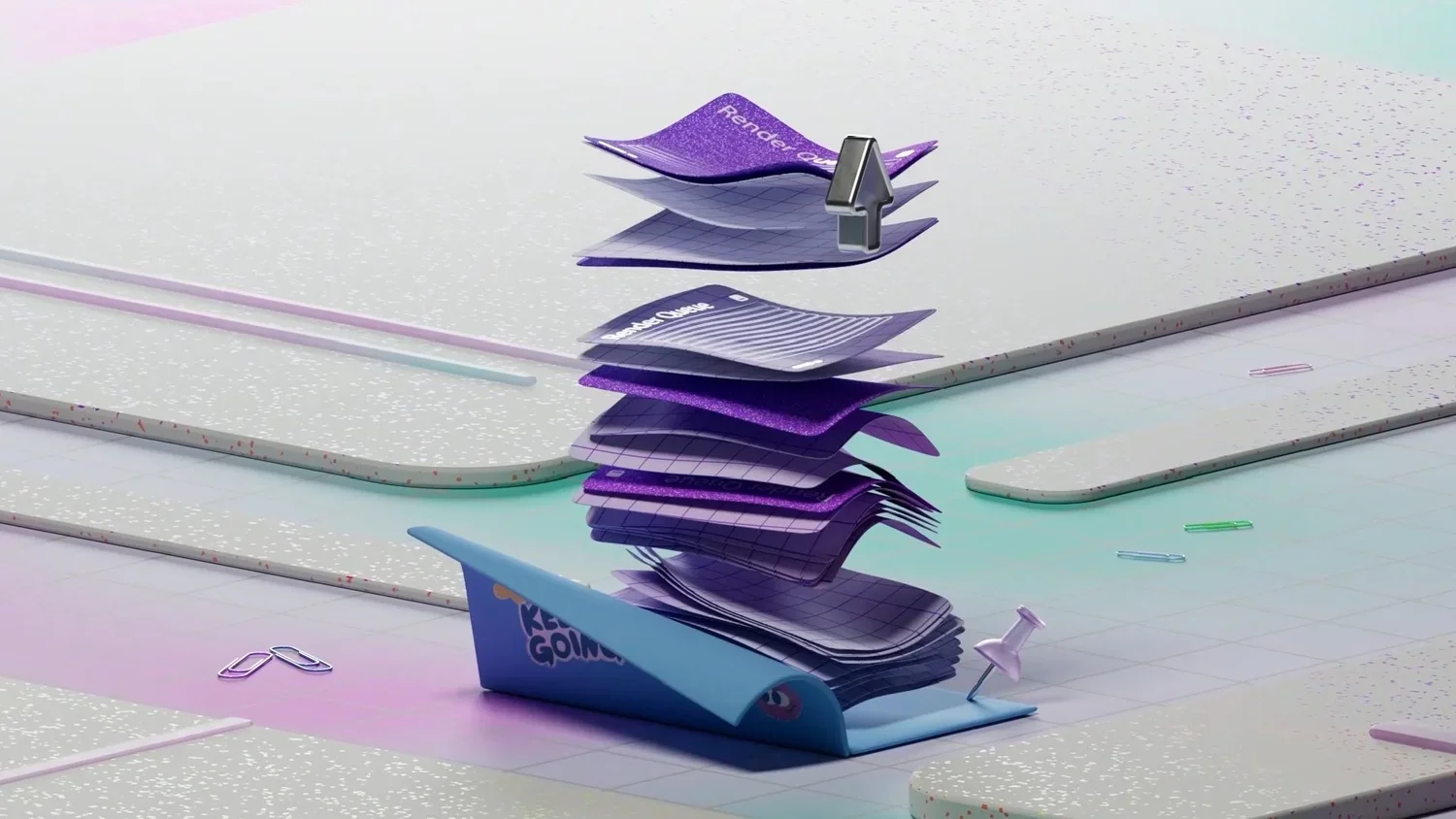
10 Questions with Kathy Yu
Kathy (Kaixi) Yu is a Los Angeles-based motion designer and digital artist working across motion graphics, 3D design, and visual storytelling. Her practice uses composition, materials, lighting, and animation to translate experiences of creative pressure, time, and imagination into stylized characters and digital environments.
Yu holds an MFA in Computer Arts from the School of Visual Arts in New York and a BFA in Design from Tongji University in Shanghai. Her professional experience includes motion design at LVLY, BUCK, and Nickelodeon, alongside an independent practice concerned with the human experience of making digital images.
For the collaborative motion design project Deadline (2024), she developed character design, modeling and shading, and 3D motion design, and shared lighting and compositing with Xiaoxiang Long. The project was co-directed with Yazhi Zheng, who contributed 2D motion design and editing, with music by Joe Basile.
Deadline received Gold in Craft: Motion Design at the 2024 Collision Awards and Silver in Craft: Art Direction at the 2025 Telly Awards. In 2026, it was also named a winner in Digital Design & Aesthetics – Animation at the Wonder Global Design Awards.

Kathy Yu - Portrait
ARTIST STATEMENT
Kathy (Kaixi) Yu examines how technology shapes experiences of time, attention, and creative labor. Working through motion graphics and 3D imagery, she gives psychological pressure a visual form through movement, space, color, and atmosphere. Her interest lies in the decisions and uncertainty behind digital images that can appear effortless when finished.
Her motion design project Deadline turns the pressures of creative production into an animated digital world. Familiar tools, graphic elements, and everyday objects become expressive forms through which anxiety, curiosity, and inspiration unfold. Composition and pacing make time felt as an emotional condition, while stylized characters connect that experience to a recognizable human presence. Materials, lighting, and scale help shape the relationship between the character and the surrounding environment.
Yu begins with collected references, brief notes, and rough visual experiments. Ideas develop through motion tests, 3D studies, and repeated adjustments rather than a fixed image decided at the outset. Modeling, shading, lighting, animation, and compositing become connected stages of inquiry. She refines relationships between rhythm, composition, and transformation, looking for moments of surprise within a coherent visual system.
For Yu, authorship rests in selection, revision, and the emotional direction of the work. Collaboration brings character performance, graphic movement, and sound into dialogue with her visual development. She seeks an immediate emotional connection, giving viewers space to recognize experiences of pressure, uncertainty, and freedom within constructed digital environments.
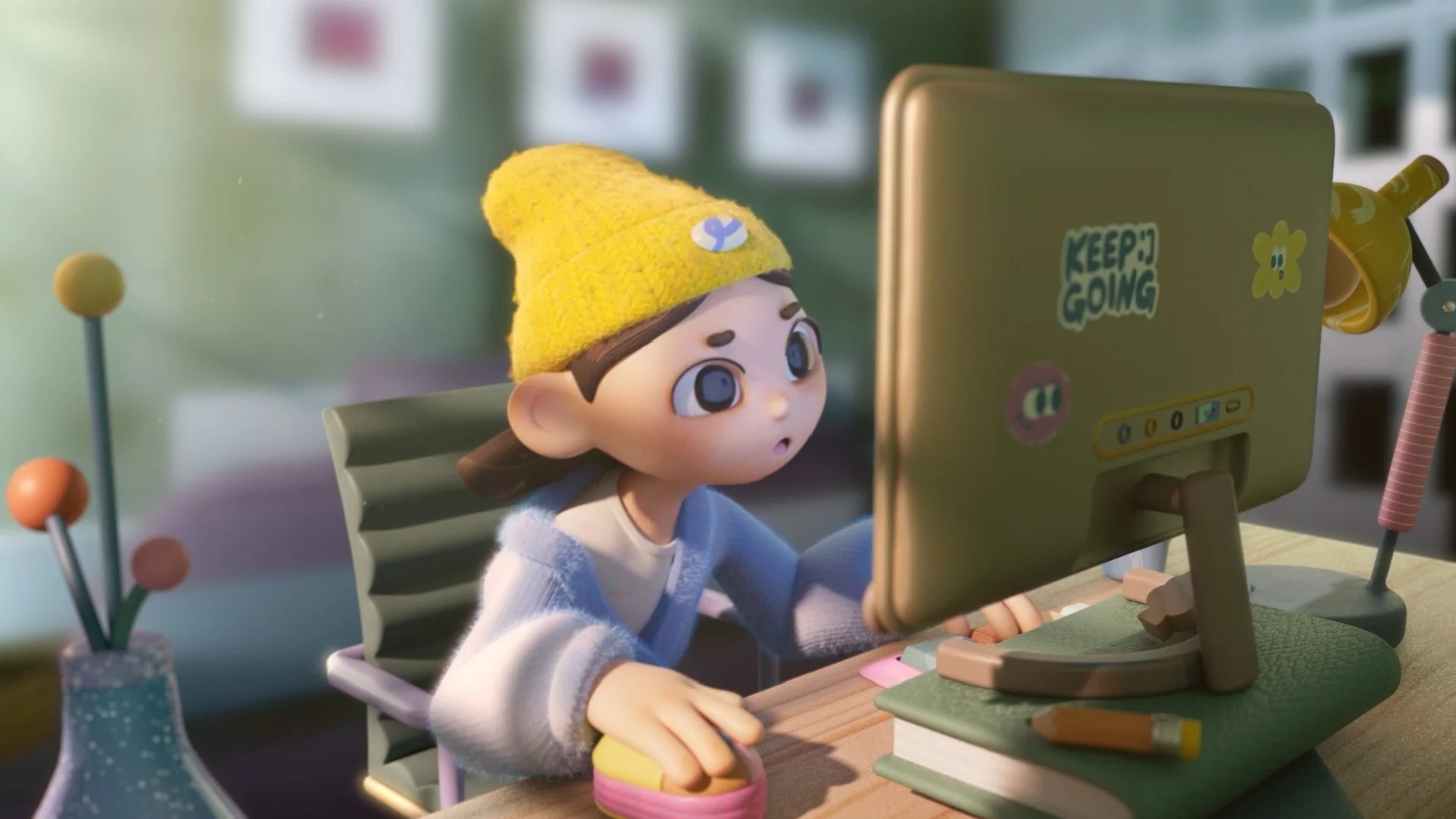
Deadline, 3D-Motion-Graphics, 1920x1080 px, 2024 © Kathy Yu
INTERVIEW
First, could you tell us a little about your background and what first drew you to motion design and digital art?
I’m a motion designer and digital artist from Shanghai, currently based in Los Angeles. I studied design at Tongji University and earned my MFA in Computer Arts from the School of Visual Arts in New York.
I was drawn to motion design because it brings together image-making, movement, sound, and storytelling. I’m interested in how animation can shape not only what an audience sees, but also how they experience an idea over time. That interest has led me to work across 3D design, animation, lighting, and compositing, in both commercial production and my own projects.
You have studied and worked in Shanghai, New York, and Los Angeles. How have these different experiences influenced your creative approach?
Each place has influenced a different part of my practice. My design education in Shanghai gave me a foundation in visual structure and craft. Studying at SVA in New York exposed me to a wide range of artistic approaches and encouraged me to experiment. Working in Los Angeles has given me experience in collaborative studio production, where an idea develops through dialogue with a team.
Moving between these environments has helped me bring together experimentation and precision. I value having a strong point of view while staying open to how an idea can change and improve through collaboration.
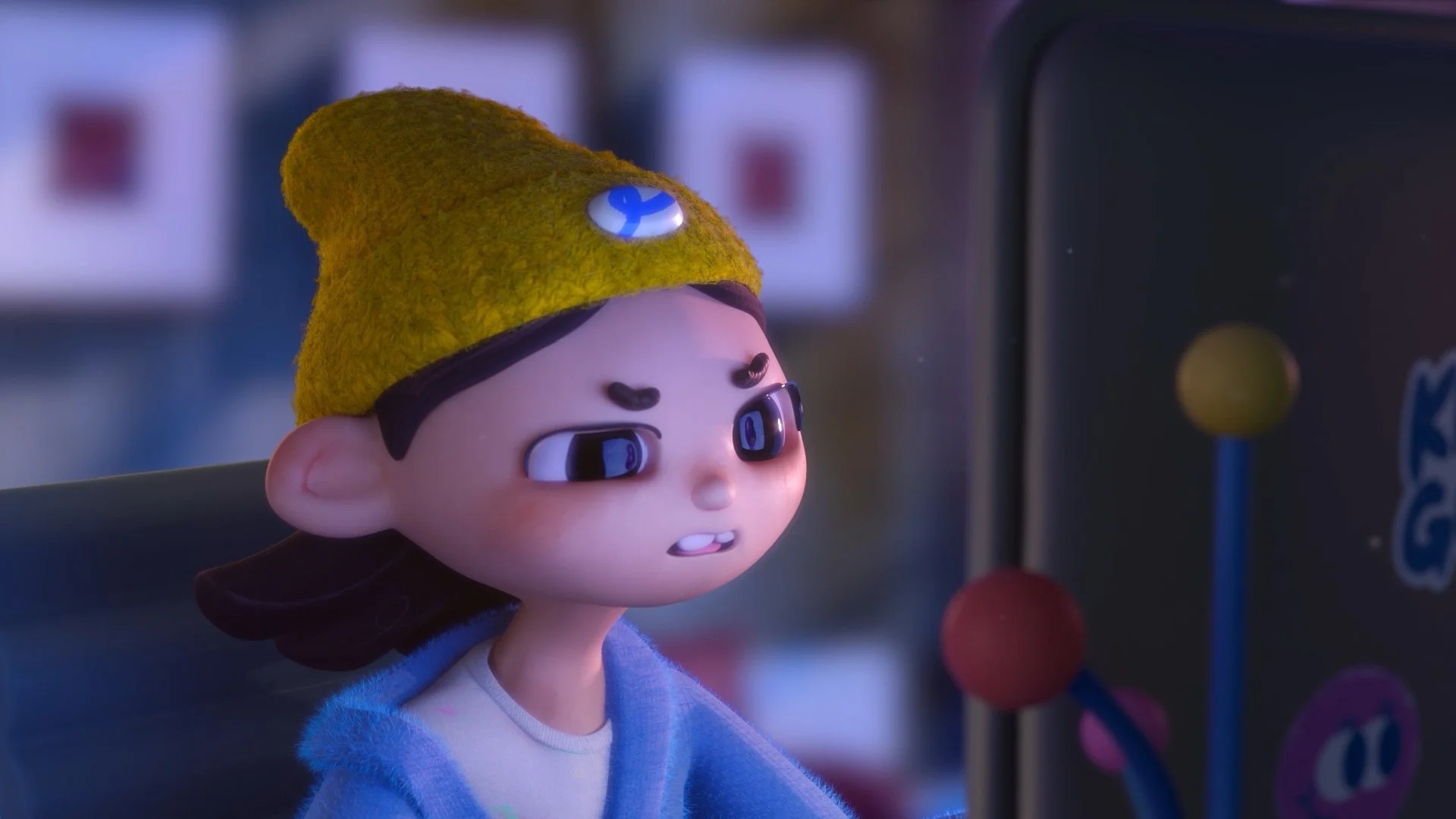
Deadline, 3D-Motion-Graphics, 1920x1080 px, 2024 © Kathy Yu
Your work combines 3D design, animation, lighting, and visual storytelling. How do you decide which techniques and materials best communicate an idea?
I begin with the idea and the feeling I want the audience to take away. Then I look for visual qualities that can make that feeling tangible: an object’s weight, the way a surface responds to light, the pace of a movement, or the relationship between a subject and its environment.
I choose techniques based on what the idea needs. 3D can give me control over space, light, and material, while animation and compositing help shape the emotional rhythm of an image. I see the tools as part of the storytelling rather than as ends in themselves.
Your project Deadline explores the pressures of creative work. What inspired you to explore this subject, and how did the initial idea develop?
Deadline grew from my own experience of creative work: the excitement of making something alongside the pressure to keep producing, solve problems, and meet expectations. I wanted to explore the emotional labor that can sit behind a polished digital image, especially the tension between the joy of creating and the feeling of being pushed by time.
The idea developed into a short motion design film about a creator moving through a digital world where time and familiar work tools become increasingly overwhelming. I co-directed the film with Yazhi Zheng and Xiaoxiang Long. My contributions included storyboarding, character design, 3D art, and motion design. Yazhi also contributed as a director, storyboard artist, motion designer, and editor; Xiaoxiang contributed as a director, 3D artist, character animator, and rigger.
Deadline received Gold in Craft: Motion Design at the 2024 Collision Awards and Silver in Craft: Art Direction at the 2025 Telly Awards. It also won in Digital Design & Aesthetics – Animation at the Wonder Global Awards, received a 2026 Davey Award Gold in Craft – Art Direction for Online Film & Video, and earned Platinum in Video / Online Video – Best Art Direction at the 2026 Vega Digital Awards. I’m grateful that the film’s recognition has helped bring attention to a personal project about the often-unseen pressures of creative work.
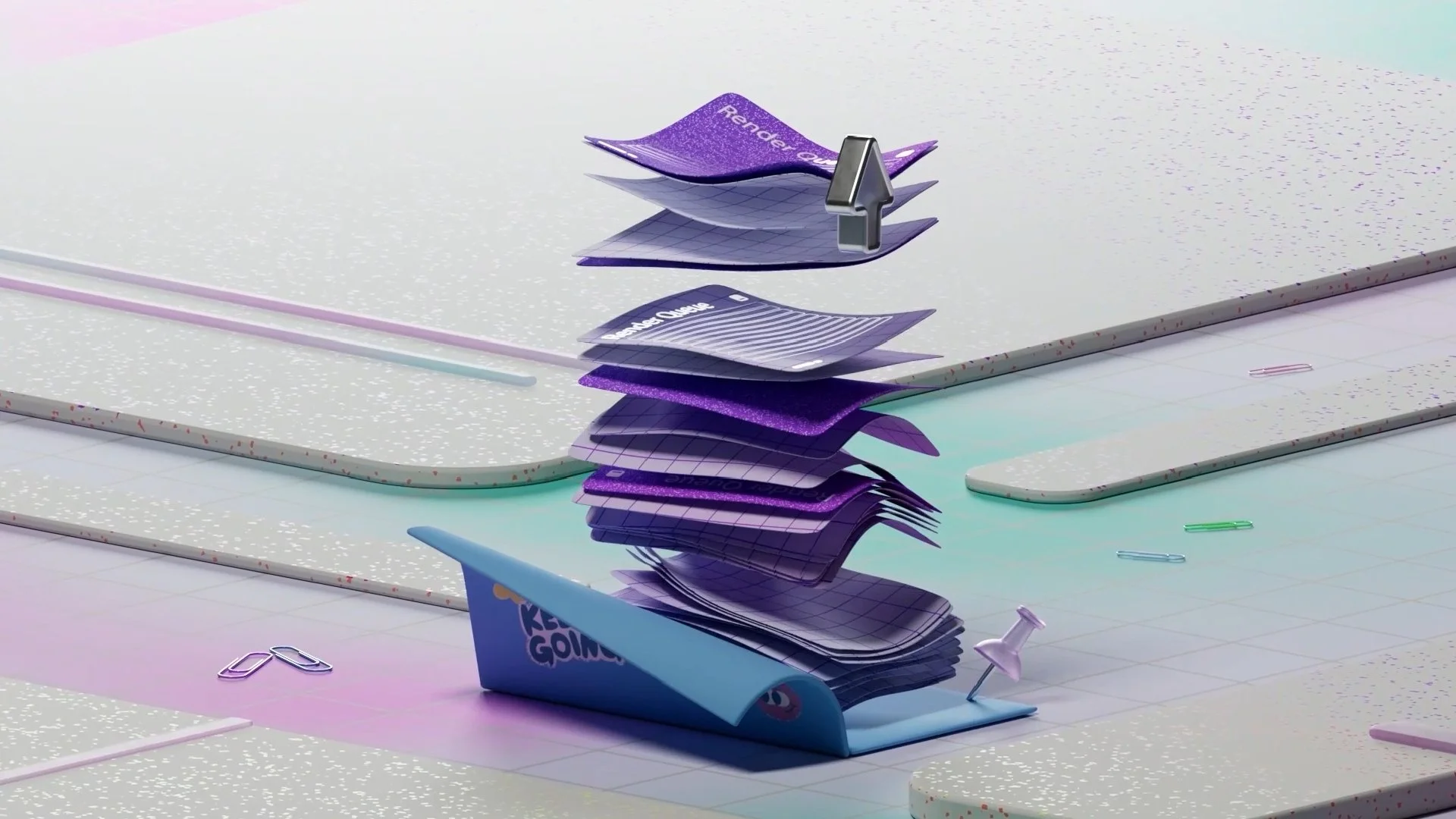
Deadline, 3D-Motion-Graphics, 1920x1080 px, 2024 © Kathy Yu
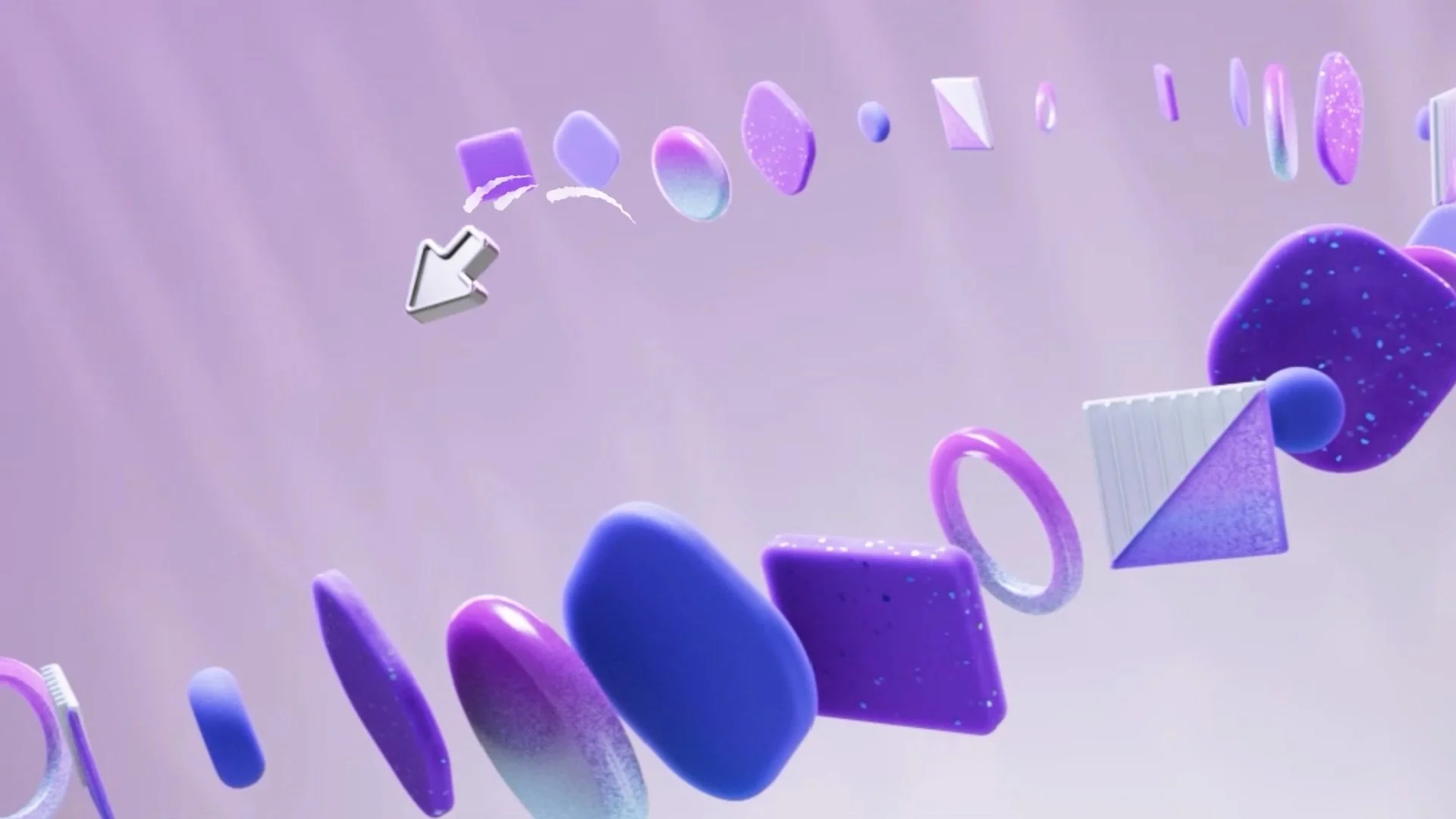
Deadline, 3D-Motion-Graphics, 1920x1080 px, 2024 © Kathy Yu
In Deadline, everyday objects and familiar tools become expressive elements in a digital world. How did you approach transforming these ordinary things into visual metaphors?
I started with objects connected to the act of making and working, then explored how their scale, movement, and relationship to the character could reflect a state of mind. In an ordinary setting, these objects are functional and familiar. In the film, they can feel unusually present or heavy, making the pressure of the environment feel physical.
I wanted the imagery to remain open enough for viewers to bring their own experiences to it. The objects aren’t meant to have only one fixed meaning; they help make the film’s emotional landscape visible.
Your work often explores time, anxiety, and creative pressure through movement and composition. How do you translate these abstract experiences into images and animation?
I think about how those feelings change a person’s perception. Anxiety can make a moment feel stretched out, while pressure can make events seem to move too quickly. I use pacing, repetition, framing, scale, and shifts in visual rhythm to create those sensations.
Composition is another way to give an abstract feeling a physical presence. A character surrounded by objects or pushed toward the edge of the frame can seem trapped, while a change in space or pace can offer a moment of relief. I use these choices to guide the audience through the character’s experience.
Could you walk us through your creative process, from collecting references and making initial sketches to developing the final animation?
I begin by identifying the central idea and emotional tone, then collect references that help me explore the world, materials, lighting, and movement. I make sketches and visual tests before committing to a detailed design, so I can compare directions early and see which ones communicate most clearly.
For Deadline, the three of us developed the film’s visual world and story together. I focused on character design and 3D art, while our shared storyboarding and direction helped shape the film’s progression. We then brought the scenes to life through motion design, character animation, rigging, and editing, refining the timing and imagery as the sequence took shape.
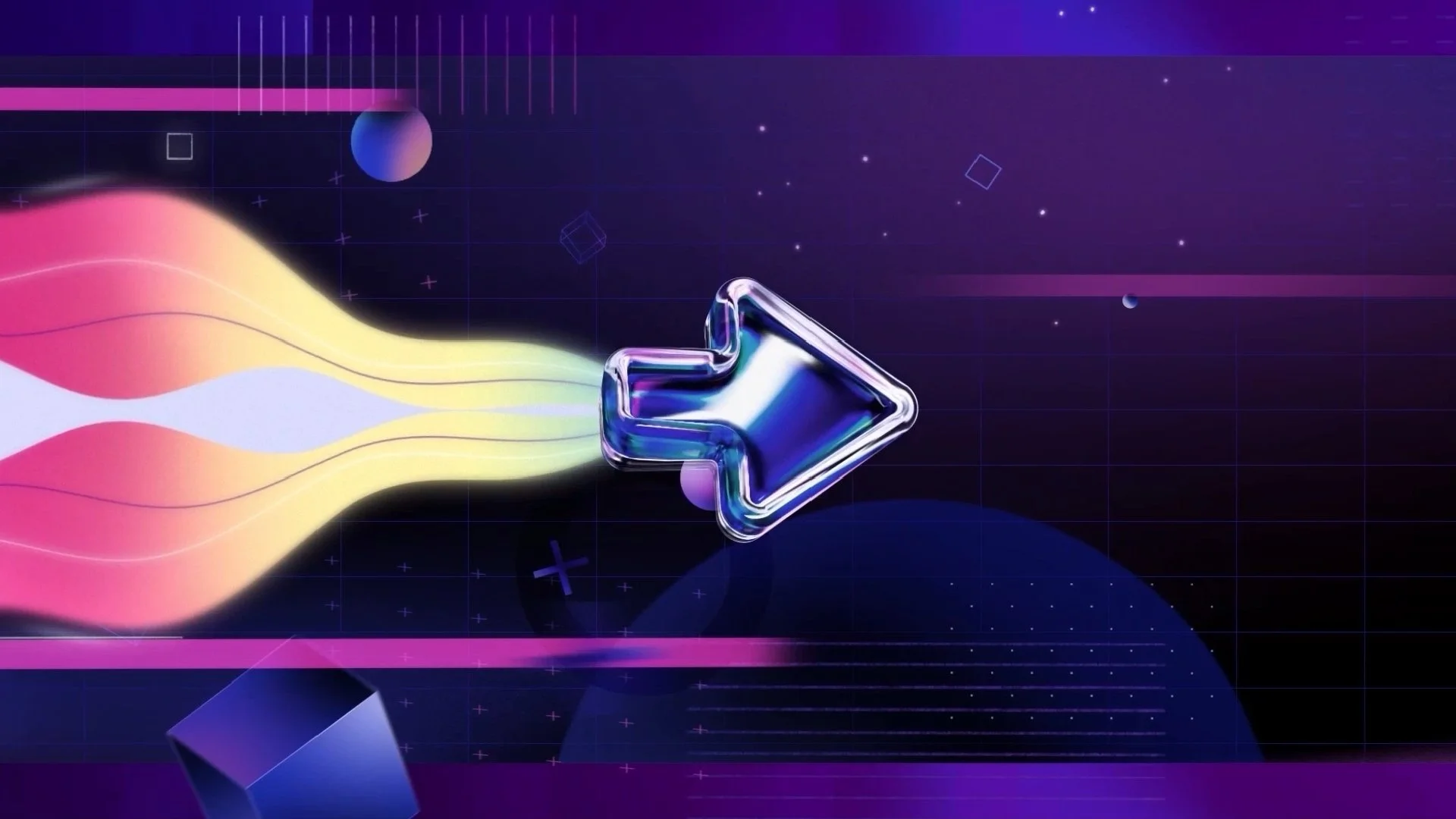
Deadline, 3D-Motion-Graphics, 1920x1080 px, 2024 © Kathy Yu
You have collaborated with other artists and worked with studios such as BUCK and Nickelodeon. How does collaboration influence your creative decisions, and what do you value most about working with others?
Collaboration brings different forms of expertise and perspective to the work. A director, designer, animator, or producer may see a more effective way to solve a visual problem or clarify what a moment needs to communicate. I value that exchange, along with the trust it takes to build on one another’s ideas.
Working with studio teams, including BUCK and LVLY, has taught me how individual craft contributes to a larger creative vision. Deadline, my self-initiated motion design film, was also a close creative collaboration: Yazhi Zheng, Xiaoxiang Long, and I shared directing and storyboarding while contributing different strengths in design, 3D, motion, animation, rigging, and editing. I value both the shared vision and the patience of the people I’ve worked with. A great deal of work goes into moving from an early draft to a finished image, and sharing that process with collaborators makes the journey memorable.
Digital images can appear effortless, even when they involve a complex and demanding process. What do you hope viewers understand or feel about the experience of creating something?
I hope viewers sense the human decisions and effort behind an image that may look seamless. Digital work can involve experimentation, technical problem-solving, revisions, and collaboration, all of which shape the final result even when they aren’t visible on screen. I want the creative process itself to be the hero of the story.
With Deadline, I wanted to acknowledge that creative work can be meaningful and rewarding while also carrying pressure. The film has been selected for presentation at Indie Film LA, The Great Film Club’s July Reel Ladies Night in Los Angeles, and the 25th Venice International Art Fair organized by ITSLIQUID Group. The screenings were very well received, and I’m grateful that audiences connected with the humor in our motion design film. I hope viewers recognize something of their own experience in it and feel that the effort behind creative work is worth seeing.
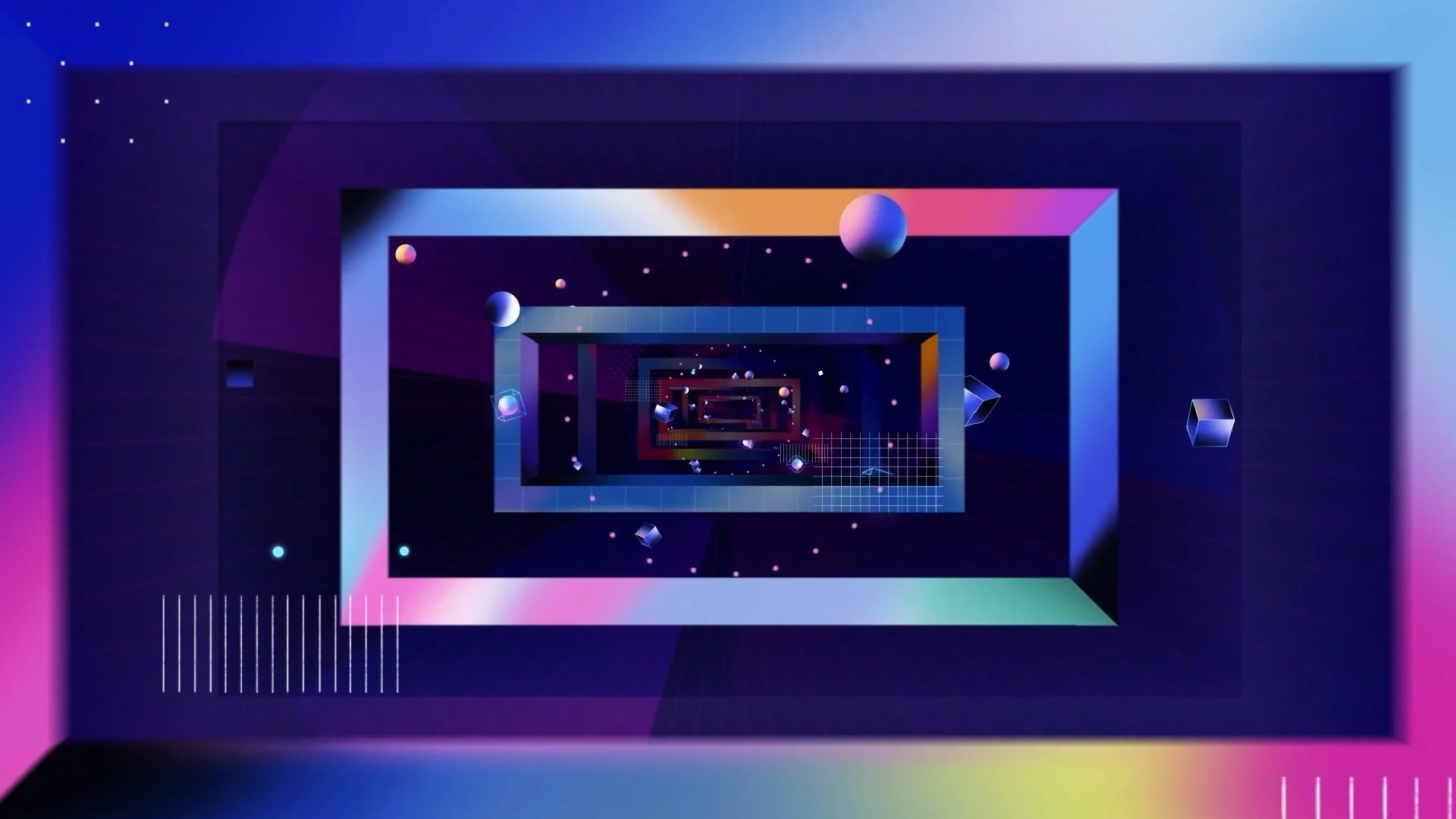
Deadline, 3D-Motion-Graphics, 1920x1080 px, 2024 © Kathy Yu
Lastly, looking ahead, are there new themes, techniques, or formats you would like to explore, and what can we expect from your upcoming projects?
I want to keep exploring how digital tools can support strong visual storytelling. I’m interested in how emerging technologies can become part of an artist’s process while leaving room for thoughtful direction, experimentation, and craft. AI can make parts of the creative process more efficient, but I’m also curious whether it can help us develop new visual languages that feel authentic to human experience, much as photography once challenged and expanded painting. I’m excited to explore that possibility.
I’m also continuing to develop work that brings together motion design, 3D, and branding. I hope to make more personal projects that turn familiar experiences into distinct visual worlds and to take on work where I can contribute to the development of the visual language as well as its execution.
Artist’s Talk
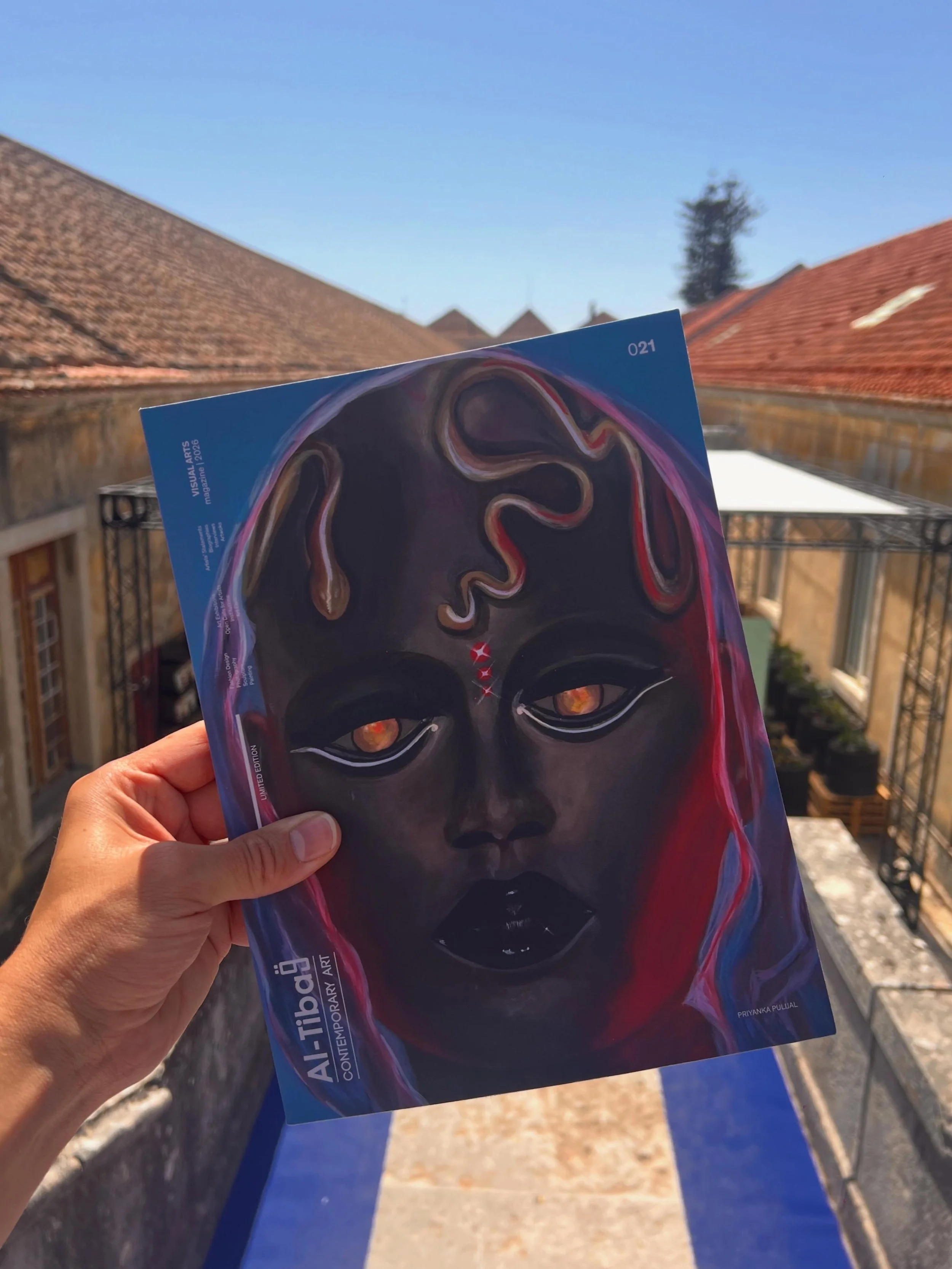
Al-Tiba9 Interviews is a promotional platform for artists to articulate their vision and engage them with our diverse readership through a published art dialogue. The artists are interviewed by Mr. Mohamed Benhadj, the founder & curator of Al-Tiba9 Contemporary, to highlight their artistic careers and introduce them to the international contemporary art scene across our vast network of museums, galleries, art professionals, art dealers, collectors, and art lovers across the globe.

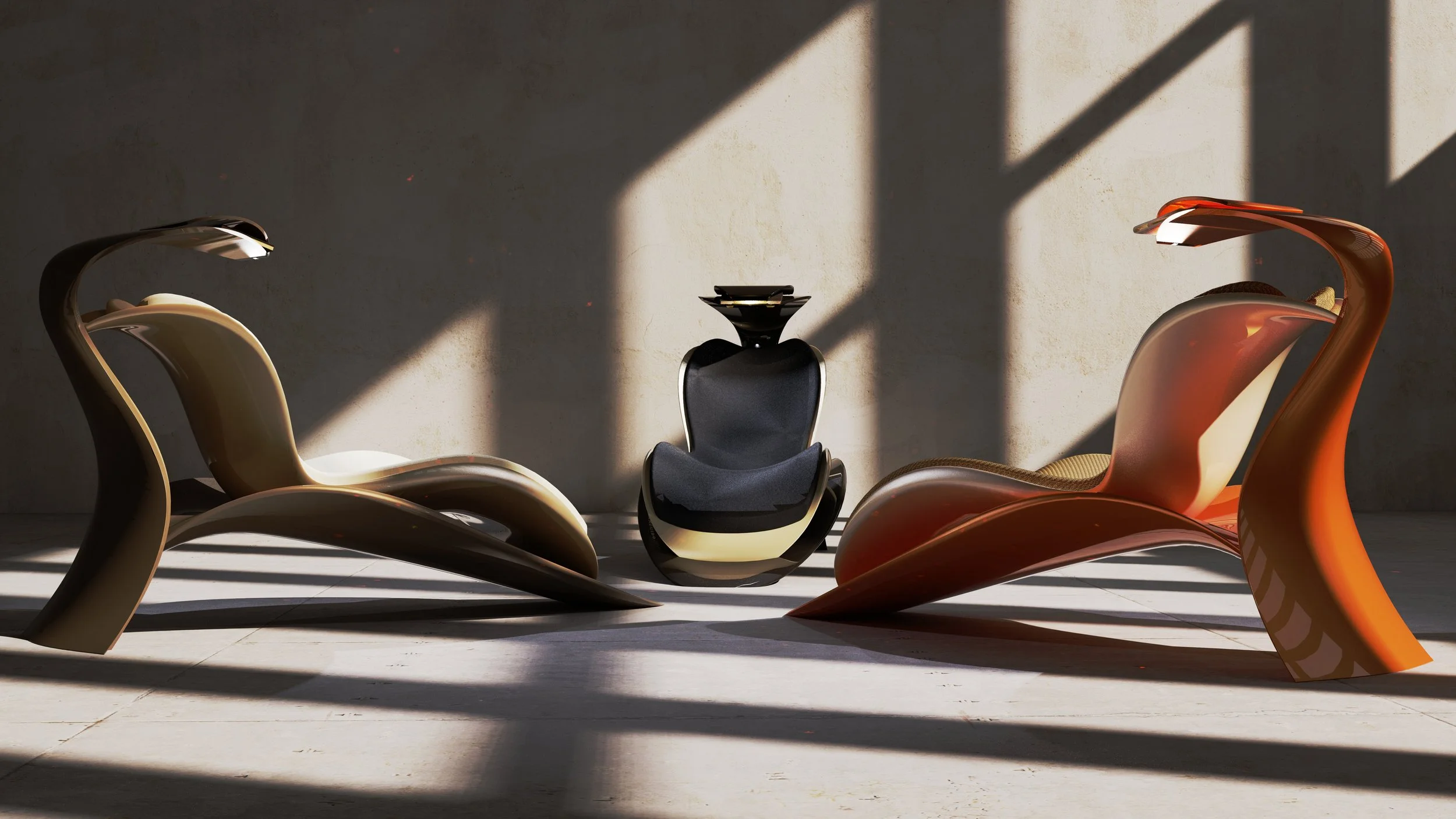


Kathy (Kaixi) Yu is a Los Angeles-based motion designer and digital artist working across motion graphics, 3D design, and visual storytelling. Her practice uses composition, materials, lighting, and animation to translate experiences of creative pressure, time, and imagination into stylized characters and digital environments.