

10 Questions with Stephanie Oconnor
Stephanie Oconnor remains very interested in continuing to travel and stay abroad, which has been the motivation behind her participation in various international programs and her production of works that are reflections of her research on the pictorial histories of the places where she has stayed. She has preferred to work in this method of creating artwork because she appreciates the process and feels it culminates in a meaningful expression and exchange. With these multicultural influences, much of her work is very bright and colorful, often referencing local myth, paralleled with, often handicraft techniques and religion. She succeeds in going much deeper, though, for the betterment of her understanding of how places can go through so many different short histories, in not such a long period of time, layered one on top of the other. So her efforts are a result of demonstrating a deep appreciation for cultural heritage, despite natural or man-made atrocities, and of understanding what leads to them and what lies behind the poetic facade. Her most recent encounter with this was being shown the Contemporary Art Collection in Cairo and speaking with its curator. It opened her eyes to an era of Art that has always captured her attention, but seeing it in its most comprehensive form and from the artists’ vantage point of the non-foreigner. She realised that the one art movement (Orientalism) has always been speaking with the other (Post-Impressionism).

Stephanie Oconnor - Portrait
Her art practice has evolved, and her attention has shifted to fashion design. With her initial background in Photography and Painting, she has witnessed and experienced the evolution from analog to digital. During her undergraduate studies, she spent countless hours in the wet darkroom developing film and producing black and white and color fine art prints, a practice which then soon evolved into a completely digital format during the course of her academic career. She adapted in order to utilized and integrate the full range of the medium in order to create innovative work, a method that has carried these hybrid principles over to her large-scale paintings and is now being applied to fashion design, which holds these same principles. She will always be inspired by traditional handicrafts and her overall research, and continue to realize the possibilities available with digital innovations. She is currently in collaboration with a creative team that inspires her to change course. So, currently she is enjoying appropriating existing fashion labels by using discarded designer garments in order to repurpose their fragmented parts into her high fashion design creations for runway shows. She also sources from her archive of paintings in order to produce her own custom printed fabric. With this practice, she is able to create her tactile and complete designs but also produce images with AI that appear to be worn by models but are in fact computer-generated. Although she prefers the authenticity of the runway shows, innovative tools like these, however insignificant, still pose exciting opportunities for future pre- conceptualized ideas. She hopes to continue to experiment with the whole range of artistic mediums and feels what she is doing now is an exciting and evolutionary step forward.
Desert Dress From the Kalamkari Collection, Paris Fashion Week 2025 © Stephanie Oconnor
INTERVIEW
First off, tell us a bit about your background and the experiences that helped you become the artist you are today. You have spent significant time travelling and participating in international programs. How have these experiences shaped your work and identity?
My identity is international even though I live in my country of nationality. These programs have helped shape my sense of place.
Your background in photography and painting has taken you from the analogue darkroom to digital processes and large-scale painting. What has this movement between different mediums taught you about your own creative process?
As photography has evolved rather quickly over the years, I’ve kept using analogue intentionally. It has slowed me down significantly and taught me what I personally value in my own work process. There are other equipments, much like older cameras, that I still use as well, so it's kept me using them.

AI Model Wears NYFW FALL Collection Dress, 2026 © Stephanie Oconnor
Your work often begins with research into the pictorial histories, myths, religious traditions, and craft practices of the places you encounter. What usually draws you to a particular place or cultural history, and how does that research enter the work?
Our modern world can be very sterile, so I prefer the sultry places that have had time to collect a lot of dust. There is a lot to discover in places like this.
Colour, pattern, and traditional handicraft techniques are very prominent in your practice. How do you balance the visual appeal of these elements with the more complex histories, like conflict, colonialism, and cultural change?
I've realised that handicrafts have served as a means by which to keep people busy making their craft that repels notions of “colonisation" or "cultural change" Sometimes it is exploited. Sometimes it is something that minimises conflict and serves to create a strong bond among people. I think the word is 'guilds.' How do I balance it? When I was little, my family and I visited a refugee village of rug makers living outside the city. My father had commissioned a large rug to be made for us. We were purchasing the rug directly from them, and later we opened our home to them in the city to use to try to sell more rugs. This memory helps me to balance it.
You have described places as being made up of different histories layered on top of one another. How do you translate these layers of history into a visual language without simply illustrating them?
I realized this when I was in Nepal: the many layers a place can have, when I learned that the Nepalese Royal family was massacred only 25 years ago, leading to a rapid succession of various transitioning government systems within a very short amount of time. Losing its Dynasty. In addition to its heavily weighted Mongolian influence and proximity to Tibet and China, two dual forces in regards to the hold over the very serious matter of a new Buddhist leader and the country’s topographical location being dangerously prone to recurring natural disasters, especially with global warming. In addition to the theory that India was the cause of the Communist Revolution, another close neighbour, that led to the severe overpopulation of the once less inhabited capital which in fact was once long ago a lake. It’s those kinds of layers I’m talking about, but I cannot paint that. And that’s just one example. Places are complicated, and the myths are like the ghosts. That’s why I like them.

Dress #6 from the Spanish Habsburg Collection, New York Fashion Week, 2026 © Stephanie Oconnor

Charmuese Sarong, From the Kalamkari Collection 2025 Paris Fashion Week © Stephanie Oconnor
You recently became particularly interested in the relationship between Orientalism and Post-Impressionism after encountering the contemporary art collection in Cairo. Did that experience change or complicate the way you understood these artistic histories?
Orientalism was a European movement of wealthy travellers painting pictures of the East. It defined the mystical East, and people travel today to confirm this to themselves because of this era of art history. But the collection in Cairo is a very comprehensive collection of Eastern artists showing their actual environment, so it is very comprehensive in that way. The style in which they were painting was Post-Impressionistic. And I realized that one place was influencing the other. If this topic interests anyone, I suggest they read Fatema Mernissi if they haven't already.
Your practice has recently shifted towards fashion design, including the use of discarded designer garments and fragments of your own paintings as fabrics. What attracted you to fashion as a new way of thinking about your existing artistic concerns?
There is a borough in Kathmandu called Lalipur, and nearly every shop on the main street has these beautiful sparkling dresses. In Lahore, there is a market called Anarkali Bazaar that has an endless labyrinth of vendors. I’ve never been to Marrakech, but it is the same. For an artist, places like this are very stimulating, and fashion design is motivated by these sorts of places. I also love to see the pirated brands. It's something I've seen all my life. In art, as long as you change something more than 33% away from its original, you can do it. So my concerns have turned into opportunities.
You are combining very tactile, handmade processes with digital tools, including AI-generated imagery. What interests you about bringing these seemingly different approaches together, and where do you draw the line between experimentation and authenticity?
I’m not an advocate of AI. Using it would only give me the chance to create a large, complicated garment which I would then not have to manoeuvre around a backstage fashion show or with a model. Other than that, I agree that preconceived creations in any sort of digital format do not often translate well to the real world.

The Lorem Ipsum, Fall Collection, NYFW, 2025 © Stephanie Oconnor

The Marie from the Fall Collection NYFW 2025 © Stephanie Oconnor
How has your work been received across the different places and contexts where you have exhibited or participated in programmes? Have you ever encountered a reading of your work that surprised you or made you reconsider it?
When I was in Morocco, the room where I hung my textile paintings as part of our open studio turned into a performance hall with several traditional Gnawa musicians! That was probably the best feedback I’ve ever received. When I was in Greece and Portugal showing my work, I had many interesting conversations. At the time, I had come up with a theory of how the Codex Borgia, which was essentially a calendar, may have been used, and I was having a conversation with several people from Latin America. I remember it being suggested to me to watch the movie Apocalypto, which I did. When you show sincere interest in learning about some other place, which is what my art practice has always been about, it is shown back to you.
Lastly, you have said that you want to continue experimenting across different artistic mediums. What are you currently curious about, and are there any projects or directions you are particularly excited to explore next?
I'm really enjoying working to exhibit for the runway. Like my previous work, it's the whole process I enjoy, and it is rare to find such a focused path.
Artist’s Talk
Al-Tiba9 Interviews is a curated promotional platform that offers artists the opportunity to articulate their vision and engage with our diverse international readership through insightful, published dialogues. Conducted by Mohamed Benhadj, founder and curator of Al-Tiba9, these interviews spotlight the artists’ creative journeys and introduce their work to the global contemporary art scene.
Through our extensive network of museums, galleries, art professionals, collectors, and art enthusiasts worldwide, Al-Tiba9 Interviews provides a meaningful stage for artists to expand their reach and strengthen their presence in the international art discourse.


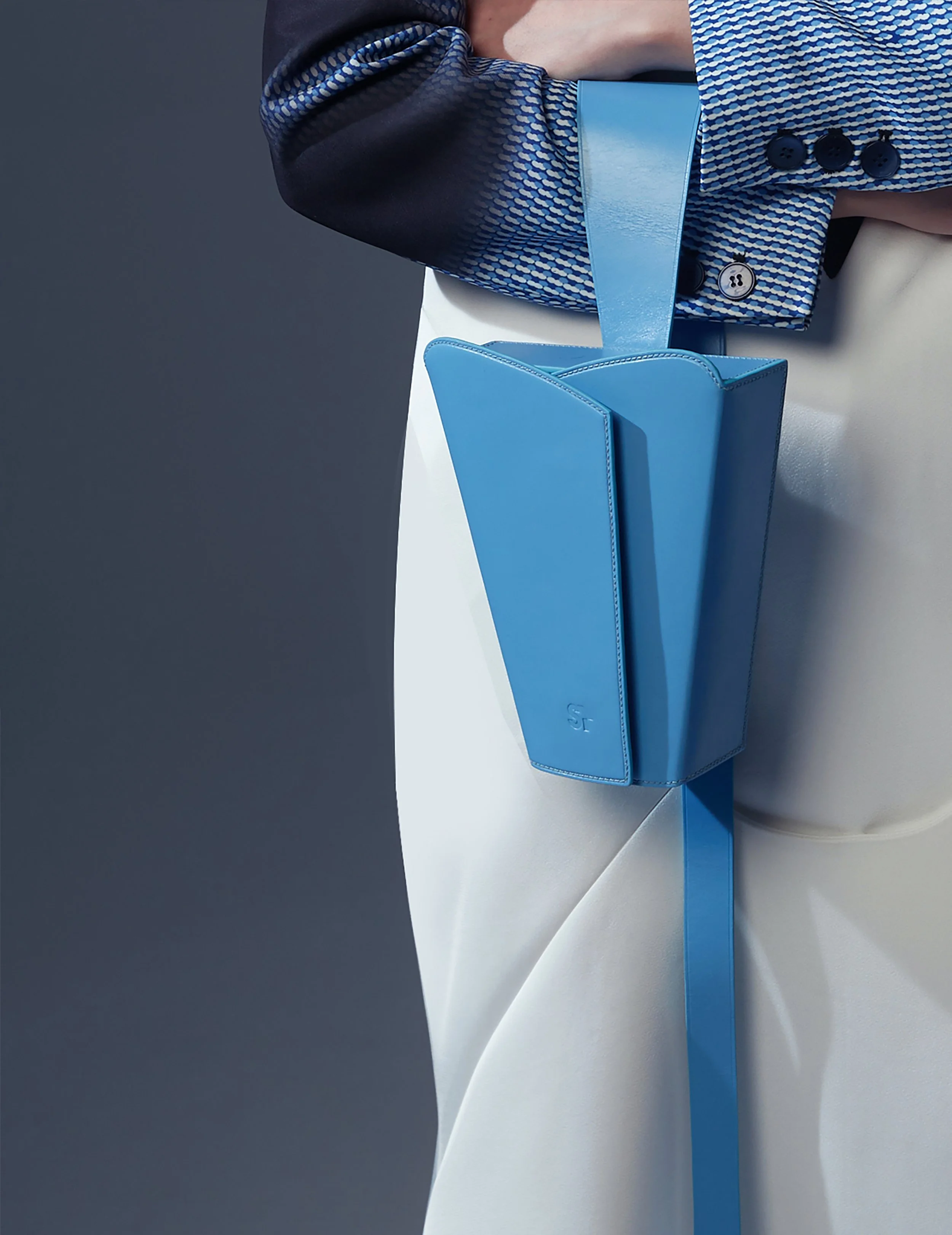

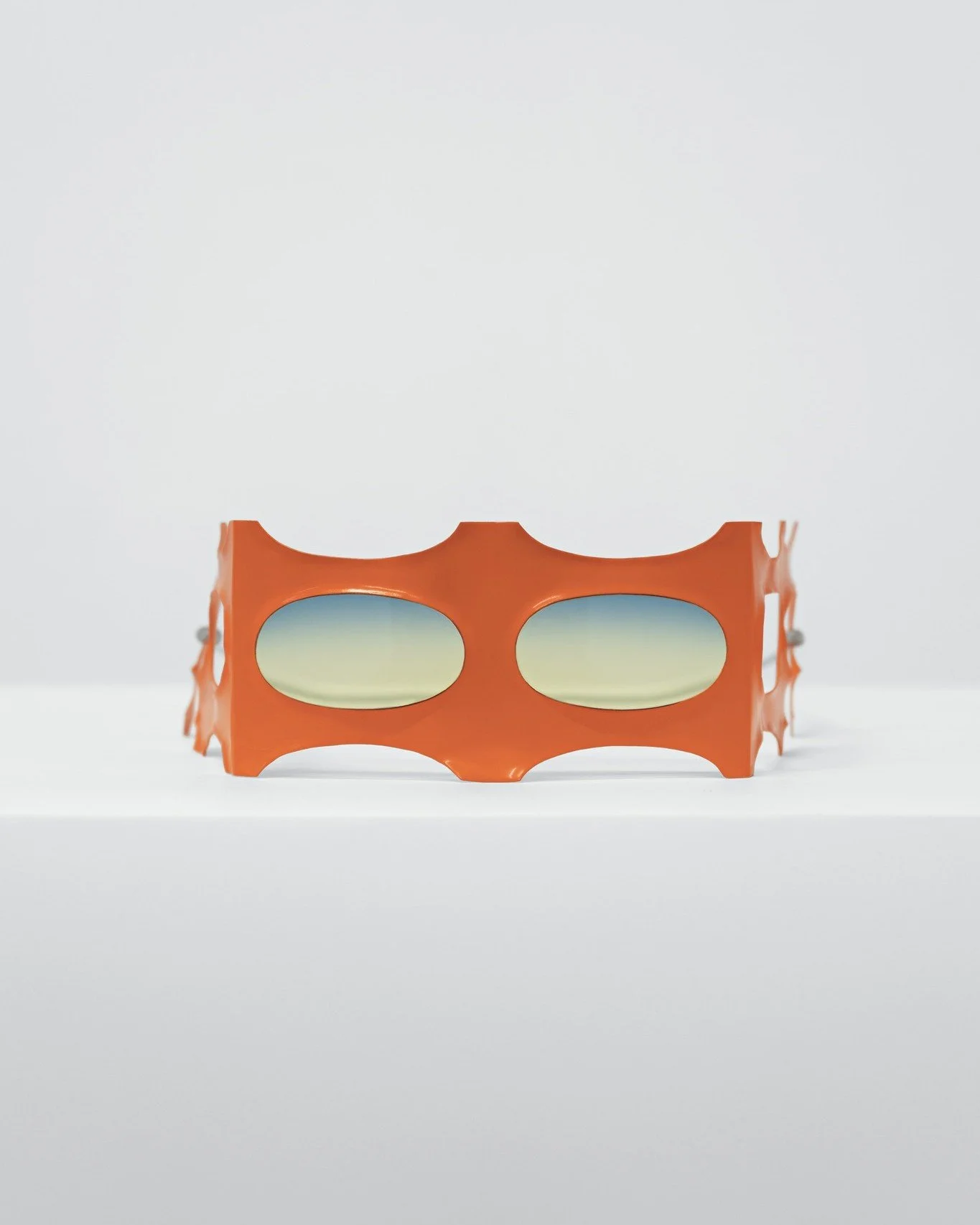
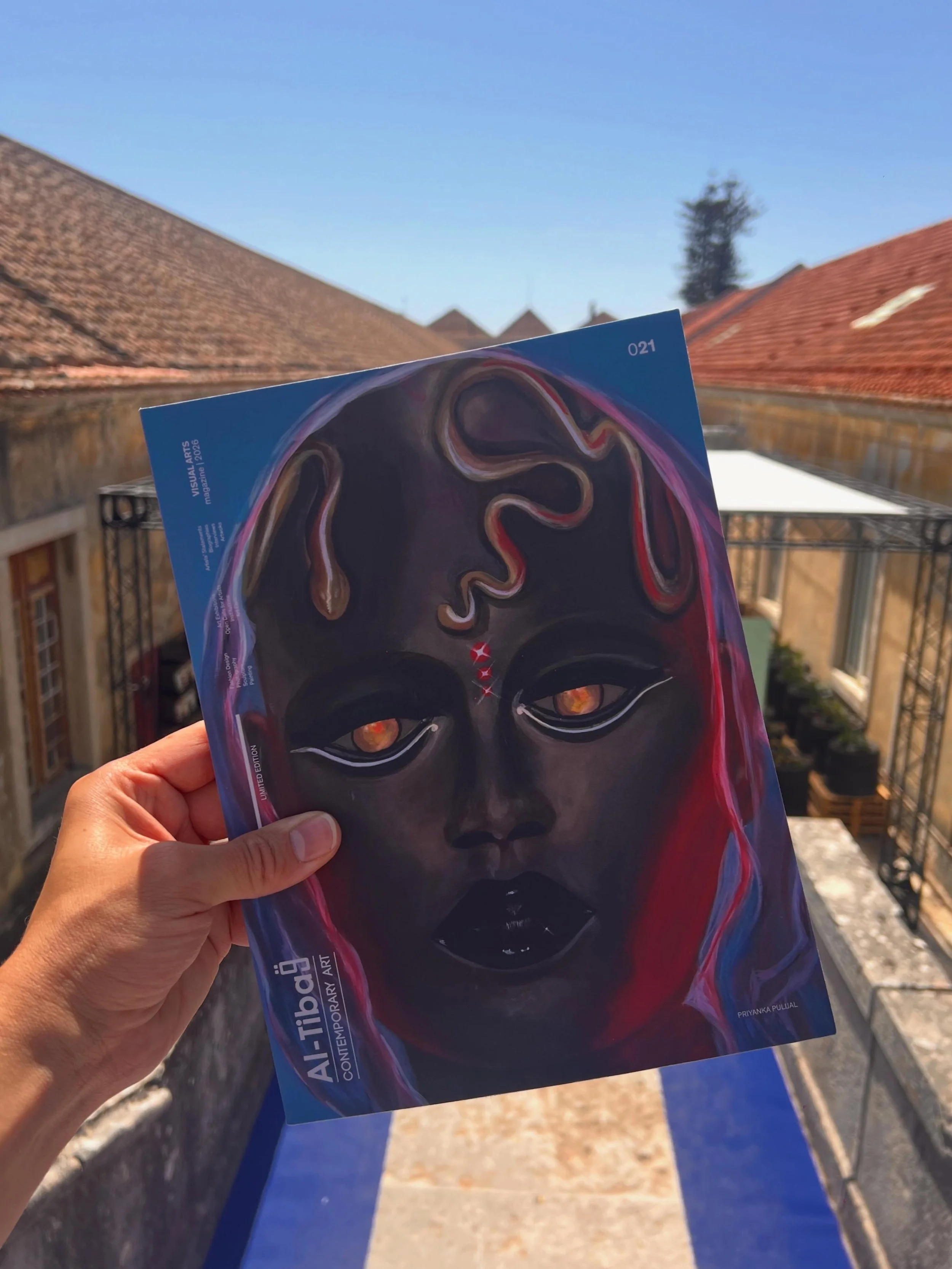
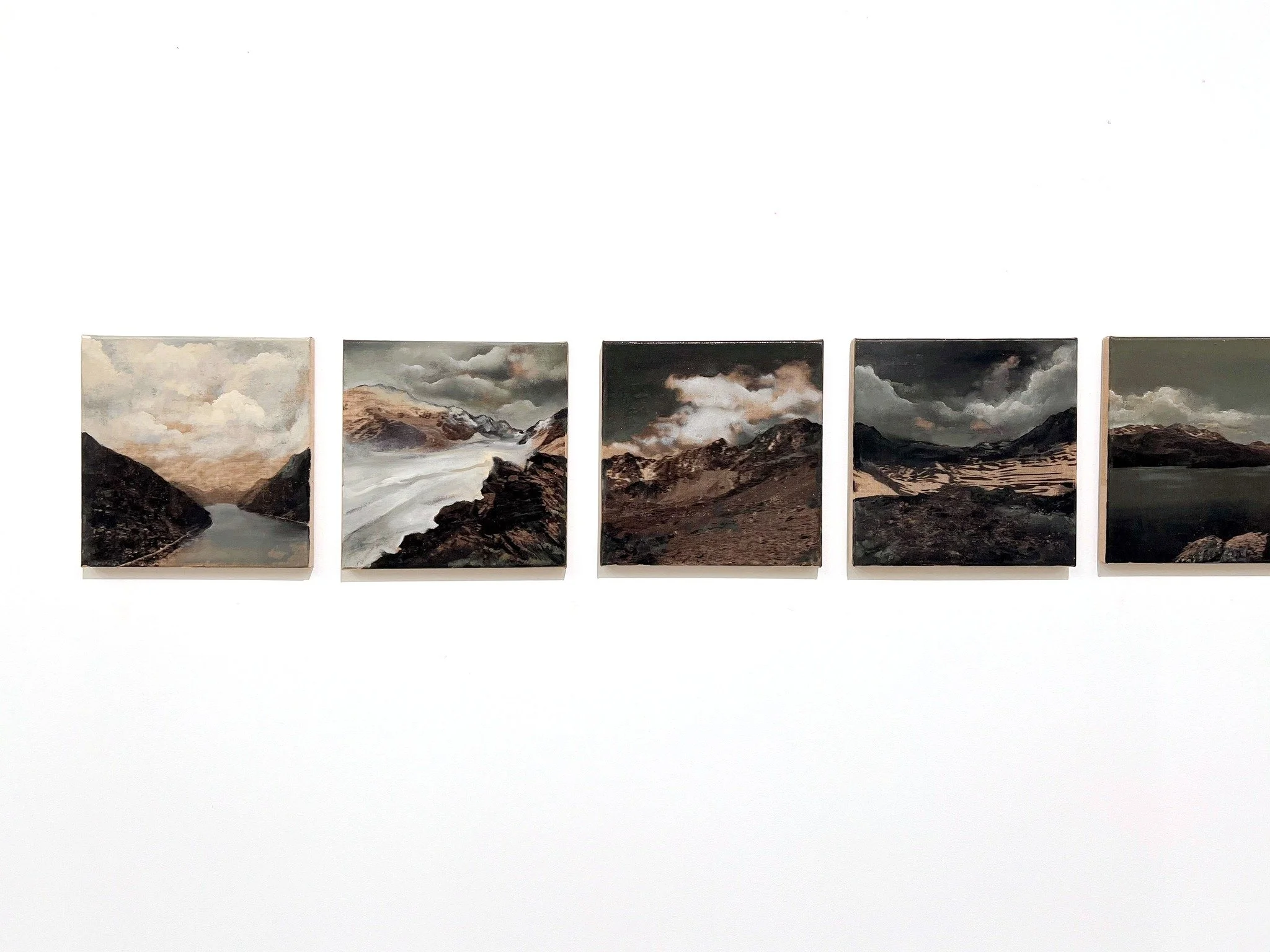
Ruoyan Er is a fashion artist and designer specialising in knitwear, textiles, draping, and garment construction. Her practice explores the relationship between material, emotion, memory, and time, approaching clothing as both a tactile object and a form of visual storytelling. Her latest project AFTERMatter is a meditation on time, decay, and reconstruction.