

10 Questions with Margherita Chimenti
Born in Venice in 1995, Margherita first began painting in her aunt’s countryside studio near Rome. Although she later studied Marketing and now works within a creative agency, painting has remained a steady and defining part of her life.
During the pandemic, she returned to a daily practice driven by vivid dreams and intuitive mark-making, sparking a renewed artistic direction.
Her work is characterised by vibrant, saturated colour and abstracted figures that echo the feminine body. These shifting forms explore themes of growth, becoming a woman, and the tension between instinct and thought.
Many of her paintings can be viewed from multiple angles, allowing figures to emerge and dissolve depending on orientation. This openness is central to her practice: she invites viewers to find their own narratives within the colour fields and shapes. In a recent exhibition, audience members shared wildly different interpretations of the same work, where Margherita saw a female form, others saw entirely different scenes, revealing the fluidity and personal nature of perception, a quality she finds both surprising and beautiful.
Her work has been featured in Artist Talk Magazine (2021) and exhibited in several London venues, most recently in 2024 at the Holy Art Gallery. A musician as well as a painter, Margherita is interested in the interplay between sound and image; her 2024 project Listen brought together mixed-media paintings and an original soundscape created in collaboration with a music producer. Across media, she seeks to translate rhythm, emotion, and sensory experience into colour and form.

Margherita Chimenti - Portrait
ARTIST STATEMENT
Margherita’s work explores identity, emotion, and the feminine experience through abstraction and sound. Guided by instinct and rhythm, she moves fluidly between painting and music, creating spaces where colour and tone echo one another. Through her work, she searches for harmony between the visible and the audible, the inner and the outer, inviting viewers to pause, listen, and connect with their own emotional landscape.
New life, Acyrlic on Canvas, 70x90 cm, 2023 © Margherita Chimenti
INTERVIEW
Let’s start with your background. You first approached painting in your aunt’s studio. How did those early experiences shape your relationship with art?
Although I’m largely self-taught, painting has been present for as long as I can remember. My earliest memories are of my aunt’s countryside studio near Rome, sunlight coming through the windows, the smell of paint, and the warm colours that shape that region: earthy reds, deep greens, and golden yellows. I didn’t understand it then, but that environment formed my visual language long before I had one of my own.
I recently found a diary I kept when I was seven, where I wrote, “painting makes me happy.” Children instinctively know what brings them joy; we often spend adulthood trying to return to that clarity. Painting has always been the place where I feel most connected to myself, even as my life took me into different professional paths.
Even while studying Marketing and working in a creative agency, painting has remained constant for you. What keeps you returning to the medium?
Painting is the only place where my mind becomes completely quiet. It’s not a distraction, it’s a state of presence. There’s a kind of necessity to it, almost a physical one. Whenever I step away from painting for too long, I feel it immediately. It grounds me, centres me, and creates the mental space where I can hear myself again.

Escaping reality, Arylic on Canvas, 80x60 cm, 2021 © Margherita Chimenti
Your recent work began during the pandemic through vivid dreams and intuitive mark-making. How do these inner images influence the way you start a painting?
During the pandemic, my dreams became incredibly vivid, with abstract figures, saturated colours, and large-scale compositions. I often dreamt of myself creating these works, and I would wake up and draw them before the images dissolved. That period taught me to trust instinct more deeply than ever. Now I begin most pieces intuitively. Often, my process isn’t about executing a predefined idea; it’s a conversation with an image that emerges and transforms as I work on the canvas.
Your paintings feature saturated colours and abstracted feminine forms. What draws you to these shapes and this palette?
The period when these dreams began was also a moment of personal transformation. I was rediscovering my femininity, starting therapy, and learning to relate to myself with more softness and honesty. The feminine forms in my paintings reflect this journey; they’re fluid, shifting, and sometimes incomplete, mirroring the continuous process of becoming.
The colours hold emotional weight for me. Their saturation matches the intensity of what I was experiencing internally. They carry energy, vulnerability, and strength, and they create a visual language that is both instinctive and physical.
Many of your works can be viewed from multiple angles. How does this intentional openness shape your creative process?
Rotation is essential to my process. I turn the canvas constantly as I paint, allowing new shapes to surface and disrupt the previous direction. Every angle generates a different reading, a different emotional entry point. This fluidity prevents the work from becoming fixed too early and keeps me connected to a sense of discovery.
I’m drawn to the idea that the work doesn’t have one definitive orientation, because identity and perception don’t, either. The multiplicity is intentional.

I see you in me, Acyrlic on Canvas, 80x70 cm, 2021 © Margherita Chimenti_

When I Lay, Acrylic on Canvas, 80x70 cm, 2021 © Margherita Chimenti
Audience members often see completely different scenes in your paintings. What do these varied interpretations reveal to you about perception and storytelling?
This is one of the most important dimensions of my practice. I’ve always connected with Susan Sontag’s argument that art is best experienced through its form and sensory presence rather than through a search for a singular meaning. When we try too hard to decode a work, we risk missing the emotional encounter.
During my 2022 solo exhibition, I invited viewers to share their own interpretations, and the responses were vastly different, sometimes completely unexpected. That confirmed something essential for me: perception is deeply personal. The painting is only one half of the story; the viewer brings the other half. This openness creates a dialogue that continues beyond the canvas, which feels aligned with how I see contemporary art functioning today.
You’re also a musician. How does sound influence your approach to painting?
Music is inseparable from my process. I never paint in silence. The rhythm, texture, and emotional tone of what I’m listening to and feeling all shape the gestures I make and the atmosphere that emerges on the canvas. Sometimes it’s almost as though the painting follows the cadence of the sound.
I also love bringing the two practices together. In my 2024 exhibition at The Holy Art Gallery in London, I created a sound installation for viewers to listen to while looking at the painting Listen. It added another layer to the experience, almost like the sound and the image were in conversation with each other.
Your themes often revolve around growth and becoming a woman. How do those ideas appear and evolve within your abstract vocabulary?
I would say these themes show up more in the movement and energy of the forms than in anything literal. I think of growth and becoming a woman as something that’s always shifting, so the shapes in my work tend to feel like they’re emerging, dissolving, or caught between states. It’s my way of showing that growth isn’t a clean, finished moment; it’s this ongoing unfolding that carries both strength and vulnerability.
As I evolve, the work changes too. Lately, the forms have gotten bolder and take up more space, almost like they’re speaking with a louder voice. They reflect where I am personally, stepping into myself with more clarity and confidence.

Subconscious, Acrylic on Canvas, 80x70 cm, 2024 © Margherita Chimenti
Your work has been featured in exhibitions across London. How has the reception from viewers and curators shaped your sense of direction as an artist?
The moments that impact me most are when viewers share the emotions or memories my work evokes for them. Those conversations remind me that abstraction, while open-ended, can be deeply personal and connective. I’m always fascinated by how people interpret the same painting in completely different ways, sometimes seeing figures or narratives I never consciously placed there. That exchange of perspectives is one of the most rewarding parts of what I do.
Curators have also played a meaningful role. Discussions around colour, form, and the openness of my compositions have encouraged me to trust the abstract language I’m developing and to continue pushing scale and immersion.
Lastly, looking ahead, what new projects or explorations, whether in painting, sound, or their intersection, are you excited to pursue?
Looking ahead, I’m excited to deepen the relationship between sound and visual form. After my project Listen in 2024, I realised how powerful it is to build environments where painting and sound coexist as one immersive experience.
I’m also exploring installation formats that allow the work to be encountered from multiple angles, echoing the way I create it. Ultimately, I want to build spaces where colour, form, and sound merge into an experience that is felt as much as it is seen, a space where the inner world becomes a shared, living environment.
Artist’s Talk
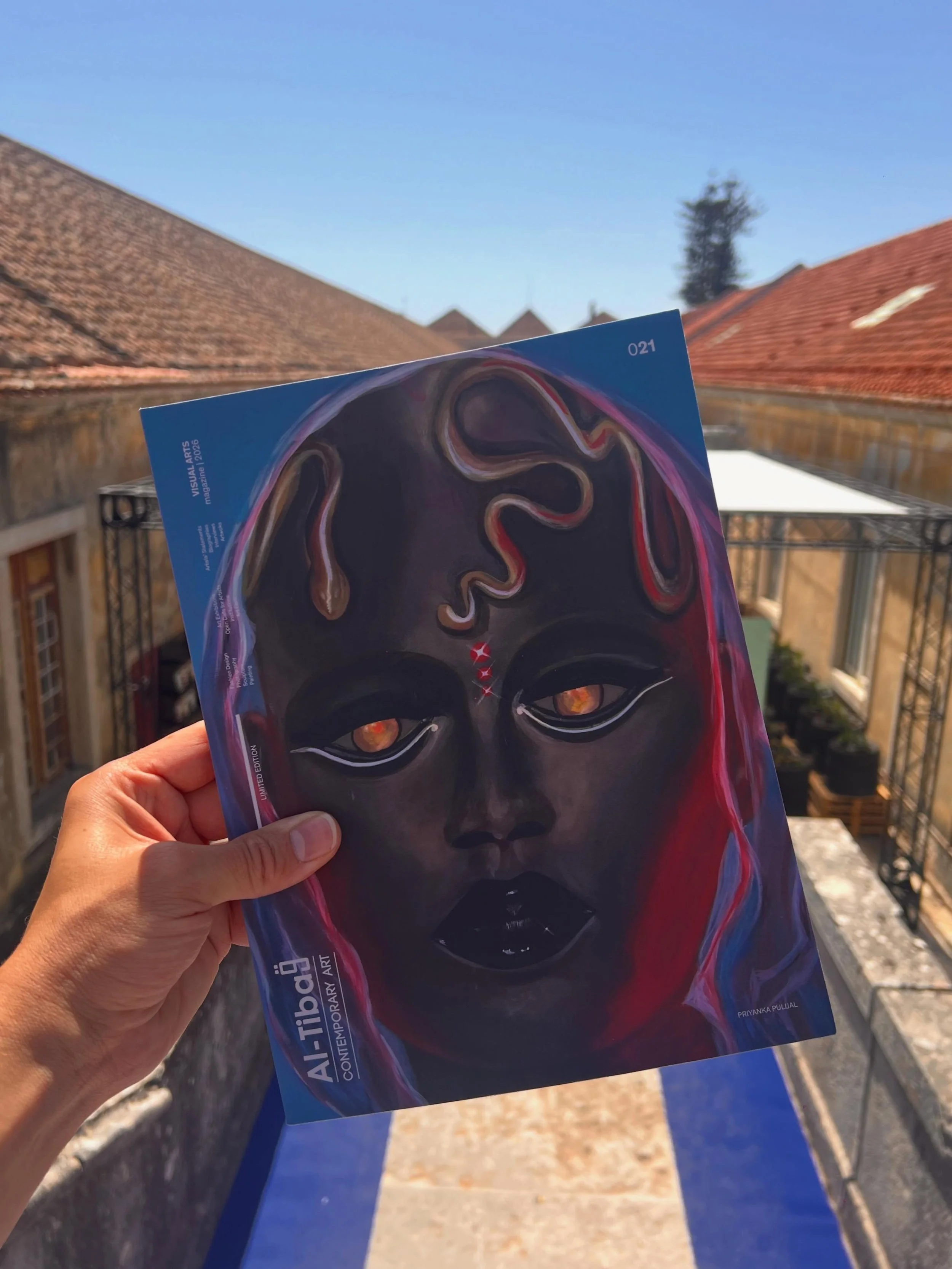
Al-Tiba9 Interviews is a promotional platform for artists to articulate their vision and engage them with our diverse readership through a published art dialogue. The artists are interviewed by Mohamed Benhadj, the founder & curator of Al-Tiba9, to highlight their artistic careers and introduce them to the international contemporary art scene across our vast network of museums, galleries, art professionals, art dealers, collectors, and art lovers across the globe.



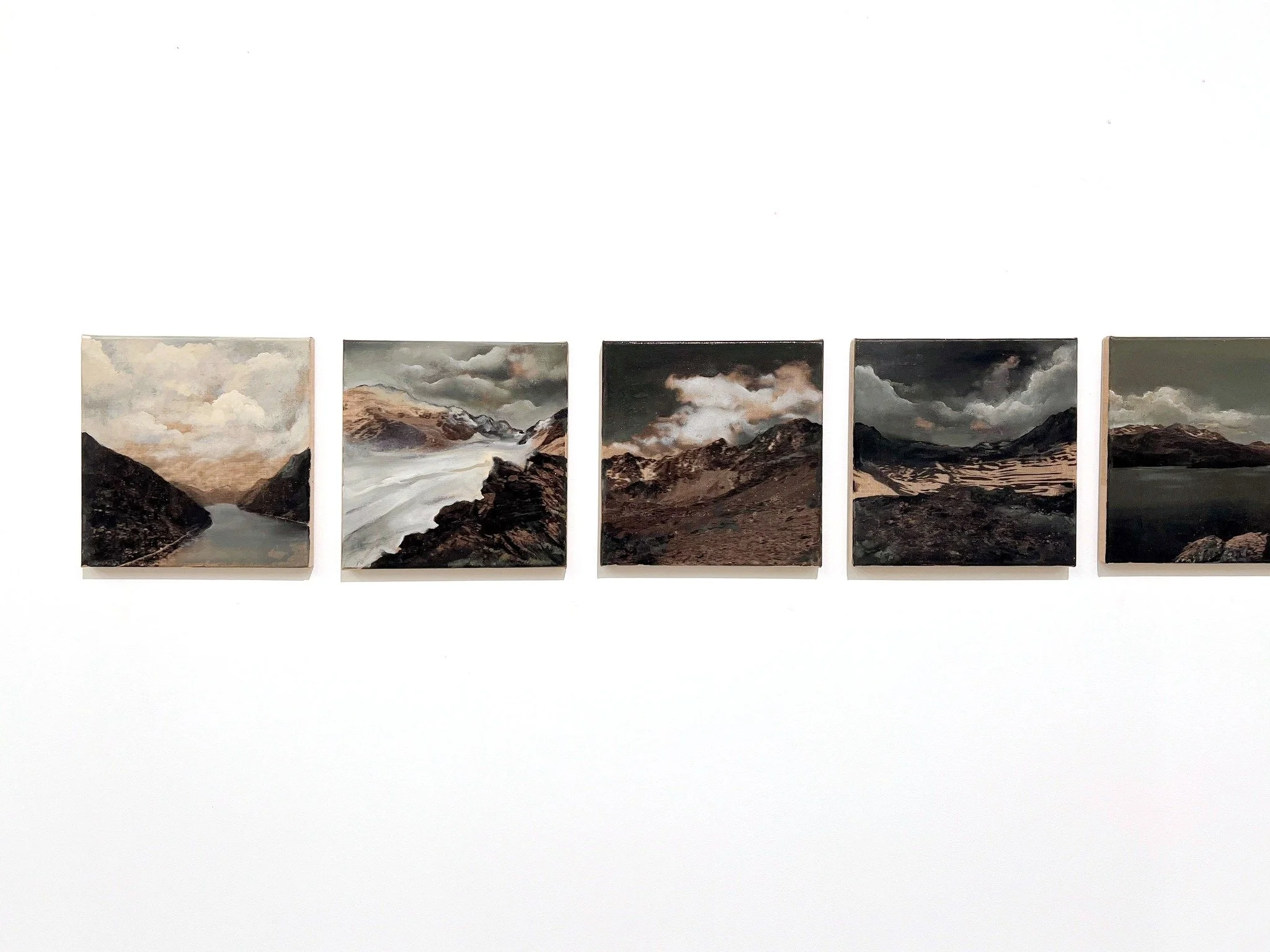
Nataraj von Allmen is a painter based in Switzerland. Often taking photographic material as a starting point, he weaves together landscapes, mythological archetypes, Christian symbolism, and contemporary socio-political themes into complex paintings. Oscillating between figuration and abstraction, his work investigates transformation, collective memory, and the human condition.