10 Questions with Karolina Bergin
Karolina Bergin is a Polish artist whose work focuses on emotional, fashion-inspired portraiture. Using mixed media, she has developed a tactile, layered style where detailed, expressive faces collide with raw textures, intuitive marks, and unfinished forms. She primarily works with traditional media, valuing the unique qualities of paper, texture, and physical mark-making. In a digital age, her passion for handmade processes persists as a way to capture the human pulse and authenticity in her portraits. She treats her art as a language, a means to explore vulnerability, identity, and the delicate constructs of beauty. People, their emotions, and inner stories remain central to her visual world.
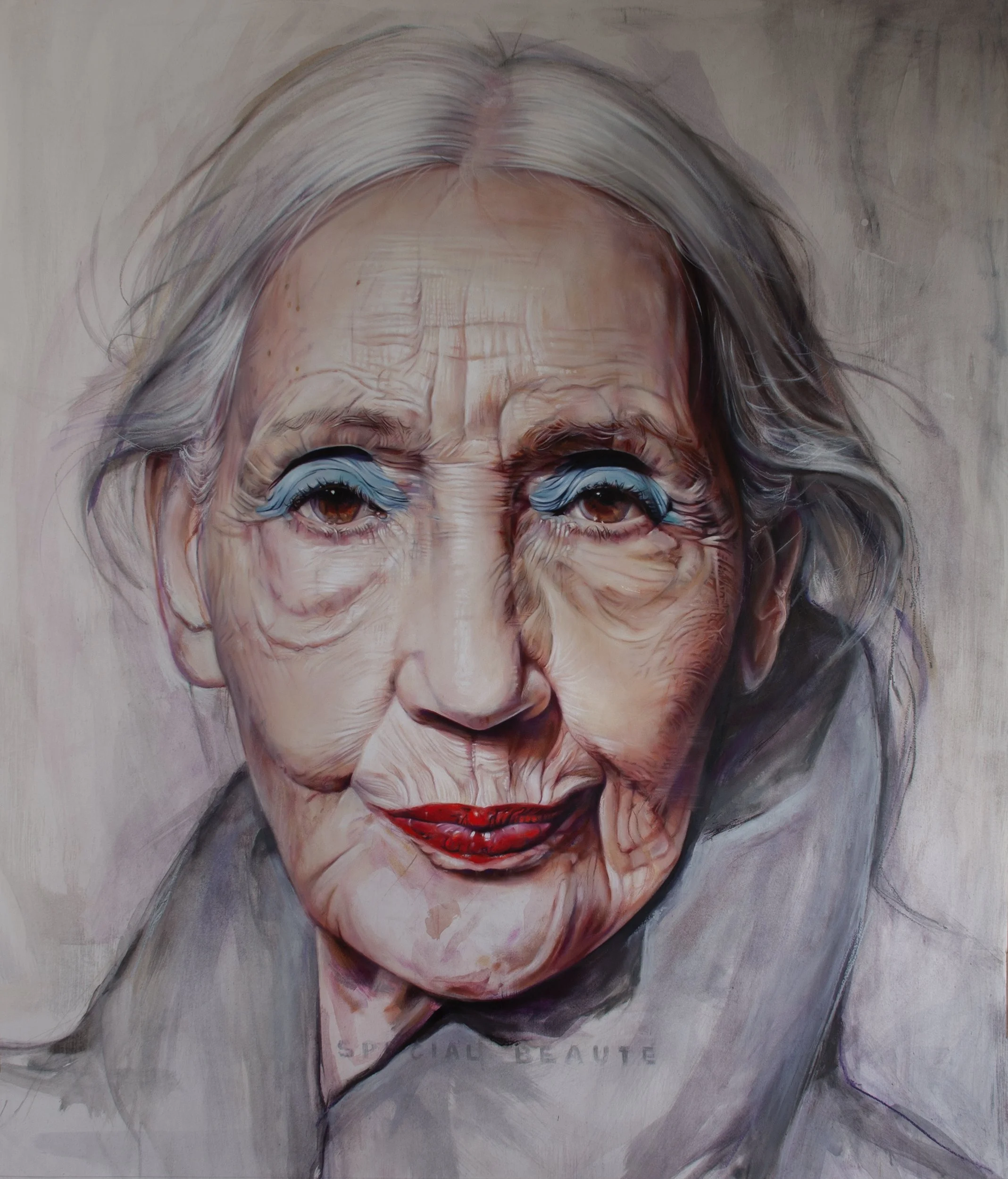
Bergin’s work is evolving toward larger sizes and bolder material expression, investigating contrasts: delicacy versus roughness, control versus intuition, and the visible versus the hidden. She is developing her series Beyond the Surface, which includes Special Beauty, the piece awarded at FIDA 11.
A pivotal moment in her journey was creating The Gilded Muse, inspired by a photograph by Daniel Roseberry. The piece was later bought by David Roseberry and gifted to Fran Roseberry, becoming part of a personal family story. This experience confirmed for Bergin how art can transcend imagery to evoke lived emotion and connection. Her work will be showcased in Portrait 2026 at the CICA Museum in Korea, marking her first international museum exhibition.
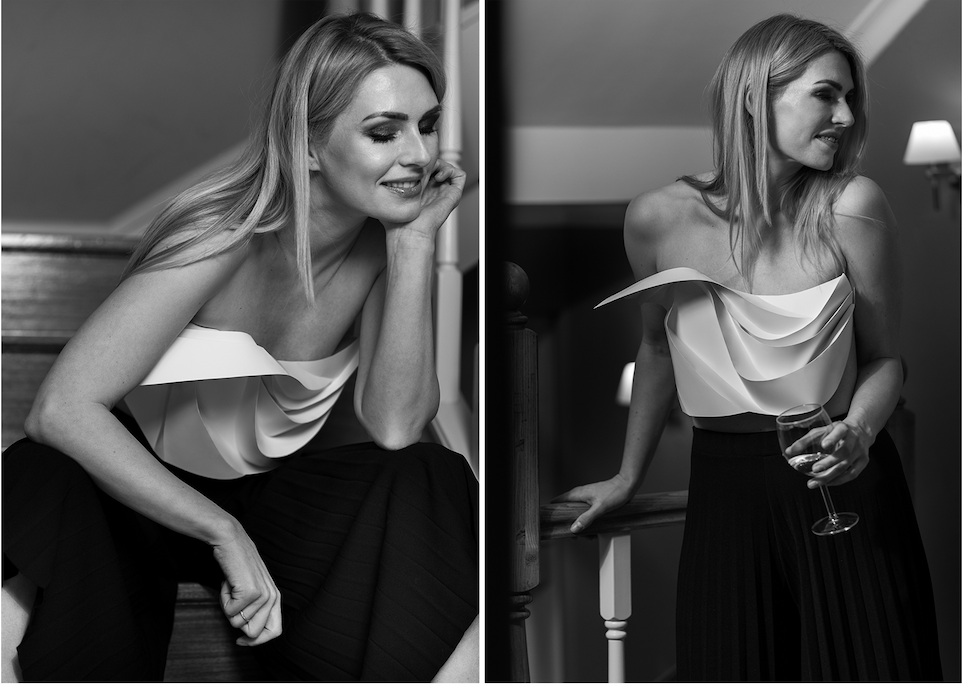
Karolina Bergin - Portrait
ARTIST STATEMENT
Karolina Bergin creates portraits inspired by the world of fashion, where clothing becomes a frame and emotion takes the spotlight. The face becomes a site of human depth, fragile, powerful, and endlessly expressive.
Emotion is always the starting point of her work. Through a focused exploration of the gaze, her portraits invite viewers into moments of recognition, reflection, and quiet dialogue, spaces where personal feelings can surface and resonate.
She works intuitively with texture and layering, moving between raw and soft, deliberate and unfinished. The surface becomes a field of exploration, where control gives way to instinct. Her practice merges portraiture with abstract narratives, shifting the focus away from idealized beauty and toward humanity, the emotions she absorbs, expresses, and the exchange they create with the viewer.
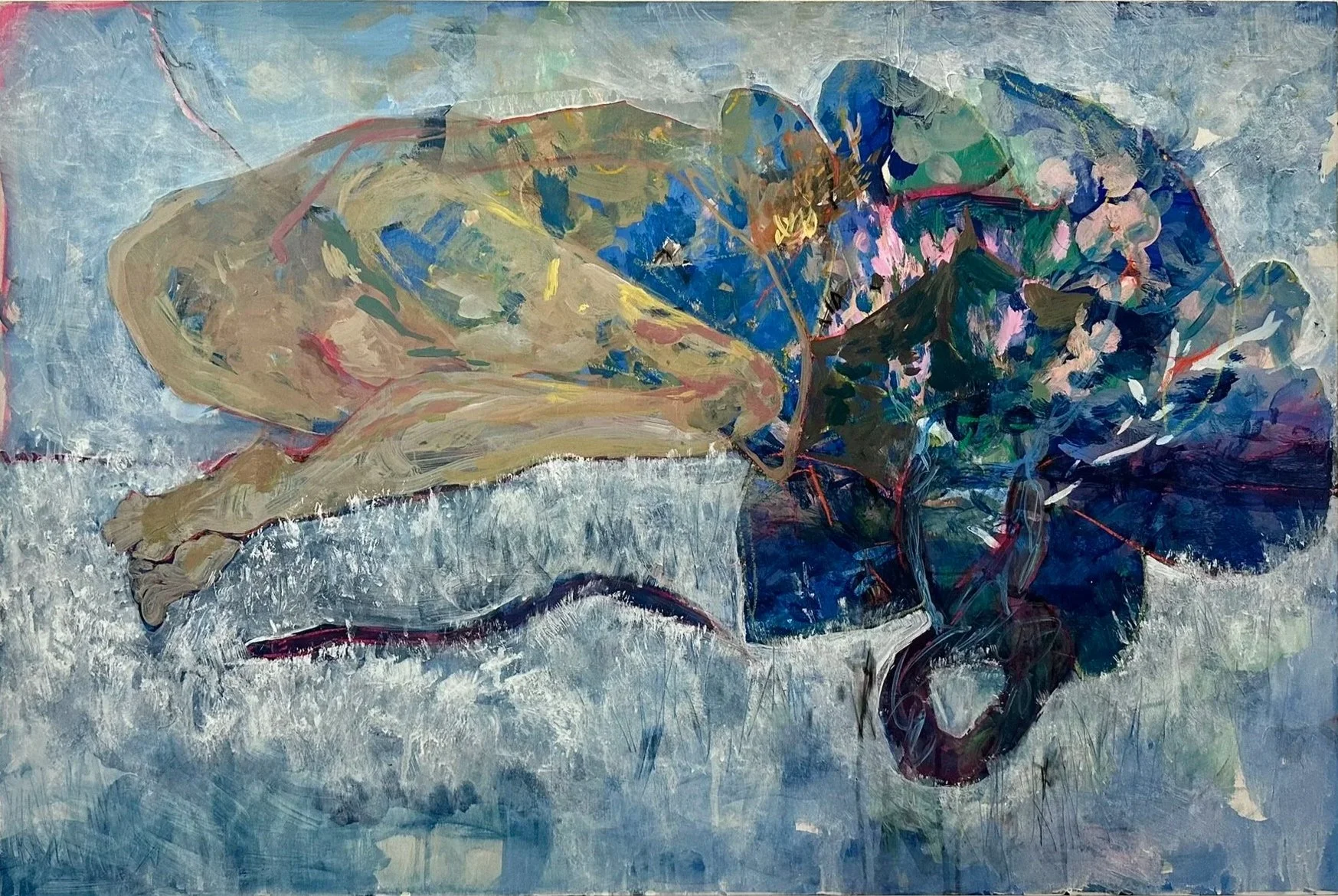
Karolina Bergin has developed her own mixed media technique on paper, combining watercolors, acrylics, oils, pastels, inks, and markers. Through layering, she explores texture and tension, raw and soft, deliberate and unfinished, always searching for what feels intuitive and true.
© Karolina Bergin
INTERVIEW
Can you tell us about your artistic background and how you began working with portraiture?
I studied interior architecture and photography, and worked professionally for over fifteen years, first as a graphic designer, creating packaging and exhibition designs, and later focusing fully on interior architecture.
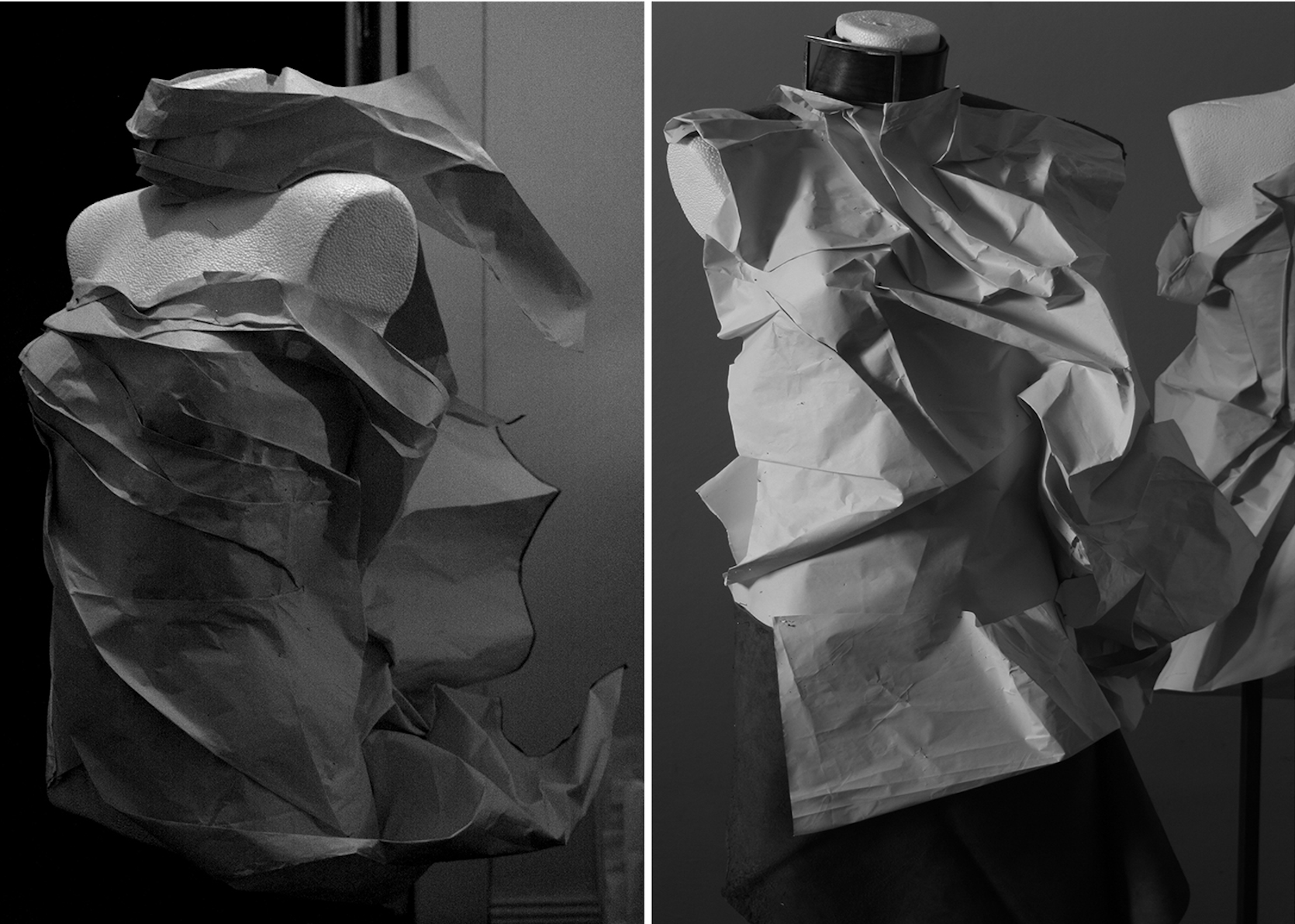
But despite those years in the profession, I stepped away from making art entirely. For years, I convinced myself I wasn't capable, not because I lacked ability, but because I couldn't stop judging myself through the wrong lens. I struggled with self-doubt for a long time, and it coloured everything, including how I saw my own work. Even though the pull toward faces and emotion was always there, even as a student, I told myself I wasn't good enough, that I couldn't do it.
Then, in November 2023, something broke open in me. I had reached a point where I no longer wanted to be an interior designer - I was craving more artistic freedom. And just at that moment, a competition appeared: FIDA. I thought, why not try? Somehow, I forgot to worry about whether I still knew how. I grabbed my materials, old student paints, over a decade old, the only ones I had, and the moment I started creating again, I felt how deeply I had missed it.
That first piece received a commendation. A small recognition, but powerful enough to open a door I didn't know was still there. From that moment on, each work brought me closer to where my heart truly was. I noticed I was drawn to faces that I loved, emotion, that I didn't just want to create for the sake of an idea, but that I needed to say something through my work. Fashion appeared naturally, too, not as the subject itself, but as a language, a way into deeper emotional stories.
That voice of doubt is quieter now. I'm still demanding of myself - perhaps more than ever - but it comes from a different place. Not from fear, but from genuine love for what I do.
© Karolina Bergin
What draws you to emotional, fashion-inspired portraits as your main subject?
Fashion has always fascinated me - the construction of clothing, how it carries identity and emotion, felt very natural to me. I deeply wanted to study fashion design, and while completing my interior architecture degree, I simultaneously studied photography, a course I got into through a competition, completing two years in one. At some point, I considered moving to London to pursue fashion studies, but life had other plans. An unplanned pregnancy changed everything, and I thought, I'll come back to this later.
I did come back. Just not in the way I expected. Today, fashion is my backdrop, and I love it deeply. I love drawing from it, being inspired by it. There is so much richness there. But it's no longer about the clothing, the accessories, the aesthetic. It's about what exists beneath them. Fashion gives me a visual language, a layer of atmosphere and narrative, but the real subject has always been the human being. Their emotion, their vulnerability, their inner world. Growing up, I had a strong sense that many things interested me, and I kept searching for what I loved most. Now I know. It's not fashion. It's not photography. It's art - and within art, it's the face. That's where I belong.
Why is working with traditional, handmade materials important in your practice?
After FIDA, when I decided to return to making art, I actually started digitally. But it didn't last long - I simply didn't feel it. So I began mixing hand-drawing with digital work, and eventually I came to trust something important: I don't need to correct anything. Every imperfection, what I once called an imperfection, is exactly as it should be. I love having a brush in my hand. I love the feeling of pastels, of paint. I often use my hands directly because I need to feel the materials physically. Handmade work is also irreplaceable in its uniqueness. There will only ever be one of each piece. I work intuitively with materials, and that means I could never recreate it, even if I tried. And I love when a work has texture. When you can see it, feel it. When something raw and imperfect sits right next to something beautiful. That contrast, you simply cannot replicate it digitally. It has to be made by hand to be truly alive.
© Karolina Bergin
How do texture and layering influence the way you build a portrait?
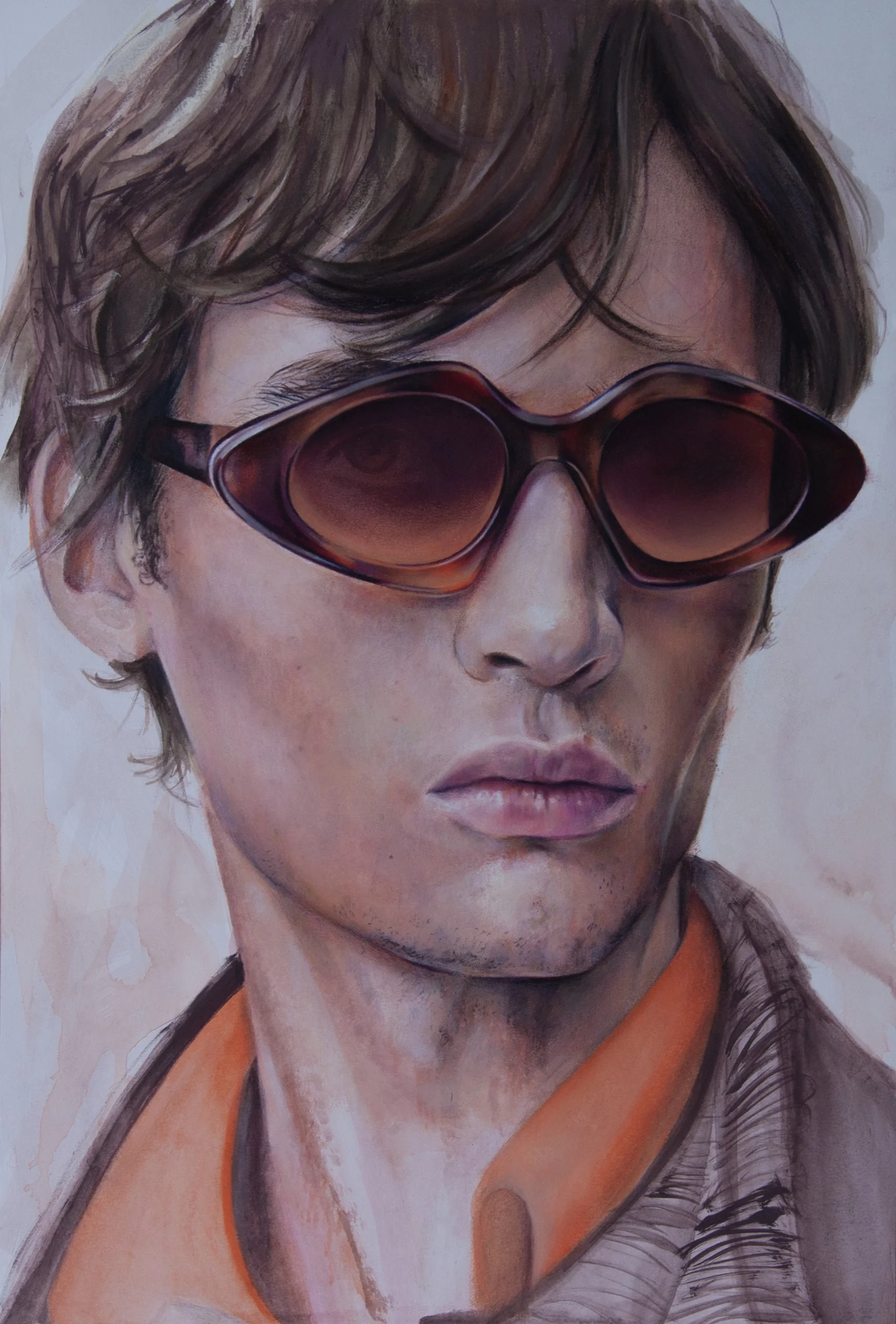
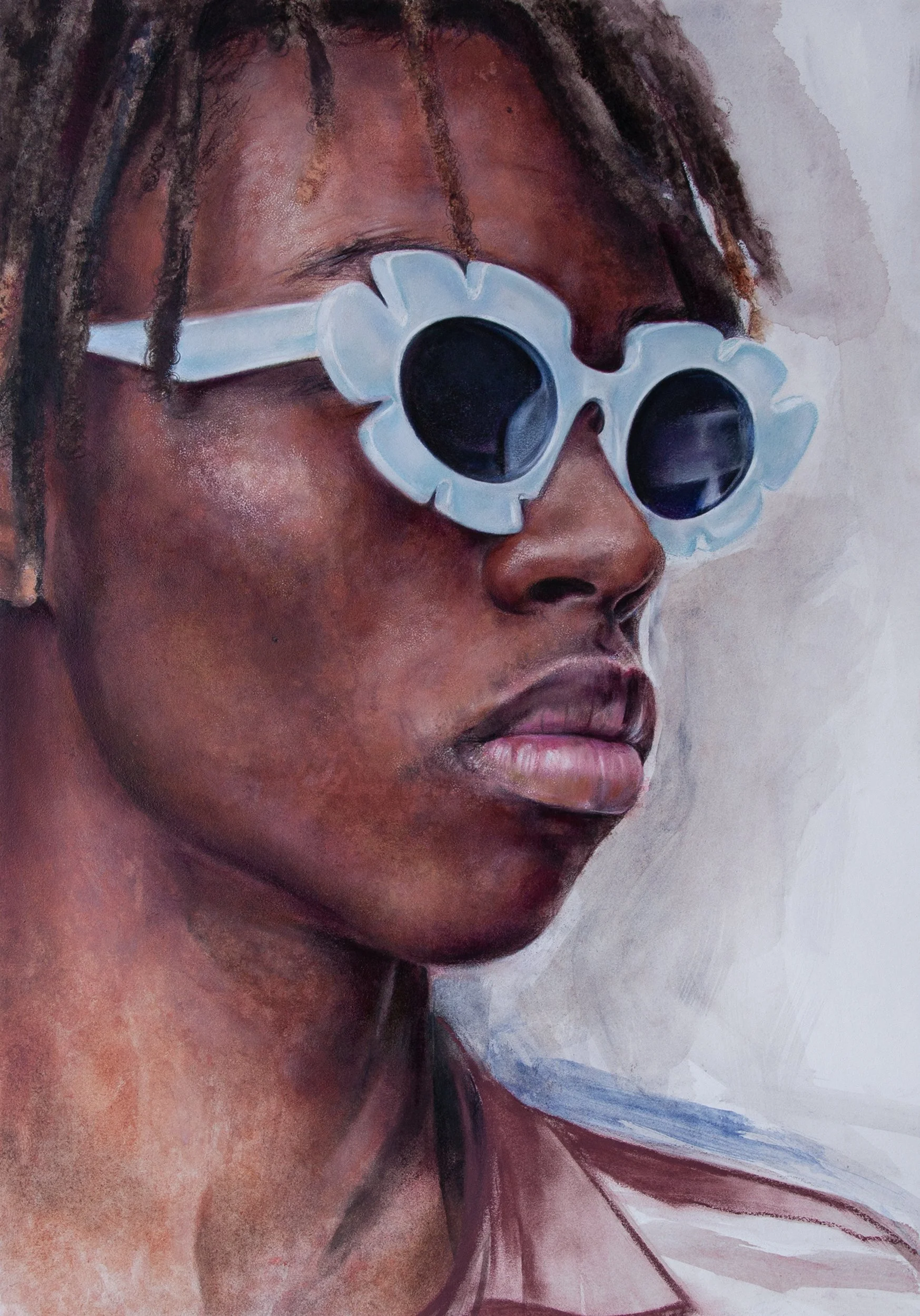
I love combining contrasts, more here, less there, something rough next to something delicate. Layering, for me, creates an enormous sense of depth and builds a kind of spatial dimension within the work. It's not always immediately visible, it depends so much on which materials are being layered and how, but I feel it as an incredible richness. Something I'm still discovering.
When I see an inspiration, I instantly feel the materials I want to use. It comes naturally, it's already inside me before I even begin. I have a clear awareness of how materials interact, what works together and why. The choices are intentional, even when they feel instinctive. It's not accidental, it's a dialogue between knowledge and feeling. And I don't always reach for the same things. I constantly buy new materials, experiment, and explore. I think I'm someone who genuinely needs to experience and search, and that's exactly what art is for. That freedom is something I deeply love. Texture and layering aren't techniques I apply mechanically. They're a language my hands speak, but also one I understand and choose consciously.
Emotion seems central to your work. How does a new piece usually begin for you?
This might sound trivial, but it usually starts with something I stumble across on Instagram. Though that's not the only way it works for me. What follows is always an emotion, and that emotion is what really begins the piece. Lately, something has shifted. The emotion comes first, and then I search for the person to match it. It's becoming much more intentional. I think just as I want to transmit emotion through my work, I am equally guided by my own emotions in deciding where to go next. I have a lot of ideas, perhaps too many. I collect them in a notebook so I don't lose them, and when I return to it, I choose the one that pulls me most strongly in that particular moment. That pull is never random, it always tells me something about where I am right now.
© Karolina Bergin
© Karolina Bergin
Your work explores contrasts such as control and intuition. How do you balance these elements while creating?
It depends entirely on where I am in the work. There are moments, especially at the beginning, when I'm in a kind of frenzy. A state of complete absorption, almost euphoric. Everything flows, and I'm not thinking, just responding. That's where intuition lives, and I've learned to trust it completely. I think my mind works in a particular way; I've always moved fast between ideas, between states, between materials. That intensity is part of who I am, and I've stopped fighting it. In the studio, it becomes an asset. But then there are the details. And there, I become precise and deliberate. The face, the expression, the specific marks that carry meaning, those require full awareness and control. Sometimes I step away from a piece for a while and return to it with fresh eyes. Other times, I finish in one go. Both are valid, it just depends on what the work is asking of me in that moment. So it's not really a balance I consciously seek. It's more than I move between these states naturally, and I've learned to recognise which one a piece needs.
What does beauty mean to you within the context of your portraits?
It's a difficult question, beauty, for me, is a broad concept. There's no single answer.
But if I return to what drives everything in my work, I always come back to the same place: emotion. Emotion is beauty, for me. A face that carries something real, tension, tenderness, vulnerability, longing, that is what I find truly beautiful. Not perfection. Not symmetry. The moment when something human breaks through. That, for me, is enough. And it's everything.
© Karolina Bergin
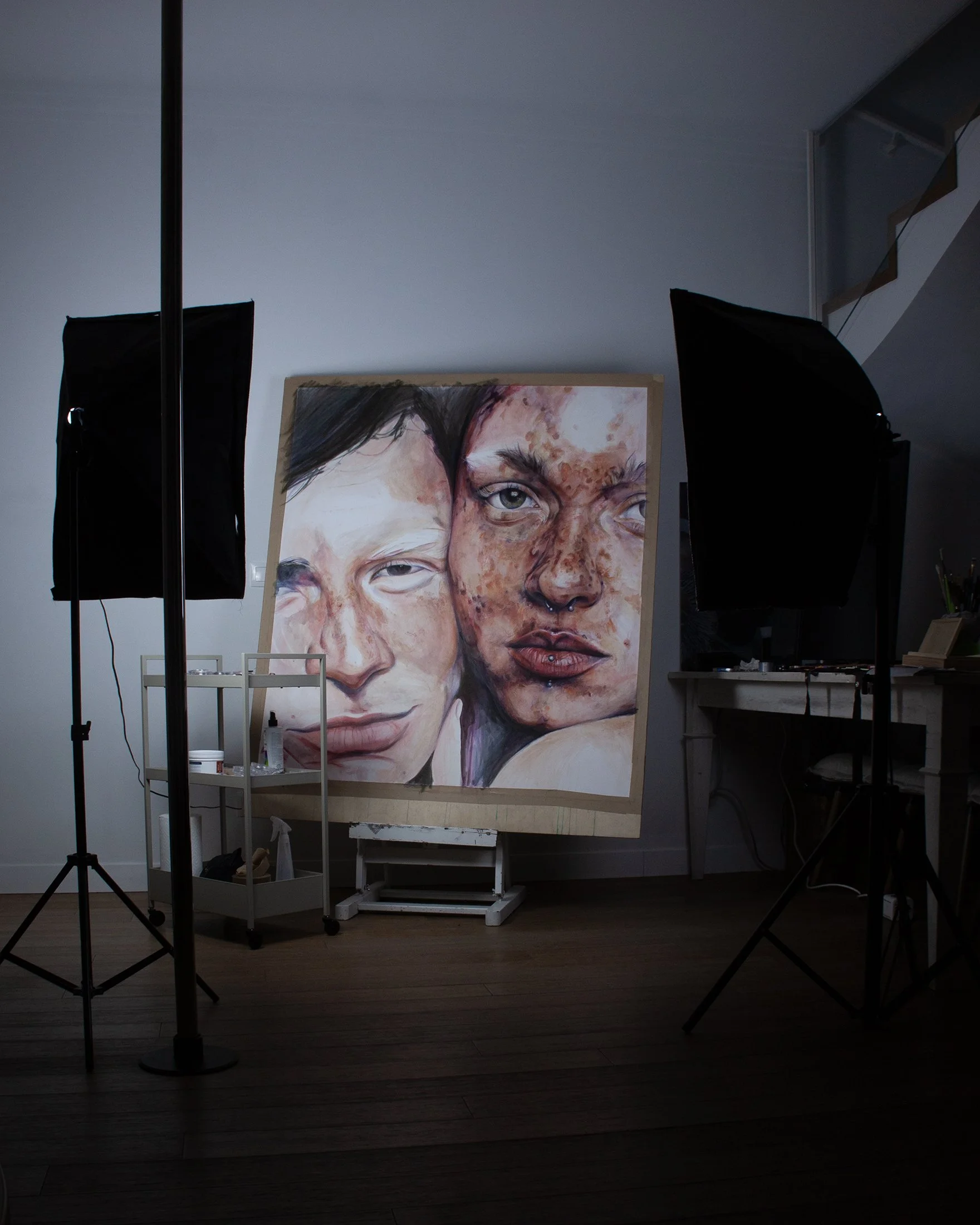
Can you tell us about the Beyond the Surface series and what you are exploring through it?
Beyond the Surface began with Special Beauty, a portrait of Françoise de Staël, who at 82 years old was the face of one of the first editions of Special Beauté in M Le Monde Magazine. That image, full of class, French elegance, and quiet eccentricity, became my starting point. Her gaze, the lines of time on her skin, the strength and tenderness in her face moved something very deep in me. I wanted to capture not just beauty, but life written into a face. The kind of beauty that goes beyond the surface, which is exactly why the piece gave the series its name. It's a portrait of a woman who doesn't need to pretend anything. Beautiful in her truth.
The series is still growing. There are more works coming, each one exploring a different dimension of what lies beneath the image. I'm not ready to reveal everything yet, because I'm building toward a moment when the works can be seen together, as a complete narrative. That's when the full story will speak.
How did the experience surrounding The Gilded Muse affect your understanding of the relationship between art and viewers?
I used to think the relationship between art and a viewer was about the moment of looking. That the work ends where the paper ends. The Gilded Muse changed that for me.
It's a portrait of Fran Roseberry, inspired by a photograph taken by her son, Daniel Roseberry, Creative Director of Schiaparelli. A son photographing his mother. That tenderness, that particular kind of love, was already inside the image before I even touched it. I just tried to honour it. And then something happened that I hadn't imagined. The painting was purchased by her husband, David. At that moment, the portrait, finding its way into the hands of the people whose story it carried, stopped me. This was no longer my work. It had become part of someone's life. Part of their history. What I carry with me from this experience is that a painting can enter a story that was already there, long before the artist arrived. It can hold love, memory, the connections between people that words sometimes can't reach. When that happens, the work becomes alive in a way I cannot create alone. These are the moments I paint for. Even when I don't know it yet.
© Karolina Bergin
Lastly, what are you looking forward to most about your upcoming exhibition at the CICA Museum, and what comes next in your practice?
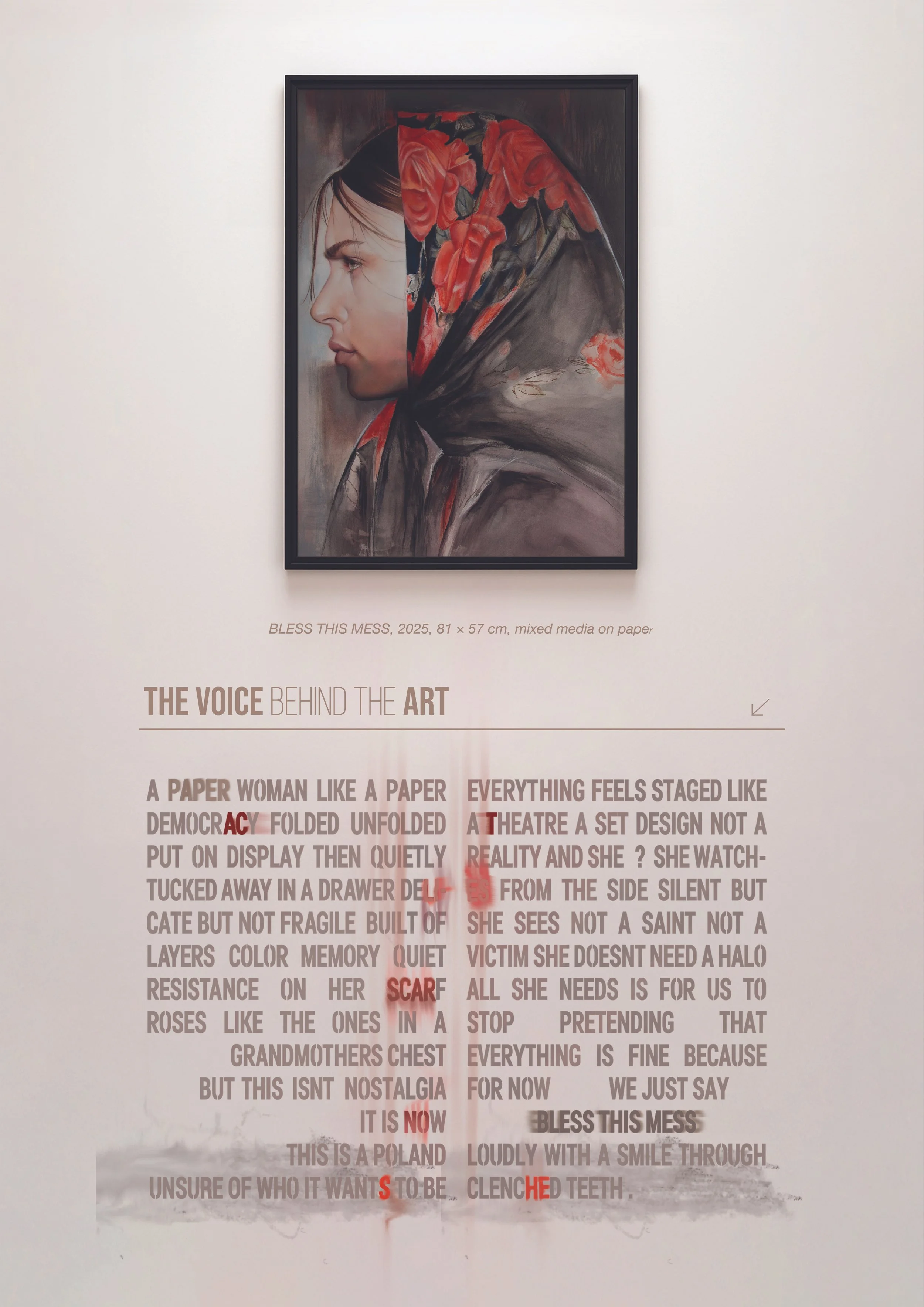
I'm enormously excited about the exhibition at CICA Museum in Korea - Portrait 2026, running from May 27 to June 14, 2026. Two of my works will be shown there: Bless This Mess (2025) and And Who Holds the Key - Me… or You? (2024).
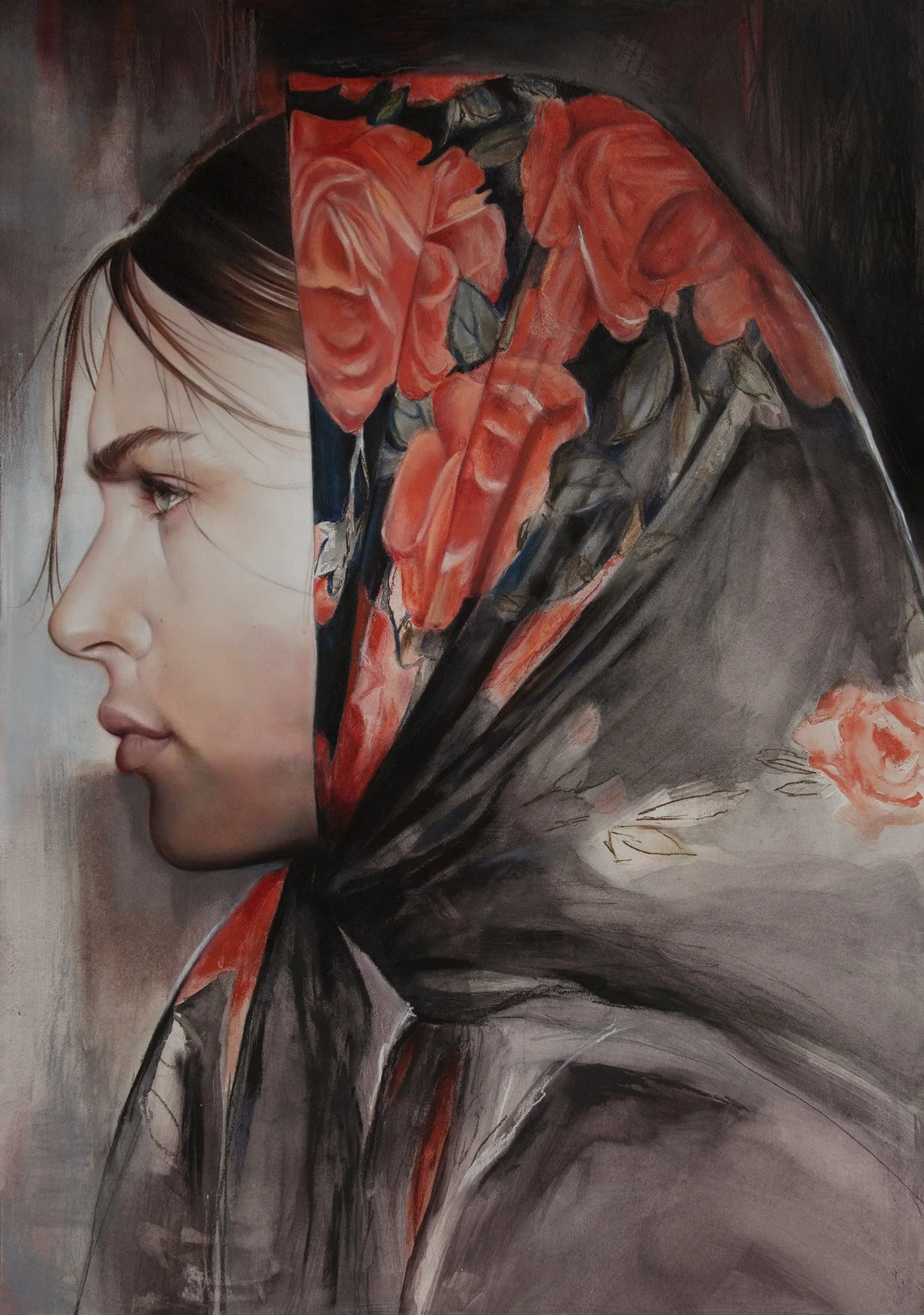
Bless This Mess grew from an unexpected place. It was inspired by Magda Butrym's project - a Polish designer whose work speaks to women, to tradition, to something deeply rooted. I hadn't planned to connect it to politics, but it happened naturally. There were elections in Poland at the time, and everything around me felt charged. The work found its own direction.
A paper woman - like a paper democracy.
Folded, unfolded, put on display, then quietly tucked away in a drawer.
Delicate, but not fragile.
Built of layers - color, memory, quiet resistance.
On her scarf - roses like the ones in a grandmother’s chest.
But this isn’t nostalgia.
It’s now.
This is a Poland unsure of who it wants to be.
Everything feels staged - like a theatre.
A set design, not a reality.
And she?
She watches from the side.
Silent. But she sees.
Not a saint.
Not a victim.
She doesn’t need a halo.
All she needs is for us to stop pretending
that everything is fine.
Because for now, we just say -
Bless this mess.
Loudly.
With a smile.
Through clenched teeth
And Who Holds the Key - Me… or You? is different. It has no description, not a single word. Only a title. That is entirely intentional. I don't want to explain it. I want the viewer to stop, to sit with it, to ask themselves the question. The pause is the point.
As for what comes next, the new work I'm developing is part of Beyond the Surface itself. I'm not ready to share it yet. I want the series to be seen as a whole, at the right moment. Around summer, perhaps more will be revealed. I'm also planning to submit to the Arte Laguna Prize in Venice, and I hold that with both excitement and a certain tension of not yet knowing what will happen. That uncertainty is part of it, too.
Artist’s Talk
Al-Tiba9 Interviews is a promotional platform for artists to articulate their vision and engage them with our diverse readership through a published art dialogue. The artists are interviewed by Mr. Mohamed Benhadj, the founder & curator of Al-Tiba9 Contemporary, to highlight their artistic careers and introduce them to the international contemporary art scene across our vast network of museums, galleries, art professionals, art dealers, collectors, and art lovers across the globe.