
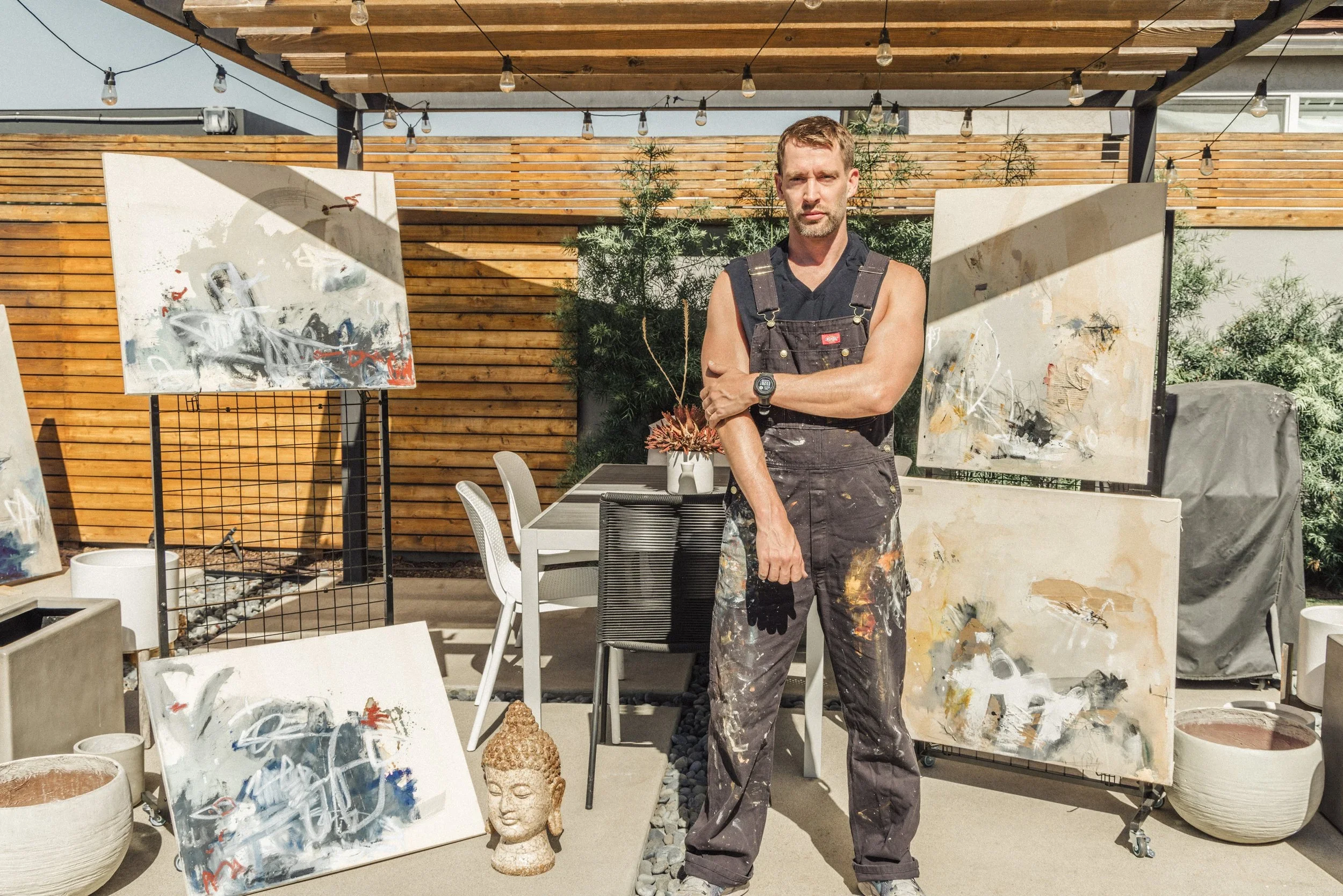
10 Questions with Samuel Perry
Samuel Perry is a self-taught abstract artist based in San Diego, California. Known for his large-scale works on unprimed canvas, his practice explores the tensions between structure and spontaneity, control and disorder. He is represented by Gloria Delson Contemporary Art (Los Angeles) and has exhibited at the International Art Museum of America, the JW Marriott (Saint Marten), and numerous galleries across Southern California. His work is held in luxury hotels and private collections throughout the United States.
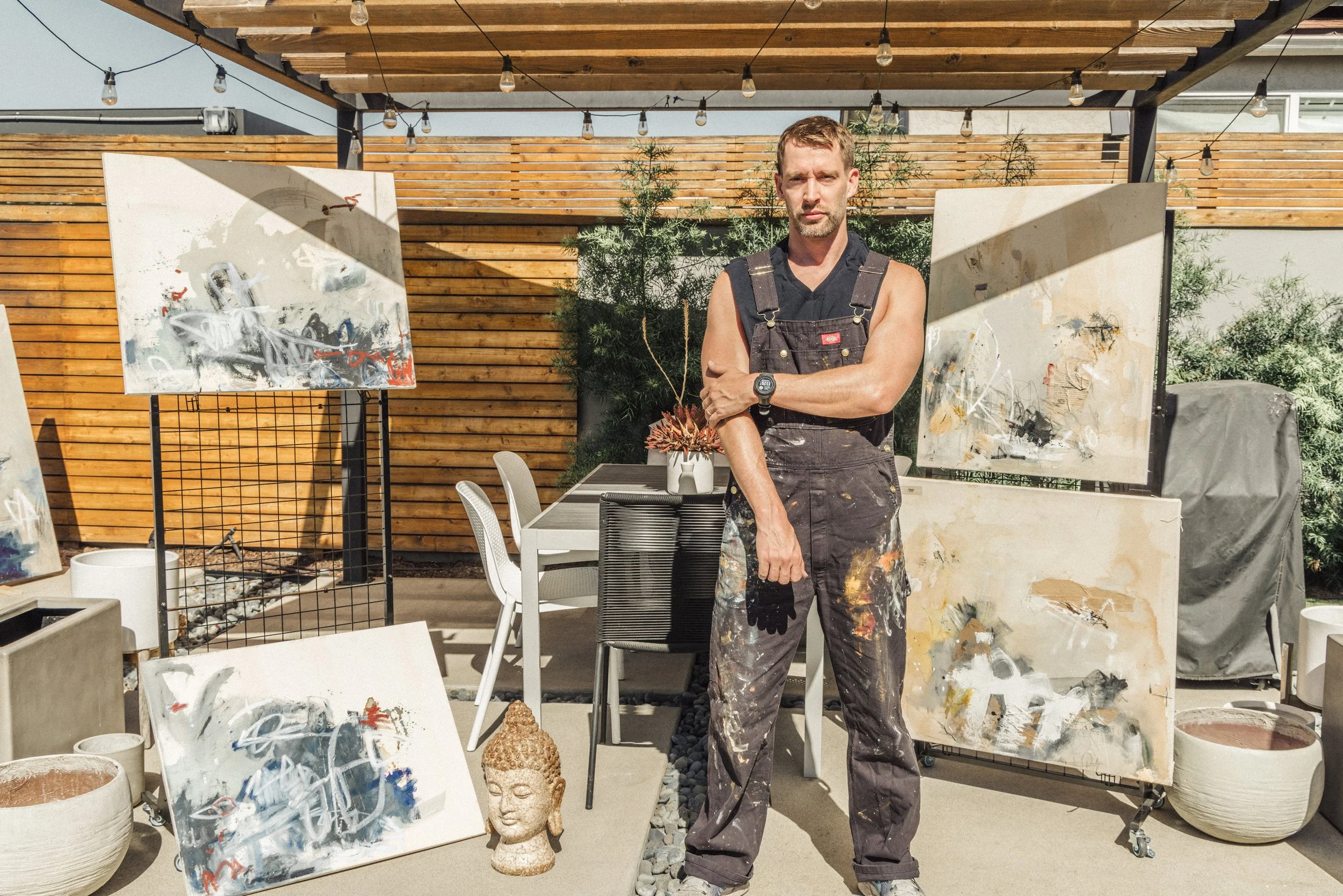
Samuel Perry - Portrait
ARTIST STATEMENT
“My creative process begins with raw, unprimed canvas, a surface that embodies both vulnerability and potential. I engage with the material in a visceral, almost ritualistic way: throwing it around, scuffing it up, stepping on it, and even using it to soak up spilt coffee. These actions imbue the canvas with a sense of history and texture, transforming it into a living, breathing foundation for my work.
Once the canvas is prepared, I staple it to a wall, where it becomes a stage for my exploration. Using drawing materials, I begin to loosely abstract places, ideas, or emotions drawn from my memory. At times, I let music guide my hand, allowing its rhythms and melodies to influence the flow of my marks and gestures.
The next phase involves loose, expressive paint strokes and additional layers of drawing materials. I build up the surface gradually, adding texture, marks, lines, colours, and shapes in a process that feels both intuitive and deliberate. Each layer contributes to the narrative of the piece, creating a rich, multidimensional dialogue between chaos and control, spontaneity and structure.
My work is a reflection of my belief that art is not just a visual experience but a tactile and emotional one. Through this layered approach, I aim to capture the complexity of human experience, moments of beauty, imperfection, and transformation. Each piece becomes a testament to the interplay between memory, emotion, and the physicality of the materials I use.”
— Samuel Perry

kissing in swimming pools © Samuel Perry
INTERVIEW
Please tell our readers about your background and what drew you to painting as a form of expression.
I'm a self-taught abstract artist based in San Diego with collectors around the world. I didn't come through a traditional art school path, which shaped the way I relate to materials and process more than anything else. I wasn't handed a language for making art; I had to find my own. Painting became the place where I could work something out that I couldn't put into words. It still is. There's an honesty in abstraction that I keep returning to. It doesn't let you hide behind a subject. Everything on the canvas is a decision, a feeling, a record of presence.
Was there a particular moment when you realised that making art was something you wanted to pursue seriously?
It was less a single moment and more a slow accumulation of evidence I couldn't ignore. Each of my series builds upon the last, and I started to feel that there was always another level I could reach. That forward momentum fuels my process. It keeps me sharp and alive as an artist. When I understood that this drive wasn't going anywhere, that it was actually accelerating, I stopped treating it as a side interest and started treating it as work.

who cares what we're missing © Samuel Perry

don't let it burn; don't let it fade © Samuel Perry
Your works are large-scale abstractions. What initially attracted you to abstraction, and what does this language allow you to communicate that other forms might not?
Abstraction gave me permission to be imprecise in a way that is, paradoxically, more honest. When you remove the literal subject, what remains is feeling, rhythm, tension: things that resist easy naming. I've always been drawn to what sits just beneath language, the place where memory and emotion haven't yet organised themselves into a coherent story. Abstraction lives there. A large-scale work pulls the viewer into that space physically. You can't stand back and intellectualise it. You have to be in it.
You work directly on raw, unprimed canvas and subject the material to physical actions such as throwing, scuffing, and stepping on it. What interests you about this process, and how does it shape the final image?
I'm constantly drawn to materials and surfaces that push back. I like to test what things can do beyond their usual limits. Raw canvas absorbs and holds differently than a primed surface; it carries the mark of everything that happens to it. When I throw pigment, when I drag or press or walk across it, I'm not decorating a surface. I'm in a conversation with it. The canvas becomes a record of time, of force, of accident and intention layered together. The final image isn't something I impose on the material; it's something we arrive at together.

i’m such a fool for you © Samuel Perry
Could you walk us through your creative process from start to finish? How does a painting begin, and how do you know when it is complete?
A painting usually begins with an atmosphere rather than an idea: a mood, a sound, something I'm carrying from the days before I enter the studio. I work with pigment sticks, graphite, and sometimes fragments of book pages layered onto raw canvas. The early stages are physical and often chaotic, with marks made quickly and decisions that open other decisions. Then I slow down and start to read what the canvas is saying back to me. The middle of a painting is the most uncertain part, when it could become anything or collapse entirely. I know it's complete when nothing I could add would deepen it, when the silence in the work feels full rather than empty.
Music, memory, and emotion play an important role in your practice. How do these elements influence the gestures, rhythms, and decisions you make while painting?
Music sets the interior tempo. What I'm listening to determines how fast I move, how much space I leave, and whether the marks are aggressive or searching. Memory works differently. It surfaces uninvited, often as texture or weight rather than image. I'm not illustrating anything specific, but something of lived experience always finds its way into the work. The sharp marks build into something that feels like memory or language trying to take shape, and that's the closest I can get to describing it. Emotion is the pressure behind all of it. I'm not painting about emotion; I'm painting from inside it.

star maps © Samuel Perry

star maps © Samuel Perry
Your work often explores tensions between chaos and control, structure and spontaneity. Why are these paradoxes central to your practice?
Because that tension is honest. I don't think we exist outside of it; this needs to make meaning out of disorder, to hold something still long enough to understand it. My favourite quote is, "Though the world can be cruel, I will choose not to be." That paradox lives in the work too. There is wildness in how I make marks, and there is real care in how I tend to them afterwards. Neither cancels the other out. The paintings that feel most alive to me are the ones where you can feel both forces operating at the same time.
Although your paintings are abstract, they seem to carry traces of personal history and lived experience. What do you hope viewers feel or reflect on when they encounter your work?
I hope they feel something before they think anything. I hope the work gives them access to something in themselves, a feeling they've carried but not yet named. For a long time, I measured my worth by how others saw my work and my choices. Struggle forced me to turn inward and build self-trust instead. My hope is that the work gives viewers permission to do something similar: to sit with what they feel without needing to immediately explain it. If someone walks away feeling less alone in their own complexity, that is more than enough for me.
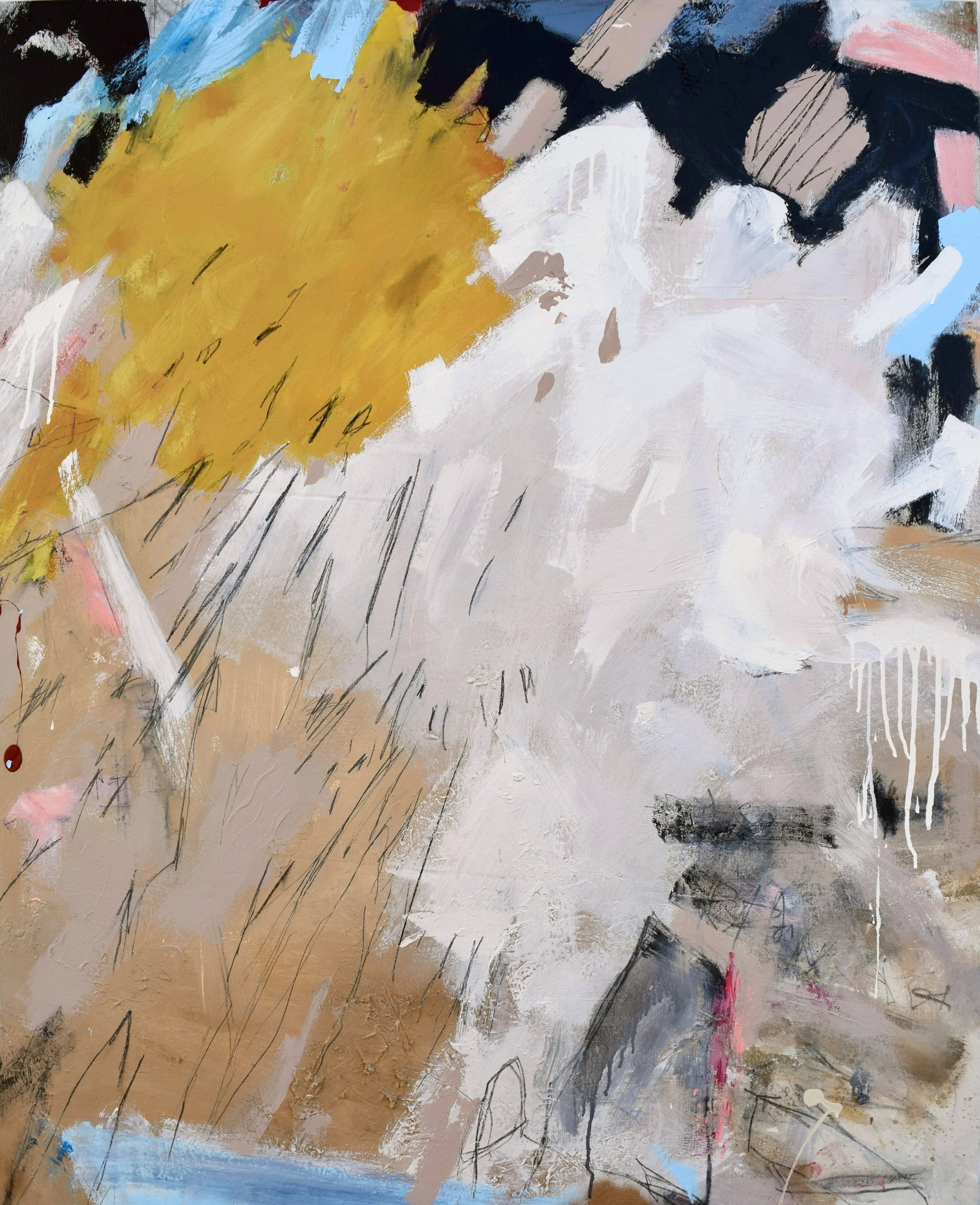
shooting arrows that never land © Samuel Perry
Your paintings are held in private collections and luxury hotels across the United States. How does it feel to see your work in these contexts, and has audience reception shaped your perspective in any way?
It's genuinely moving. The installation at the JW Marriott Dawn Beach in St. Maarten was a landmark moment for me. That project was curated by Mattie Lavelle of Curator and Co. and brought together artists from across the world alongside Caribbean talent. A piece in a setting like that meets a completely different audience, people who weren't necessarily seeking art, who encounter it unexpectedly during a transition in their lives. It has reminded me that the work doesn't need a traditional gallery context to function. It can reach someone in a hotel lobby and do something real. Reception has taught me to trust the work's ability to travel far beyond my original intentions.
Lastly, what directions are you currently exploring in the studio, and are there any upcoming exhibitions or projects you are particularly excited about?
Right now, I'm developing a new collection that continues to push the boundaries between mediums, thought, and feeling, deepening what I've been building across my series while opening up new questions I don't yet have answers to. I'm chasing opportunity and embracing every chance to show, to experiment, and to reach new audiences. There is always another level I can reach, and that belief is what keeps me in the studio.
Artist’s Talk
Al-Tiba9 Interviews is a curated promotional platform that offers artists the opportunity to articulate their vision and engage with our diverse international readership through insightful, published dialogues. Conducted by Mohamed Benhadj, founder and curator of Al-Tiba9, these interviews spotlight the artists’ creative journeys and introduce their work to the global contemporary art scene.
Through our extensive network of museums, galleries, art professionals, collectors, and art enthusiasts worldwide, Al-Tiba9 Interviews provides a meaningful stage for artists to expand their reach and strengthen their presence in the international art discourse.
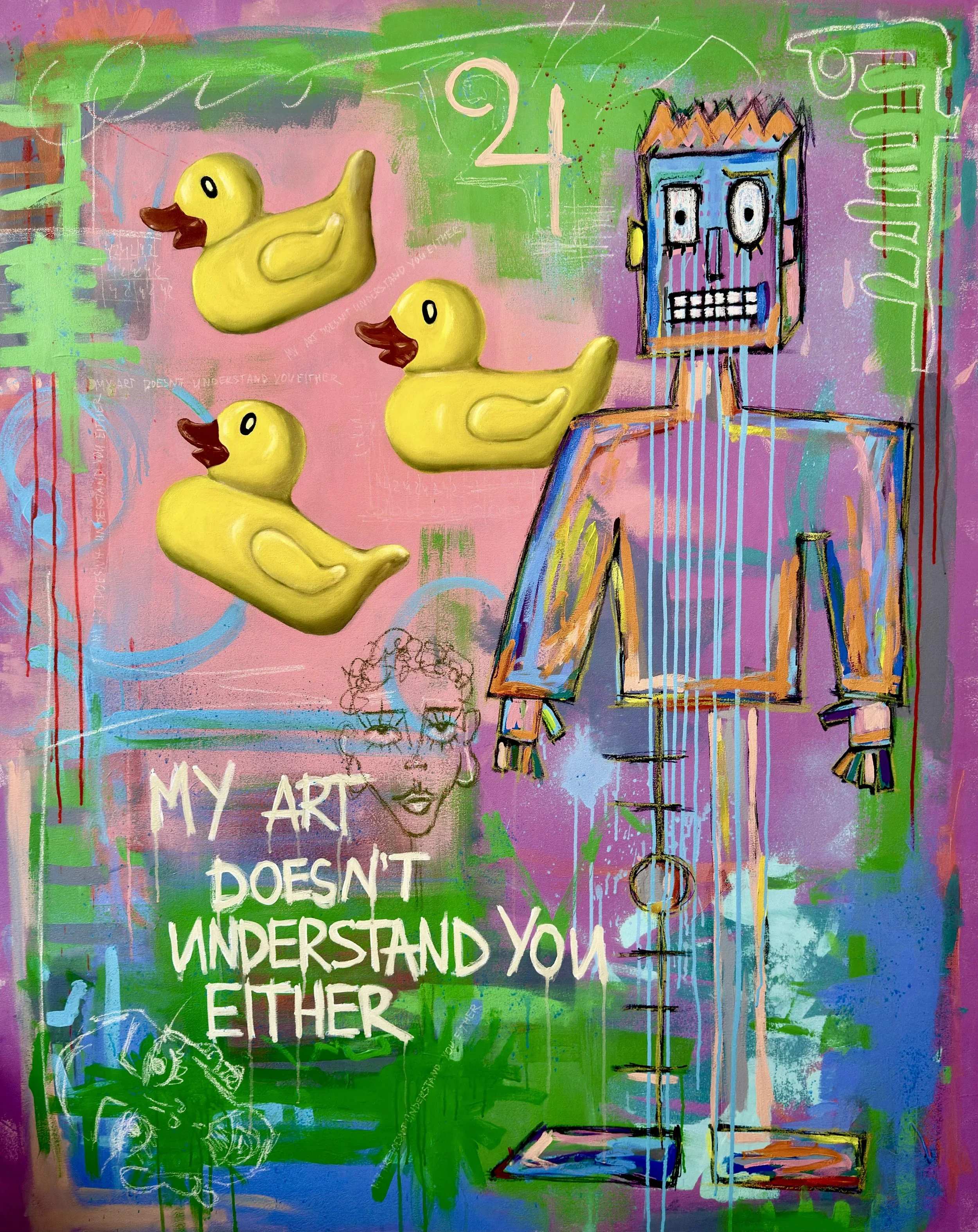



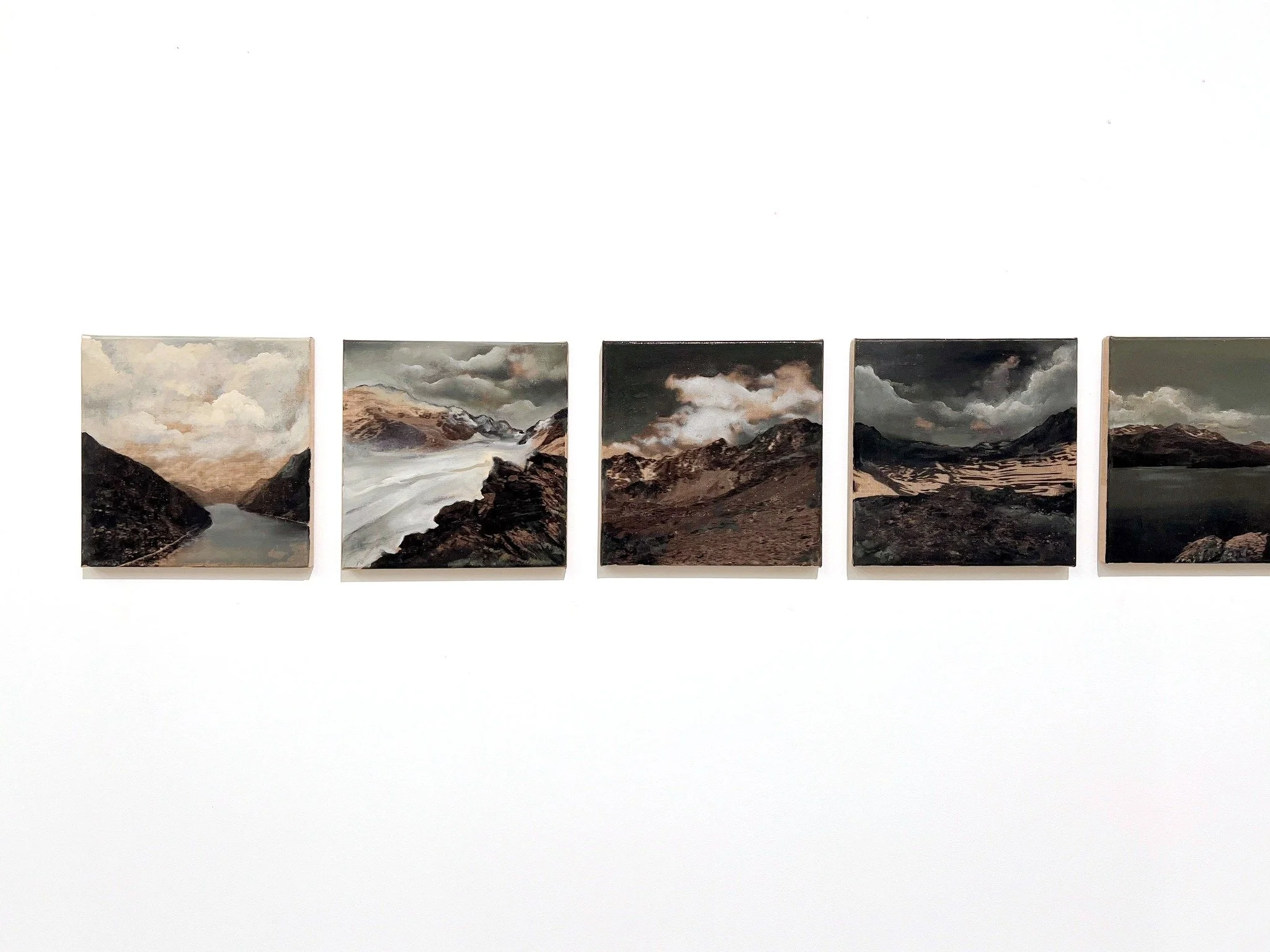
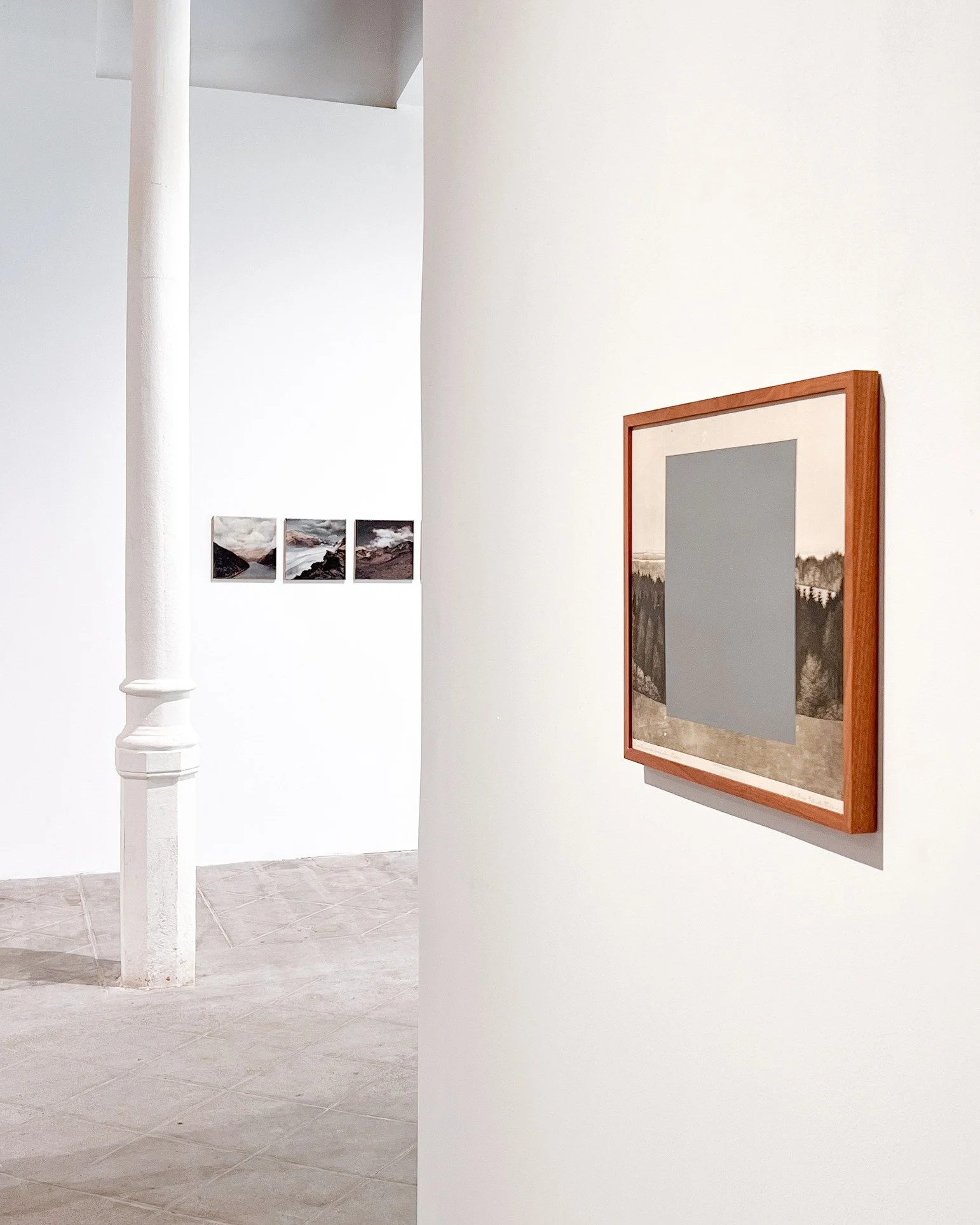
Nataraj von Allmen is a painter based in Switzerland. Often taking photographic material as a starting point, he weaves together landscapes, mythological archetypes, Christian symbolism, and contemporary socio-political themes into complex paintings. Oscillating between figuration and abstraction, his work investigates transformation, collective memory, and the human condition.