

10 Questions with Ivan Pili
Ivan Pili (Cagliari, 1976) is a hyperrealist painter whose work focuses on the human figure and the intimate atmospheres that arise in unspoken moments. Initially trained in music, his rhythmic sensitivity and disciplined approach have profoundly shaped the way he constructs light, time, and detail in his paintings. Over the years, his technique has evolved into a refined synthesis of rigorous realism and contemporary minimalism, giving rise to images suspended between introspection and visual restraint.
He has taken part in international art fairs and cultural events, including Art Basel Miami Week, Artexpo New York, Carrousel du Louvre in Paris, the Venice Biennale, and the Barcelona Biennale, consolidating his presence on the international art scene. His works are held in numerous private collections throughout Europe, the United States, the Middle East, and Asia.
Working from his studio in Sardinia, Pili continues to pursue a painterly research dedicated to minimal gestures, controlled chiaroscuro, and the slow construction of emotional tension, elements that belong as much to the portrayed figure as to the gaze of the viewer.
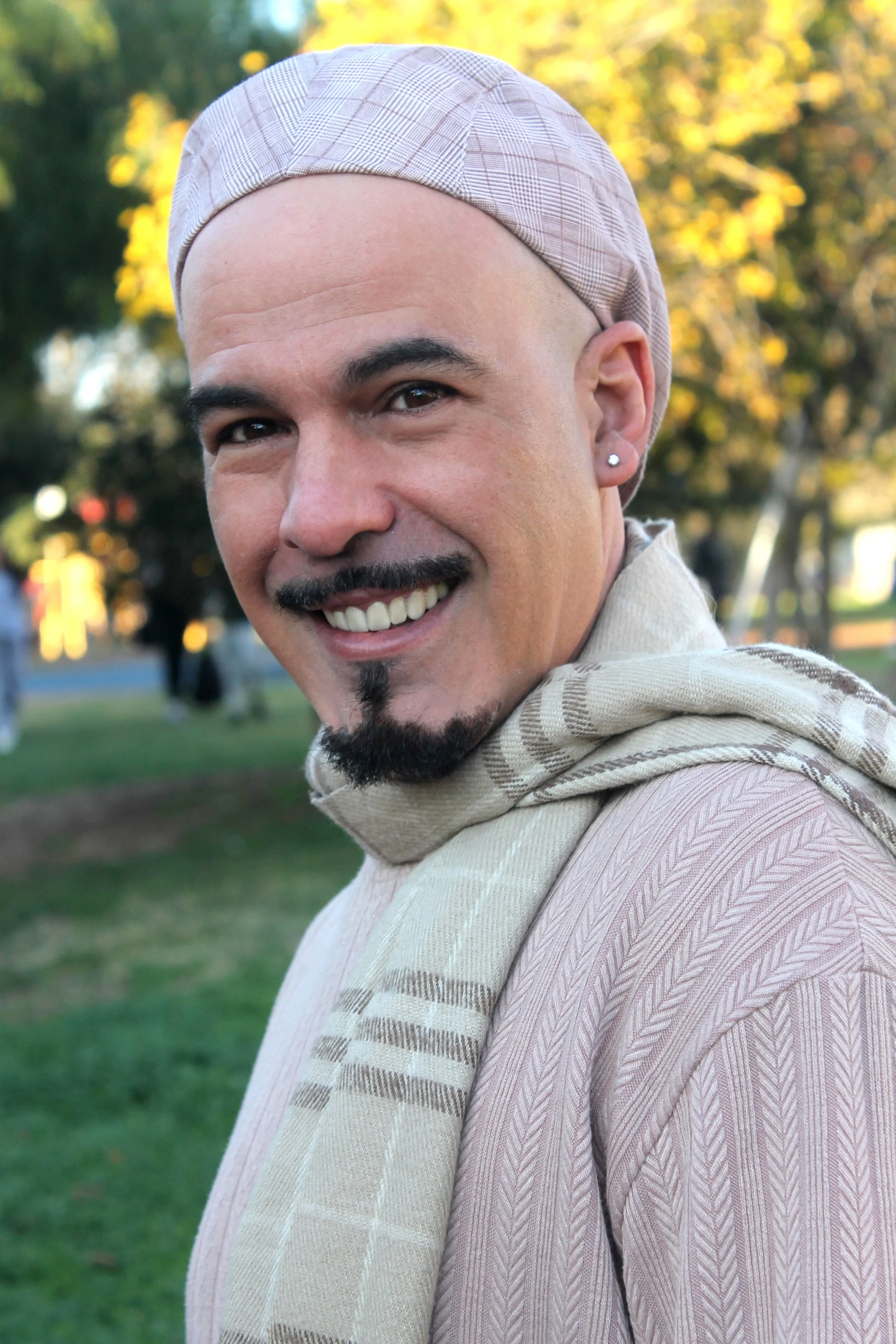
Ivan Pili - Portrait
ARTIST STATEMENT
Ivan Pili’s work is driven by the desire to capture the fragile emotional dimension found in suspended moments. Over the years, his pictorial language has shifted from a more descriptive realism to an essential vision in which the figure becomes a narrative device and light a psychological structure.
Pili works through a slow, layered methodology, using thin glazes and subtle contrasts to model the human body with precision that is never cold but deeply connected to the emotional perception of gesture. His aim is not to reveal everything but to evoke what remains outside the frame: waiting, concentration, the movement before the movement.
His recent series, such as Captured, Impressions, and Timeless, demonstrate an evolution toward a poetics of subtraction and suspension, where time appears to pause, and the figure becomes an emotional space rather than a representation. Each work is conceived as an open fragment, a scene that invites the viewer to complete it with their own sensitivity.
Don’t speak, Oil on canvas, 90x60 cm, 2023 © Ivan Pili
INTERVIEW
Let’s start with your background. You initially trained as a musician; how has your musical background influenced the way you approach painting today?
In music, I was a perfectionist, but not in a rigid way; that was simply how I listened. I could spend hours cleaning a sound, removing anything that disturbed it. I couldn’t stand “dirty” frequencies, the ones that make everything heavier. Over time, I realised something simple but important: sound is made of frequencies, and colour isn’t that different. When I paint, I find myself doing exactly what I did in the studio: looking for the right note, the nuance that holds everything together. My musical past isn’t a closed chapter; it’s the foundation of how I observe. Those tiny details most people don’t notice at first, to me, they change everything. And in painting, just like in music, I look for that moment where everything coexists in harmony: light and shadow, presence and silence.
What led you to choose hyperrealism as your main language, and how do you personally define it within your practice?
I didn’t choose hyperrealism; it simply fit me, the way a shirt fits before even trying it on. I’ve always looked at things with precision. I chase details others skip, and eventually, this way of seeing found its own language. Hyperrealism, for me, isn’t copying. It’s taking a fragment of reality and turning it into something of my own. I don’t need to reproduce everything: I select, I simplify, I keep only what truly vibrates. I would call it a filtered realism; I don’t imitate reality; I translate it through the way I feel it.

Chrysalis, Oil on canvas, 70x100 cm, 2022 © Ivan Pili

Stillness, Oil on canvas, 50x80 cm, 2025 © Ivan Pili
Your technique relies on thin, layered glazes and controlled chiaroscuro. Can you describe your process step by step, from the first draft to the final touches?
My process begins very simply: just a few marks, enough to understand where the figure will breathe. Then comes the slow part, the glazes. Thin, transparent layers that make the painting grow gradually. I almost never begin with a fixed colour; I prefer to be guided by what happens on the canvas. Sometimes I lower the lights in the room to understand how the scene wants to be illuminated. Every layer changes something: a warmer shadow, a growing volume, a softer edge. In the final steps, I work on micro-variations, tiny details you notice only later. If you stare long enough, they almost look like they’re staring back at you. I never follow a rigid sequence. I listen to what happens and let the figure come forward when it’s ready.
Many of your works focus on quiet, suspended moments. What attracts you to these “unspoken” situations and gestures?
I’m drawn to suspended moments because they don’t reveal everything. I like that instant when something is about to happen, or has just happened, without showing it. It’s like watching a still frame and imagining the story around it. The magic is in what you don’t see: the moment before, the moment after, a gesture that has just ended. Silence isn’t empty, it’s space. Everyone brings their own experience into it. A scene explained too clearly closes itself; a suspended one lets you breathe. I can suggest an emotion, but I don’t want to impose it. It’s the most honest way I know to tell a story.
How do you balance rigorous realism with the minimalism that characterises your recent series?
Realism and minimalism coexist naturally for me. In life, I’m an essential person, not because I practice Zen philosophy, but because I’m so distractible that if I have too many things around, I lose everything (keys included). That need for space naturally enters my painting, too. Realism gives the figure a true presence. Minimalism gives it air. One defines the form; the other reveals its truth. Sometimes a profile or a shoulder says more than a full figure. I focus on what strikes me and let the rest go.

Geisha, Oil on canvas, 60x80 cm, 2022 © Ivan Pili
Light seems to play a psychological role in your paintings. When you paint, do you think of light as a technical tool, an emotional structure, or both?
Light, for me, is part technique and part emotion. I think about direction and temperature, of course, but mostly I observe how light “arrives” on the figure and how it shapes the atmosphere. A harsh light tells everything. A softer one leaves room for interpretation. I love how light brushes a face or how a shadow shifts without warning. Small movements, but they define the mood of the scene. Light is a bridge between what I see and what I feel. It gives depth without needing too many explanations.
Your figures often evoke what is left outside the frame. How do you decide what to reveal and what to leave to the viewer’s imagination?
I ask myself a simple question: “What does this scene truly need to exist?” When I find the answer, the rest disappears. I like revealing only the moment that carries the tension: a profile, a shoulder, a thin cut of light. The rest belongs to the viewer. If I showed everything, the image would be closed; leaving something open lets each person complete the story. Suggesting instead of directing, that’s what I aim for. And whatever lies outside the frame belongs to whoever is looking.
You have exhibited internationally at major art events such as Art Basel Miami Week and the Venice Biennale. How has this global exposure influenced your work or the way you think about your audience?
Showing my work in major international events, in Miami, Venice, and elsewhere, gave me a completely new perspective on the audience. Every culture reads my images differently, sometimes in ways I never expected. But the most valuable part, for me, is the human side: the encounters. When someone tells me what they saw, and it aligns with what I felt while painting, something clicks. Moments like that show me which paths are worth exploring. As a former musician, I was used to an immediate, “live” audience. Now I work in solitude, and that’s a good thing. It gives me freedom. The dialogue happens in front of the painting, in silence. And what I leave to imagination is no longer mine: it belongs to anyone who looks. Visibility is important, but it reminded me of something essential: art finds its audience when it doesn’t try to force anything.

The man without face, Oil on canvas, 70x100 cm, 2022 © Ivan Pili
Collectors from Europe, Asia, and the Middle East have acquired your pieces. Have you noticed different ways in which people from various cultures respond to your subjects?
Yes, and it’s one of the most fascinating parts of working internationally. In Asia, people have an extraordinary sensitivity to subtle details. They notice nuances I almost forget I painted. In the Middle East, the unspoken is seen as something deeply intimate. In Europe, the reading is often more psychological; people focus on what the figure might be thinking or feeling. In the United States, reactions are immediate and spontaneous. They tell you openly what they feel, without filters, and it creates very sincere conversations. The moments that touch me most are when someone, from anywhere in the world, describes something exactly as I felt it. For a second, all cultural differences disappear. An essential image works everywhere because it doesn’t force a single interpretation.
Lastly, your newest series explores subtraction and suspension. Where is your research heading next? Are you continuing this process of reduction, or do you see new directions emerging?
Recently, I’ve noticed the surface of my work changing. Parts of my past reappear, a bit of texture, quicker gestures, impressions shaped by memory. It’s not a return to old habits, but a sedimentation: experiences resurfacing in a more mature way. The figure remains realistic, almost tangible, but what surrounds it feels like something resurfacing, a memory rather than a background. And that’s where I feel my direction moving. Reduction remains, but not to reach the “minimal.” It remains because it makes room for new atmospheres, new emotional tones I didn’t allow into my work before. I think my future lies here: a precise figure emerging from a background made not of scenery, but of experience. A suspension that belongs both to the gesture and to the surface. A path that unfolds on its own, step by step.
Artist’s Talk
Al-Tiba9 Interviews is a promotional platform for artists to articulate their vision and engage them with our diverse readership through a published art dialogue. The artists are interviewed by Mohamed Benhadj, the founder & curator of Al-Tiba9, to highlight their artistic careers and introduce them to the international contemporary art scene across our vast network of museums, galleries, art professionals, art dealers, collectors, and art lovers across the globe.



Brooklyn-Born Allan Gorman is a contemporary fine artist based in Jersey City, NJ, with a unique artistic vision cultivated by a distinguished commercial career that helped refine a sense of aesthetics and unwavering commitment to excellence that continues to define his artistic process to this day. His latest series of paintings is titled Imaginary Spaces.