
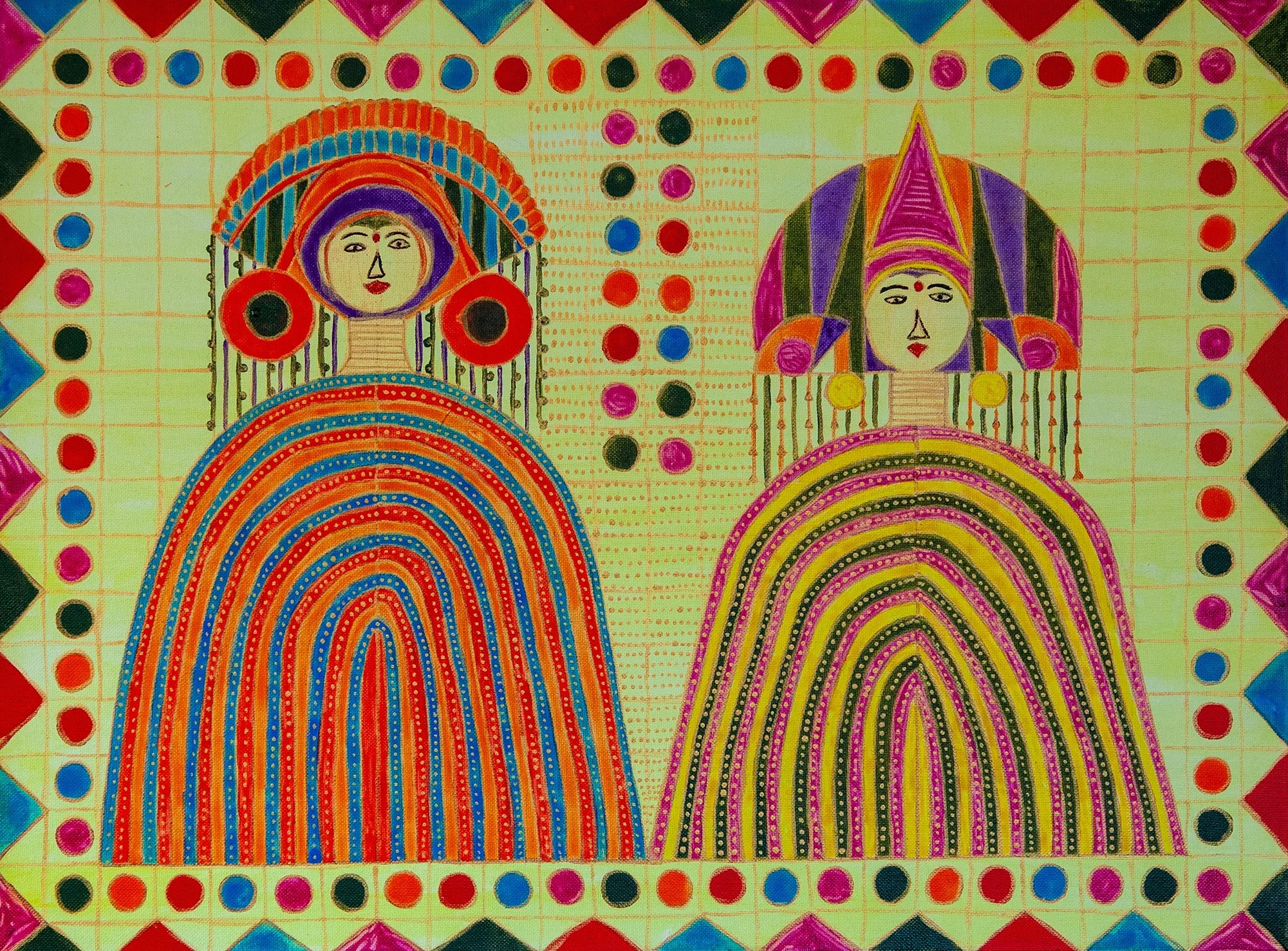
10 Questions with Indra Persad Milowe
Indra Persad Milowe, an internationally acclaimed artist accredited by the UNOFEX (Union of Excellence), has journeyed through life with a passion for art that has defined her path and captivated audiences globally. Born with an innate talent and a deep appreciation for the natural world, Indra's work reflects her rich cultural heritage and the vibrant stories of her homeland, Trinidad and Tobago.
Her artistic journey is a tapestry woven with threads of nature, still life, and design, all infused with personal narratives and cultural celebrations. Today, Indra's work is celebrated in prestigious galleries and public spaces worldwide, embodying the essence of her three guiding principles: planning, persistence, and publicity.
Indra's artistic journey began in her youth, nurtured by the encouragement of her high school art teacher, Mrs Helga Mohammed. Mrs Mohammed, a native of Madrid married to a Trinidadian, left an indelible mark on Indra's artistic perspective. On the first day of class, she inscribed on the blackboard: "Art is not just a painting hanging up on a wall; art is in every aspect of your daily life." This profound statement resonated with Indra, shaping her understanding of art's omnipresence.
During her high school years, Indra's talent blossomed. Her paintings were chosen for the school's yearbook for two consecutive years. At 15, she painted orchids on a branch, capturing nature's delicate beauty. At 16, she created a still life featuring an apple, a pear, and a bunch of grapes. These early works garnered incredible reviews, boosting her confidence and affirming her artistic potential.
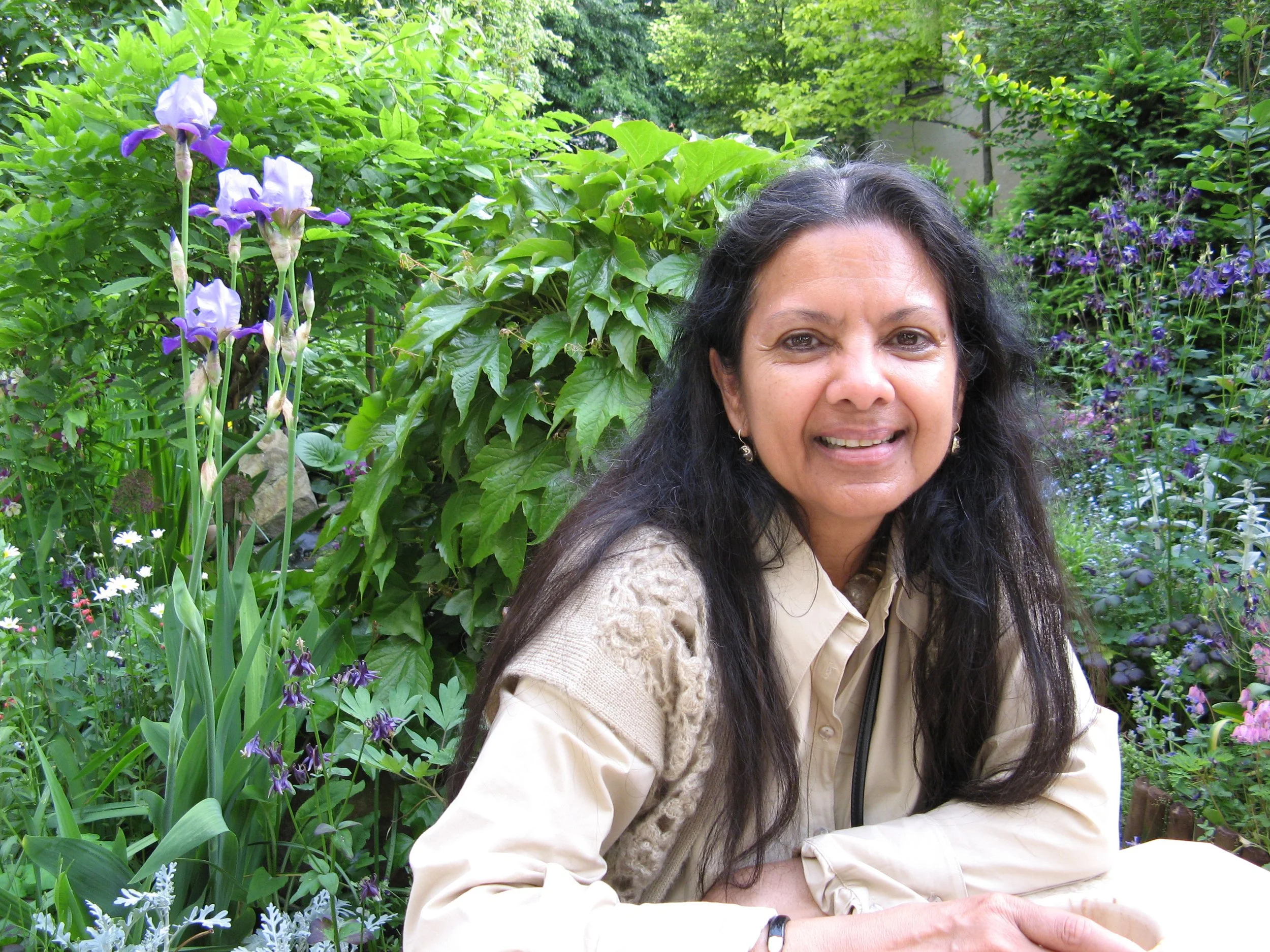
Indra Persad Milowe - Portrait
Despite her passion for art, Indra's career took a different path. She pursued nursing, a profession that took her across continents. She worked in England, Malta, Trinidad, and the United States, gaining diverse experiences through British Nurses Overseas. Her dedication to nursing spanned general, ophthalmic, and psychiatric specialities, with a significant portion of her career devoted to adult psychiatric medicine.
In April 2019, after decades of service in the medical field, Indra retired, embracing her lifelong dream of returning to art. Her retirement marked a new beginning, where she channelled her experiences and memories into her paintings. Her first piece in this new chapter was inspired by her grandmother's kitchen, a place filled with fond memories of cooking and cultural traditions. This painting became the cornerstone of her collection titled "Festivals and Folklore of Trinidad, West Indies." Indra's artwork is deeply personal, each piece telling a story from her life or the folklore of Trinidad. She meticulously plans her projects, often lying on her bed or sofa, gazing at the sky to find inspiration. With pencils and a sketchpad always at hand, she captures these visions, translating them into vibrant acrylic paintings on canvas.
Persistence is key to Indra's creative process. She refines her work continuously, aiming not for perfection but for a high peak of artistic expression. Her goal is to create pieces that resonate with viewers, bringing pleasure, education, and inspiration. To achieve this, she actively seeks publicity, ensuring her art reaches a wide audience through exhibitions, press reviews, and contributions to various galleries and public buildings.
Indra's work has gained international recognition, leading to numerous exhibitions and press releases. Her travels have significantly influenced her art, as seen in her collections like "Beautiful Ubud, Bali" and "My Journey to Morocco." Her time as an Artist-in-Residence in Ubud, Bali, allowed her to immerse herself in local traditions, attending festivals and ceremonies that enriched her artistic repertoire. In addition to her exhibitions, Indra's contributions to the Rotunda Gallery in the Red House, Port of Spain, and Art Impact International in Washington, D.C., showcase her commitment to sharing her culture and stories with the world. Her participation in the Singapore International Festival of Arts (SIFA 2023) further highlighted her global presence.
Indra's recent residency at Mauser Eco House in Costa Rica culminated in the creation of a 6 x 6-foot mural titled "Lutchmie" and the donation of a painting to a local restaurant. Her work in Salem, MA, where she painted murals and public art exhibitions, earned her recognition and two grants from the Public Art Commission.
Indra Persad Milowe continues to inspire with her dedication to art and culture. Her journey from a young artist with a dream to an internationally acclaimed figure is a testament to her planning, persistence, and publicity. Through her art, Indra not only tells her own story but also brings the vibrant folklore and festivals of Trinidad and Tobago to life, connecting with audiences worldwide.
© Indra Persad Milowe
INTERVIEW
Let's start from the beginning. Your artistic journey began very young. How did those early experiences in Trinidad and Tobago shape the artist you are today?
My artistic journey began in my youth, nurtured by the encouragement of my high school art teacher, Mrs Helga Mohammed. Mrs Mohammed, a native of Madrid, married to a Trinidadian, left an indelible mark on my artistic perspective. On the first day of class, she inscribed on the blackboard: "Art is not just a painting hanging up on a wall, art is in every aspect of your daily life." This profound statement resonated with me, shaping my understanding of art's omnipresence. During my high school years, my talent blossomed. My paintings were chosen for the school's yearbook for two consecutive years. At 15, I painted orchids on a branch, capturing nature's delicate beauty. At 16, I created a still life featuring an apple, a pear, and a bunch of grapes. These early works garnered incredible reviews, boosting my confidence and affirming my artistic potential.
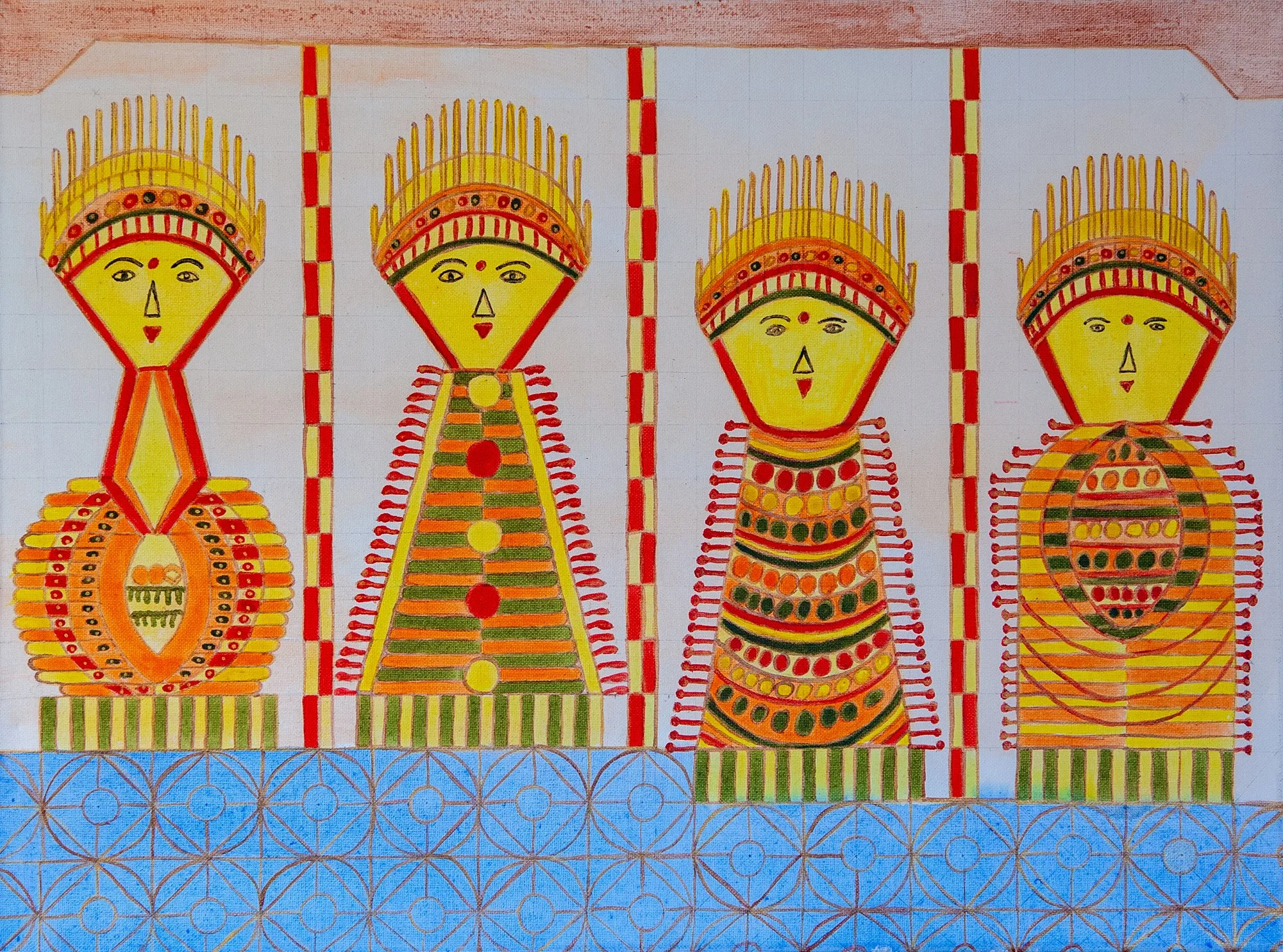
© Indra Persad Milowe
Despite my passion for art, my career took a different path. I pursued nursing, a profession that took me across continents. I worked in England, Malta, Trinidad, and the United States. Only after retirement from that profession did I reignite my youthful desire to be a successful artist. Where one road ends, a new one begins!
In April 2019, I retired, and I read Ruth Reichl's article about her favourite kitchen that she ever cooked in. For me, I thought about all the kitchens that I had cooked in, and my favourite was my grandmother's kitchen. She cooked withthree chulhas (clay wood-burning stoves) that required a lot of skill to manipulate the pieces of wood, to keep the flameburning correctly. To become an "eligible bride," one of the requirements was to be able to puff a paratha (a flat Indian circular bread) with the right texture and consistency. After mastering that skill, you were allowed to place "your handprint" on her kitchen wall; it was like a graduation. That kitchen brought up a lot of memories of different foods that were cooked for different festivals. Hence, my first painting was of my grandmother's kitchen. As I began to plan out this painting, I remembered the smell of freshly made laddos (sweet chickpea balls), which was a favourite dessert of ours and of Lord Ganesh. Lord Ganesh is the Remover of all Obstacles and the first Hindu deity to be worshipped in all Festivals and Ceremonies. Therefore, my second painting was Ganesh Chaturthi. My Agee's (paternal grandmother) mantra was: "Eat your dahl and roti, and God will make a way." अपनी दाल रोटी खाओ और भगवान रास्ता दे (apanee daal rotee khao aur bhagavaan raasta dega).
You spent many years working as a nurse across several countries. How have those experiences influenced the themes or emotions in your artwork?
I left Trinidad at age 18 and am now seventy-three years old. I wanted to focus my artwork on childhood memories and growing up on a unique multicultural island. Weekends and holidays were spent at my grandparents' house. There was a Hindu temple on their street, which was the community hub. There is so much that I thought I had forgotten, but the memories streamed back for my series: Festivals and Folklore of Trinidad, West Indies.
I was an "Artist in Residence" at Mauser Eco House in Parrita, Costa Rica and Air Ubud, Ubud, Bali, Indonesia twice. I attended the Singapore International Festival of Arts (SIFA) in May/June 2023. I have travelled extensively around the world, including Morocco and 60 cities throughout Europe, North & South America and Asia, hence my two other Art Collections: Beautiful Ubud, Bali and My Journey to Morocco.
Acrylic on canvas is central to your practice. What draws you to this medium, and how has it evolved with your storytelling over time?
Multicolour & gold acrylic paints on canvas are the easiest to work with to create an impact.
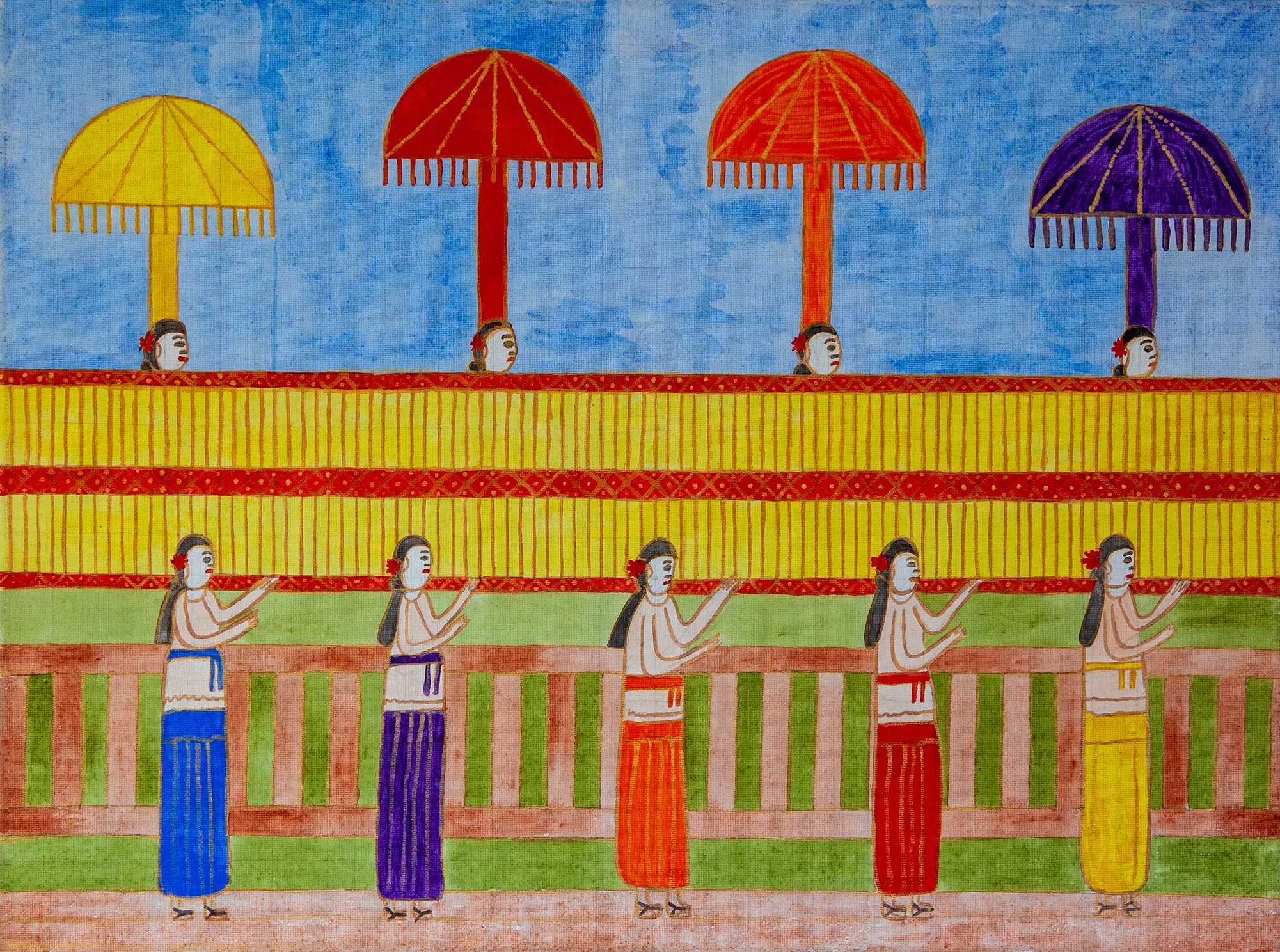
© Indra Persad Milowe
© Indra Persad Milowe
You often say planning is essential to your process. Can you walk us through how an idea moves from inspiration to sketch to finished painting?
My painting enhances my creativity both on the canvas and in other aspects of my life! It also has an uplifting effect on my mental and emotional well-being.
Most of my ideas come to me when I am lying in my bed, so I keep a sketchbook and pen next to it. I sketch my thoughts before putting them onto my canvas. I also do a lot of research before I start sketching.
Much of your work celebrates nature, folklore, and cultural memory. What recurring themes feel most important for you to express?
I want to capture the incredible cultural history of my subjects. It is like I am photographing timeless scenes that live on in a society's collective memory. I wish to inform and inspire, especially the young people, so they will want to know more of their living culture and thus, preserve it.
Your paintings often come from personal stories or scenes from your travels. How do you decide which moments or memories become artworks?
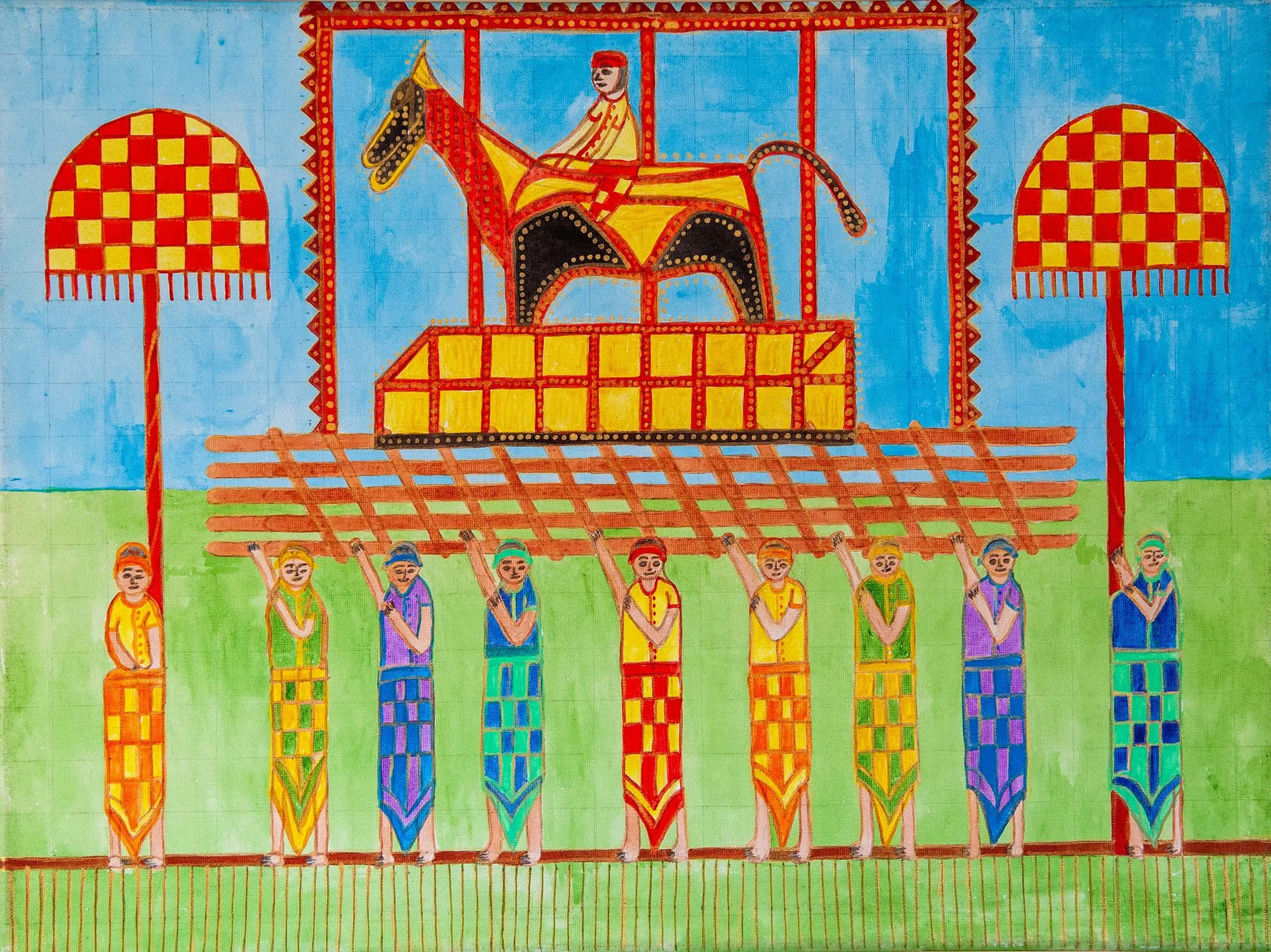
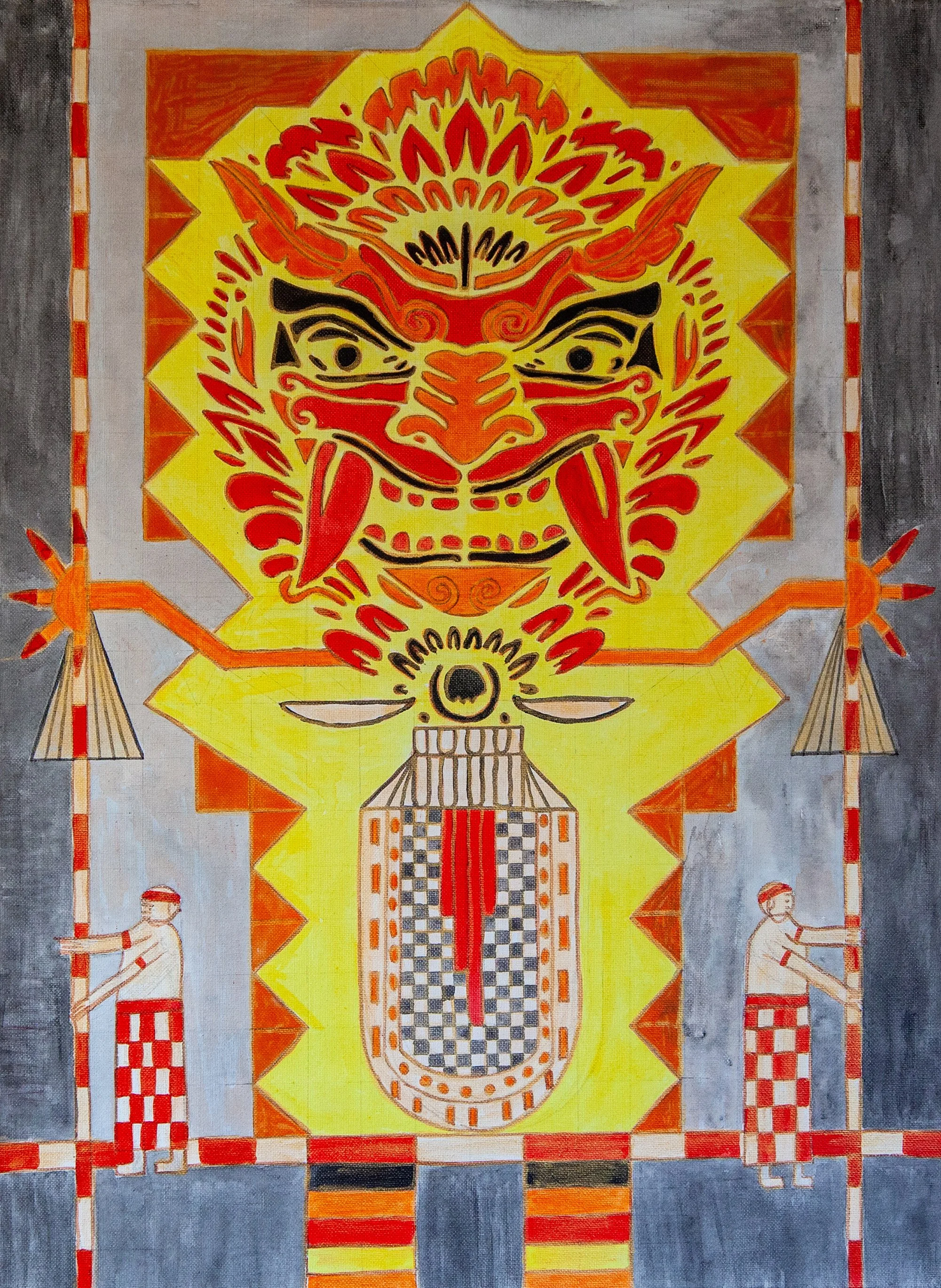
These sights catch the artist's eye! While travelling in Bali, you cannot miss: candi bentar, a classical Balinese gateway.They are commonly found at the entrance of religious compounds. A candi structure refers to its stone or brick construction, and it means such a structure is split perfectly in two. Both halves are symmetrical and have a passage in the centre for people to walk through.
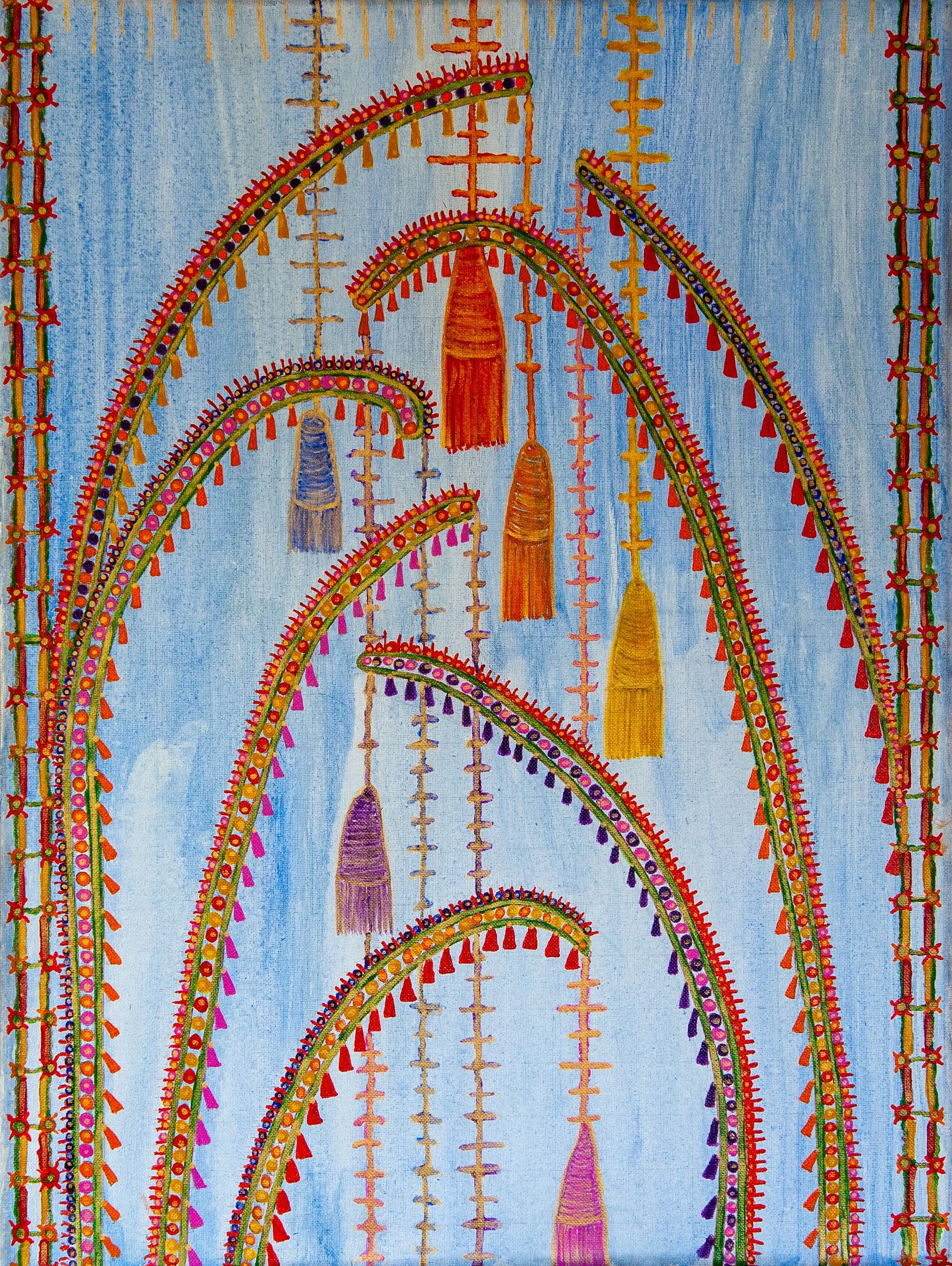
Penjors Adorn the Sky: A ubiquitous cultural attribute you would mostly see during Galungan, which is a festival held every 210 days in Bali. Prayers (puja) honour ancestors (pitrus) and other people who have passed away, thanking them for their contributions. Tall curved poles of bamboo adorned with decorations are displayed in front of virtually every building in Bali.
Female Procession Holding a Cloth During the Odalan Festival: An Odalan is a Balinese Village Temple Festival. It is an occasion when the Hindu village community comes together, offering refreshments and entertainment, and to celebrate Balinese Hindu Heritage and performance arts.
Your pieces aim to bring pleasure, education, and inspiration. What do you hope viewers take away when they encounter your work?
I hope to inspire the viewers of my art so that they will take a deeper interest in the diverse and fascinating cultures of our world!
© Indra Persad Milowe
© Indra Persad Milowe
You've created murals, exhibited internationally, and completed multiple residencies. How have these public-facing projects shaped your growth as an artist?
I have received so much positive feedback, and I know that my efforts are much appreciated! This, in turn, inspires me to continue to paint and to exhibit my art. I am grateful to have inspired people and to have given them joy from viewing my paintings. It is truly a two-way conversation!
Travel remains a major source of inspiration for you. How do places like Bali, Morocco, or Costa Rica influence the colours, forms, or narratives in your art?
Different cultures are full of rich and fascinating music, visual arts, dance, festivals, ceremonies, and customs. People often adorn themselves in beautiful, colourful clothing, such as the sarong and kabaya women wear in Bali, while the men there also wear sarongs and sport colourful head coverings called udengs. And then there are the women wearing long kaftans and the men in jillabas in Morocco. Oh my! That is endless delight for the artist's eye and paintbrush!
Lastly, what new projects or themes are you excited to explore as you continue sharing the stories of Trinidad and Tobago with the world?
I love to highlight the unique contribution that Trinidad & Tobago has made to music, especially calypso and the steel pan. Traditional dances like the limbo and modern soca still thrive on these islands! Colourful costume designs may be seen at the annual Carnival each February on mardi gras.
Artist’s Talk
Al-Tiba9 Interviews is a promotional platform for artists to articulate their vision and engage them with our diverse readership through a published art dialogue. The artists are interviewed by Mohamed Benhadj, the founder & curator of Al-Tiba9, to highlight their artistic careers and introduce them to the international contemporary art scene across our vast network of museums, galleries, art professionals, art dealers, collectors, and art lovers across the globe.



Brooklyn-Born Allan Gorman is a contemporary fine artist based in Jersey City, NJ, with a unique artistic vision cultivated by a distinguished commercial career that helped refine a sense of aesthetics and unwavering commitment to excellence that continues to define his artistic process to this day. His latest series of paintings is titled Imaginary Spaces.