
10 Questions with Hansa Sethi
Hansa Sethi is a contemporary Indian artist whose practice centres on the inner landscapes of memory, emotion, and silence. Working primarily with abstraction, she builds her compositions through layered textures, shifting tones, and symbolic forms that echo the complexities of lived experience.
Her process is intuitive, often beginning with a feeling rather than an image, allowing each work to emerge gradually through instinct and atmosphere. Sethi’s paintings navigate the subtle space between pain and clarity, vulnerability and resilience, revealing what is often felt but rarely spoken.
Based in India, she continues to develop a visual language that is deeply personal yet universally resonant, creating works that invite quiet reflection rather than fixed interpretation.
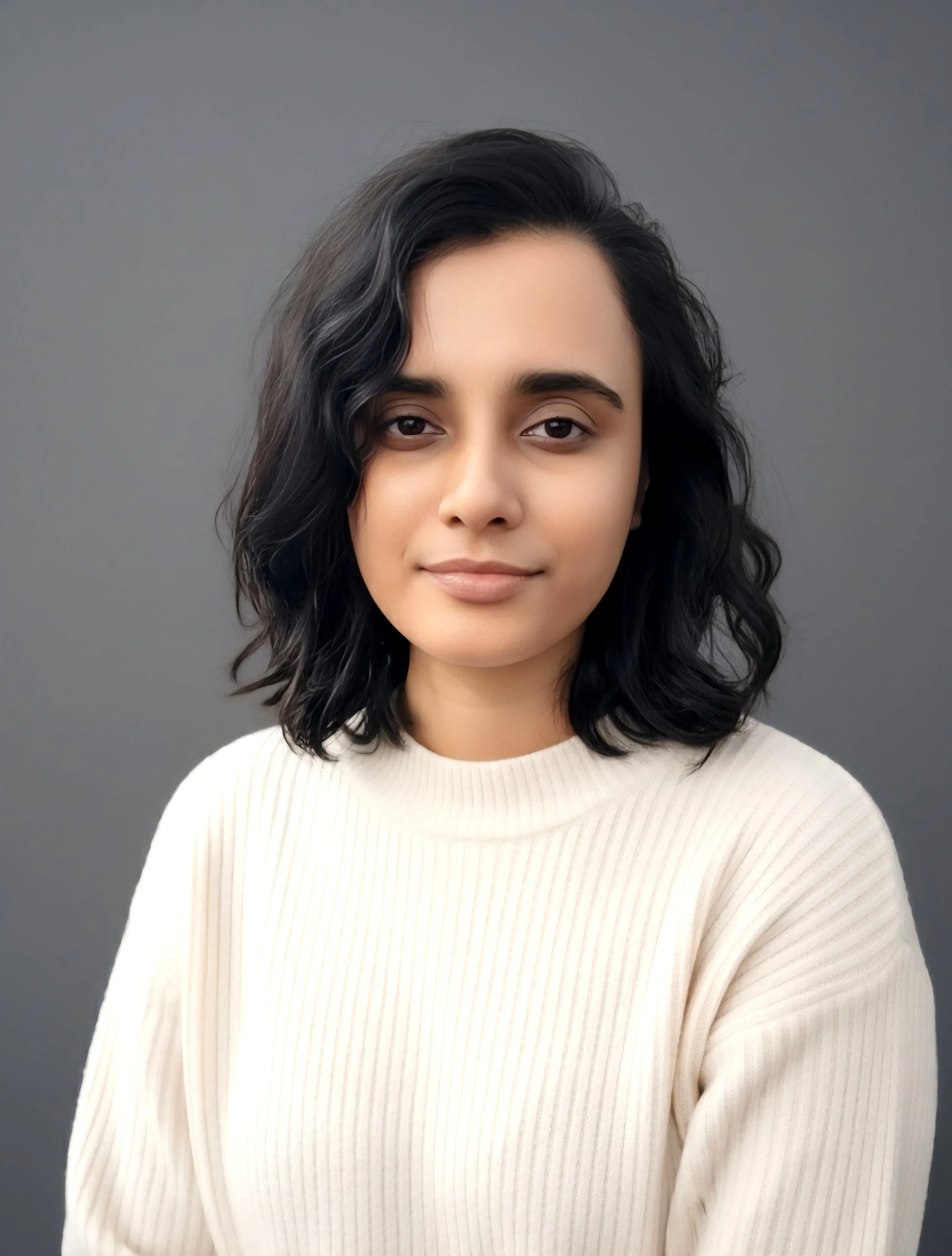
Hansa Sethi - Portrait
ARTIST STATEMENT
Hansa Sethi’s practice emerges from a life shaped by early creative curiosity and an adolescence marked by mental turmoil. She grew up drawing, painting, and shaping small sculptures, but from the age of twelve, her relationship with art became an unpredictable rhythm of pull and release.
In 2024, during a period of severe depression, painting returned to her not as a choice but as survival. Colours became the first things she could feel again. What began as a quiet, private act of grounding slowly reopened the world to her. By 2025, encouraged by her brother, she began submitting her work to competitions and exhibitions, confronting long-held beliefs that she was “nothing” in the eyes of society or her own illness.
Her practice now reflects that reclamation. Through abstraction, layered textures, and emotional atmospheres, Sethi explores the silent terrains of mental health, vulnerability, and recovery. Her work does not seek perfection or clarity; it seeks honesty. Each piece is a negotiation between pain and resilience, a record of disappearing and returning to oneself.
For Sethi, art is not just expression, it is evidence that a soul can be lost, recovered, and reshaped into something stronger.
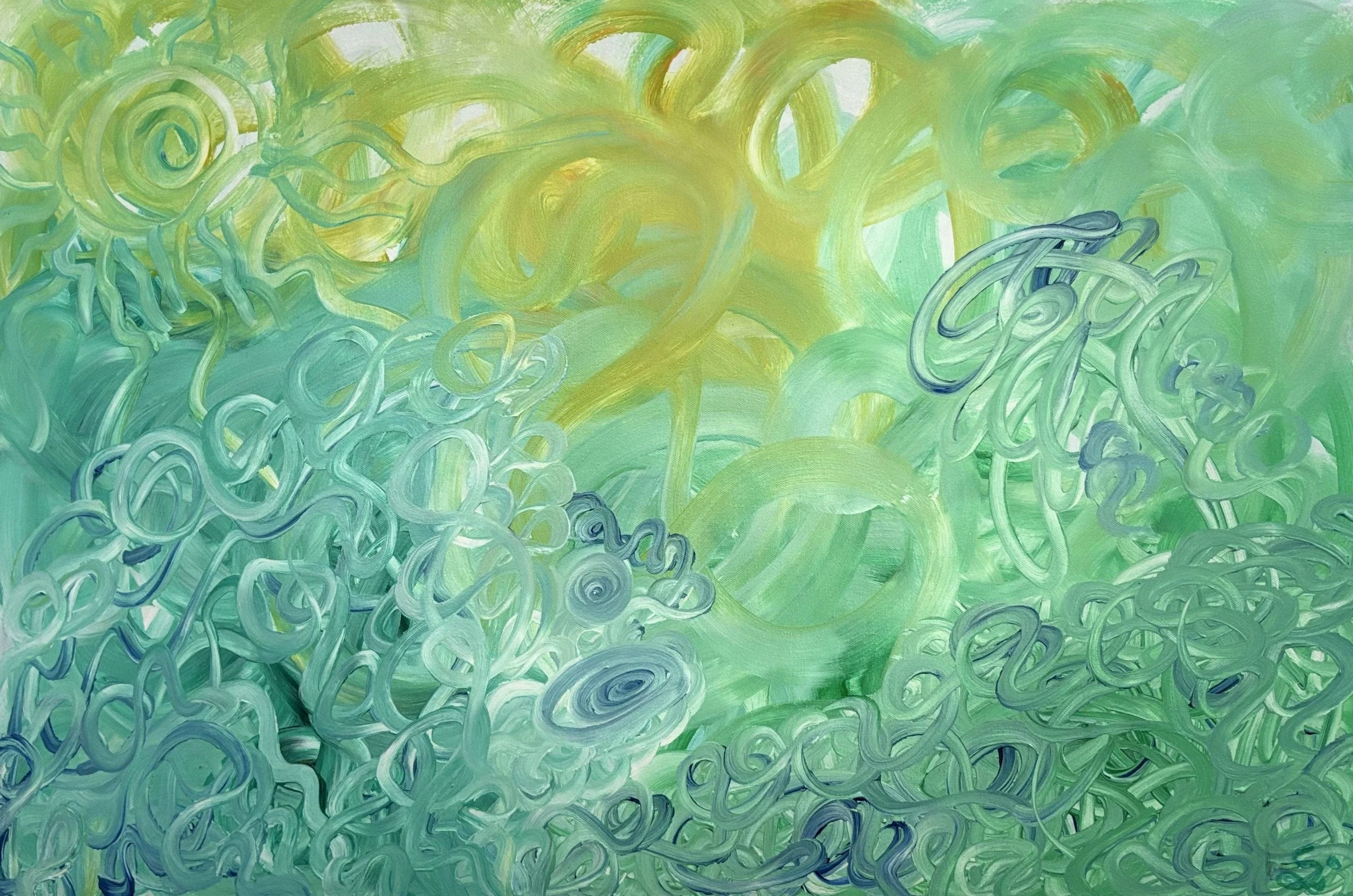
Begin Again, Acrylic On Canvas, 24x36x1.5 Inches, 2025 © Hansa Sethi
INTERVIEW
First of all, can you share a bit about your background, your early relationship with art, and how those childhood experiences shaped the artist you are today?
My early years were marked by constant shifts. While my mother was posted outside our city, I grew up with my grandmother, whose bedtime stories opened my imagination long before I had words for it. In those years, I was expressive and confident, living in a world shaped by narrative and play. When I returned to live with my parents around the age of four, the atmosphere changed sharply. The household was turbulent, and my mother often struggled emotionally. The outspoken child I had been slowly withdrew, and that silence settled into me for a long time. Art became the one enduring thread. Many of my relatives were artists, and creativity moved through the house naturally. My mother encouraged it in her own way, she even let me draw on the walls. Those small freedoms taught me early that expression does not require permission; it only needs space. These early contrasts, imagination and silence, freedom and tension, formed the emotional ground on which my practice now stands.
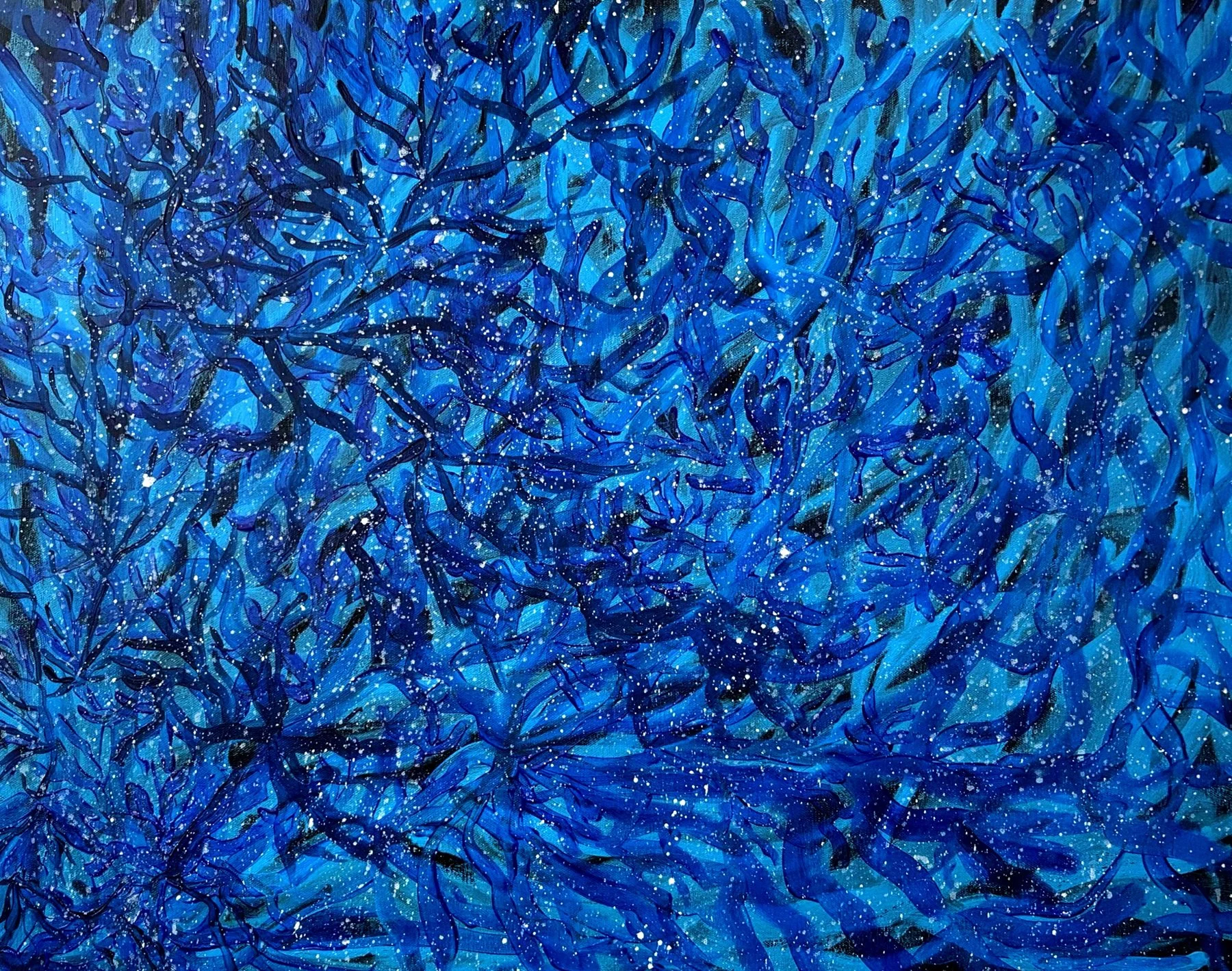
Cold Bloom, Acrylic On Canvas, 24x30x1.5 Inches, 2025 © Hansa Sethi
Your work is rooted in abstract painting. What draws you to this medium as a way to explore memory, emotion, and silence?
As a child, whenever I drew something unfamiliar, I was asked, “What is this?” For years, that question pushed me toward more recognisable forms, even though I was instinctively drawn to fractured shapes and dissolving figures. In 2025, during a difficult period when I stepped away from my banking career, abstraction surfaced naturally. I began painting with complete honesty, emotion first, structure later. I often started with a figure, only to break it apart or layer over it until it aligned with my internal state. Abstraction became my language because it allows me to express memory, silence, and emotional turbulence without confining them to fixed outlines. It offers the most truthful space for what cannot always be verbalised.
You’ve described your process as intuitive. How does a painting usually begin for you, and how do you know when a piece is finished?
My internal rhythm changes constantly. Some days feel fast and overwhelming; others move slowly. My starting point depends entirely on that inner pace. When my emotions move too quickly, I begin with small sketches using markers, pastels, or gel pens. They help me focus before transitioning to a larger composition. Once the rhythm settles, the work naturally expands into canvas. A piece is finished when it no longer asks anything of me, when the internal urgency quiets. That moment of stillness tells me the work has reached its truth.

Not Anymore, Acrylic And Modeling Paste On Canvas, 24x36x1.5 Inches, 2025 © Hansa Sethi

Auric Memory, Acrylic and Glue On Canvas, 24x36x1.5 Inches, 2025 © Hansa Sethi
Much of your practice emerges from your experiences with mental health. How has painting supported you through vulnerability or recovery?
Painting first appeared as an anchor. It allowed sadness, confusion, and numbness to surface in a form I could understand and release. Each canvas carried a moment I could not articulate. With time, this relationship transformed. I no longer paint only to cope; I paint with intention and clarity. My series *The Circus of Mind* reflects that shift. It moves from raw expression toward a focused, conceptual inquiry shaped by years of internal work. Art has held me through vulnerability, but it has also rebuilt me. It remains a space of healing and growth.
Your compositions often build through layered textures and shifting tones. What materials or techniques do you use to create that sense of depth?
I allow materials to respond directly to the emotional weight of the work. While acrylic is my primary medium, I often build surfaces using modelling paste, gel mediums, pouring mediums, and other textural elements when the painting calls for more physical presence. In some works, emotion demands unconventional materials. For instance, in After the Rot, I incorporated dried coriander and chillies to convey a sense of decay and heaviness, textures that translated the internal state more accurately than paint alone. I frequently construct the surface in multiple layers, moving between smooth passages and sharply textured areas. Texture, for me, is not decorative. It is a way to articulate the density, turbulence, and layered nature of the mind, an external form for emotions that resist being flattened.
Tell us about your colour palette. How do you choose the colours in your paintings? Do they have meaning or symbology?
My colours arise directly from my emotional landscape. For a long time, darker tones dominated because that is where I lived mentally. Recently, lighter shades have begun entering, even white, which once felt empty, now brings balance. I don’t assign rigid symbolic meanings or follow a fixed palette. Colour evolves with me and reflects the psychological space I inhabit while creating the work.

I Have Grown, Acrylic And Modeling Paste On Canvas, 24x36x1.5 Inches, 2025 © Hansa Sethi

My Bad, Acrylic On Canvas, 36x48x1 in, 2025 © Hansa Sethi
You speak of navigating the space between pain and clarity. How do those contrasts appear in your work?
A year ago, the world felt blurred and unstable, spirals, thorns, and distortions everywhere. That state shaped my compositions through tangled lines, fractured shapes, and visual tension. Recently, something quieter has emerged. The darkness has not disappeared, but it now coexists with light. My canvases still hold tension, but they also contain softness. I am slowly moving out of older patterns, and the work reflects this ongoing shift. Pain and clarity no longer oppose each other; they intersect and reshape one another.
Since beginning to share your work publicly in 2025, what has the reception been like? Has it influenced how you see your practice?
I never expected the response I received. For a long time, appreciation was rare, and criticism arrived much faster than encouragement. I didn’t realise I carried something worth sharing until my brother suggested that I take my work online. When I finally appeared in public spaces, the reception surprised me. I couldn’t believe how openly people engaged with my paintings, especially as a new artist stepping into the public space for the first time. That experience changed something in me. I felt seen, not in spite of my journey but because of it. The numbness I once viewed as a burden now feels like a perspective that allows me to see the world differently. The recognition, from strangers, collectors, and curators, has been humbling and transformative. It reminded me that the world holds far more generosity than I expected, and it strengthened my belief in my path as an artist.

Thank You For Coming, Acrylic And Modeling Paste On Canvas, 36x24x1.5 Inches, 2025 © Hansa Sethi
Your paintings invite reflection rather than fixed interpretation. What do you hope viewers experience when spending time with your work?
People carry more than they reveal: complexity, pressure, and emotional weight. Because of that, I avoid imposing a single narrative. I want viewers to enter the work from their own experiences. My paintings function as open spaces. They shift with perspective, mood, and time. That is why I keep descriptions minimal; I want the work to breathe and allow viewers to find their own reflection in it. I offer an invitation, not an instruction.
Lastly, what themes or projects are you interested in exploring as you continue developing your visual language?
The mind, its fragility, its unpredictability, and its shifting architecture continue to guide my practice. I do not impose rigid themes because my inner world refuses stillness. I prefer to follow its movement and let the work evolve in response. People, nature, and the unspoken psychological tensions within ordinary moments keep drawing me in. My years in the corporate world offered an unexpected education in human complexity, and those observations still echo through my compositions. What remains constant is my devotion to learning. Every shift, every pause, every fragment teaches me something. My visual language will keep unfolding through emotional density, psychological terrain, resilience, and the quiet conversation between chaos and clarity. I feel myself moving deeper into psychological inquiry, and I know that direction will continue to shape my future work.
Artist’s Talk
Al-Tiba9 Interviews is a promotional platform for artists to articulate their vision and engage them with our diverse readership through a published art dialogue. The artists are interviewed by Mohamed Benhadj, the founder & curator of Al-Tiba9, to highlight their artistic careers and introduce them to the international contemporary art scene across our vast network of museums, galleries, art professionals, art dealers, collectors, and art lovers across the globe.



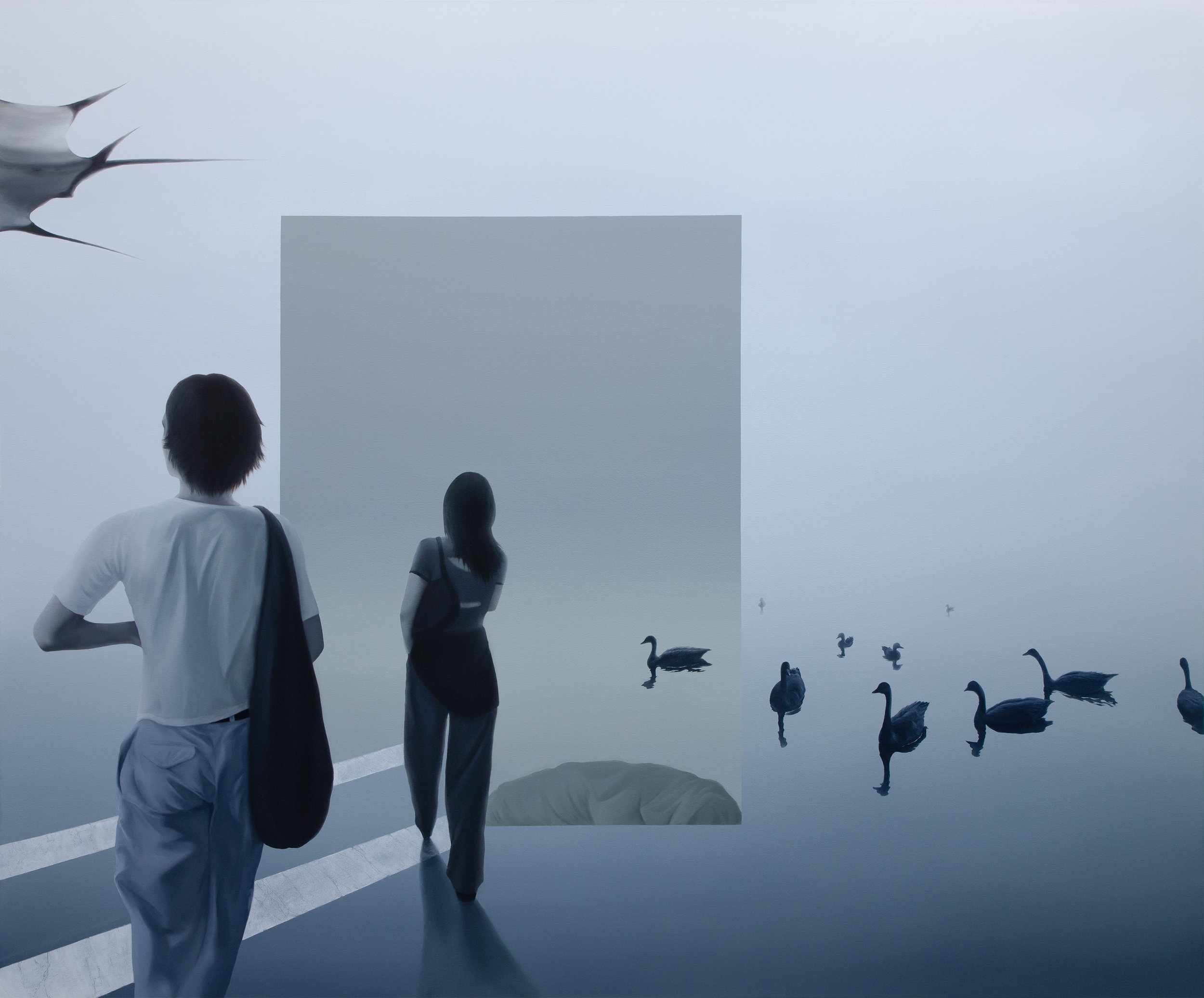
Brooklyn-Born Allan Gorman is a contemporary fine artist based in Jersey City, NJ, with a unique artistic vision cultivated by a distinguished commercial career that helped refine a sense of aesthetics and unwavering commitment to excellence that continues to define his artistic process to this day. His latest series of paintings is titled Imaginary Spaces.