
10 Questions with Eva Oleandr
Eva Oleandr is a UK/Russia-based emerging artist whose work serves as a portal to a reality bent through the prism of her imagination, creating new perspectives and narratives that invite viewers to question the conventional. Inspired by a profound love for nature and a deep engagement with philosophical concepts, Eva’s surreal compositions are imbued with a mythical and symbolic resonance. Her pieces often feature elements of anatomy, fantastical creatures and ethereal figures seamlessly intertwined with natural elements reflecting her fascination with themes of transformation, the interconnectedness of all living things, and the sublime beauty found in both the seen and unseen worlds.
Originally from Sarapul, a small Russian town, Eva grew up exploring nature in all its captivating forms, which served as the ground for her earliest artistic expressions. Later Eva went to Fine Art School N3, where she learned all the basics of traditional, academic painting, drawing and sculpture. Seeking new horizons and perspectives, Eva subsequently moved to the UK, where she pursued and successfully graduated from Cardiff Metropolitan University in 2022 with a degree in illustration. This blend of cultures, traditional discipline and contemporary illustration techniques allows her to craft intricate, dreamlike visuals that resonate with a sense of wonder and introspection, taking viewers into a realm where the boundaries between reality and fantasy dissolve.
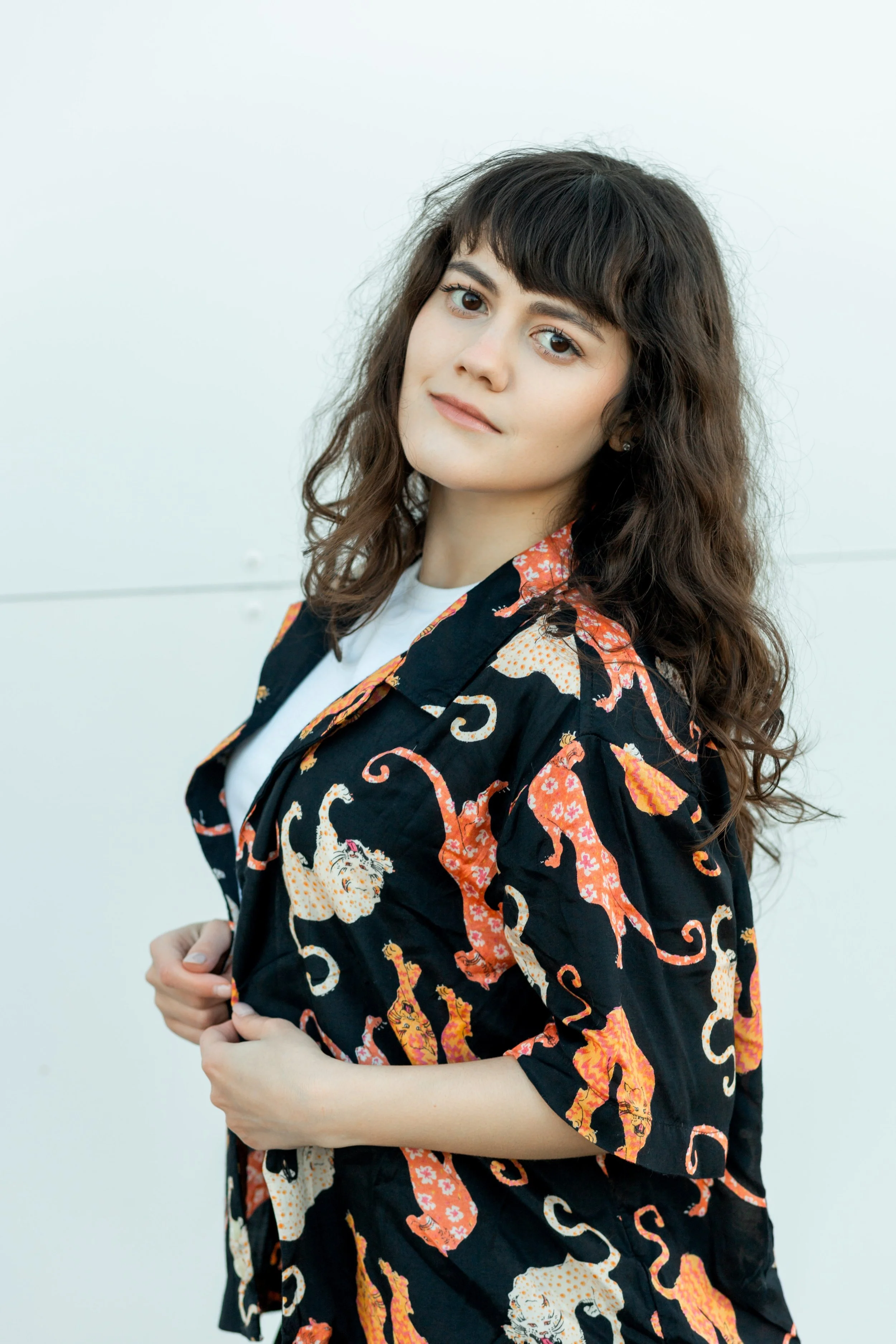
Eva Oleandr - Portrait
ARTIST STATEMENT
Eva is a visionary artist whose work transcends the boundaries of reality through surreal, mythic, and symbolic compositions inspired by her deep love of nature and philosophy. Using a wide range of materials with a current focus on colour pencils, she explores new ways to bring her vivid imagination to life, crafting worlds that challenge perceptions and invite viewers to question reality and discover deeper meanings. For Eva, art is an ontological journey, an essential path for exploring and expressing the depths of existence, meaning, and alternative worlds. Her work aims to inspire viewers to see beyond the surface, uncover new perspectives, and consider the profound connections between imagination and reality. Currently, she is filled with a multitude of ideas she is excited to bring to fruition, eager to further her artistic career and share her transformative visions.
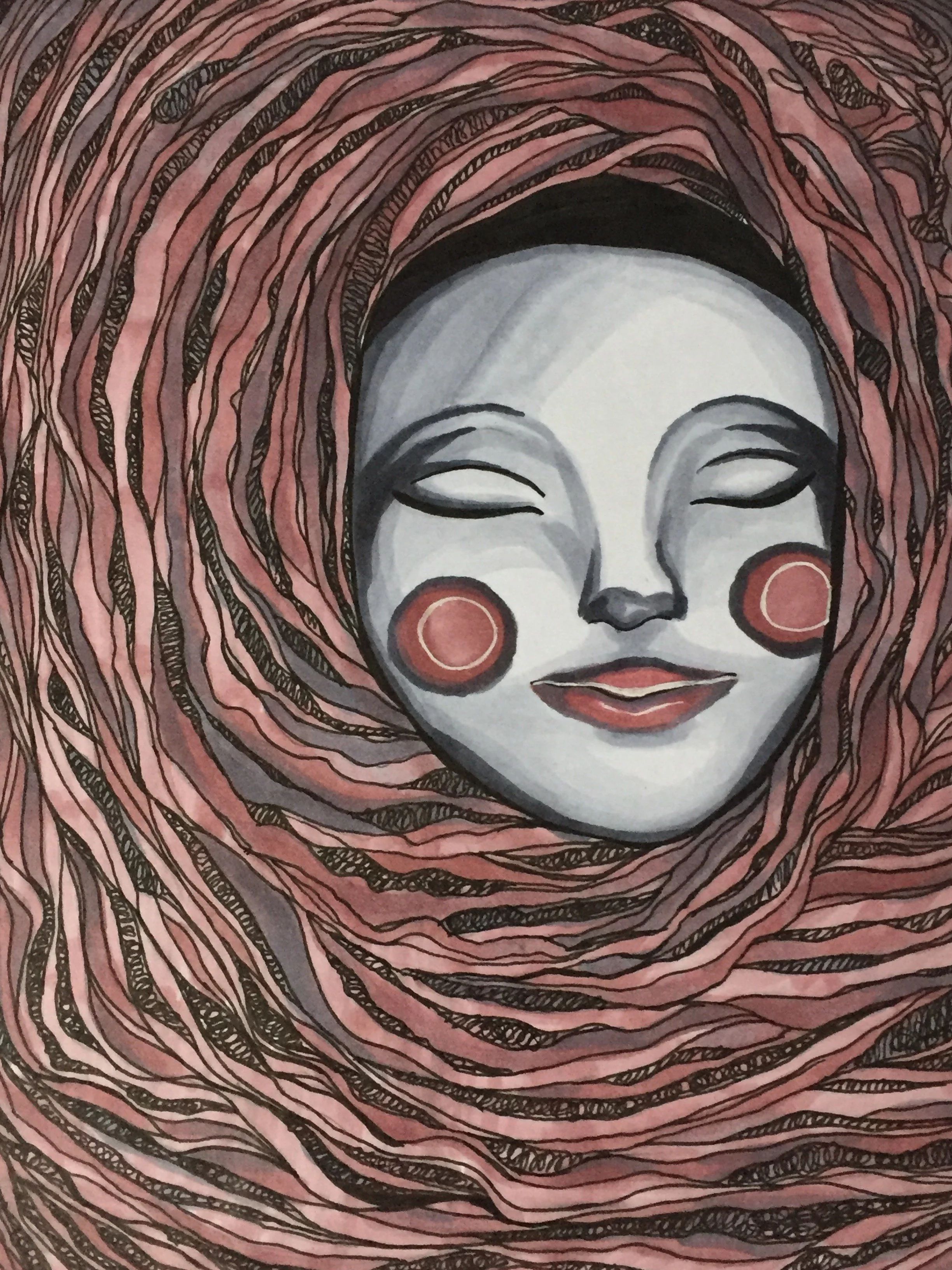
The Mask, Copic Markers and Pens, 29x21 cm, 2018 © Eva Oleandr
INTERVIEW
You were born in Sarapul, a small town in Russia. How did growing up surrounded by nature influence your early artistic interests?
Growing up in a small town surrounded by lush taiga forests, expansive fields, and a majestic river profoundly shaped my worldview and core values. From my earliest memories, I was captivated by nature, which still serves as my primary source of inspiration. Nature fuels my creative passion, and my creativity ignites my practice. I have always aspired to be a creator rather than just a simple user; thus, the child-like wonder within me has never faded. Instead, it has evolved into a vital source of strength that carries my creative journey through exploration and enriches my life in countless ways. Reflecting on my youngest childhood artworks, I see themes of animals often, scenic landscapes, and natural elements.These symbols were illustrating how my vivid imagination led me to explore. I am eager to learn about the natural world and its endless mysteries through play and storytelling. I have always been attentive to the subtle details of nature, the gentle flow of water, paw prints on the ground, and a falling leaf, and these small, often overlooked moments have become the nucleus of my expression in practice. The result is artwork that became my way of expressing love and admiration for our natural world, channelling my deep connection and reverence through artistic technicality.
You studied at Fine Art School N3 before moving to the UK to attend Cardiff Metropolitan University. How did your education in these two different environments shape your artistic approach?
Living and studying art in both Russia and the United Kingdom has provided me with a unique and diverse artistic experience that few others can resonate with. Russian fine art education is exceptionally rigorous, deeply rooted in technical mastery and classical academic principles. The strict curriculum provided me a solid foundation and a clear understanding of what art is to me. Over four years, I studied a wide range of subjects that include academic drawing and painting, composition, sculpture, and art history, along with plein air practice during the summer term. My experience at Cardiff School of Art and Design introduced me to a more flexible and contemporary approach to art making. My newfound methodology was both refreshing and inspiring.
This unique blend of academic fine art and contemporary illustration keeps enabling me to develop a strong technical, philosophical, and theoretical foundation: fostering an openness to all my ideas and allowing me to express myself freely and authentically.
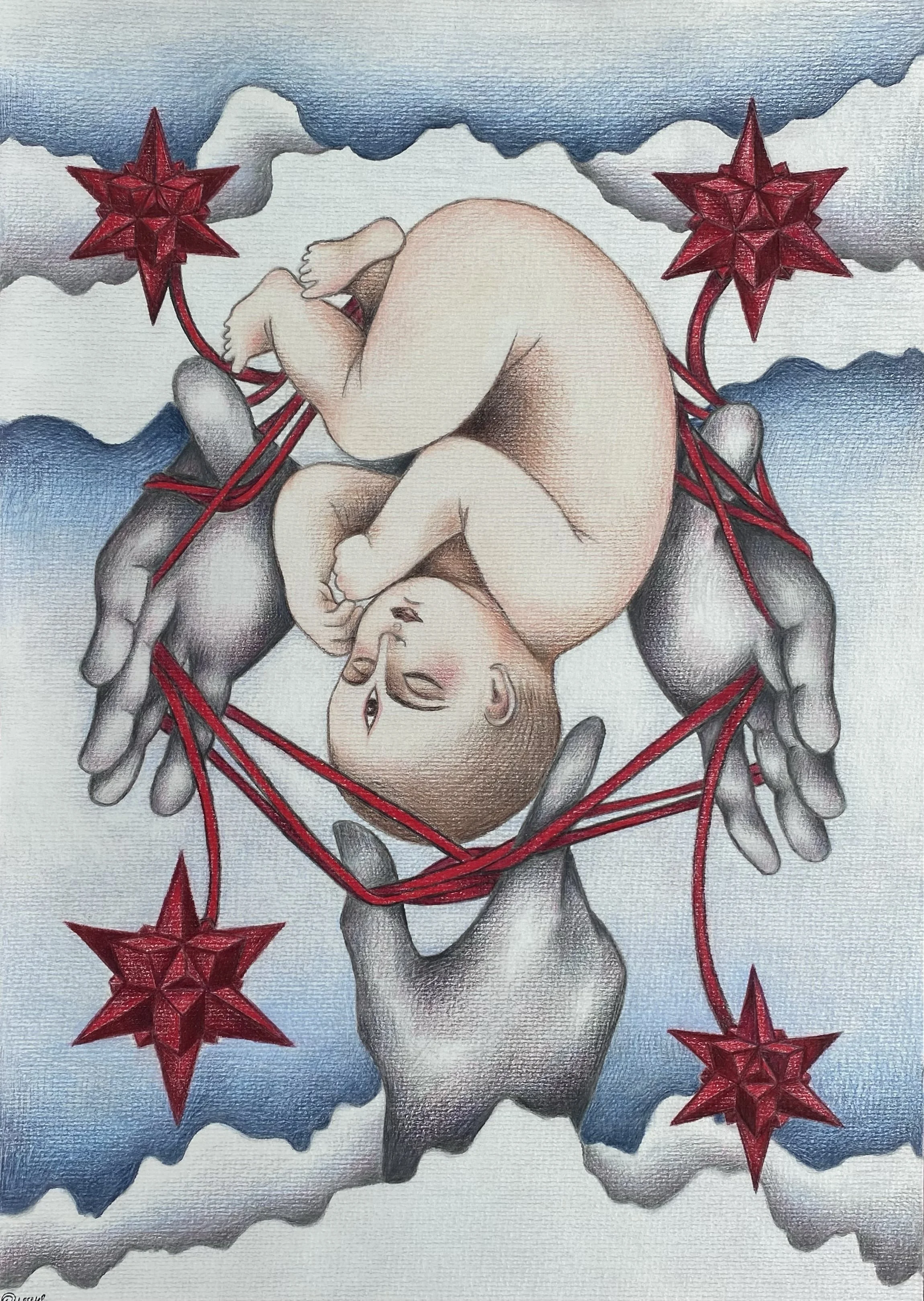
Born In The Clouds, Coloured pencils, 42x30 cm, 2025 © Eva Oleandr

Eternal Present, Coloured pencils, 42x30 cm, 2025 © Eva Oleandr
You combine traditional painting and drawing techniques with contemporary illustration. How do you decide which medium or method best suits each work?
I usually begin by sketching and experimenting for a while to explore my ideas, which helps me develop a clear visual understanding of the most suitable mediums and techniques for each composition. This process allows me to envision the final outcome I would like to achieve, ensuring that my artistic vision is both well-defined and attainable. The concept precedes the medium, as the medium is just another tool I use to realise my vision.
Colour pencils are currently your main medium. What draws you to them, and what do they allow you to express that other materials might not?
Coloured pencils are quite often underestimated and not seen as a "serious" art medium. While they typically evoke memories of school days, professional-grade coloured pencils are incredibly versatile and capable of creating work with remarkable richness and depth. Nearly anything achievable with brush and paint can also be created with coloured pencils. I particularly love coloured pencils for their precision and adaptability; they allow me to work with intricate details, render fine lines, and experiment with a variety of textures. Texture is an important aspect in my work. Although utilising this medium requires intense focus and patience, often taking a lot of time to complete a piece, I find the process deeply fulfilling and even meditative.
Your works often feature surreal, symbolic imagery and elements of anatomy and nature. Can you describe your creative process when developing these compositions?
My creative process is simple; it is effortlessly fluid and deeply intuitive, as I draw inspiration from everything around me. I find the world endlessly fascinating. I often ask myself "what if...?" and blend these ideas to create new perspectives and realms. Even though it may appear a little chaotic, this process flows naturally, allowing me to build intricate compositions imbued with profound meaning and boundless wonder.
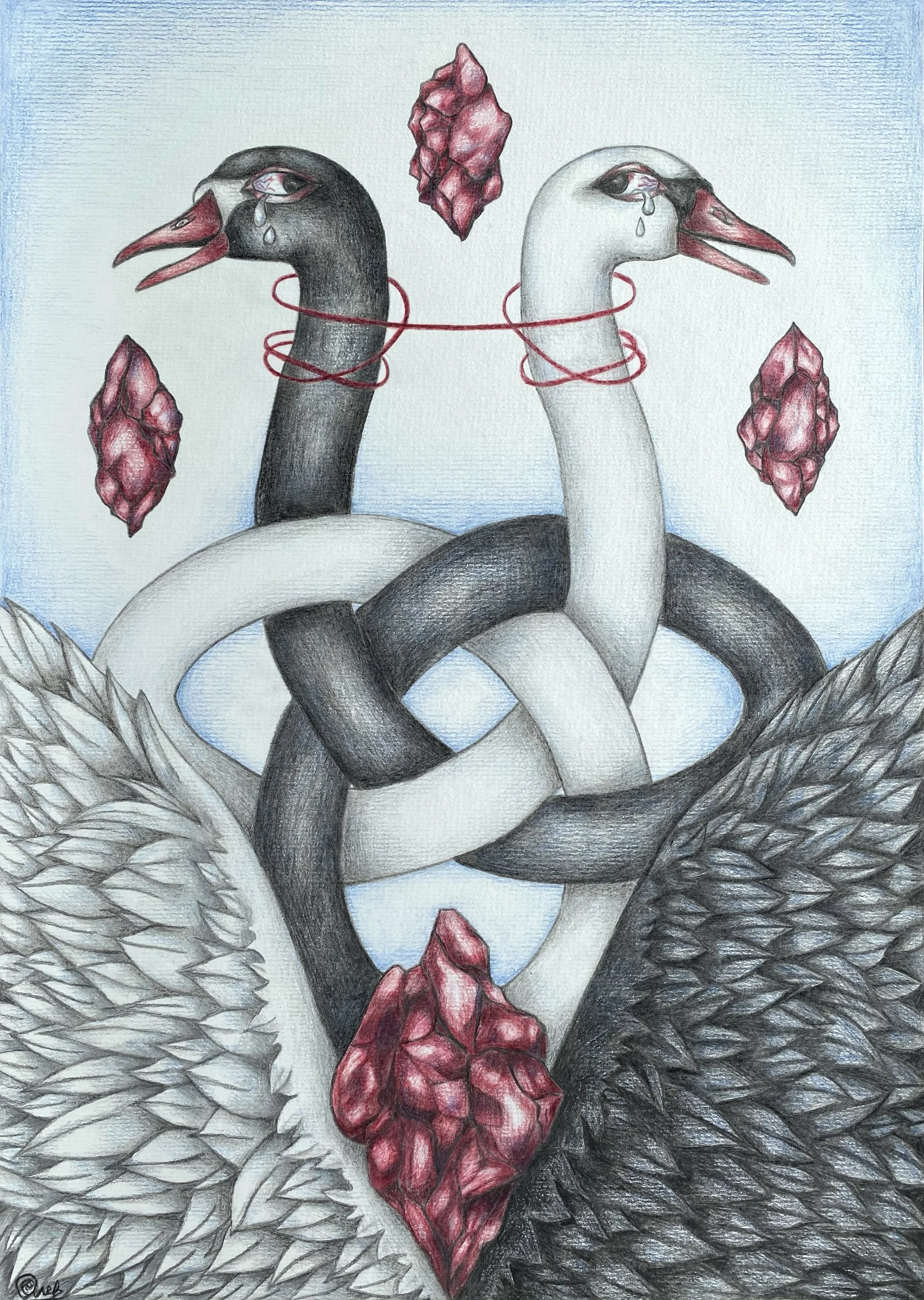
Attachment, Coloured pencils, 42x30 cm, 2025 © Eva Oleandr
Many of your pieces explore transformation and interconnectedness. How do these themes reflect your personal philosophy or view of the world?
Themes of transformation and interconnectedness have always resonated deeply with me. I have a personal philosophy. I feel that everything that ever comes to existence in this whole universe is interconnected and flows harmoniously. It spans disciplines, suggesting that the universe is not a collection of separate things but, perhaps, a large, unfathomable conscious organism: a unified system. Recognition of this concept fosters a deeper understanding and appreciation for our place within this life.
Transformation is a fundamental aspect of our existence, shaping us both epistemically and personally as we continually evolve through our interactions with the world. The dynamic nature of these changes and their unpredictable directions offer endless opportunities for discovery and growth, making transformation an endlessly intriguing and central aspect of life. I believe I will never get tired of exploring or experiencing the human condition.
There's a strong sense of mythology in your art. Do specific myths, stories, or philosophical ideas inspire you when you create?
I find inspiration in philosophical theories that provoke thought and deep reflection. I have always been curious about the true nature of our reality and the overarching question of life's meaning. I often wonder for the sake of wondering, without limits. This curiosity opens up a realm of endless possibilities, theories and narratives that inspire me to create suchcomplex and meaningful compositions that could challenge my viewers' perceptions. I hope to evoke reflections on the nature of reality. So, I find inspiration in all kinds of philosophical ideas and remain open to new concepts. I am placing particular emphasis on metaphysics and ontology, as well as various theories of consciousness, and Buddhist philosophy that I have recently begun to explore more deeply.
How has the audience's response to your work influenced your artistic direction or the way you think about your practice?
The audience's response is consistently positive and encouraging; people are often fascinated by my ideas and technical skills, which motivates me to continue creating and growing as an artist. While I can sometimes be overly critical of my work due to my perfectionist tendencies, which is something quite common among artists, those who engage with my art often offer fresh perspectives that help me reframe and quiet my inner critic and embrace greater self-acceptance. I am endlessly grateful for my loving international audience and the unwavering support they provide, as it means the world to me and helps me to move forward on my artistic journey.

Comedy and Tragedy, Watercolour and Coloured pencils, 42x30 cm, 2025 © Eva Oleandr
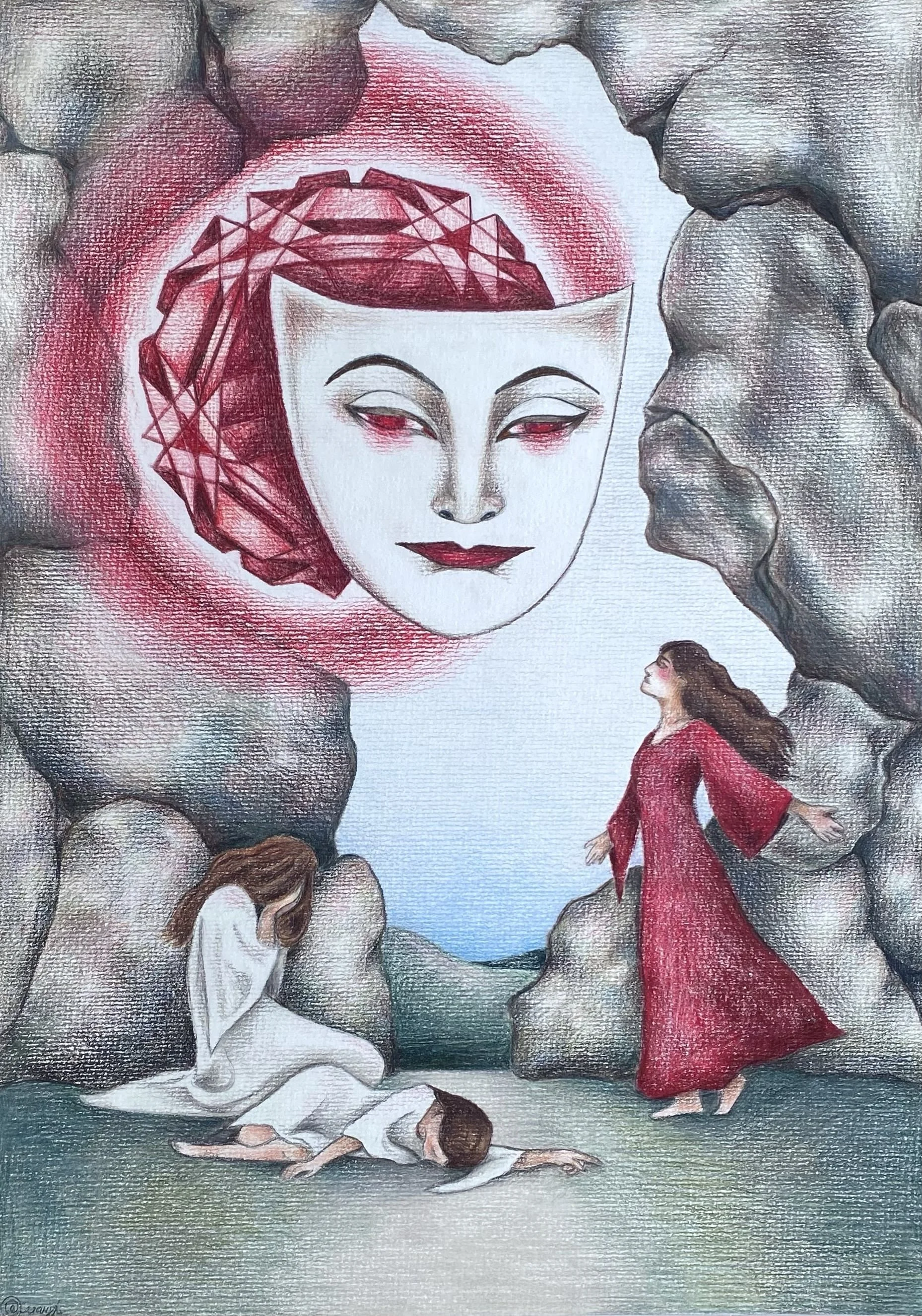
The Polyhedral Red Star Is Not God But It Is Something Similar, Coloured pencils, 42x30 cm, 2025, 29x21 cm, 2025 © Eva Oleandr
Your statement describes art as an "ontological journey." What does that mean to you in practice, when you sit down to create?
Ontology is the philosophical study of being, which is focused on understanding what it means to exist, to be human, and how to make sense of our mysterious world. Art isn't just a powerful tool for expression but a life path that constantly challenges me and teaches me to live authentically. I see art as an ontological journey because, through the prism of art, I can not only explore the nature of existence but also invent new perspectives and realities, expanding my understanding of the world and myself.
Looking ahead, what new projects or ideas are you most excited to explore in your upcoming work?
I have countless ideas I am beguiled by. I am currently experimenting with diverse compositions, dynamic movements, and unusual angles, all while using new colour combinations in my work. While my primary focus remains on the profound mysteries of existence, I also aspire to delve deeper into the beauty of nature and venture into scientific fields, such as anatomy and physics. Art has the incredible power to transform any idea into a realm of possibilities, and I am truly enthused to immerse myself in this creative journey.
Eva Oleandr : “Ontological Fictions and the Poetics of Interconnection”
Art Review by: Mohamed Benhadj, Founder and Curator of Al-Tiba9 Contemporary.
Eva Oleandr creates a symbolic visual language shaped by introspection and transformation while searching for meanings. Using coloured pencil, she produces detailed compositions in which human figures, animals, anatomical elements, and theatrical motifs coexist within suspended settings. Her work unfolds in contemplative spaces, with intertwined or fragmented bodies that suggest identity is fluid and shaped by unseen forces.
Recurring motifs such as masks, threads, interlaced forms, theatrical decorations and floating structures create continuity in her drawings. These elements connect figures and introduce relationships marked by tension. Imagery including infants surrounded by hands, swans merging into knots, faces shifting into skeletal forms, and suspended hearts framed by contrasting expressions evokes a sense of dependency, emotional complexity, and psychological duality. Her compositions reflect an ongoing negotiation between attachment and transformation.
This reflective dimension is reinforced through symbolic arrangements that gather cyclical time and shifting consciousness. Human and non-human forms coexist, while geometrical forms and hovering presences introduce a metaphysical atmosphere. Life and mortality overlap, and meaning remains open. Oleandr’s drawings prompt thought, encouraging viewers to interact with ambiguity and layered interpretations.
Technically, she demonstrates strong control of coloured pencil, building surfaces through gradual tonal transitions and precise linework. The slow process contributes to the work's meditative quality. Subtle textures and restrained colour reinforce the subtle intensity of her compositions, constructing a contemplative universe centred on transformation, introspection, and interconnected existence.
Artist’s Talk
Al-Tiba9 Interviews is a promotional platform for artists to articulate their vision and engage them with our diverse readership through a published art dialogue. The artists are interviewed by Mohamed Benhadj, the founder & curator of Al-Tiba9, to highlight their artistic careers and introduce them to the international contemporary art scene across our vast network of museums, galleries, art professionals, art dealers, collectors, and art lovers across the globe.

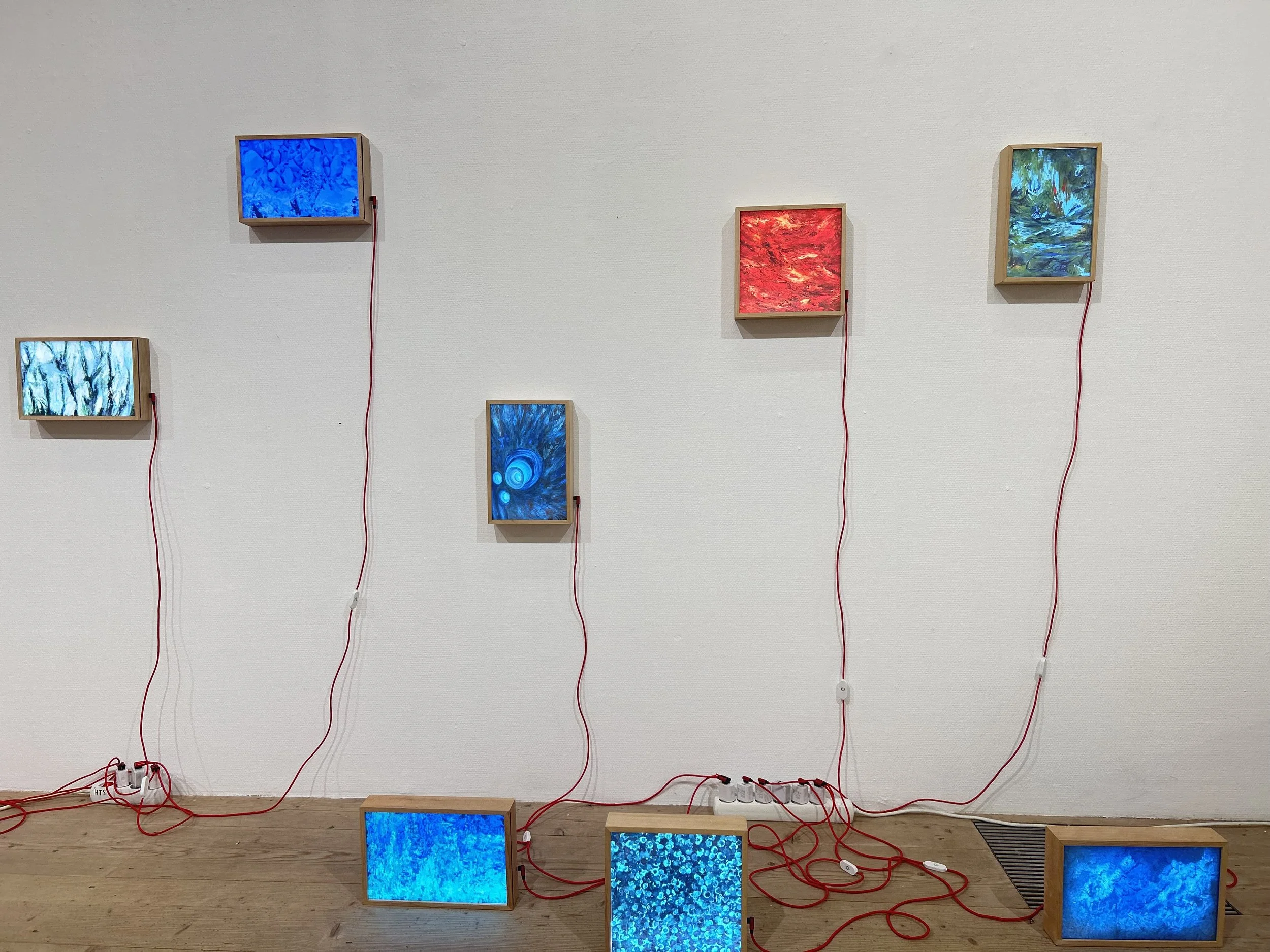
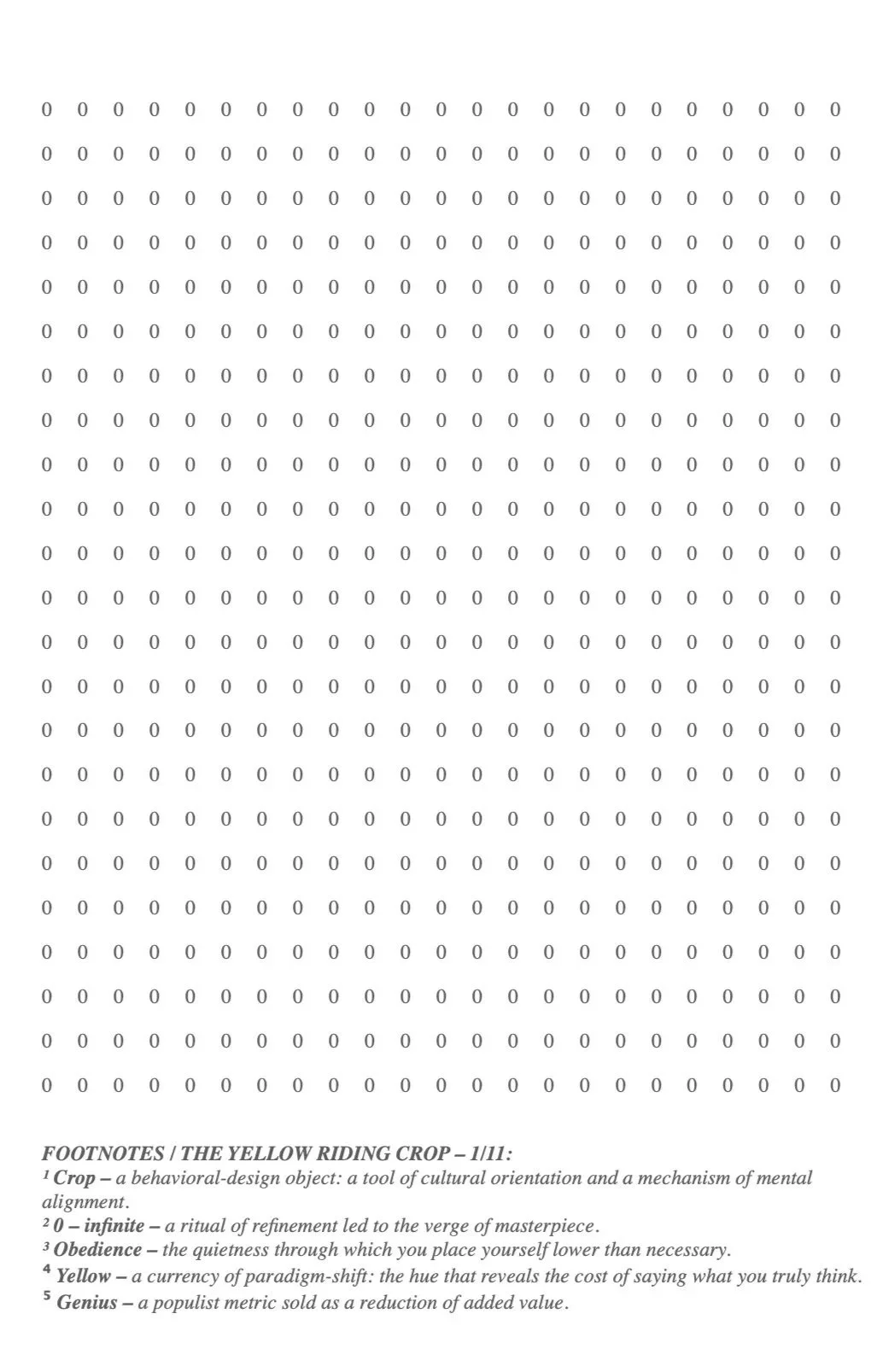

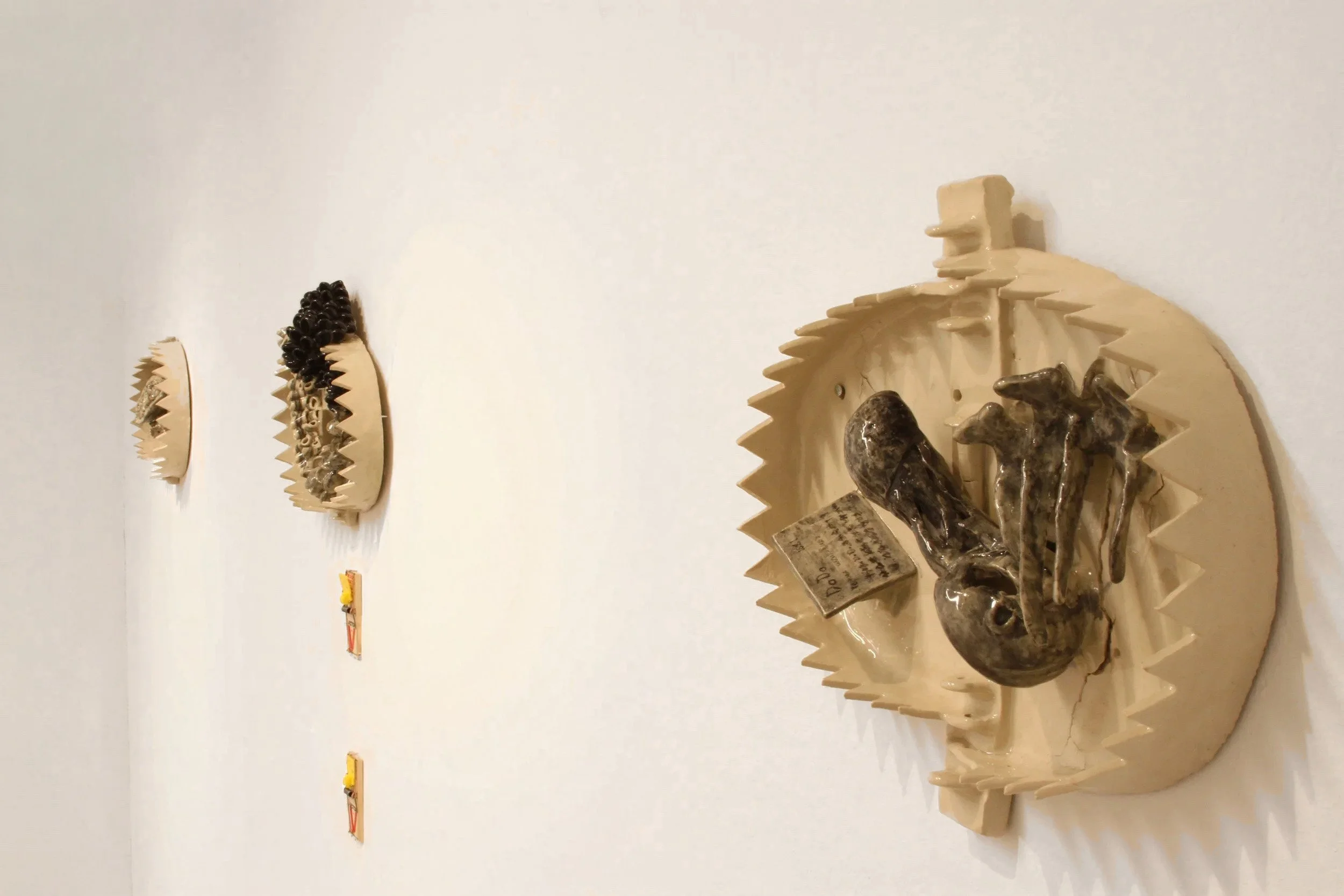

Kfir Galatia-Azulay Darash is an architect, engineer, multidisciplinary designer, and artist. In his practice, architecture defines the framework, scale, rhythm, and light; interior design addresses the body and the human experience; product design approaches detail, material, and physical contact; and art allows an idea to move beyond function and become emotion, memory, and interpretation.