
10 Questions with Artist Name
Anastasia Klimova is a Russian-born visual artist currently based in Hua Hin, Thailand. She is primarily an oil painter, with a background in film production design and stage design from the University of the Arts London.
Her practice moves across disciplines, where painting, film, and spatial storytelling coexist as interconnected forms of expression. Rather than separating mediums, she approaches them as part of a continuous exploration of visual language, perception, and emotional experience.
Her artistic development has unfolded across multiple locations, including Russia, Italy, and the United Kingdom, each shaping her sensitivity to atmosphere and place. Her work has been presented internationally, including in Cagliari, Italy, and London, and is held in private collections across Europe and Asia.
Alongside her painting practice, she also works as an illustrator, including projects in children’s book illustration.
Her work has been presented in exhibitions across the United Kingdom and internationally, including London, Scotland, Azerbaijan, and Italy, with recent exhibitions in London in 2026. Currently, her primary focus is oil painting, through which she continues to explore the relationship between observation, feeling, and the act of capturing lived moments on canvas.
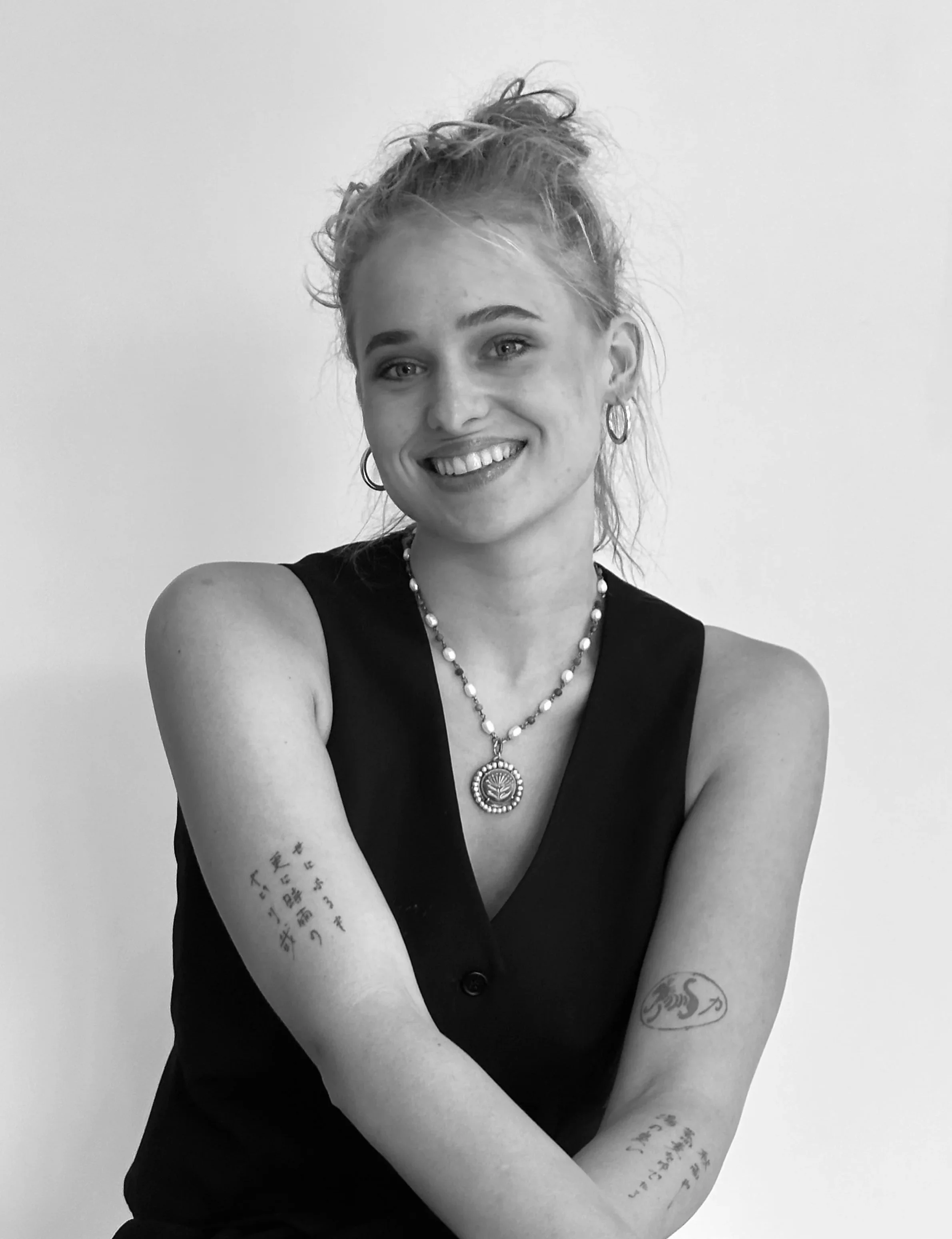
Anastasia Klimova - Portrait
ARTIST STATEMENT
Anastasia Klimova is an artist in a continuous process of learning and discovering her own visual language. For her, no art form exists separately from another. Painting, film, stage design, and visual storytelling coexist as different ways of understanding and expressing the world.
Painting has been part of her life since childhood, forming the foundation of her artistic practice. Although her path later expanded into film production and stage design during her studies in London, these experiences became another layer of visual storytelling rather than a departure from painting. Art has remained a constant presence throughout her life, continuing alongside different creative directions.
Her current focus is oil painting, through which she explores how to capture moments from reality within reality itself and bring them onto the canvas. Whether through a figure, a still life, or a space, each subject carries its own story. Her process is rooted in observation and feeling, responding to what is present rather than constructing fixed narratives.
Through her work, she leaves space for the viewer to engage personally, allowing each painting to hold different meanings, memories, and emotional responses.
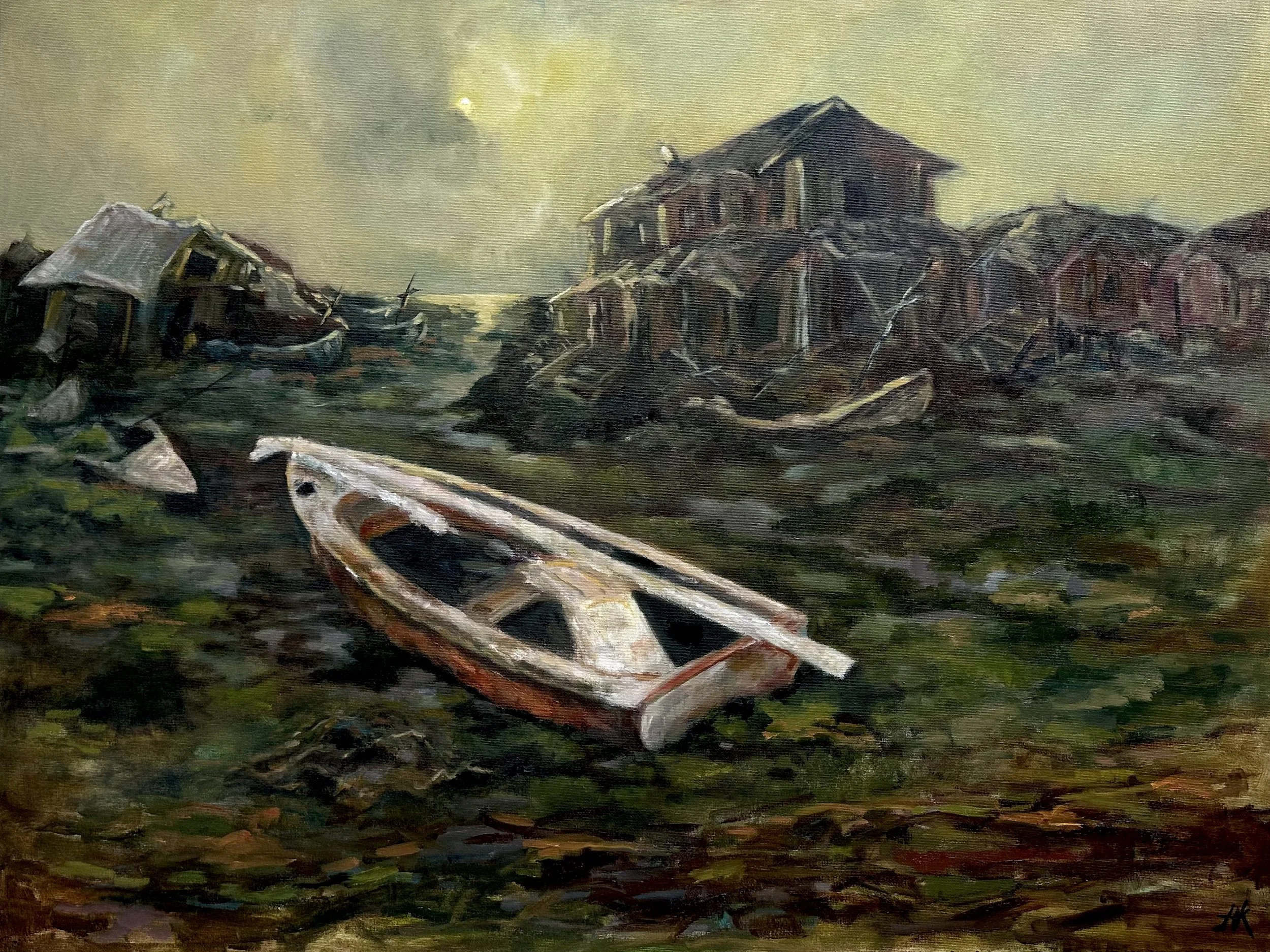
Silent Shore © Anastasia Klimova
INTERVIEW
First of all, you mention that painting has been part of your life since childhood. Can you recall an early moment when you first felt a real connection to art?
Memories from our childhood are often blurry and are more reminiscent of a pattern of images, feelings, and fleeting moments that we can bring back. I asked my mom if she could recall a specific moment on my behalf. She told me that I was always very keen on drawing and that I had asked her, seemingly out of the blue, to put me into art school. But personally, I feel like I was always drawn to art. The first time I remember being truly fascinated by drawing was when I was a child at school. I loved children’s books with illustrations. I had this Alice in Wonderland book, and I remember having a strong desire to repaint it. Even though I spent many years in art school, I think a deeper connection began to develop. It took time through a feeling rather than a single moment. I remember what it felt like to go there: the corridors filled with history, with paintings, with this distinct smell of paint and solvents. Most of the art schools in Moscow, where I lived, were in post-Soviet buildings, very beautiful in their own way, with high ceilings, stucco, slightly worn, almost poetic. But I think I truly understood what art means to me later, when I grew up. In 2019, I returned to drawing and, for the first time, started working with oil painting. It was in Sardinia, Italy, where I met an incredible artist, Ana Lisa, who, in a way, opened this medium to me. Since then, it has become a significant part of my life.
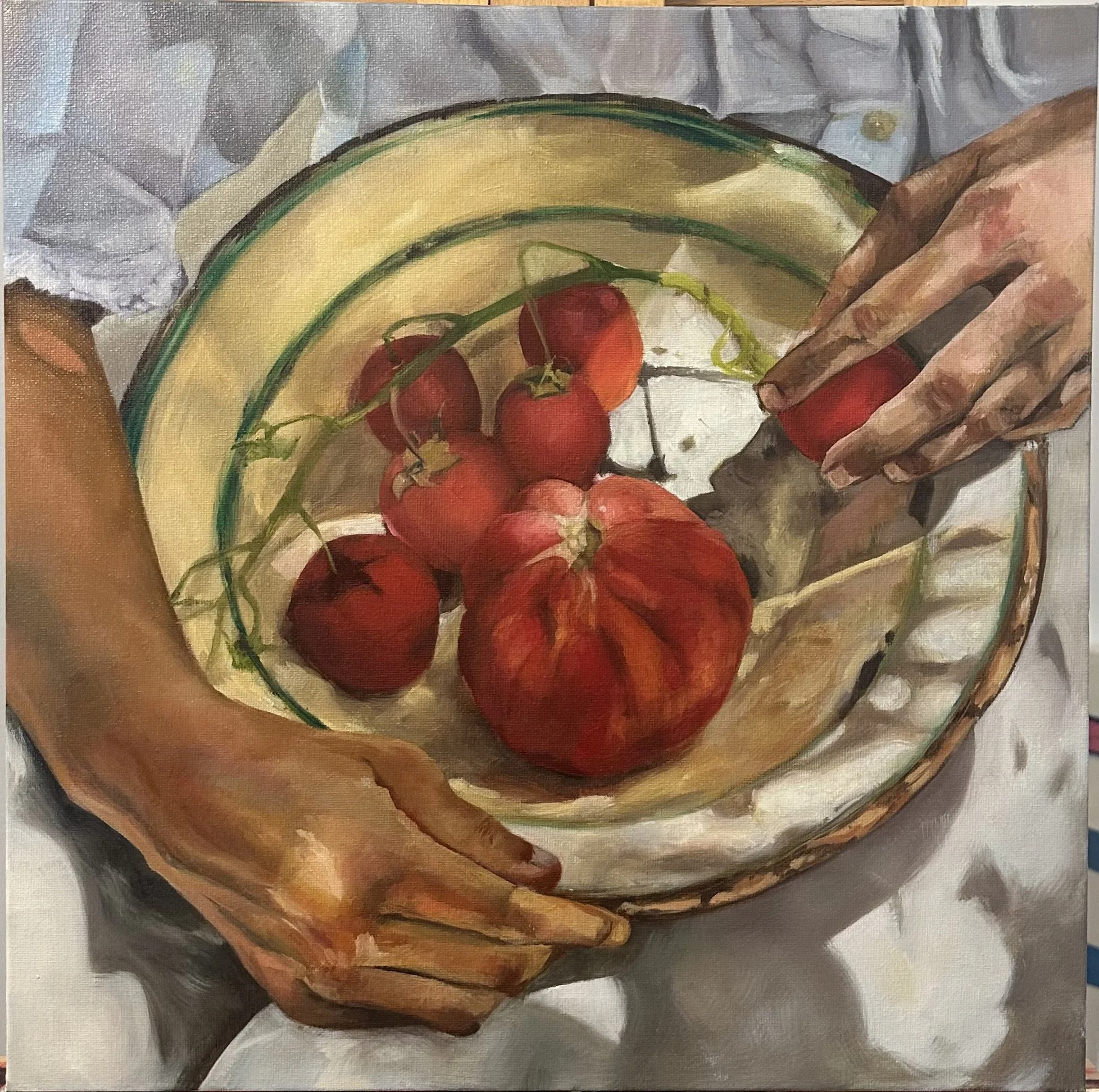
Italian Tomatoes © Anastasia Klimova
How did your background in film production design and stage design at the University of the Arts London shape the way you think about images and storytelling today?
I’ve always loved cinema. For me, film and animation have always felt like a kind of parallel reality; something very close and familiar to my inner world, almost like an escape or a place of comfort. When I moved to London, I didn’t plan to go into film. Yet, something about the way visuals shape emotions in filmmaking drew me to it. I was doing production design for three years, and through that experience, I began to understand how important atmosphere and detail are within an image. How much they carry in terms of storytelling. If I were to tell you how it shapes the way I think today, I would say it shifted something in my perception. The way I see an image now is much more layered. I think about storytelling not only through characters or narrative, but through space, through composition, through the design of a scene. Even the smallest details matter: color matters, placement matters, the relationship between objects in space matters. All of these elements come together to build a kind of constructed reality. And what’s interesting is that a lot of this works on a subconscious level. The viewer might not notice it directly, but the way a scene is built affects how they feel, how they read the image, and how they experience the story. Production design taught me that an image carries much more than we consciously realise. It’s not just what we see, it’s how it’s built, and how that construction quietly influences perception. In a way, it’s almost psychological, a subtle interaction with the viewer’s mind through visual language.
Your practice moves across painting, film, and spatial storytelling. How do you decide which medium a particular idea or feeling belongs to?
I think for me it’s all very interconnected. Even in stage or spatial design, I always begin with drawing. It’s how I think through sketching, through putting ideas on paper. I first feel them through the drawing. That’s my way, and I think that’s why painting never really left my side; for some time, it merely took on a different form. Then it develops depending on what the idea requires and my own purpose. If it’s something coming from everyday moments, something more immediate, it often becomes a sketch or a drawing. Quick ideas I sketch. When it’s a brief capture, I draw. And when it’s something deeper, something that takes more time to evolve, I turn to painting. It’s interesting that you come back to the same feeling and add something new each time you take the brush and stand in front of the canvas. There is an ongoing dialogue with the painting, with the canvas. You interact with it, and together you build a small reality.
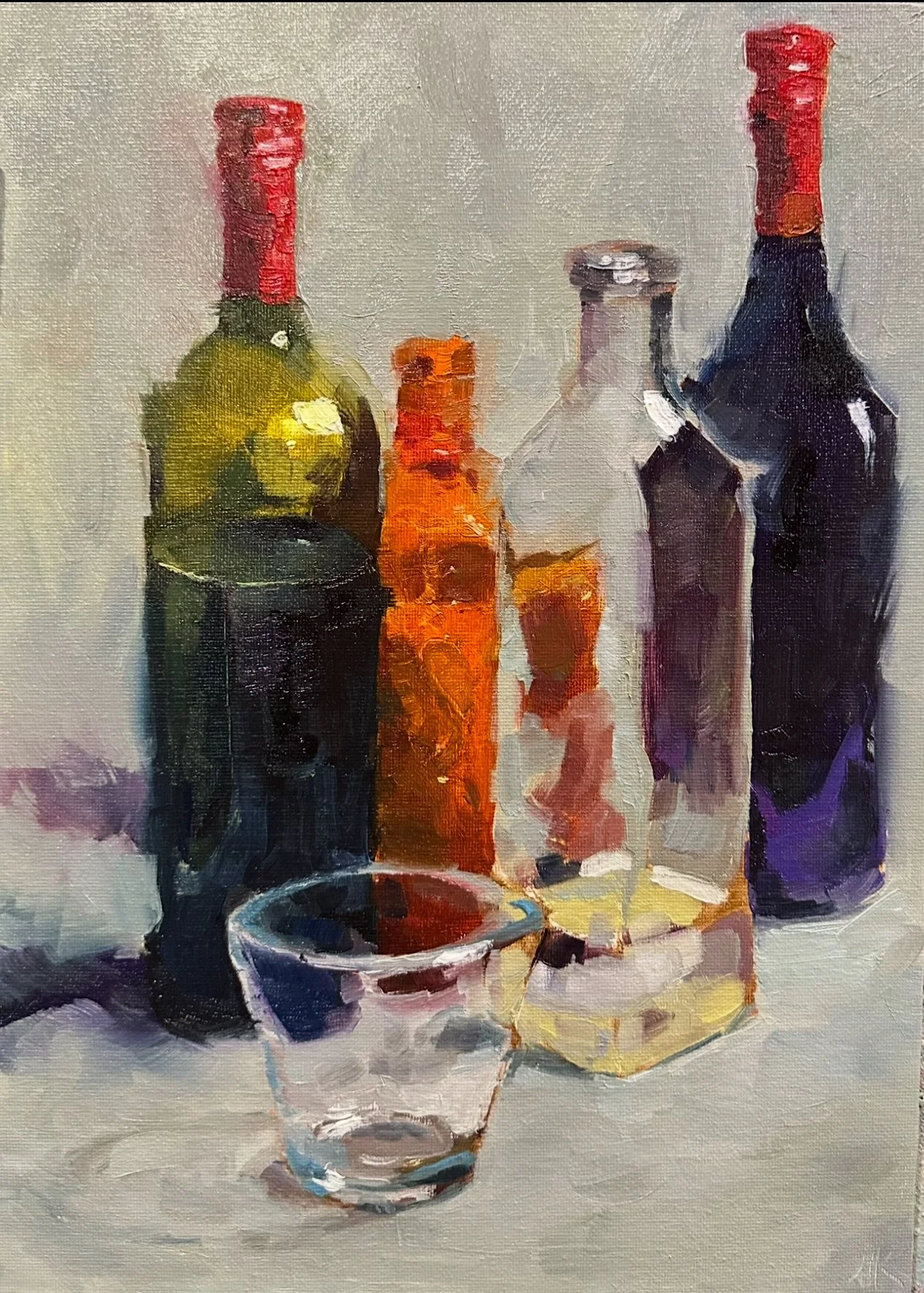
Empty Conversations © Anastasia Klimova
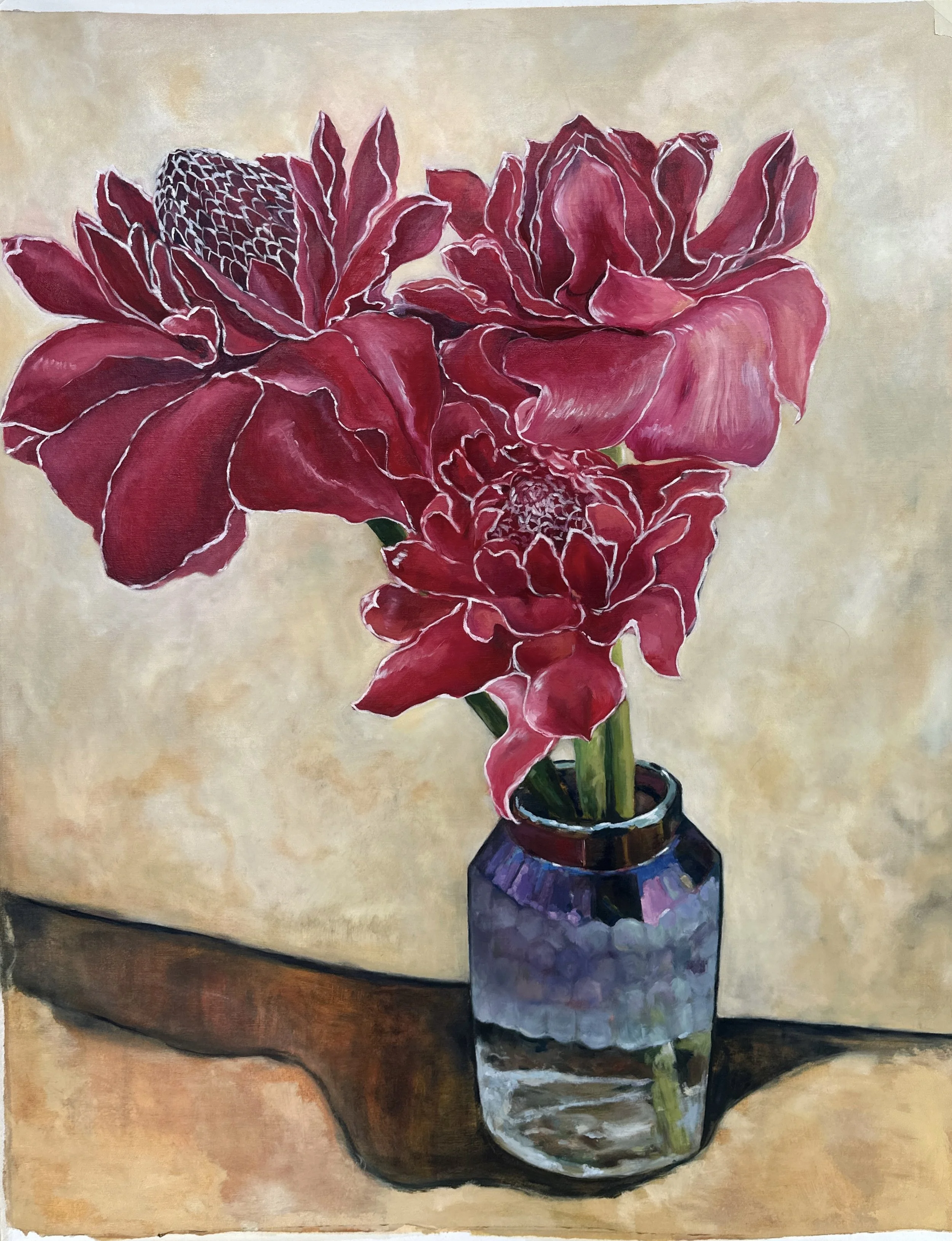
Ginger Flowers © Anastasia Klimova
Having lived and worked in Russia, Italy, and the UK, how have these different environments influenced your sensitivity to atmosphere and place?
Each country I’ve lived in has given me something unique. Russia is an inseparable part of my childhood and growing up. It feels wide, like it's in my nature, a sense of scale and beauty that became a fundamental part of me in my early formation as a person. It’s home, and it gave me a kind of warm, slightly melancholic feeling that stays with me. Italy became a part of the beginning of my freedom. It was an important stage in my relationship with art, it’s where I came back to painting. And, as cliché as it may sound, it gave me a sense of taste, a kind of “siesta” feeling in life, a sense of enjoyment of small things, of quietness, of beauty. The UK is a very important part of my becoming as an artist. It felt like everything I had before came together in one place, but on a much bigger scale. It’s a very creative city with people from different backgrounds, and you start to absorb everything, process it, pass it through yourself and transform through it. It was also the beginning of my independent adult life, learning to live on my own, with a certain sense of distance from home and a bit of melancholy that comes with it. So, for me, each place brought something of its own and left a part of itself in me like different versions of home. And all of that shaped my relationship with the language of art, with self-expression, and with how I experience reality.
Your work is rooted in observation and feeling rather than fixed narratives. What does a typical starting point look like for a new painting?
Yes, I’m definitely more drawn to spontaneous beginnings, especially when it comes to oil painting. I really love going out and doing plein air, capturing a moment as it is, making quick sketches of the environment around me. I enjoy painting nature and still life. Sometimes it’s very simple, I might be having coffee, eating something, and I take a photo and think, “this is a moment I want to capture.” If the morning feels good, I want to hold onto that feeling and later bring it onto the canvas. At the same time, when I feel like doing something more thought-through, the idea develops slowly. I carry it with me, I sketch, I make studies, I start with an underpainting. And then there is often a pause, a quiet stage where I just look at the painting, at that first layer, and think, feel, and reconsider the form and the composition. I usually work from the general to the specific, rather than starting with details. And from this kind of creative chaos, the painting is born.
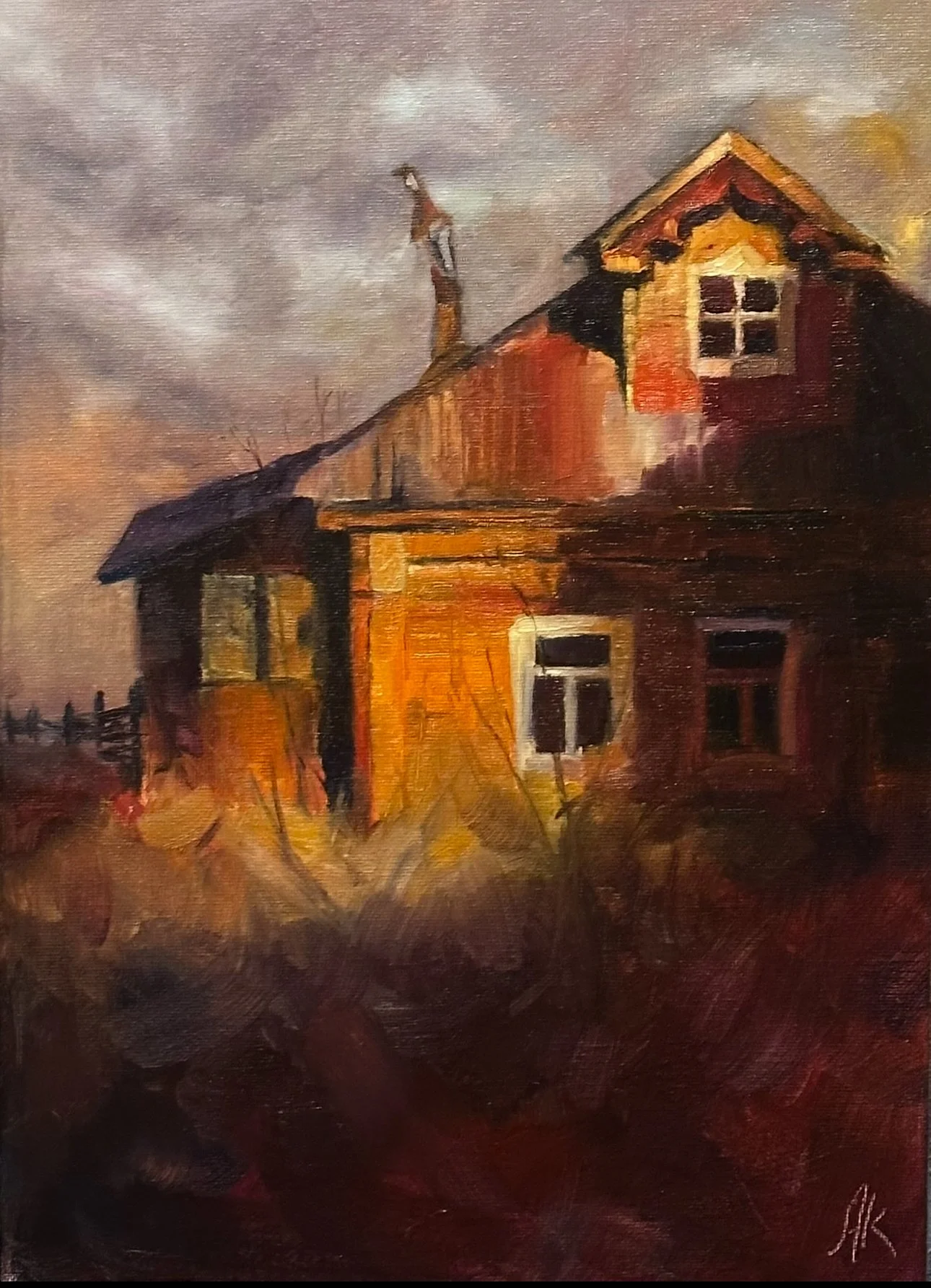
The Village House © Anastasia Klimova
You often speak about “capturing moments from reality within reality itself.” Could you expand on what that means in your day-to-day practice?
What I mean by this is this: everyone has their own way of perceiving reality, and their own language of expressing it. Especially for artists, there is always a very personal way of seeing and translating the world. In a way, each person holds their own universe within their hands. Artists draw from their own perception of reality, and that’s why we see so many different styles. Style, for me, is the way you interpret reality and your attempt at capturing that perception. In my day-to-day practice, it’s more about noticing a moment when something ordinary suddenly feels alive. It’s about catching a moment that is very real, but also fleeting, and wrestling to keep hold of it. It’s not about recreating reality; it’s about preserving a trace of how something felt at a specific point in time. Even if the viewer doesn’t experience it in the same way, the act of painting allows me to give that moment a kind of continuity.
As someone who also works in illustration, including children’s books, how does that process differ from or inform your oil painting?
Children’s books and oil painting are two very distinct approaches to image-making. With illustration for younger audiences, I think psychology plays a big role. You have to think about how to capture their attention, how to make the idea clear and engaging for a younger mind, and how to keep them involved in the story. It’s about making the image accessible, understandable, and alive in a way that speaks directly to them. With oil painting, it’s different. It feels more open and more ephemeral. You don’t think as much about how it will be understood or received. There is less analysis of the viewer and more focus on the act of expression itself. There is more freedom to express what you feel without the need to filter or adapt it for a specific audience.
Your paintings leave space for the viewer’s interpretation. How do you balance personal expression with openness in meaning?
I would describe it more as an observation. When I paint, I always have my own idea or feeling behind the work, but I don’t try to control how people perceive it. I believe everyone has their own inner world, and that shapes how they see things, so the meaning can shift from person to person. For me, it’s always interesting to see how someone experiences the work and what they feel. With Trace of Being, I was exploring this idea of existential continuity: a sense of an ongoing trace that connects us across time. For me, the painting felt like a release of those thoughts. It was freeing, with a kind of quiet, slightly melancholic calm. Yet people responded very differently: some felt uneasy, others felt relief, and some experienced a sense of silence. So, the balance comes naturally. I focus on being honest in my painting, while still leaving the interpretation open.
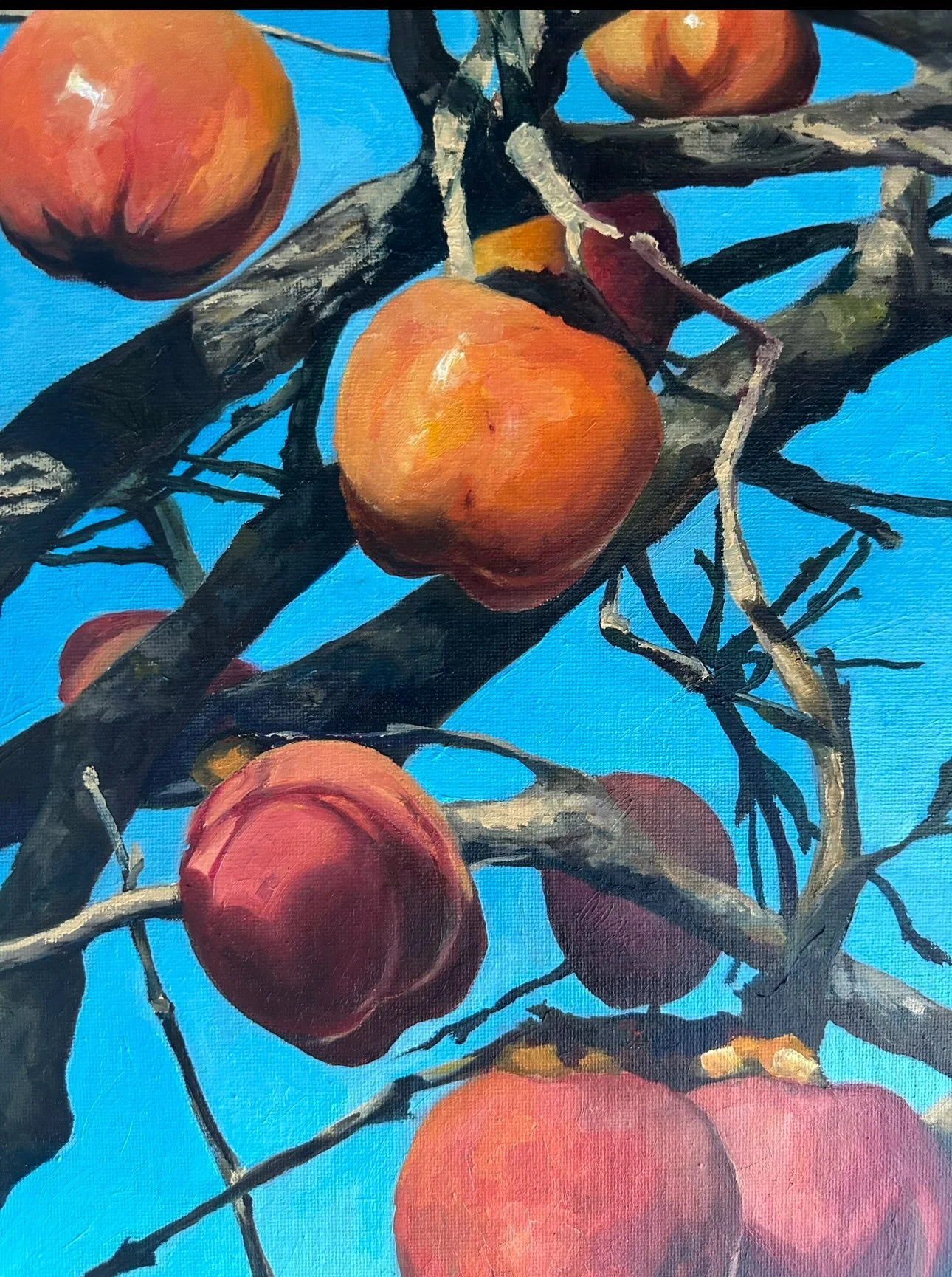
Korean Persimmons © Anastasia Klimova
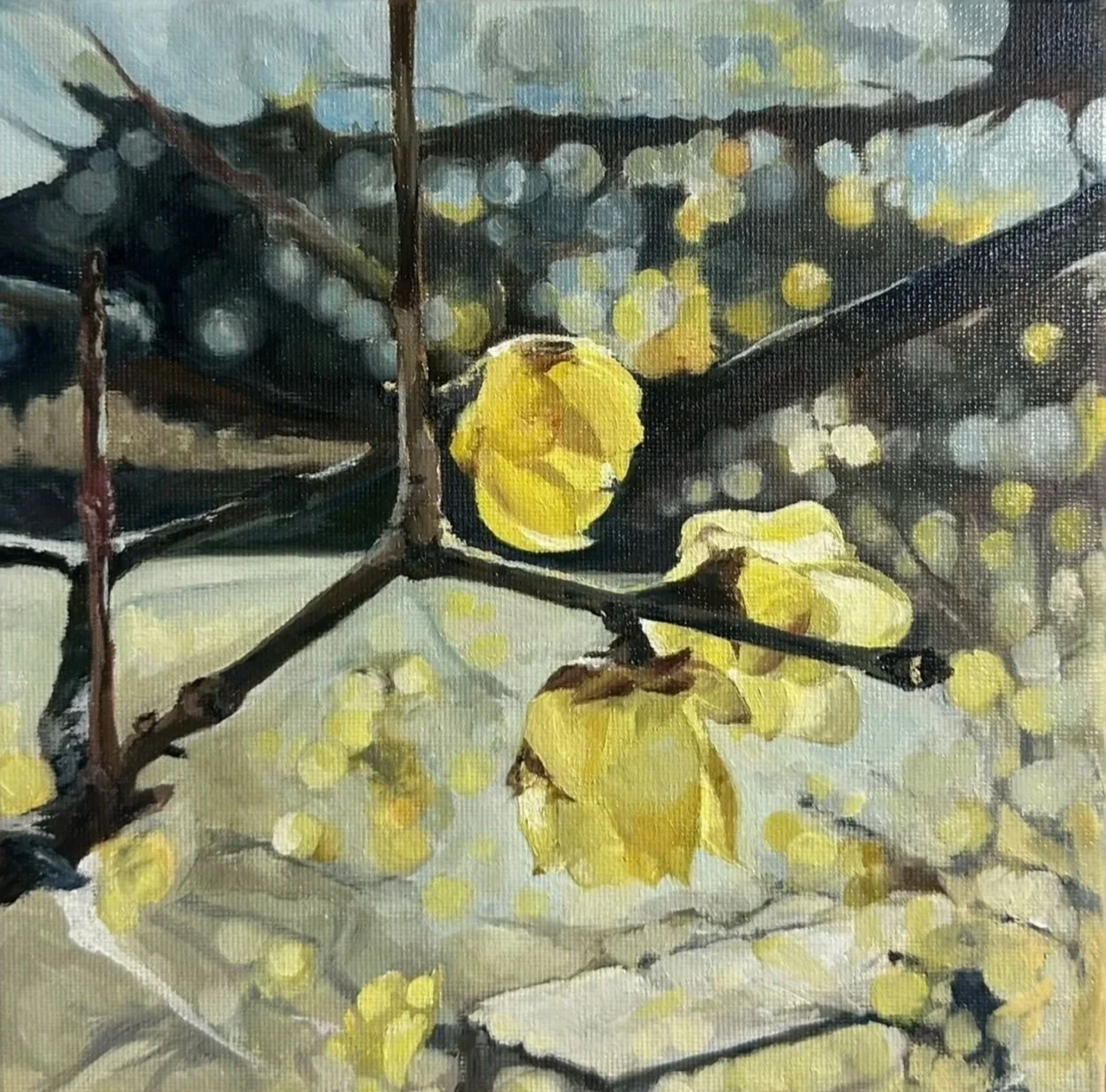
Japanese Blossom © Anastasia Klimova
With your recent exhibitions in London in 2026, how do you see your work evolving at this stage in your career?
At this stage, my work is becoming more focused and intentional. The recent exhibitions in London gave me a chance to see how my paintings are received and how people engage with them, and that has been very important for me. I put a lot of value in seeing how my visual language resonates with others. For an artist, it means a lot when your work doesn’t go unnoticed, it gives you the drive to keep creating, to grow, and to build confidence in what you do. For me, it pushes me to go further, to deepen my practice, and to continue developing that inner dialogue with my own craft to create more and give more of that work to the world.
Lastly, looking ahead, what are your long-term goals, both in terms of your artistic language and the kind of projects or contexts you hope to engage with?
I would really like to keep exploring my own voice as an artist and refining my creative skills by giving nutrients to that seed of talent (Something I believe everyone has). It devours time and dedication, but in turn, it gives me growth and room to evolve.
I would also like to continue my exhibition activity and take part in more open calls, as they offer new opportunities and challenges, and allow me to be part of a wider art community. And honestly,
I just want to keep absorbing the beauty of the world around me, to go deeper into art and the creative process, to paint more and to develop and refine my own visual language, and simply to keep creating.
Artist’s Talk
Al-Tiba9 Interviews is a promotional platform for artists to articulate their vision and engage them with our diverse readership through a published art dialogue. The artists are interviewed by Mohamed Benhadj, the founder & curator of Al-Tiba9, to highlight their artistic careers and introduce them to the international contemporary art scene across our vast network of museums, galleries, art professionals, art dealers, collectors, and art lovers across the globe.



Brooklyn-Born Allan Gorman is a contemporary fine artist based in Jersey City, NJ, with a unique artistic vision cultivated by a distinguished commercial career that helped refine a sense of aesthetics and unwavering commitment to excellence that continues to define his artistic process to this day. His latest series of paintings is titled Imaginary Spaces.