

10 Questions with Wei Wu
Wei Wu is an interdisciplinary artist whose practice reimagines civic experience through spatial storytelling in the public domain. Working across projection, robotics, AI, augmented reality, and interactive systems, she creates large-scale experiences shaped by memory, place, participation, and ritual. Her work explores how emerging technologies can transform the ways people gather, perceive, and share public life.
Wei holds a Master’s degree from Harvard Graduate School of Design. Her work has been exhibited at major public venues, including Boston City Hall and Beijing National Stadium. She has also contributed to large-scale projects presented at institutions such as the Kennedy Center and Centre Pompidou.
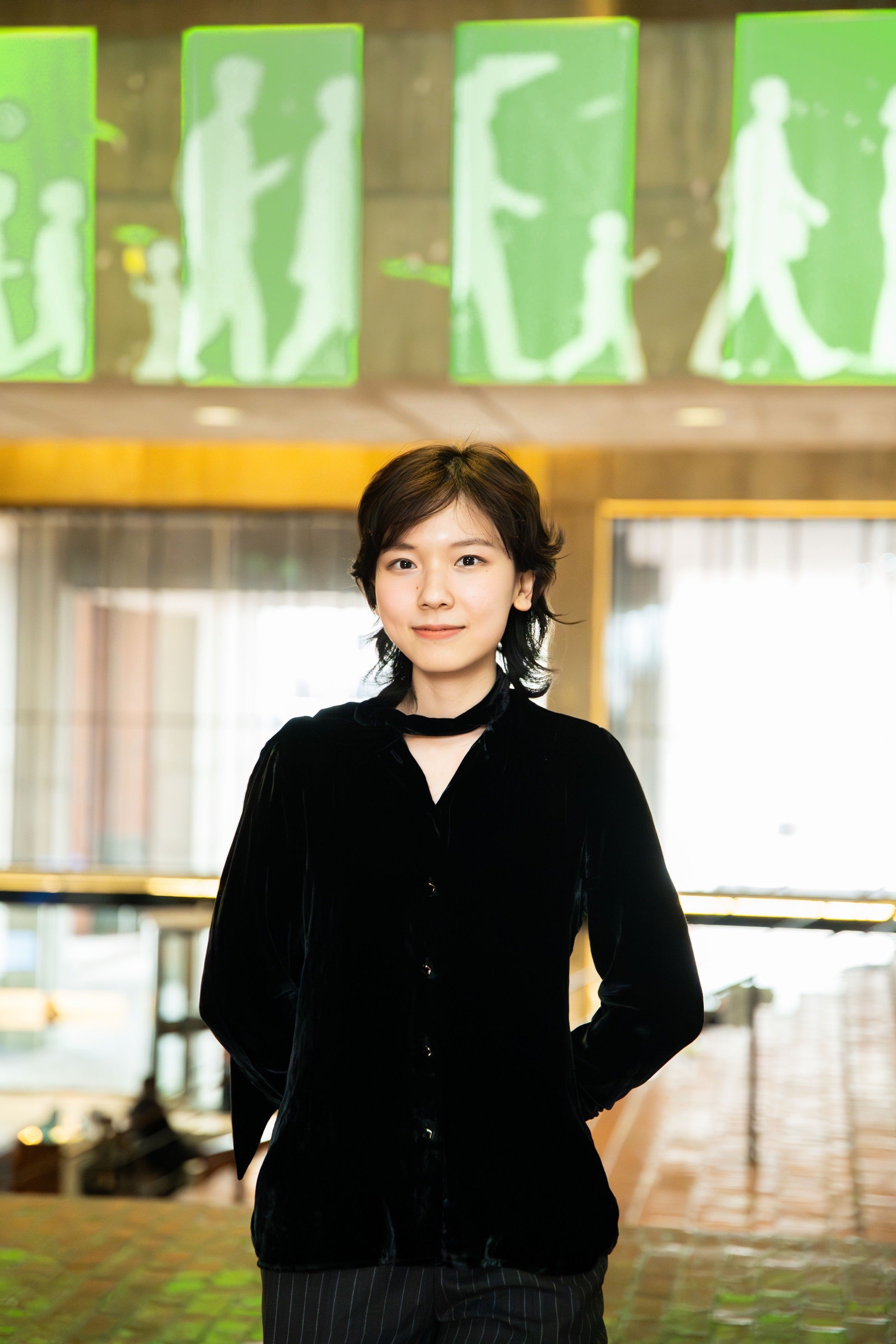
Wei Wu - Portrait
ARTIST STATEMENT
Wei Wu’s practice explores how emerging technologies can reconfigure the relationship between private perception, collective memory, and public space. Through projection, augmented reality, AI, and interactive systems, she creates place-based works that intervene in civic sites while opening individualized channels of encounter, allowing the same city to be read through parallel narratives. Wu is interested in the political potential of this condition: when hidden, personal, marginalized, or collective memories enter shared space, technology becomes not spectacle but a tool of presence, agency, and empowerment. By layering virtual images and stories onto the physical city, her work constructs temporary civic spaces where multiple perspectives coexist, collide, and reshape how a place is seen, remembered, and inhabited.

Memorial of Forgotten Casualties, Augmented Reality, variable dimensions, 2023 © Wei Wu
INTERVIEW
First of all, your practice explores the relationship between technology, memory, and public space. How did you become interested in using emerging technologies as a way to rethink civic experiences?
I was originally trained in architecture. Architecture is a slow, heavy, and often quiet medium. Its long process allows it to carry deep meanings, but I gradually realized that such a stable form could not respond quickly enough to many questions emerging in contemporary public life.
At the same time, I watched the internet quietly transform the ways we mourn, gather, and remember. Cities were full of untold stories, while almost everyone suddenly carried a device capable of revealing and sharing them. This contrast fascinated me. I began to wonder whether civic space could hold more voices than stone and brick had traditionally allowed, and whether the same plaza could be experienced through several narratives at once. Projection, augmented reality, interactive systems, and AI gave me ways to explore these questions. They could respond more immediately to public concerns and translate feelings, perceptions, and memories into experiences that could enter physical space.
My interest in emerging technology, therefore, did not begin with technology itself. It began with a desire to create a stronger sense of public connection and to rethink the relationships between people and space, people and history, and people and one another.

Memorial of Forgotten Casualties, Augmented Reality, variable dimensions, 2023 © Wei Wu
You work across projection, AI, augmented reality, robotics, and interactive systems. How do you choose the right medium or technology for each project?
I do not begin by choosing a technology and then searching for content that fits it. The medium should grow from the central question of the work: What should the audience do or feel, and how should the work exist within its setting?
In Crossroads, the monumental scale of Boston City Hall’s atrium called for a medium that could meet the architecture with equal force. Projection allowed the stories and portraits of ordinary people to appear at a civic scale, turning their presence into a public declaration and giving those voices greater visibility and agency.
For Memorial of Forgotten Casualties, the idea was very different. I wanted to create hidden memorials that people could enter through a portal, contribute to, and leave messages within, while still preserving a sense of privacy and underground publicness. Augmented reality became the right medium because it could quietly place this memorial layer within existing landmarks without physically altering them.
Interactive systems allow the audience to genuinely affect the work, while robotics introduces movement, physical presence, and unfamiliarity. AI interests me because it can join a discussion organically, respond to other participants, and help form a self-organising interactive system. Its ability to calculate, simulate, and generate quickly can also turn a complex imagined world into something perceptible almost immediately.
I usually ask whether the technology genuinely supports the concept, suits the site and audience, and fundamentally changes the experience. Technological complexity does not automatically create artistic depth. Sometimes, raising a phone and remaining silent for one minute can be more powerful than a large immersive installation. The medium is right when it becomes almost invisible, and the encounter remains.
Many of your works transform public spaces into places of storytelling and participation. What role does the audience play in completing or shaping your works?
The audience is not simply the recipient of my work; they are its material and co-authors. Digital Starlight Memorialremains empty until someone places the memory of a loved one among the stars. Memorial of Forgotten Casualties takes shape through the testimonies left by local residents, while Crossroads was built from community-submitted footage of Bostonians moving through their everyday lives. I think of these works as participatory monuments: frameworks and rituals rather than finished statements. I create the constellation, portal, or canvas, and the public fills it with stories and gestures that I could never fully script.
Creating space for people to express themselves, especially those whose experiences are often overlooked, is already a form of empowerment. I want participants to feel a genuine sense of agency and to recognise that their presence can shape something larger than themselves. When an individual's story enters public space and connects with other people’s stories and gestures, it is no longer isolated. It begins to resonate not only with those who contributed but also with the wider public who encounter the work.

Digital Starlight Memorial, Augmented Reality, variable dimensions, 2022 © Wei Wu
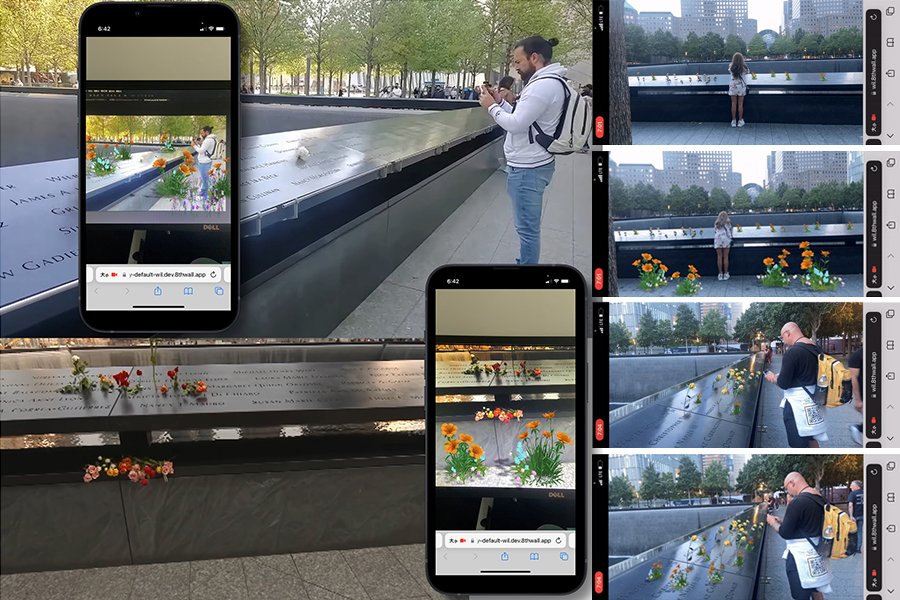
Digital Starlight Memorial, Augmented Reality, variable dimensions, 2022 © Wei Wu
You often explore how personal and collective memories coexist within shared environments. How do you approach gathering or translating these different narratives into an artwork?
I approach these narratives with great care because they are often shared at moments of vulnerability, involving grief, displacement, or loss. Rather than extracting stories, I design structures that allow people to decide what to share and how visible they wish to be. These may include open calls, anonymous submission channels, or QR-code portals. In Crossroads, for example, we asked a deliberately open question: “How do you move through the city?” This allowed a marathon runner, a commuter, or someone taking a daily walk to respond through the same language of movement. In my memorial projects, anonymity can protect the contributor, while a collective form, such as a constellation or a hidden monument, gives each story presence without exposing the individual.
The more difficult step is finding an artistic language that allows different experiences to coexist without flattening them. In Crossroads, I used a single dot as the smallest visual unit. One dot could represent an individual, while many dots could form a portrait and gradually expand into a portrait of the city. This created a unified visual language while preserving the relationship between the individual and the collective. For me, translation does not mean turning many lives into one story. It means creating a shared form in which their differences remain visible, while the connections between them can begin to emerge.
Your projects often intervene in recognizable civic spaces. What interests you about working with existing places rather than creating experiences in traditional art spaces?
Galleries pre-select their audiences; a city hall or a plaza does not. Working in recognizable civic sites means encountering people who never planned to see art, and that unplanned encounter is where the work becomes civic rather than merely aesthetic. Existing civic spaces are never neutral. A city hall, memorial, street, or public square already carries history, authority, everyday routines, and collective memory. When an artwork enters such a place, it does not simply occupy a background. It activates meanings that are already present. At Boston City Hall, projecting personal stories into the building created a direct dialogue between residents and the city, allowing individual experiences and emotions to become publicly visible.
At the 9/11 Memorial, a digital ritual can connect those gathered at the site with people commemorating from far away. It expands the act of remembrance beyond one physical location and creates a sense that people across the world are sharing the same concern and memory. A temporary intervention can make a familiar place speak differently, reveal what has been overlooked, and give private or marginalized experiences a visible place within the public realm. This is a kind of experience that a traditional white-cube gallery cannot offer.

Crossroads, Projection, 16.6 × 8 × 2.7 m, 2026 © Wei Wu
You describe technology as a tool for “presence, agency, and empowerment” rather than simply a form of spectacle. How do you create meaningful human experiences through digital tools?
Digital tools can rapidly create imagined worlds, transform a space, and bring audiences into experiences beyond everyday reality. They can also allow people to enter the work, interact with it, and form a direct connection with it. What matters to me is whether that connection gives participants a real sense that their presence and actions can shape the work.
Empowerment in my work is very concrete. A loved one’s name becomes a star that others can find. A testimony becomes part of a memorial at a landmark that once overlooked it. A daily walk becomes part of a portrait of the city projected at its civic heart. I also try to keep the threshold for participation low. No headset or ticket is required. A smartphone and a QR code are often enough. When personal, hidden, or marginalized memories enter public space and become visible to others, technology moves beyond spectacle. It becomes a way for people to feel present, to exercise agency, and to experience the quiet dignity of being recognized and counted.
How do you balance the possibilities of new technologies with the emotional and human aspects of storytelling, memory, and connection?
I anchor every project in a ritual that predates any technology: burial, vigil, gathering, walking, or a moment of silence. The technology then serves the ritual, never the other way around. In Digital Starlight Memorial, the experience is rooted in familiar gestures of remembrance, such as offering incense or sending a flower to someone who has passed away. AR and haptic technology allow these intimate gestures to travel and be felt by strangers who share a similar sense of loss.
I keep the interactions deliberately simple and human-scaled because my benchmark is whether the idea can genuinely reach and move people. I test each work against one question: if the technology disappeared tomorrow, would the emotional need it serves still be real? If the answer is yes, then the work has an honest foundation. The complexity can remain within the system, while the participant’s experience should feel direct and intuitive, as elemental as looking up at the night sky. Technology helps shape and deliver that experience, but it is never the purpose of the work itself.

Crossroads, Projection, 16.6 × 8 × 2.7 m, 2026 © Wei Wu

Crossroads, Projection, 16.6 × 8 × 2.7 m, 2026 © Wei Wu
Your works create temporary spaces where different perspectives can coexist. Do you see art as a way to encourage dialogue around social, cultural, or political questions?
Yes, though I see it less as debate and more as coexistence. What interests me is creating a condition in which multiple perspectives can occupy the same place without one erasing another. Augmented reality makes this almost literal. The physical city remains intact while hidden, and personal, marginalized, and collective narratives are layered onto it, where they can collide, coexist, and resonate.
In Memorial of Forgotten Casualties, residents and immigrants whose experiences are often overlooked can share their voices and reclaim histories connected to specific places, including landmarks associated with official memory. I do not prescribe a conclusion. Instead, I create temporary civic spaces where difference becomes visible and can be experienced by others. People are more likely to empathize with an issue after encountering it physically or emotionally. Recognizing that others may remember and experience the same place differently can itself become the beginning of dialogue.
Having presented projects in diverse contexts, from Boston City Hall to the Beijing National Stadium, how does each location influence the way you develop a new work?
The site is always my first collaborator. I would not simply move the same artwork from one place to another. Even when a work is part of a touring exhibition, I carefully reconsider how it should exist within each new setting. Every location has its own scale, history, symbolism, communities, and relationship with the public, and these conditions become part of the work’s meaning.
Tanner Fountain in Cambridge is an open and comfortable space, but its location at Harvard also gives it a sense of privilege. Presenting a memorial about migration and forgotten lives there creates a tension between displacement and a setting associated with elite education, resources, and opportunity.
Boston City Hall operates differently. Its Brutalist concrete walls feel heavy and monumental, yet it is also an active civic space where people handle immigration and identity documents, and attend public meetings. Projecting the stories of ordinary residents onto this architecture gave those experiences a scale and visibility they would not normally receive. The building became a kind of people’s monument, bringing civic authority and everyday life into direct dialogue.
The Beijing National Stadium calls for a completely different approach. Its monumental scale, national symbolism, and vast crowds require a more immersive intensity. The work I presented there combined advanced technology with a speculative, science-fiction-inspired visual language, responding naturally to the setting’s emphasis on art, technology, and cultural ambition.
Each place determines the work’s scale, rhythm, audience relationship, and even the forms of participation it can support. I spend as much time studying a site’s history, daily use, and social choreography as I do developing the work itself. My goal is to let the work respond to the place rather than simply occupy it.
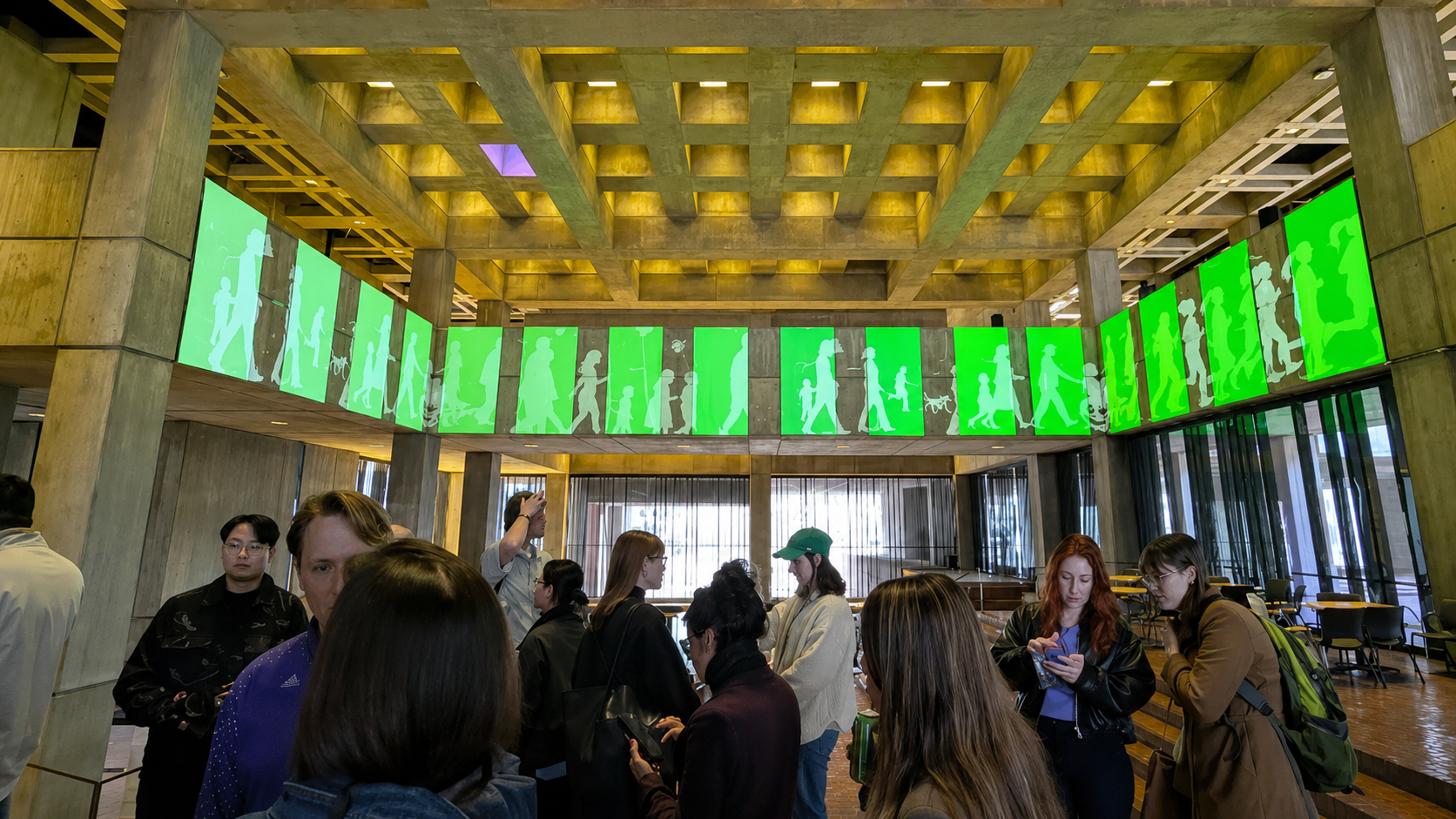
Crossroads, Projection, 16.6 × 8 × 2.7 m, 2026 © Wei Wu
Lastly, looking ahead, what new directions or questions are you interested in exploring within your practice? How do you imagine the relationship between technology and public life evolving in the future?
I am increasingly interested in what happens when AI moves beyond being a tool and becomes a participant in an artwork. Many conversations about AI in cities imagine a single authoritative voice: one best recommendation or one optimized route. I am drawn to the opposite possibility. I imagine AI as an ecology of situated, partial, and culturally specific voices, in which no single perspective owns the street and the narratives continue to grow as communities contribute their own memories, languages, and experiences.
This also leads me to think about how AI might support new forms of public memory. Traditional monuments are often permanent, fixed, and authoritative, while contemporary memory is increasingly distributed, participatory, and continually revised. AI could help a memorial remain responsive to the people around it, welcome new voices over time, and connect acts of remembrance across physical distance. I am interested in commemorations that behave less like stone and more like living systems, while still preserving the care, dignity, and responsibility that remembrance requires.
Perhaps the monuments of the future will not simply be objects we look at, but public experiences that we continually take part in, spaces that keep listening and evolving long after they are created. I hope my work can help imagine cities not only as places where art is presented, but as living archives shaped by the stories of the people within them.
Artist’s Talk
Al-Tiba9 Interviews is a curated promotional platform that offers artists the opportunity to articulate their vision and engage with our diverse international readership through insightful, published dialogues. Conducted by Mohamed Benhadj, founder and curator of Al-Tiba9, these interviews spotlight the artists’ creative journeys and introduce their work to the global contemporary art scene.
Through our extensive network of museums, galleries, art professionals, collectors, and art enthusiasts worldwide, Al-Tiba9 Interviews provides a meaningful stage for artists to expand their reach and strengthen their presence in the international art discourse.
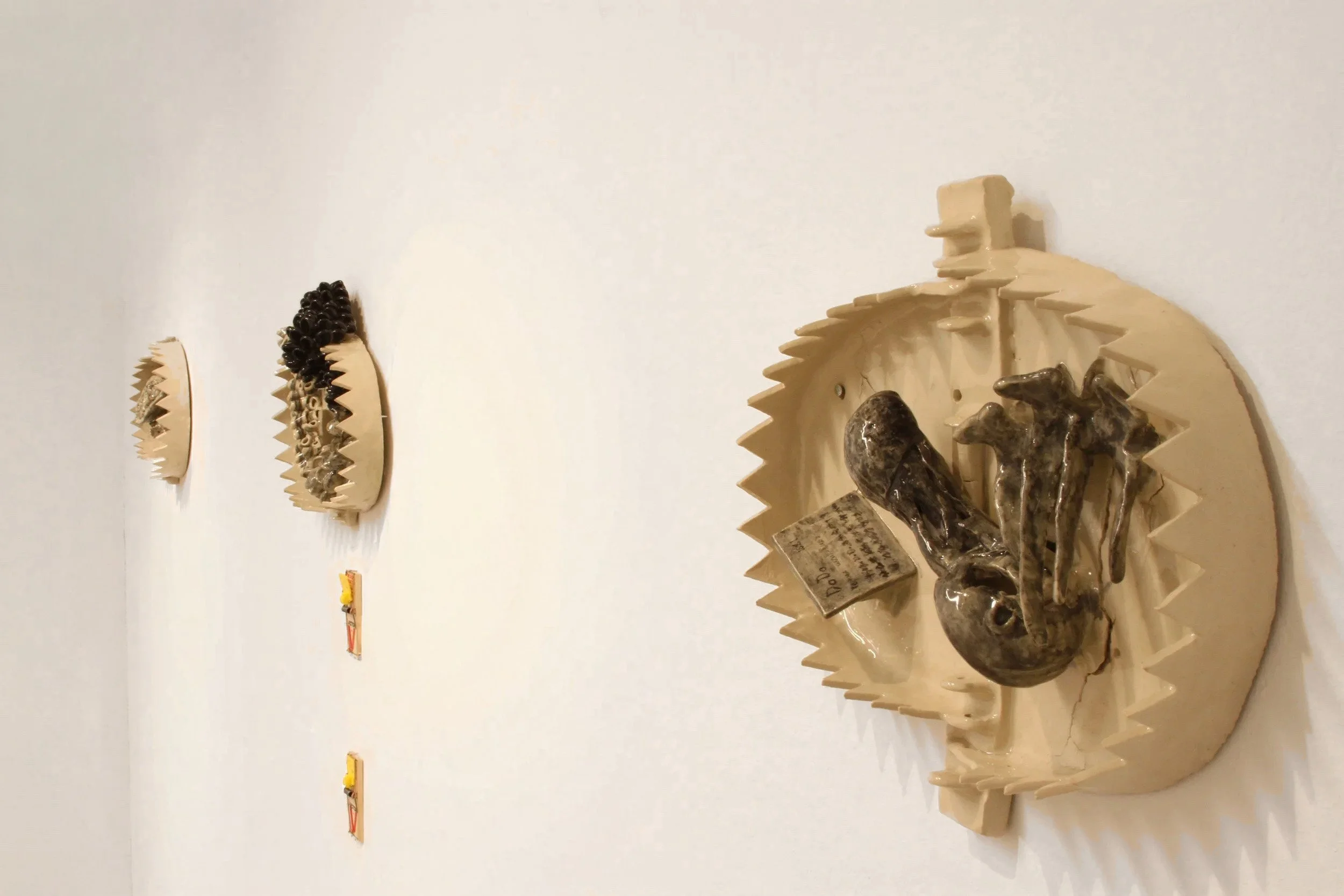

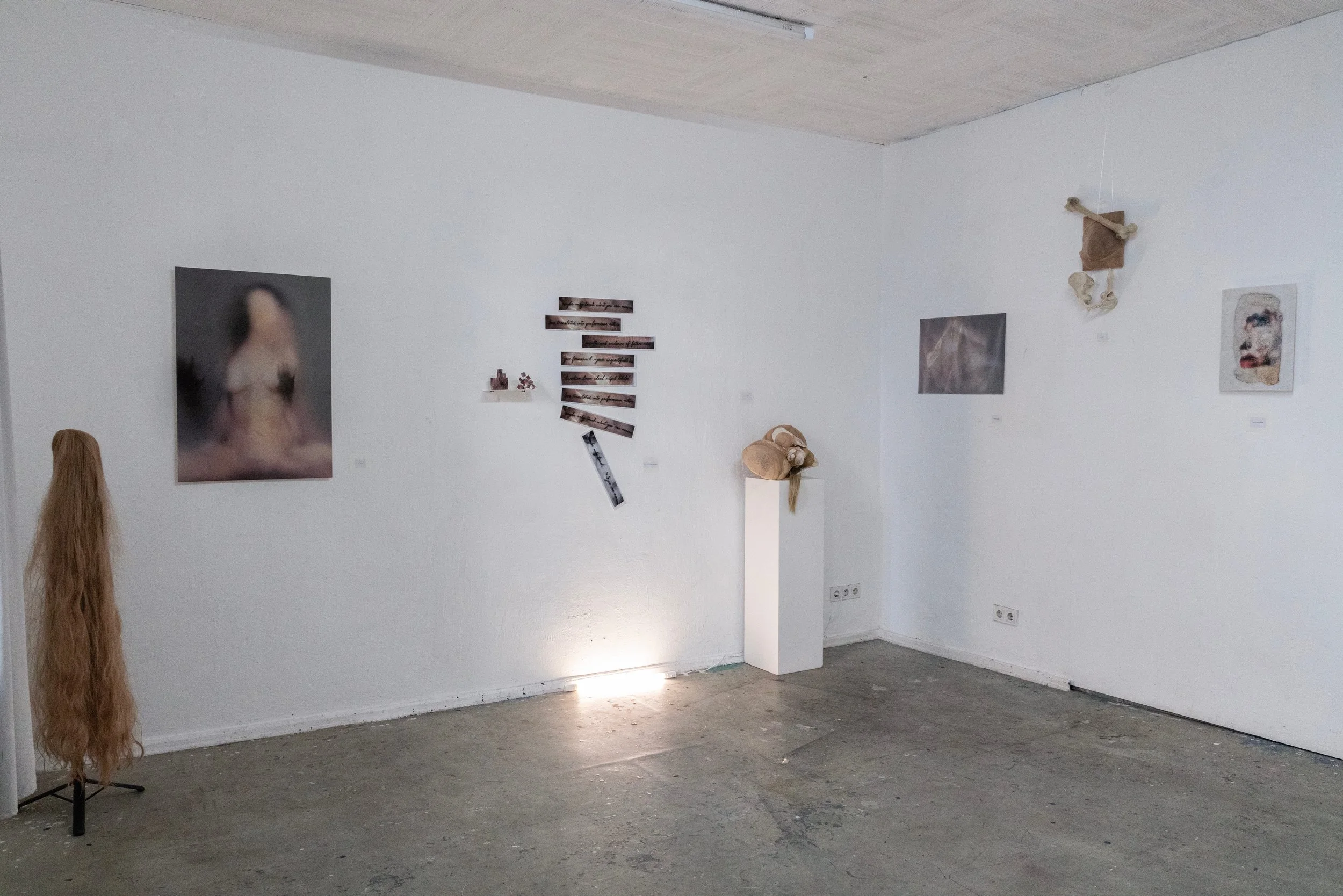

Lim Won Ji (Oneg) is a South Korean artist based in Chicago. Working across sculpture, installation, performance, and process-based experimentation, Lim investigates hypervigilance as a bodily condition shaped by anxiety, uncertainty, anticipation, and the desire for control, constructing unstable situations in which order is continually negotiated through gravity, time, repetition, and chance.