
10 Questions with Ronit Keret
Ronit Keret is a multidisciplinary artist, born in Jerusalem, who currently lives and works in both Haifa and Tel Aviv. She graduated from Hamidrasha Beit-Berl (2005-2009) and holds an MA in Arts Education from Leeds University, England (1998-2001).
Keret has primarily focused on installations and video art in recent years. Her recent work addresses the ecological crisis, particularly the melting of glaciers caused by human activity. Keret’s installations are shaped in response to the display space and the inherent qualities of her chosen materials, such as Styrofoam and cardboard. Through her art, she explores the complex relationship between humans and nature, reflecting on the transition between good and evil and the gap between childhood dreams and catastrophic reality.
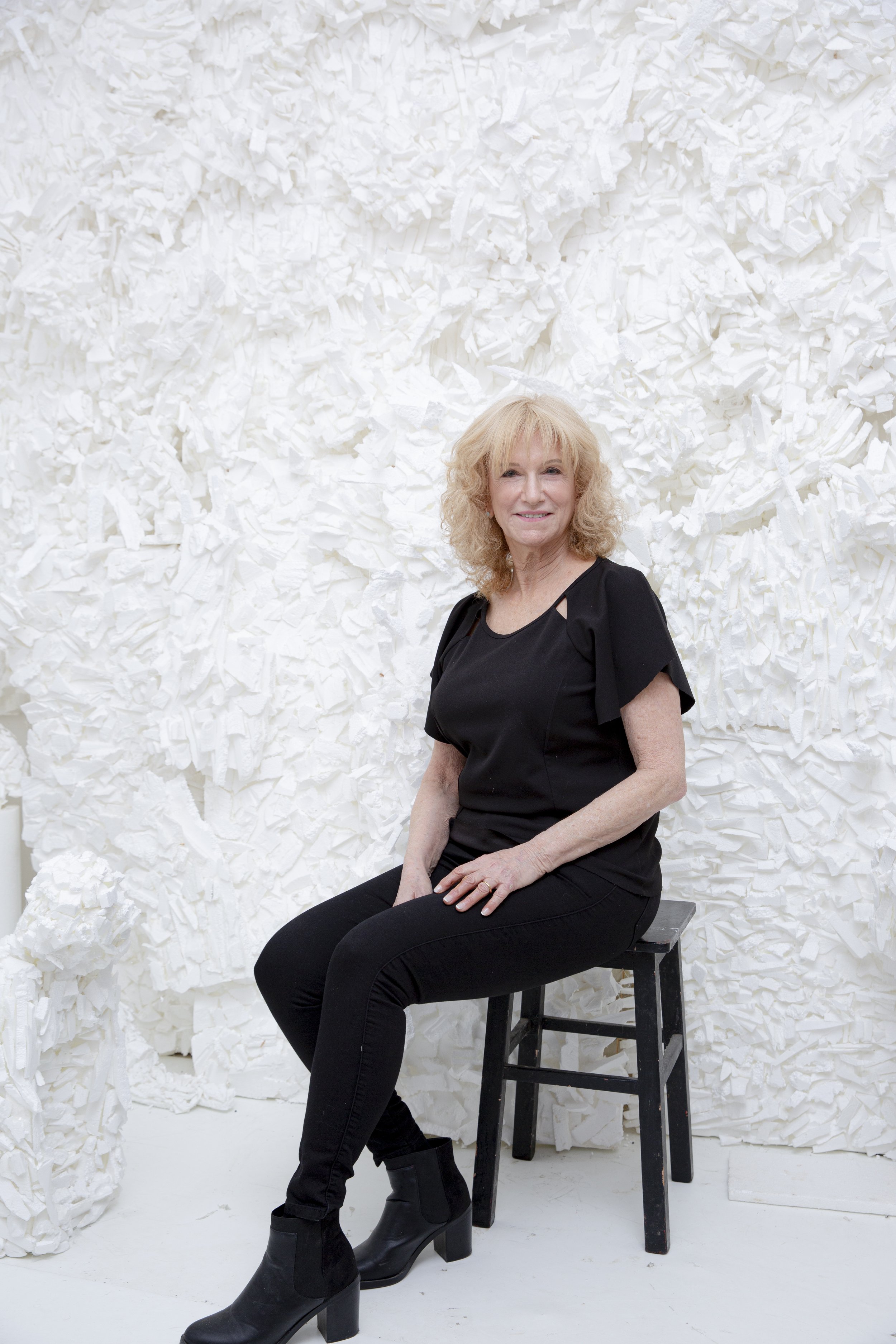
Ronit Keret - Portrait
ARTIST STATEMENT
“The natural world is being transformed before our eyes, although this transformation does not always take the form of a singular, dramatic event. More often, it unfolds through gradual processes of melting, desiccation, disintegration, migration, and disappearance, through an almost imperceptible movement in which a familiar landscape slowly loses its stability. Within this shifting reality, the tension between the beauty of nature and its vulnerability becomes increasingly acute, as does the contradiction between the human desire to protect, preserve, and insulate and the systems of production and consumption that hasten environmental destruction.
My work emerges from this tension and addresses the climate crisis and its consequences for both natural and human systems. Global warming, melting glaciers, prolonged drought, and climate-induced migration are not treated merely as data or distant phenomena; they are given material, visual, and spatial form.
I work primarily with site-specific installations that bring together sculpture, video projection, drawing, and relief. Each installation develops in response to the space in which it is presented, its scale, the history inscribed within it, and the physical experience it offers the viewer.
I frequently work with readymade objects and discarded industrial materials, particularly used Styrofoam and cardboard packaging. Designed to package, transport, protect, and insulate, these materials are discarded after a brief period of use. I cut, tear, and break them apart, then use the fragments to construct large-scale environments, walls, landscapes, reliefs, and sculptures.
Styrofoam occupies a central place in my work because of the contradictions it contains. Lightweight, white, and durable, it appears clean, silent, and almost pure. Yet it is also a polluting, non-biodegradable material, inseparable from industry, global commerce, and consumer culture. Intended to protect objects, it leaves behind an enduring and damaging environmental presence. Its whiteness and texture evoke glaciers, ice fields, and frozen landscapes that are steadily disappearing. This visual resemblance to nature does not obscure the material’s industrial origin; it makes the contradiction all the more visible a seemingly ancient and pristine landscape formed from an artificial substance that will remain long after that landscape has vanished.
In my installations I try to create an atmosphere of stillness and unease. At first, the material may appear delicate, poetic, and almost weightless. With sustained attention, however, an underlying anxiety begins to surface, along with a sense of internal movement and imminent collapse. I seek to place the viewer within a landscape that is at once beautiful and disturbing: quiet but charged, apparently stable yet profoundly vulnerable.
Most of my installations incorporate video projections. Through video, the static material becomes part of unfolding processes of melting, flooding, collapse, migration, and disappearance. At times, the image is projected directly onto the installation, moving across and within its surface. At others, it occupies a parallel space, extending the sculpture into an imagined landscape, a memory, or a possible future. The encounter between physical matter and the moving image unsettles the apparent stability of the space and gives it a sense of continuous transformation.
I create also autonomous sculptures, figures, and reliefs. The figures are often assembled from fragments of expanded Styrofoam and occupy an uncertain state between a recognizable body and a remnant, fracture, or trace. Through them, I consider humanity’s complex position within a rapidly changing world: responsible for the destruction it has set in motion, yet also exposed to its consequences, displaced, uprooted, and compelled to migrate, while still searching for the possibility of repair. The human body does not stand apart from the landscape as a neutral observer; it belongs to the same material and ecological system that is now coming undone.”
— Ronit Keret

Topography of Collapse, installation view, HAA Gallery, 2026 © Ronit Keret
Ronit Keret. Topography of Collapse
Curator: Vera Pilpoul
Topography of Collapse, Ronit Keret’s first solo exhibition in Helsinki, brings together site-specific installations, drawings, and video in a body of work shaped by erosion, fracture, and environmental precarity. The exhibition develops out of Keret’s long-standing preoccupation with climate change, and more specifically with melting glaciers, ecological fragility, and the long afterlife of industrial waste. Rather than approaching these subjects through documentary description, Keret works through form, structure, and material transformation. Collapse appears here as a continuous condition, one that affects landscape, matter, and perception alike.
At the centre of the exhibition is a large wall-based installation composed of discarded Styrofoam packaging, which the artist carves, shapes, and reassembles into an expansive white relief. Gathered from the urban environment just before being thrown away, these fragments are transformed into a precarious topography that evokes a fractured glacier, a fault line, or an eroded terrain, while remaining recognisable as industrial waste. This double register is central to the exhibition. Styrofoam resembles ice in its colour, texture, and apparent fragility, yet it is a synthetic, petroleum-based material that resists decomposition and persists in the environment long after its original use. In Keret’s hands, these contradictory qualities remain unresolved. The material recalls a natural formation while simultaneously pointing to systems of extraction, consumption, and ecological damage.
The installation avoids direct representation, focusing instead on fracture, pressure, and instability. The fissure running through the work acts both as a visual structure and as a conceptual marker. It introduces the sense of an internal break: a loss of continuity, a system under strain, a condition in which environmental and spatial stability can no longer be taken for granted.
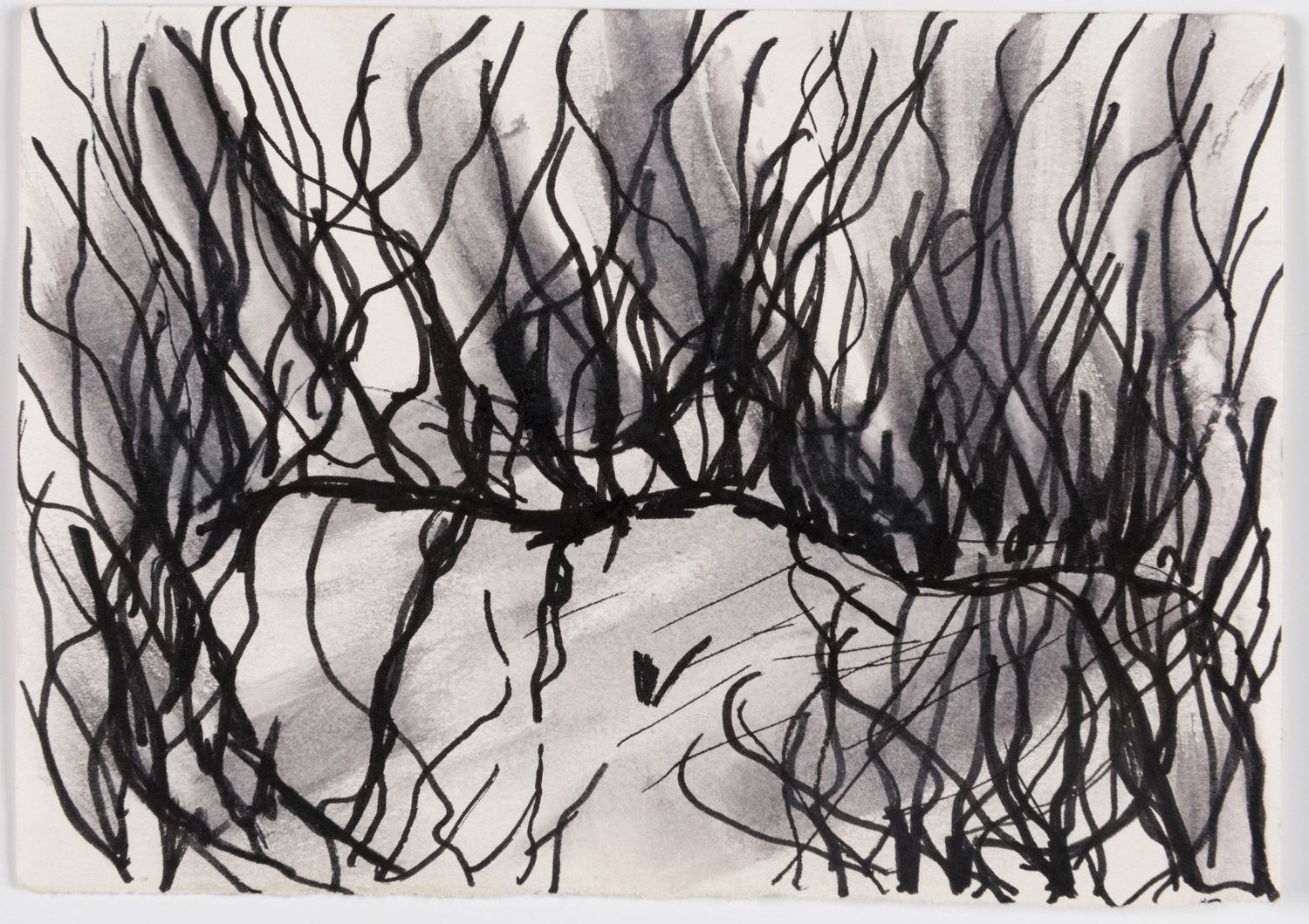
Instability extends into the drawings, executed in black ink through sparse yet insistent lines that branch, bend, and intersect. They evoke trees, thickets, currents, or exposed structures without settling into fixed description. Trees appear as forms under stress, dense vertical fields suggest vegetation, burning, or erosion, and a bridge emerges as a vulnerable structure suspended within an unstable spatial field. Landscape is treated here as a field of pressure, marked by exposure, strain, and imbalance.
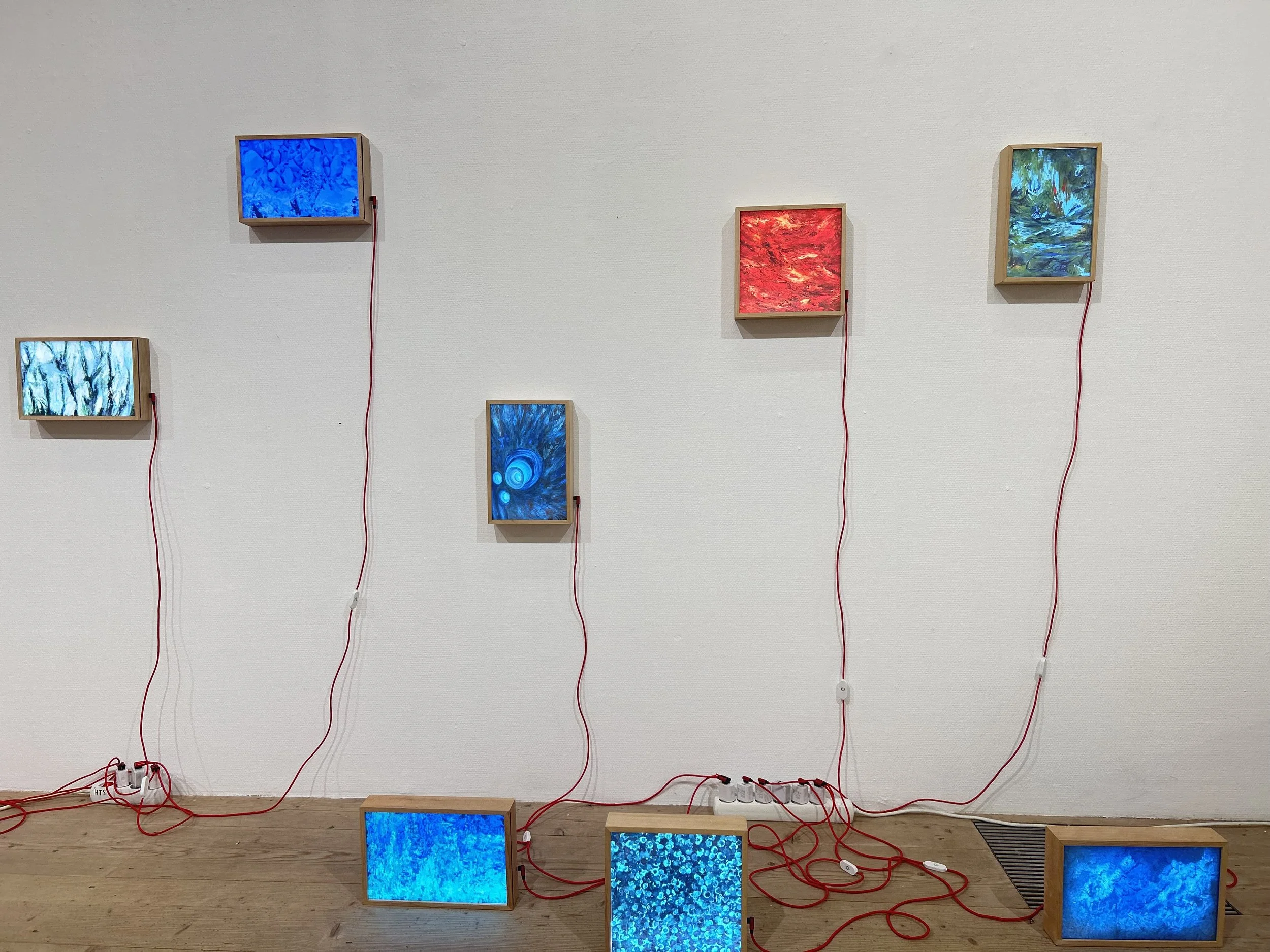
An installation of small wooden light boxes, scattered across the wall and descending onto the floor, creates an abstract presence within the space. Each contains a photograph of one of the artist’s paintings or a still from her earlier video works, and is connected to a long red electrical cord that remains visible and visually dominant. Together, they form a choreography of lines that contrasts with the reduced palette of the drawings and the near-monochrome central installation.
Melting introduces a temporal dimension to the exhibition. Set in the 14th-century Château de La Napoule in southern France, the video follows the gradual flooding of the fortress as rain turns to inundation and waves breach its gardens and interior spaces. In the final sequence, the château lies underwater, with fish and plastic debris drifting through its halls. Its soundscape, combining traffic, construction, a city café, an internet server room, rain, and crashing waves, renders collapse as a slow, permeating force.
Taken together, the works in Topography of Collapse register catastrophe as a slow and pervasive condition: a world cracking gradually, visibly, and from within. Keret gives this condition form through a restrained and sensitive handling of line, light, and matter.

Topography of Collapse, installation view, HAA Gallery, 2026 © Ronit Keret
INTERVIEW
Welcome back to Al-Tiba9. What have you been up to since our latest interview?
Ronit Keret: Since our previous interview in 2021, which centered on my project Tears, my engagement with the climate crisis has expanded considerably. While melting glaciers remain an important point of departure, my research now also addresses drought, extreme heat, and severe water scarcity, as well as the human consequences of these processes, particularly climate-induced migration and the displacement of communities whose environments can no longer sustain them. I have also become increasingly concerned with coral bleaching caused by rising ocean temperatures and the danger it poses to marine ecosystems. These phenomena may appear geographically distinct, but I understand them as interconnected manifestations of the same ecological imbalance: the disappearance of ice, the absence of water, the loss of habitat, and the gradual extinction of colour and life beneath the sea. During this period, I presented my work in South Korea, participated in artist residencies in New York and at La Napoule in France, and took part in several exhibitions in Israel. These experiences offered me new cultural and geographical perspectives and allowed my research to evolve through encounters with different landscapes, materials, and artistic communities. At the same time, my artistic language has continued to develop through installation, video, drawing, illuminated works, and sculptures made from discarded industrial materials. Rather than simply representing environmental catastrophe, I seek to create spaces in which its instability, vulnerability, and emotional weight can be physically sensed.
Topography of Collapse is your first solo exhibition in Finland. How did this exhibition come about, and what made HAA Gallery the right place for this project?
Ronit Keret: This was the first time I had been invited to exhibit in Finland, and I felt deeply honored and excited to present my work in such a northern and intriguing place. HAA Gallery is located on Suomenlinna, the historic sea fortress just off the coast of Helsinki and a UNESCO World Heritage Site. Its unique setting, surrounded by the sea and shaped by centuries of history, gave the exhibition an additional layer of meaning. Presenting this body of work there felt especially significant. The exhibition addresses melting glaciers, rising water, and landscapes undergoing irreversible transformation, and these questions acquire a different resonance in a country whose cultural and geographical identity is so closely connected to water, forests, and changing seasons. Finland itself is warming at nearly twice the global average, and the effects are already visible: winters are becoming milder, snow and ice seasons are shortening, and heatwaves and heavy rainfall are becoming more frequent. Several visitors spoke about the unfamiliar intensity of recent summers in a country once regarded as a refuge from the heat. These conversations reinforced the sense that the exhibition was not addressing a distant or abstract catastrophe, but a transformation already being experienced locally, in the landscape, in everyday life, and in people’s relationship with the season

Silence, installation view, HAA Gallery, 2026 © Ronit Keret
Vera Pilpoul: The exhibition emerged through an extended dialogue between Ronit and me about how works created at different moments could be brought together into a coherent spatial and conceptual constellation, particularly when presented in a country and cultural context different from the one in which they were made. The idea of carrying Ronit’s glacier northward was compelling to both of us, and when the opportunity arose, we embraced it. We did not want merely to assemble a selection of works concerned with climate change. We wanted the gallery itself to become a disturbed landscape: a place in which the viewer moves between seduction and unease, recognition and uncertainty. Realising this vision was challenging, not least because transporting large quantities of Styrofoam from Israel to Finland proved extremely complicated. Inevitably, our artistic and curatorial ambitions had to negotiate with logistical realities and technical constraints. In this sense, the final exhibition was shaped not only by our original vision, but also by processes of adaptation, limitation, and compromise, ideas that, perhaps unexpectedly, echoed the exhibition’s own preoccupation with unstable conditions. HAA Gallery was particularly meaningful because it is situated on Suomenlinna, an island and historic sea fortress reached by crossing the water. The location was far from incidental. The surrounding Baltic landscape, the fortified architecture, and the gallery’s physical separation from the city intensified the exhibition’s concerns with vulnerability, protection, erosion, and possible submersion. The setting also created a powerful conceptual correspondence with Ronit’s video Melting, in which another historic fortress is gradually overwhelmed by rising water. Although the work formed an important part of our thinking, for several practical and curatorial reasons it was ultimately not presented at HAA Gallery. We would therefore be very pleased to have the opportunity to show Melting alongside this interview.
The exhibition centers on Styrofoam, a material that closely resembles glacial ice and that you have worked with extensively. What drew you to this contrast between the artificial and the natural?
Ronit Keret: I first turned to Styrofoam after witnessing the Perito Moreno Glacier in Patagonia breaking apart and collapsing into the water. It was a magnificent and terrifying experience: I was confronted simultaneously with the sublime beauty of the natural world and with its extreme vulnerability. Styrofoam became the most precise material through which I could return to that contradiction. It resembles ice in its whiteness, texture, and apparent fragility, yet it is petroleum-based, entirely artificial, and resistant to decomposition. It appears delicate and temporary, while in environmental terms it is disturbingly permanent. There is also a profound irony embedded in its ordinary function. Styrofoam is manufactured to protect and preserve objects during transportation, yet its production, use, and persistence are part of the industrial systems contributing to the destruction of what we most urgently need to protect.
In the studio, I cut discarded packaging by hand into thousands of fragments and reconstruct it as a fractured glacial landscape. Through this slow and repetitive process, industrial waste is transformed without losing the history or contradictions it carries. In this exhibition, alongside the Styrofoam installation, I also created works with hot glue on royal-blue velvet. Using the glue, I formed delicate, plant-like shapes, as though attempting to preserve traces of vegetation within an artificial material. These works extend the tension between the natural and the synthetic while drawing attention to the effects of global warming not only on glaciers and water, but also on the plant life that sustains our world. The Styrofoam glacier is therefore neither an imitation of nature nor simply a symbol of pollution. It is a hybrid landscape in which the artificial and the natural, protection and destruction, beauty and toxicity have become inseparable.

Topography of Collapse, installation view, HAA Gallery, 2026 © Ronit Keret
Rather than documenting climate change, your works create immersive environments. Why is it important for you to address the climate crisis through metaphor rather than direct representation?
Ronit Keret: Documentary images provide essential information, but we have also become accustomed to seeing images of catastrophe. They appear, shock us briefly, and are quickly replaced by the next image. I am interested in creating a slower encounter, one that cannot be understood or dismissed immediately. Metaphor allows the work to reach the viewer through sensation before it becomes an argument. A surface may initially appear beautiful, delicate, or even sublime; only gradually does its artificial and destructive nature become apparent. That delay is important to me. It reflects the way the climate crisis itself operates: often gradually and almost imperceptibly, until what once seemed permanent and stable has already begun to disappear. The immersive environment also places the viewer physically inside the work. Rather than observing the crisis from a safe distance, the viewer becomes surrounded by a fractured and unstable landscape. I do not want to tell people what they should think or feel. I want to create an experience that remains with them, an encounter in which beauty, attraction, anxiety, and responsibility can coexist.
Vera Pilpoul: Curatorially, we approached collapse not as an event illustrated on the walls, but as a condition governing the entire exhibition. It appears in fractured surfaces, suspended images, exposed cords, vulnerable structures, and landscapes that seem to be dissolving or losing their coherence. Metaphor prevents the exhibition from becoming didactic. It leaves room for uncertainty, imagination, and emotional recognition, without diminishing the political urgency of the subject.
Vera Pilpoul, what first drew you to Ronit Keret’s work, and how did your collaboration develop into Topography of Collapse?
Vera Pilpoul : I first met Ronit in 2014 at her solo exhibition, After All, at the Artists’ House in Tel Aviv. It featured a compact, immersive environment constructed from Styrofoam packaging that evoked architectural fragments and imagined futuristic structures. Stepping into this concealed space, I was struck by the complexity she achieved through an almost entirely white visual vocabulary. A material associated with disposability and industrial waste had been transformed into something fragile, monumental, and strangely beautiful—a tension between toxic permanence and apparent delicacy that remains central to her practice today. Having curated my first project in Venice the previous year, I instinctively felt her work belonged at the Biennale and told her so. We began working together shortly after.
Our collaboration took a major public form with Tears, presented at Palazzo Mora in Venice in 2022, and has continued through an ongoing dialogue about her evolving practice. Topography of Collapse was conceived as an expansion of the questions Ronit’s art and research raised. Works from different moments in her practice were brought together in a single spatial constellation. The exhibition reflects our shared desire to move beyond the isolated image of the melting glacier, framing collapse as a broader condition: gradual, cumulative, and deeply embedded in the materials and landscapes of everyday life.
How did you approach the installation of the works within HAA Gallery, and what role did the gallery space play in shaping the exhibition’s atmosphere and narrative?
Vera Pilpoul: The point of departure was Ronit’s site-specific Styrofoam work, which suggests a shattered, icy terrain. Presenting Topography of Collapse in Finland gave this image particular resonance, here, the consequences of a warming climate are a perceptible reality, and the glacial form registered immediately. Throughout the installation, however, we also found ourselves discussing how climatic deterioration intersects with wider geopolitical tensions; the two can no longer be neatly separated.
The HAA Gallery itself, situated on the historic sea fortress of Suomenlinna, profoundly shaped our vision. The surrounding Baltic landscape and fortified architecture intensified the exhibition’s focus on vulnerability, protection, and possible submersion. We wanted the gallery to function as a disturbed landscape. Practical challenges became part of this process, too. Adapting the Styrofoam structure to the space, realizing several important drawings had not arrived, and making a rapid curatorial decision to substitute the planned video, Melting, with Tears, were not just logistical hurdles, they altered the exhibition's rhythm and internal logic.
We approached the installation as a choreography of differing intensities. The cluster of light boxes, showing still images taken from Keret’s video work and previous paintings, all related to landscapes real and imagined, formed a fragile constellation connected by exposed red electrical cords. The intervals between the works became just as significant as the objects themselves. Ultimately, the entire process of adaptation, limitation, and compromise echoed the instability at the very heart of the project.
Your installations are made from discarded industrial materials. Has working with waste changed the way you think about beauty, value, or responsibility as an artist?
Ronit Keret: Working with discarded materials has taught me that value is neither stable nor inherent. A piece of packaging may be produced to protect an object, used for only a few minutes, and then remain in the environment for centuries. By bringing it into the studio, I do not pretend to redeem it or erase the damage associated with it. Instead, I expose its persistence and the contradictions it embodies. Searching for materials around rubbish bins has also made me acutely aware of the enormous amount we consume and discard. Encountering this waste directly, not as an abstract statistic but as a physical presence, has changed the way I look at objects and at the speed with which they lose their value. Beauty becomes complicated in this process. I allow the material to remain seductive because our relationship with consumption is itself seductive. Yet this beauty should never be entirely comfortable. I want it to retain an aftertaste of unease. For me, artistic responsibility begins with attention: attention to what materials are, where they come from, the histories they carry, and what remains long after we believe we have finished.
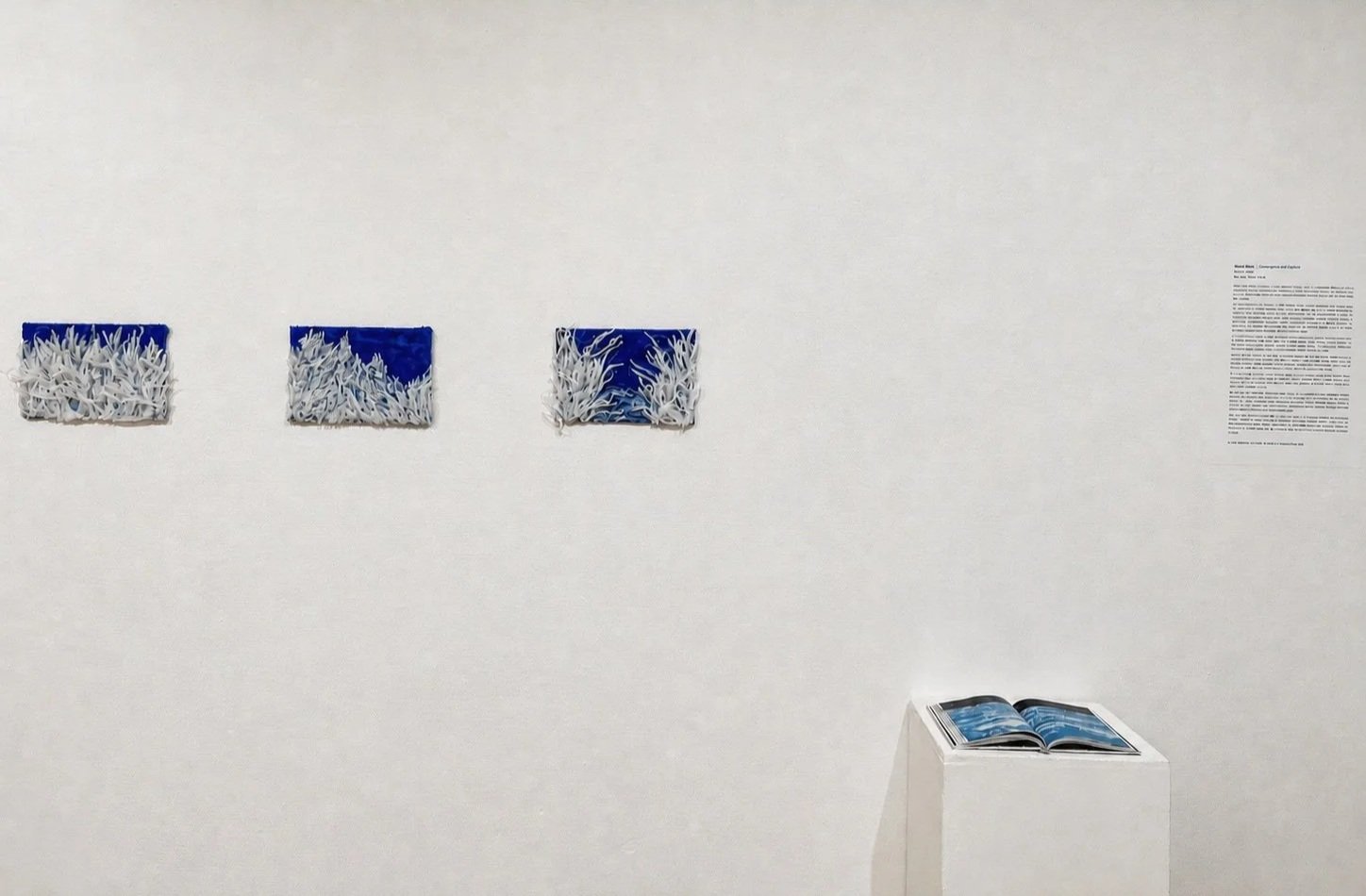
Velevt series, installation view, HAA Gallery, 2026 © Ronit Keret

Velevt, hot glue on velvet, 2026 © Ronit Keret
Many of the works explore the blurred boundary between nature and human-made materials. Do you think this distinction is becoming increasingly difficult to separate in today’s world?
Ronit Keret: Yes. I do not think the distinction has entirely disappeared, but it has certainly become increasingly difficult to maintain. Almost every natural system now carries traces of human activity. Plastic enters oceans and living bodies; industrial particles penetrate the air, soil, and ice; and even landscapes that appear remote or untouched are affected by decisions made elsewhere. The ambiguity of the materials in my work reflects this condition. Styrofoam resembles a glacier; hot glue suggests vegetation, rivers, or root systems; and artificial light evokes a natural radiance. The eye recognizes something from nature, but the material contradicts that recognition. This tension is important to me because it reveals how profoundly our understanding of nature has changed. Nature is no longer a separate realm somewhere beyond us. It is inseparably entangled with our bodies and with our systems of production, consumption, imagination, and neglect
Your installations are made from discarded industrial materials. Has working with waste changed the way you think about beauty, value, or responsibility as an artist?
Ronit Keret: Working with discarded materials has profoundly changed the way I think about beauty, value, and responsibility. Value is neither stable nor inherent. A piece of Styrofoam packaging may be produced to protect an object, used for only a few minutes, and then remain in the environment for centuries. When I collect it and bring it into my studio, I do not pretend to redeem it or erase the damage associated with it. I transform it into glaciers, landscapes, and vulnerable human figures, while allowing it to retain the memory of its industrial origin. Beauty becomes complicated in this process. White Styrofoam can appear pure, delicate, and even sublime, particularly when it evokes ice or snow. Yet this beauty should never be entirely comfortable. Its seductiveness reflects our own attraction to consumption, while beneath its surface lies a material that is toxic, persistent, and almost impossible to eliminate. I want viewers to be drawn to the work, but also to experience an aftertaste of unease. For me, artistic responsibility begins with attention: to what materials are, where they come from, the systems of production and consumption they belong to, and what remains long after we believe we have finished using them. I do not claim that art can resolve these contradictions, but it can make them visible and invite us to reconsider what we discard, and what never truly.

Velevt, installation view, HAA Gallery, 2026 © Ronit Keret
How have visitors in Helsinki responded to the exhibition? Have any reactions or conversations surprised you?
Ronit Keret: I was particularly interested in the moment when viewers realized that the glacier-like installation was made from discarded Styrofoam. Their initial response was often sensory: they were drawn to its whiteness, scale, and apparent delicacy, and only afterwards confronted the nature of the material. That transition from attraction to discomfort is fundamental to the work. The Finnish context also brought a particular sensitivity to the exhibition. Surrounded by the sea and shaped by a culture deeply connected to nature and the landscape, many visitors understood that the works were not describing a distant catastrophe, but changes that already belong to their present. Several visitors shared with me that Finland itself is increasingly experiencing the effects of global warming. They recalled how tourists from around the world once came to Finland during the summer to enjoy its characteristically cool climate. In recent years, however, Finnish summers have become noticeably warmer, and they described this summer as having brought an unprecedented number of hot days, with temperatures to which many Finns are simply unaccustomed. What surprised and moved me was how quickly the exhibition opened a space for personal conversations. The melting glacier was no longer perceived as an image of something happening far away; it became connected to the visitors’ own memories, landscapes, and sense of a climate that is changing around them.
Alongside environmental concerns, your practice often touches on vulnerability, transformation, and human responsibility. How do these ideas continue to shape your work?
Ronit Keret: The environmental crisis cannot be separated from vulnerability or responsibility. It exposes the fragility of landscapes, species, communities, and bodies, while also revealing the consequences of human decisions. I am interested in the uncomfortable space between feeling powerless in the face of such vast processes and recognizing that they are not abstract or inevitable; they are shaped by political, economic, and personal choices. This connection is especially visible in my human figures, which are constructed from fragmented pieces of discarded Styrofoam. Their stooped, fractured, and sometimes incomplete bodies appear physically fragile, even when they possess a monumental presence. They echo damaged landscapes, but also those who have been displaced, wounded, excluded, or rendered invisible by social and environmental forces. By using the same material to evoke both a melting glacier and a vulnerable human body, I seek to emphasize that the fate of the natural world cannot be separated from our own. Transformation in my work is therefore never entirely positive or negative. It may suggest adaptation, imagination, or renewal, but also erosion, mutation, and irreversible loss. Vulnerability is not simply weakness; it is evidence of interdependence. It reminds us that neither human beings nor natural systems exist in isolation. This understanding continues to shape both the subjects I explore and the materials through which I give them form.

Silence, installation view, HAA Gallery, 2026 © Ronit Keret
Lastly, your recent research focuses on drought, climate refugees, and coral bleaching. Are these themes influencing the direction of your future projects?
Ronit Keret: In the coming year, I am planning several exhibitions that will allow me to further develop this research. I am particularly interested in the drying of rivers, the disappearance of ice from the European Alps, and the different ways coastal cities are preparing for flooding and rising sea levels. Through these future projects, I hope to explore the interconnected manifestations of the human-made climate crisis and its profound impact on landscapes, ecosystems, and human life.
Artist’s Talk
Al-Tiba9 Interviews is a curated promotional platform that offers artists the opportunity to articulate their vision and engage with our diverse international readership through insightful, published dialogues. Conducted by Mohamed Benhadj, founder and curator of Al-Tiba9, these interviews spotlight the artists’ creative journeys and introduce their work to the global contemporary art scene.
Through our extensive network of museums, galleries, art professionals, collectors, and art enthusiasts worldwide, Al-Tiba9 Interviews provides a meaningful stage for artists to expand their reach and strengthen their presence in the international art discourse.



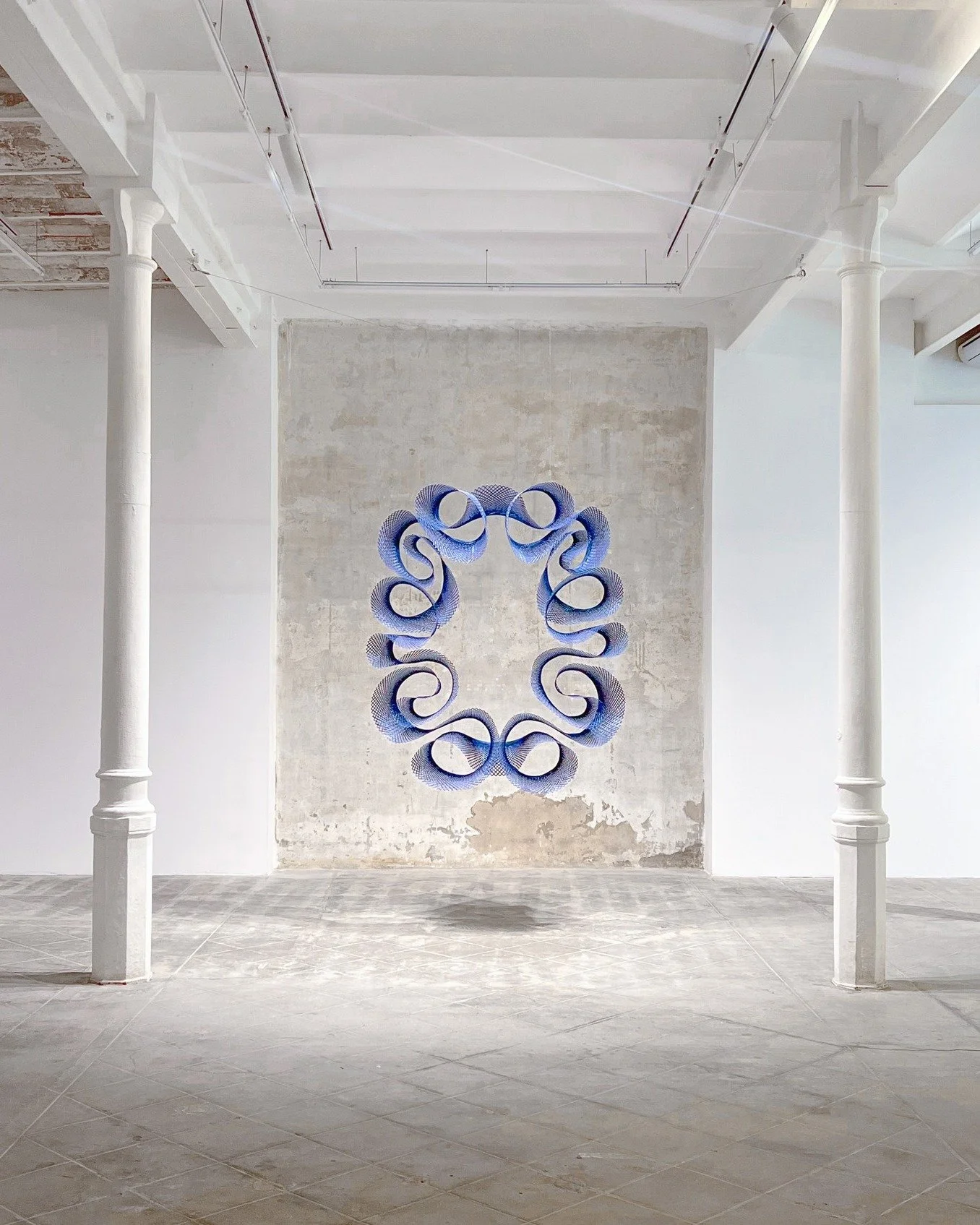
Lim Won Ji (Oneg) is a South Korean artist based in Chicago. Working across sculpture, installation, performance, and process-based experimentation, Lim investigates hypervigilance as a bodily condition shaped by anxiety, uncertainty, anticipation, and the desire for control, constructing unstable situations in which order is continually negotiated through gravity, time, repetition, and chance.