

10 Questions with Zengjie Chai
Zengjie Chai is an interdisciplinary artist from Hangzhou, China, currently based in Los Angeles. He holds a Bachelor's degree in Media from the University of California, San Diego, and an MFA in Art from the California Institute of the Arts. Working autobiographically through queer autotheory, he explores elements of his lived experience from multiple perspectives. Through engaging with different media, including performance, video, installations, and more, his work addresses and examines the intersection between his personal narrative and the sociological context as a queer diasporic body.
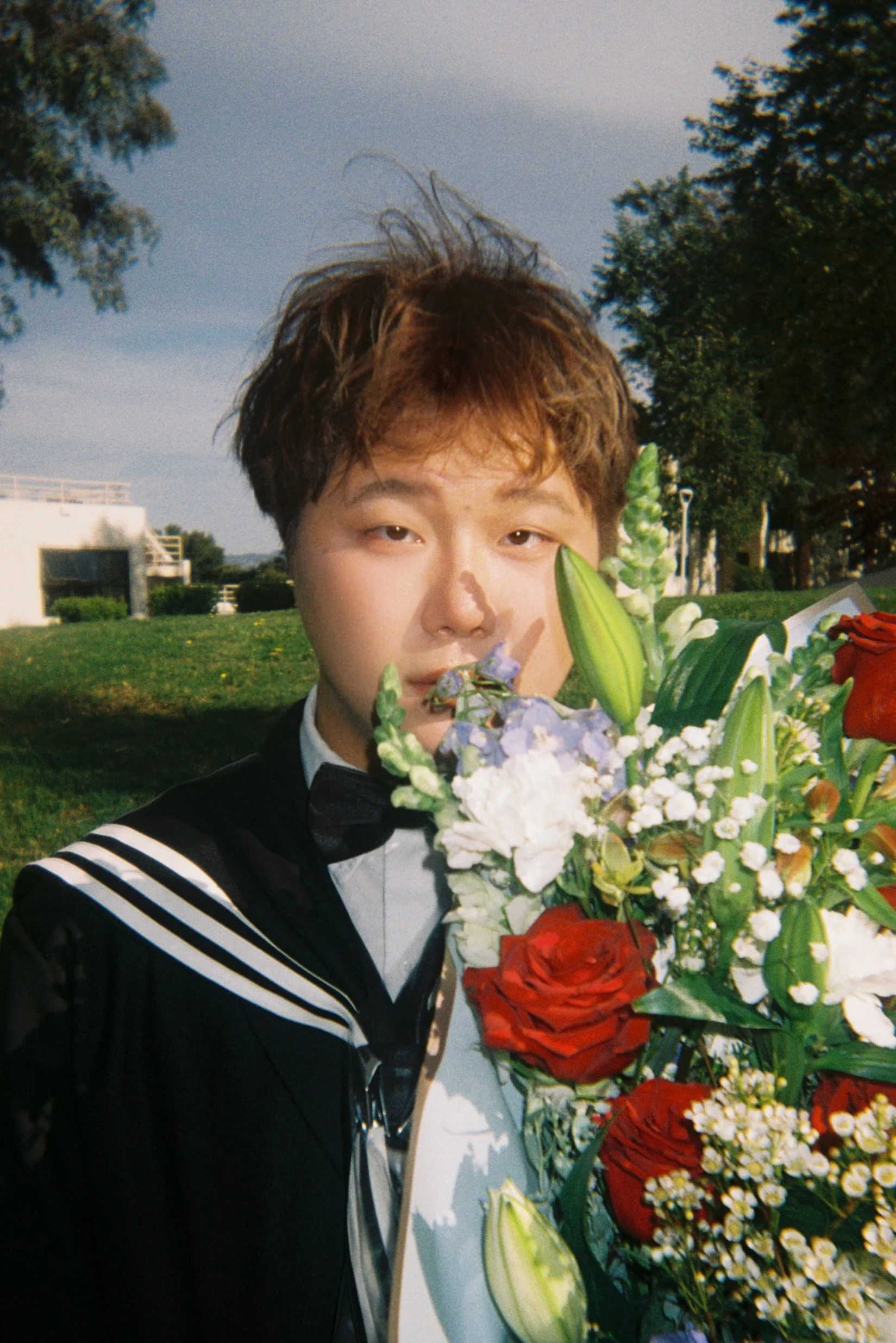
Zengjie Chai - Portrait
ARTIST STATEMENT
Chai’s artistic practice originates from his autobiography, exploring elements from his lived experience. He uses his work to bridge different individual perceptions and create an emotional impact on viewers through embodying lived experience. His process interweaves his personal experiences with various cultural artefacts across different media, along with glimpses of humour throughout the works. By utilising autotheory and analogy, Chai positions his personal narrative in a cultural and critical framework that the audience can access.
Through the vulnerable and intimate moments in his work, Chai reveals the ambiguous in-between spaces he occupies. By examining various personal experiences, Chai investigates how a queer body navigates a heteronormative social structure.
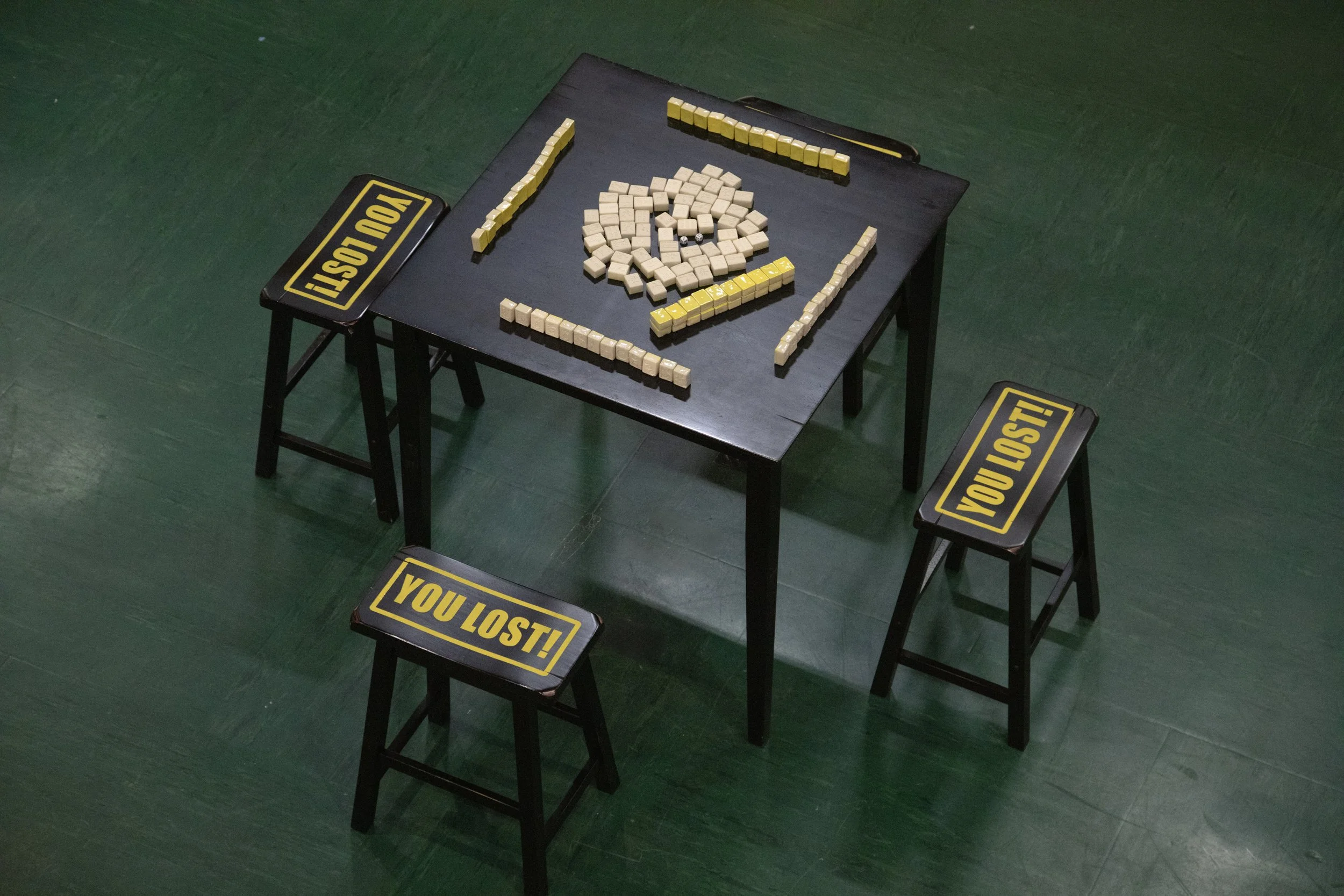
the game of life, installation, size varibale, 2025 © Zengjie Chai
INTERVIEW
Your work begins from autobiography. What parts of your personal history feel most urgent for you to return to in your practice right now?
At the moment, I find myself returning to different dimensions of queerness, particularly queer longing, attachment, and the urgency of being present. These concerns are central to my recent solo exhibition, We Will Always Have Los Angeles. Engaging with these layers of my own experience has allowed me to better understand myself, while also guiding the ways I approach art-making and think about my practice. Returning to this part of myself has helped me recognise the nonlinear and non-binary qualities that are essential to the ethos of my work. These ideas not only shape the content of my pieces; they also inform the ways I approach vulnerability, desire, intimacy, and identity.
You work across performance, video, installation, and other mediums. How do you decide which medium is right for a specific memory or idea?
I think every medium carries its own set of qualities, and my decisions usually depend on whether those qualities can add something essential to the idea I am trying to convey. For example, one of my earlier works, teenage dream, began as a painting on canvas but eventually became a sculpture made with transparent film. The piece reflects on how educational certificates can become psychologically weighted objects, even though they are mass-produced pieces of paper that are materially inexpensive. Halfway through the painting process, I realized that the labor I was investing in the work was turning the certificate into a unique object, which contradicted the original impulse behind the piece. I then sent the images to a large-scale printer and received the finished film within two hours. That shift in medium allowed the work to stay closer to the cheap, reproducible, and institutional nature of the certificate itself.

We Will Always Have Los Angeles, installation shot, 2026 © Zengjie Chai
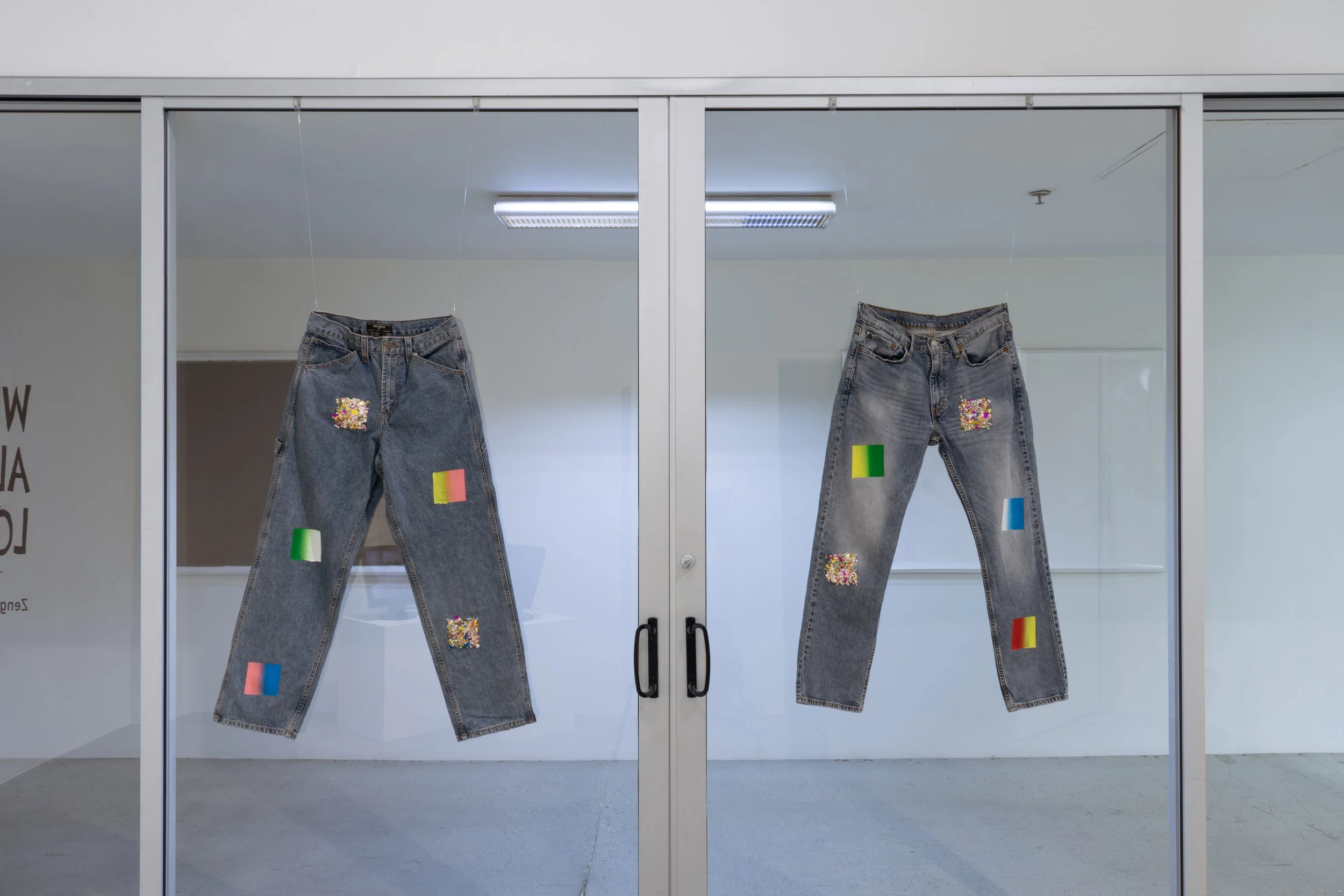
We Will Always Have Los Angeles, mixed media on denim, size variable, 2026 © Zengjie Chai
Can you describe a moment when a personal experience changed how you approached your work materially or conceptually?
When I first came to Los Angeles in 2023, I had a difficult time adjusting during the first few months, even though I thought I would be fine. I became much more homesick than I expected. I missed the ordinary things that had shaped my life at home, especially my grandmother's soup. That longing made me rethink what home means to me, not as a fixed location but as something formed through memory, care, routine, and bodily experience. It also brought me closer to my lived experience as a source of artistic thinking. This led me toward a new mode of art-making and changed the way I conceptualize intimacy, belonging, and displacement in my practice.
Your practice often uses autotheory and personal narrative together. How do you balance intimacy with critical distance in your work?
I strongly believe that the personal is political. I do not think personal experience exists in an isolated bubble, separate from the larger social, cultural, and institutional frameworks that shape it. My works often begin with intimate personal moments, and sometimes that intimacy becomes the content itself. I spend time trying to understand those moments, what produced them, and what kinds of structures may be embedded within them. At the same time, I experiment with which medium can best hold that experience. Through this process, I place my memories and emotions under a critical lens, allowing the work to remain emotionally grounded while still opening itself to broader conversations.
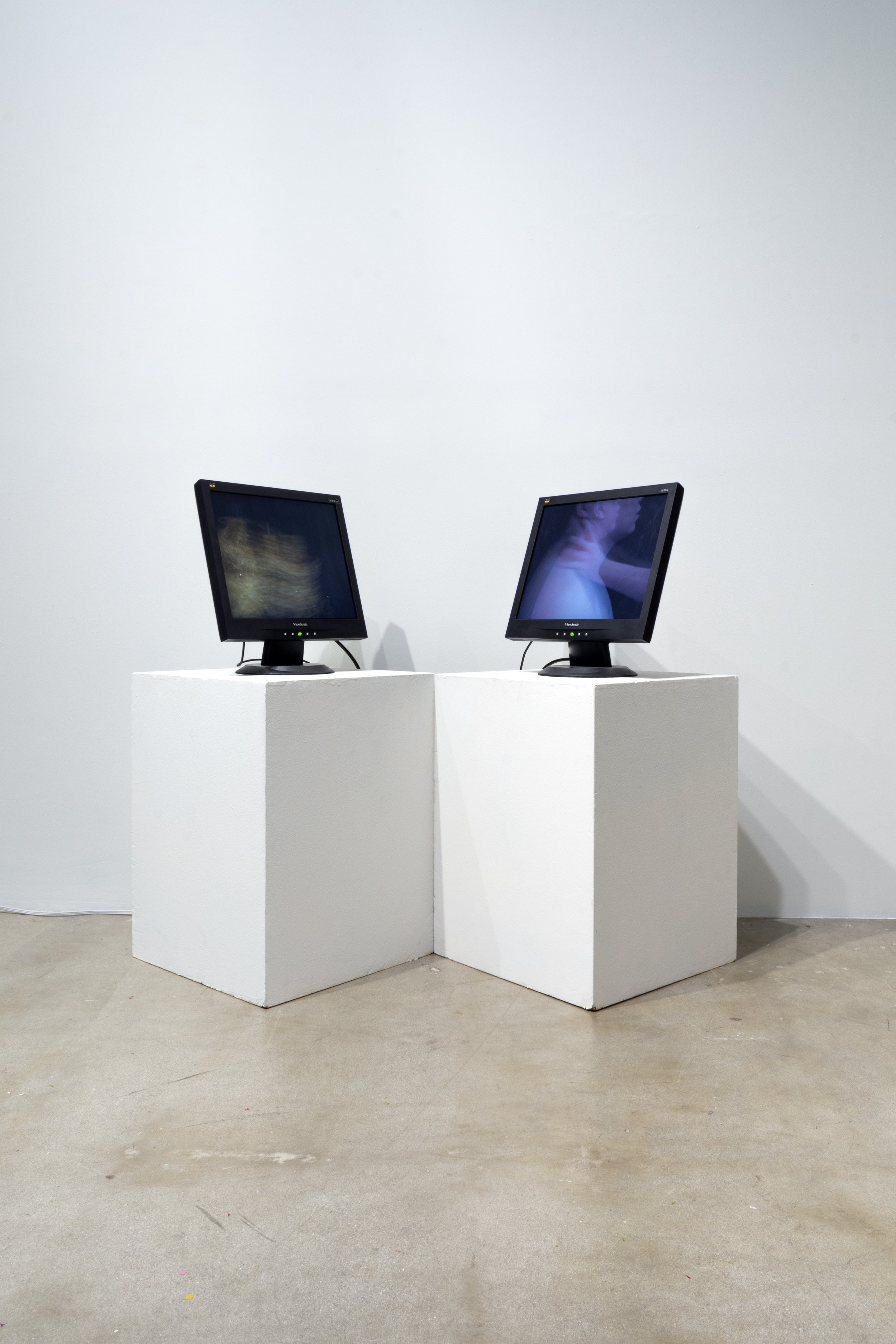
PARTY PARTY PARTY, two channel video installation, size variable, 2024-2026 © Zengjie Chai
Humor appears in your work alongside vulnerability. What role does humor play when you are dealing with difficult or complex subjects?
Humor often functions as a kind of metaphorical cushion. It softens the initial impact of darker or more complex subjects, such as trauma, identity crisis, and emotional uncertainty, without making them less serious. Humor allows audiences to enter the work with less discomfort, while also creating moments of pause in which they can sit with what they have encountered. In this way, the stories within my work are not reduced to tragedy. Instead, they become spaces where tenderness, absurdity, discomfort, and complexity can coexist. On a personal level, humor has also been a way for me to navigate difficult experiences and process them without diminishing their significance.
You often explore the experience of a queer body within heteronormative structures. How do you translate something so lived and embodied into visual or spatial forms?
I do not always depict those experiences directly. Instead, I think about how an experience feels and what kind of material or spatial language might carry a similar sensation. Much of my work relies on analogy because many of the subjects I am drawn to are intangible or difficult to visualize. I look for forms that behave in similar ways. In my solo exhibition, We Will Always Have Los Angeles, for example, I used confetti as a marker of fleeting joy because it suggests a brief moment of celebration and ecstatic release. I also used gradients to visually suggest an in-between space, since gradients exist between two fixed points while allowing those points to continuously slip into one another. This process allows the work to move beyond my own lived experience, so that audiences can encounter the pieces through their own experiences and resonate with the feelings embodied in them.
Your work weaves together cultural artifacts and personal memory. How do you choose which references or materials to enter a piece?
My references and cultural materials usually come from things that have stayed with me for a long time, rather than from things I actively search for in order to illustrate a specific memory. When a reference continues to resonate with me, I begin to ask what larger ideas it might be carrying. The video piece PARTY PARTY PARTY, which appeared in my solo exhibition, began with a realization about how violence can be normalized for the sake of entertainment. I was struck by how hard people hit piñatas at parties, and that image reminded me of forms of violence represented in queer BDSM visual culture. This parallel made me think about how much can be overlooked, rationalized, or aestheticized in order to reach a moment of ecstatic release. I am drawn to references that carry both personal charge and broader social or cultural significance.

can i tell you how i feel before spring comes, mixed media on canvas, 16x20 in, 2026 © Zengjie Chai

oh, be my once in a life time, mixed media on canvas, 18x24 in, 2026 © Zengjie Chai
How have living between different cultural and academic environments, such as Hangzhou and Los Angeles, shaped the way you think about identity in your practice?
I think the complexity of identity becomes more visible when it is displaced. There were things I rarely thought about while growing up in Hangzhou that became impossible to ignore once I started living in Los Angeles, including my queerness and my relationship to myself. As a result, my work is less concerned with arriving at a stable definition of identity and more interested in understanding identity as something fluid, unstable, and continuously shaped by context. I am drawn to the ambiguity that emerges when one moves between different cultural, social, and academic environments. These experiences have led me to think of identity not as a destination, but as an ongoing process of becoming.
How do audiences usually respond to the emotional or intimate aspects of your work, and has any response ever shifted your own understanding of a piece?
I am often moved by how people from backgrounds very different from mine can still connect to my work, even when the work begins with my own autobiography. Sometimes they respond to a specific detail, and sometimes they are drawn to a particular image or atmosphere. I think the emotional and intimate aspects of my work invite audiences to meet it at a similar level of vulnerability. The work is grounded in authenticity, but it does not require the viewer to share the same experience as me. A visual form that carries a specific meaning for me may open a different but equally meaningful association for someone else. In that sense, meaning is formed through the encounter between the artwork and its audience, rather than being determined solely by the artist.

Teenage dream, print on transparent film, 58x44 in, 2025 © Zengjie Chai
Lastly, looking ahead, what questions or tensions are you currently interested in exploring that you haven’t fully addressed yet in your work?
After my recent solo exhibition, I have become increasingly interested in time as both a concept and a material. Looking back, many of my works have engaged with time through pauses, durations, repetitions, anticipation, and precarity, but I have not yet addressed time as directly as I would like to. Whether I am thinking about belonging, attachment, uncertainty, or longing, time often functions as the underlying force that connects these subjects. It is not simply the backdrop of experience; it is a condition through which experience is shaped. Moving forward, I am interested in how the perception and comprehension of time can be shaped by emotion, and I am excited to explore how that might manifest in visual, spatial, and performative forms.
Artist’s Talk
Al-Tiba9 Interviews is a curated promotional platform that offers artists the opportunity to articulate their vision and engage with our diverse international readership through insightful, published dialogues. Conducted by Mohamed Benhadj, founder and curator of Al-Tiba9, these interviews spotlight the artists’ creative journeys and introduce their work to the global contemporary art scene.
Through our extensive network of museums, galleries, art professionals, collectors, and art enthusiasts worldwide, Al-Tiba9 Interviews provides a meaningful stage for artists to expand their reach and strengthen their presence in the international art discourse.


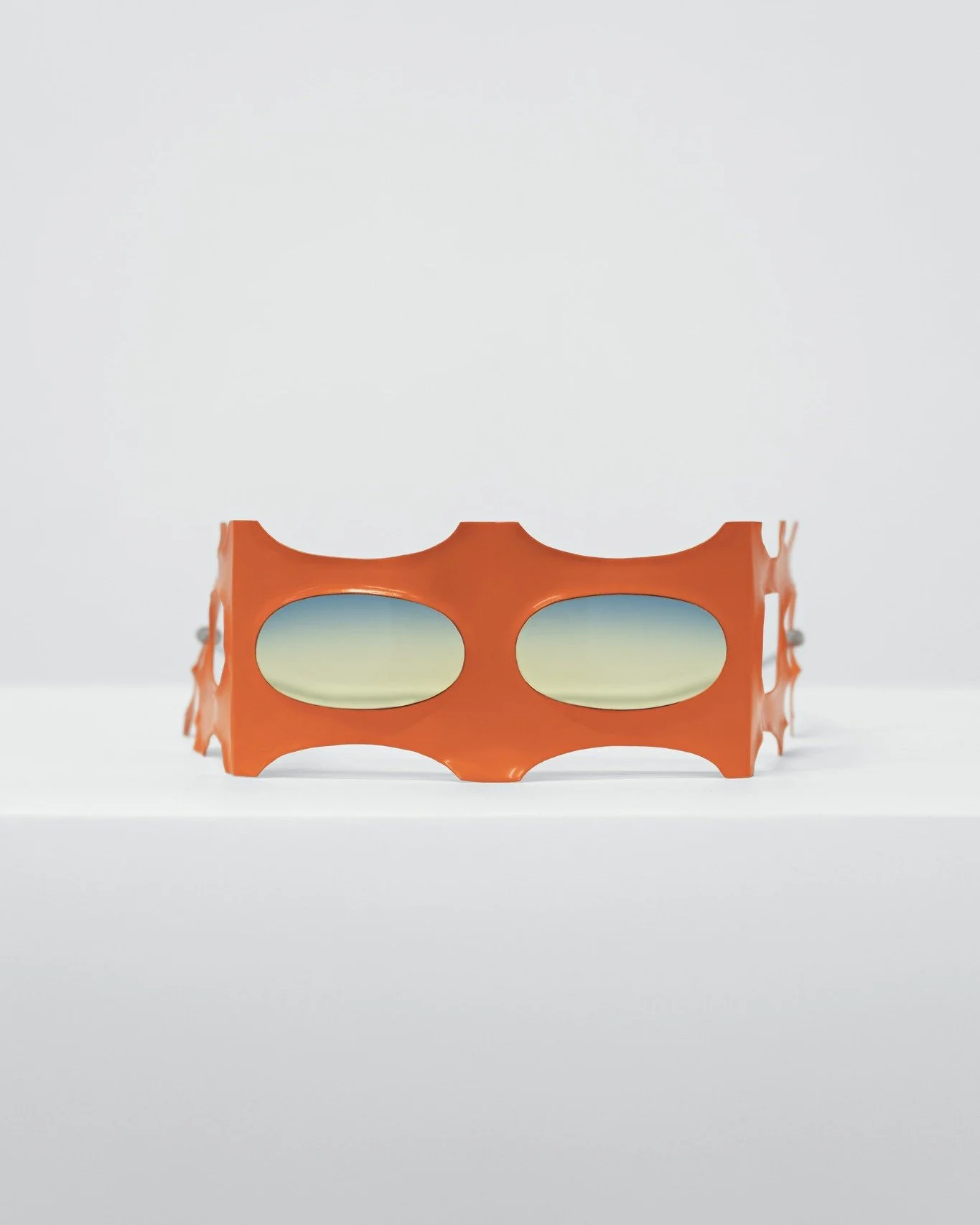
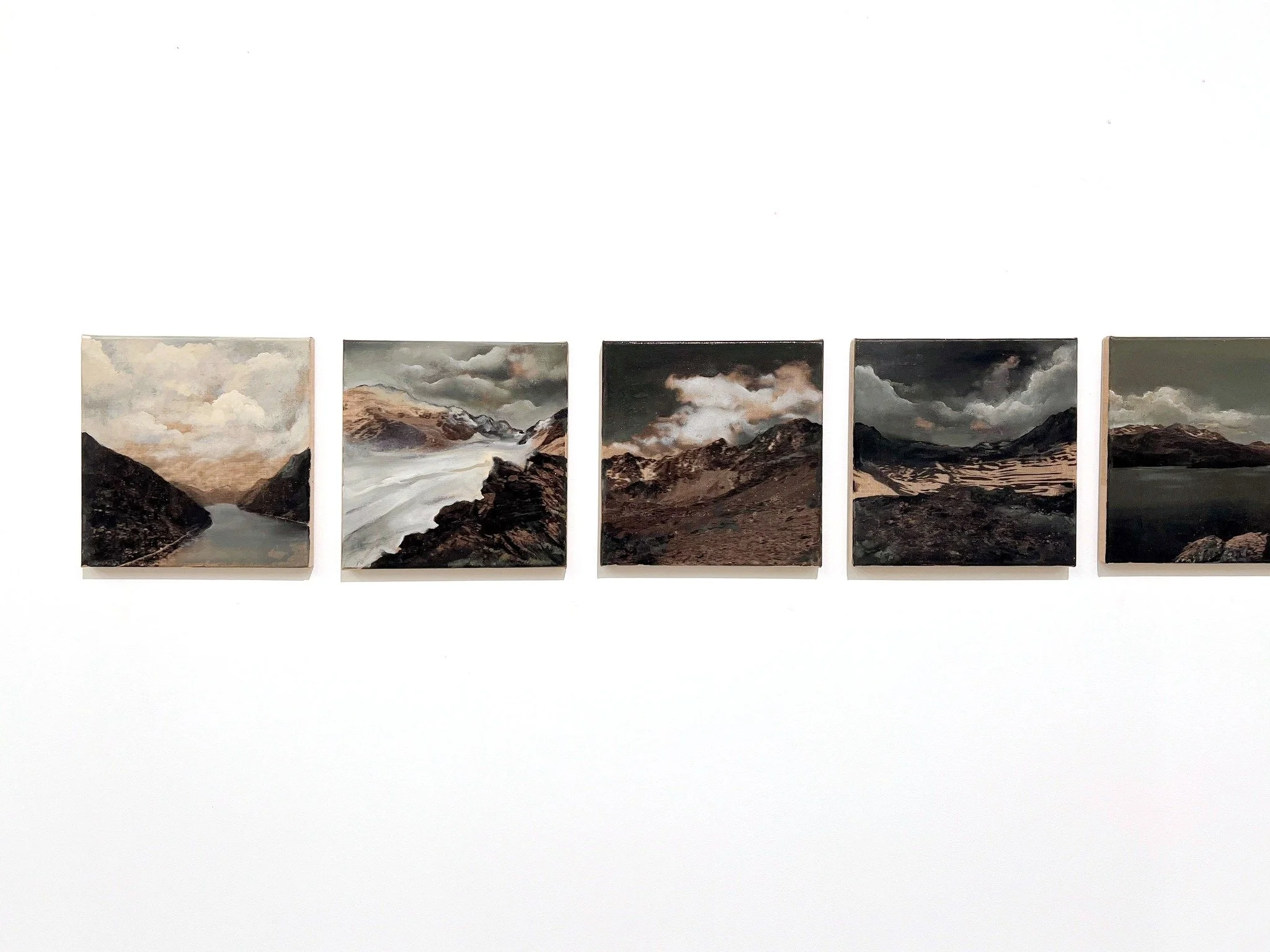
Lim Won Ji (Oneg) is a South Korean artist based in Chicago. Working across sculpture, installation, performance, and process-based experimentation, Lim investigates hypervigilance as a bodily condition shaped by anxiety, uncertainty, anticipation, and the desire for control, constructing unstable situations in which order is continually negotiated through gravity, time, repetition, and chance.