
10 Questions with Yidan Chen
Yidan Chen (b. 2002, Northwest China) is a visual artist whose practice moves between installation, sculpture, experimental film, and olfactory media. Growing up in a small city in China’s northwest, she developed a heightened sensitivity to atmosphere, scent, and the quiet symbolism of domestic objects, sensibilities that now anchor her material language. Working between China and the United States, Chen explores the cultural dissonance and perceptual shifts that arise in cross-cultural life. Her practice investigates how identity is shaped and unsettled through sensory cues, inherited symbols, and the subtle social expectations placed on Asian bodies in Western contexts. Using materials such as butter, mousetraps, ceramics, and manufactured scents, she constructs fragile architectures where vulnerability, humor, and estrangement coexist. She has exhibited with Chicago Sculpture International (CSI), shown work at the CAFA Art Museum and completed a residency in Jingdezhen, where she continued her research into material fragility and ritual interaction. Chen is currently an MFA candidate in Film, Video, New Media, and Animation at the School of the Art Institute of Chicago, working between Chicago and Beijing.
Yidan Chen - Portrait
ARTIST STATEMENT
Yidan Chen’s practice investigates how material transformation and sensory experience can redefine the relationship between objects, bodies, and cultural memory. Working across sculpture, installation, and moving image, she focuses on materials that possess inherent instability. Butter softens and yields to temperature, ceramic surfaces retain traces of tension, mousetrap mechanisms hold a suspended potential for movement, and scent functions as an atmospheric signal that quietly shifts the viewer’s attention. Through these materials, she constructs environments where temporality, vulnerability, and perception become central elements of the work. Chen is interested in how small and often subtle changes such as melting, bending, cracking, or dispersing can open new interpretations of familiar forms. Her installations encourage viewers to engage with the work through extended and multisensory encounters. A scent may be encountered before its visual source is identified, or a structural imbalance may reveal itself gradually as the material continues to change. These slow processes invite a form of looking that is attentive, patient, and responsive to the evolving behavior of materials. Although her work frequently draws from everyday objects, Chen reconfigures these materials into forms that move between the domestic and the speculative. This shift prompts viewers to reconsider how personal associations, cultural references, and atmospheric conditions shape perception. Across her practice, she highlights the coexistence of fragility, quiet humor, and transformation, creating spaces that heighten awareness of uncertainty, transition, and the delicate boundaries between presence and disappearance.
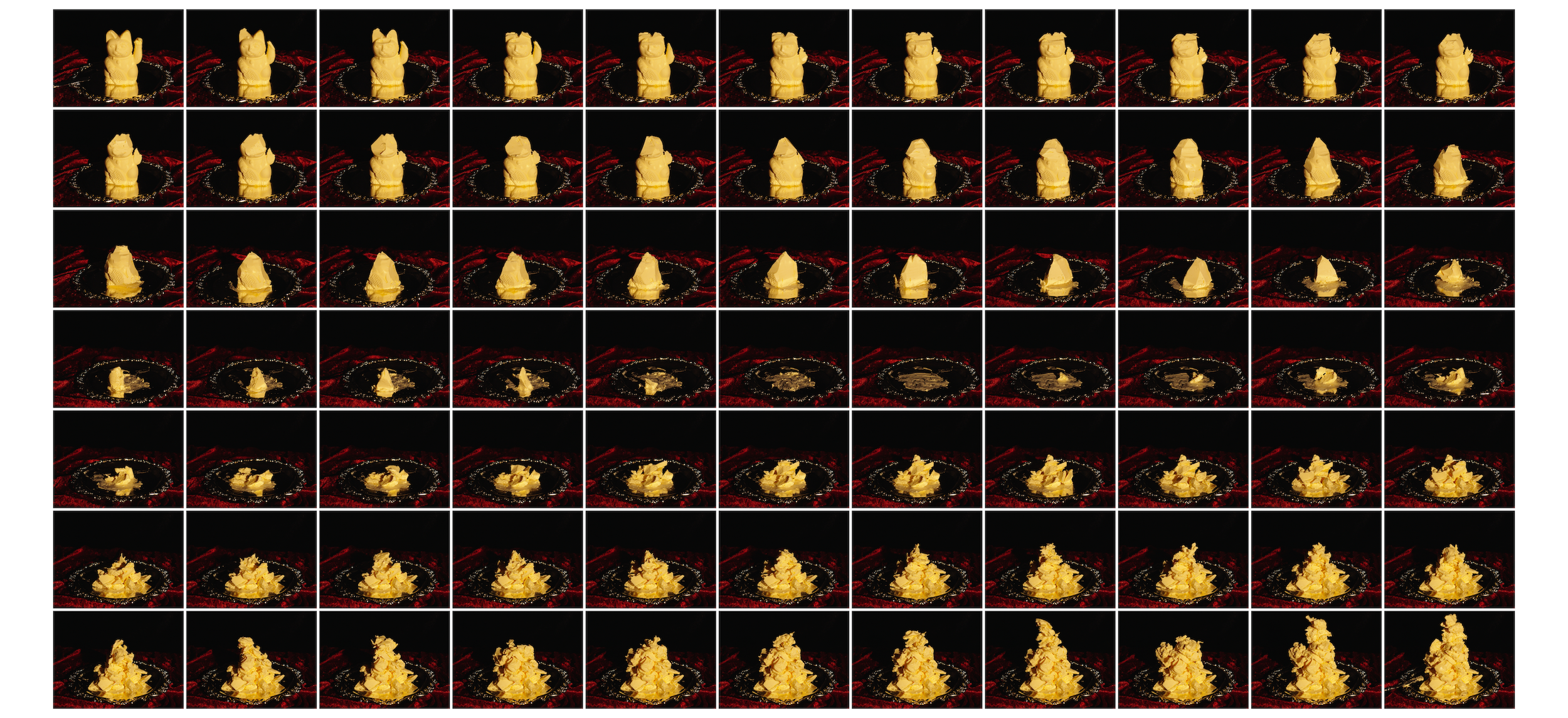
Shanzhai, After imitation, identity piles into a mountain Butter, butter knife, freeze frame image, 120 x 60 cm, 2025 © Yidan Chen
INTERVIEW
You grew up in Northwest China. How has that environment influenced you and your work as an artist?
I think I've actually been trying to answer that question myself. Over the past few years, I've kept asking why I'm so drawn to materials that melt, disappear, or change over time. Sometimes I wonder if it goes all the way back to where I grew up. Northwest China is very different from cities like Beijing or Shanghai. The landscape is vast, dry, and constantly shifting. Sand moves with the wind, the weather changes everything, and there are traces of history everywhere. It's a place with its own smell, its own rhythm, and a kind of quiet simplicity. I don't think I realized how much that environment had shaped me until I left. Looking back now, I feel like I've been trying to return to those memories, not literally, but through materials that refuse to stay fixed.
What draws you to working across such different mediums?
It probably looks like I move between a lot of different media, but for me it always starts with one small question. I usually begin with something that I can't stop thinking about, and then I ask what kind of work that question wants to become. Sometimes it becomes a sculpture, sometimes a film, sometimes an installation, sometimes a smell. So instead of choosing a medium first, I let the idea expand outward. A lot of my process is honestly learning as I go. I'll realize halfway through that I need to learn a completely new technique because that's what the work asks for. It's a lot of thinking, making, failing, and learning at the same time.
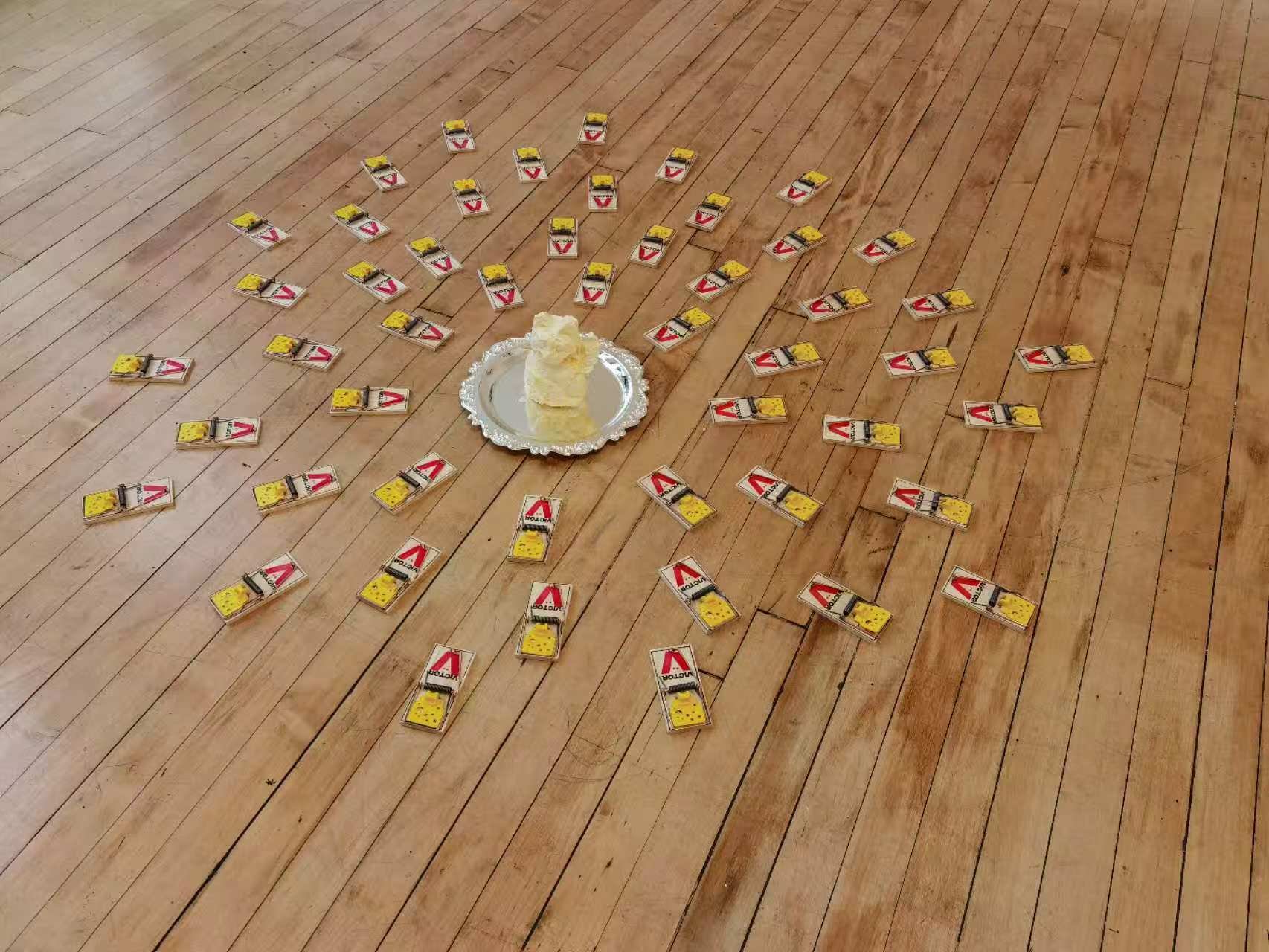
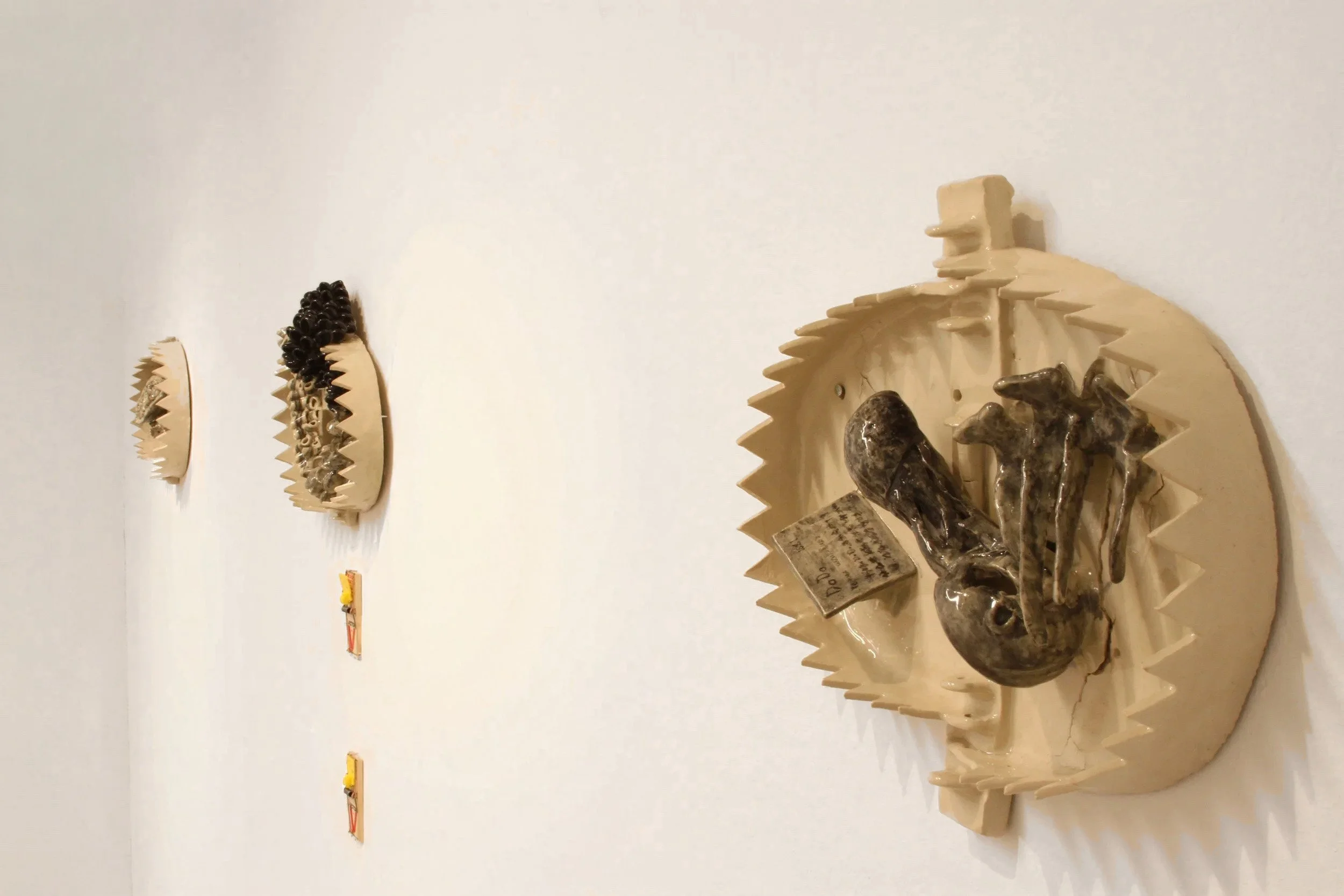
The Cat Knows Who Bends, Butter, mousetraps, porcelain plate, scent, Dimensions variable, arranged as a guiding line across the exhibition space, 2025 © Yidan Chen
What attracts you to unstable materials?
That's actually something that only happened after I moved to the United States. The work I made in China and the work I make now feel almost like they were made by two different people. The materials changed, but more importantly, the questions changed. I think it has a lot to do with trying to understand my own cultural identity. Lately I've been thinking less about symbolism and more about whether materials can have an accent. Just like people do. A material carries histories, habits, and assumptions depending on where it comes from and where it appears. I'm interested in those shifts. That's probably why I'm drawn to materials that are unstable. Their identities aren't fixed either.
Could you walk us through your creative process?
My process is honestly pretty messy. It usually starts with a very small moment, something I notice for just a second, a smell, a sentence, an image, or a strange feeling that I can't quite explain. The important thing is trying to catch it before it disappears. Then I start writing everything down. I sketch. I ask myself why this object, why this material, why this form. I keep questioning my own decisions because I feel like every answer usually leads to another question. A sketch might be redone five or six times. Even when I'm installing the work, I'm still changing things. So it's really an endless cycle of questioning, rewriting, and iterating.
Your work explores cross-cultural identity and the perceptual shifts of living between China and the U.S. How do these experiences enter your installations or moving-image works?
I don't consciously decide to make work about cultural identity. It just keeps showing up. Before I came to the U.S., I was interested in much bigger themes. They felt almost universal, and in some ways they were easier to make. But living here changed the way I look at ordinary things. Suddenly food, materials, language, even small misunderstandings, became really important. I realized I wasn't making work about China or America anymore. I was making work somewhere in between. Translation is never complete. There's always something that can't quite be carried across. I think that's the space where my work lives now.
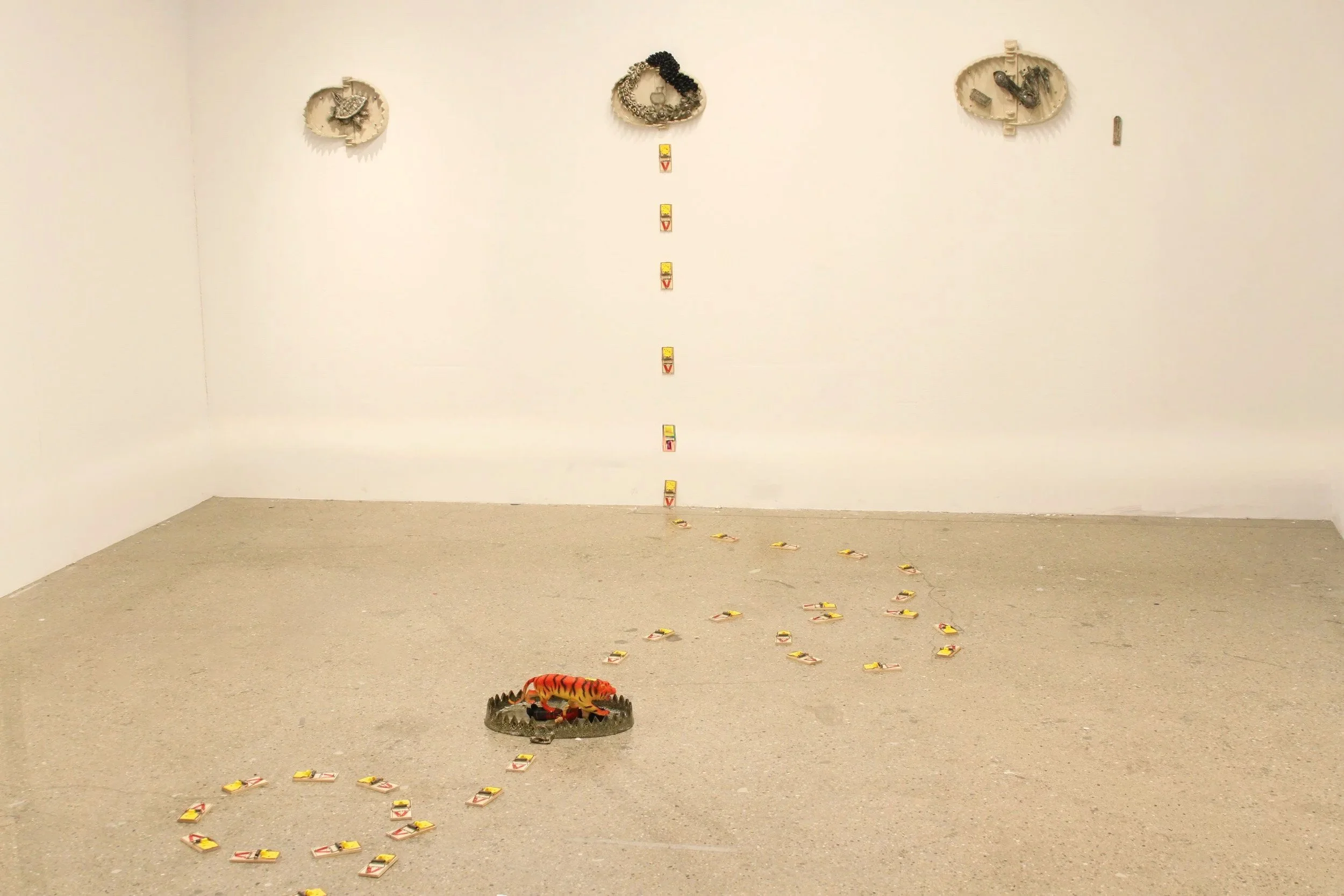
Line of Traps, Ceramic mousetrap sculptures, metal mousetraps, Dimensions variable, arranged as a guiding line across the exhibition space, 2025 © Yidan Chen
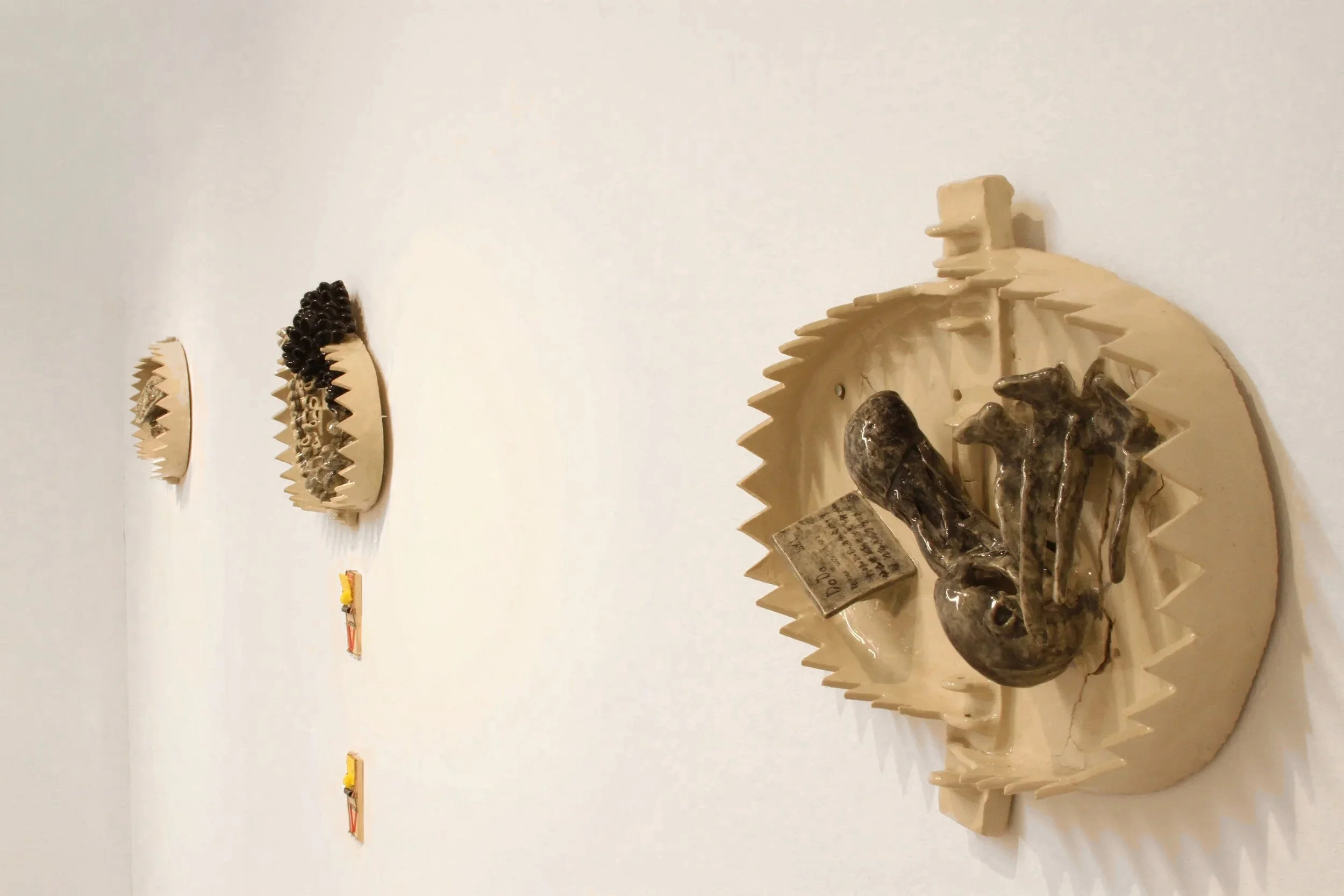
Line of Traps, Ceramic mousetrap sculptures, metal mousetraps, Dimensions variable, arranged as a guiding line across the exhibition space, 2025 © Yidan Chen
Humor, vulnerability, and estrangement often coexist in your pieces. How intentional is that emotional balance, and how do you manage it while constructing an installation?
It's definitely intentional, but I don't plan it like a formula. I really like leaving a little bit of humor in my work. It doesn't have to be an obvious joke. Sometimes it's just a small shift, an unexpected material, or a detail that makes me smile.
I have a lot of respect for serious work, but I also think that if a piece tries too hard to be serious, it can start to feel a little forced. Real life isn't like that. Even in moments of vulnerability, there's often something awkward, absurd, or quietly funny. I'm more interested in that emotional complexity than in asking viewers to feel one single emotion. When I'm building an installation, I keep asking myself whether something feels too obvious or too literal. If it does, I'll usually pull it back. I like leaving a bit of space for uncertainty, so viewers can move between curiosity, humor, and discomfort on their own. I think that kind of movement feels much more alive than directing people toward one fixed emotional response.
Scent appears in your work as both atmosphere and signal. What role do you see olfactory experiences playing in guiding the viewer’s perception?
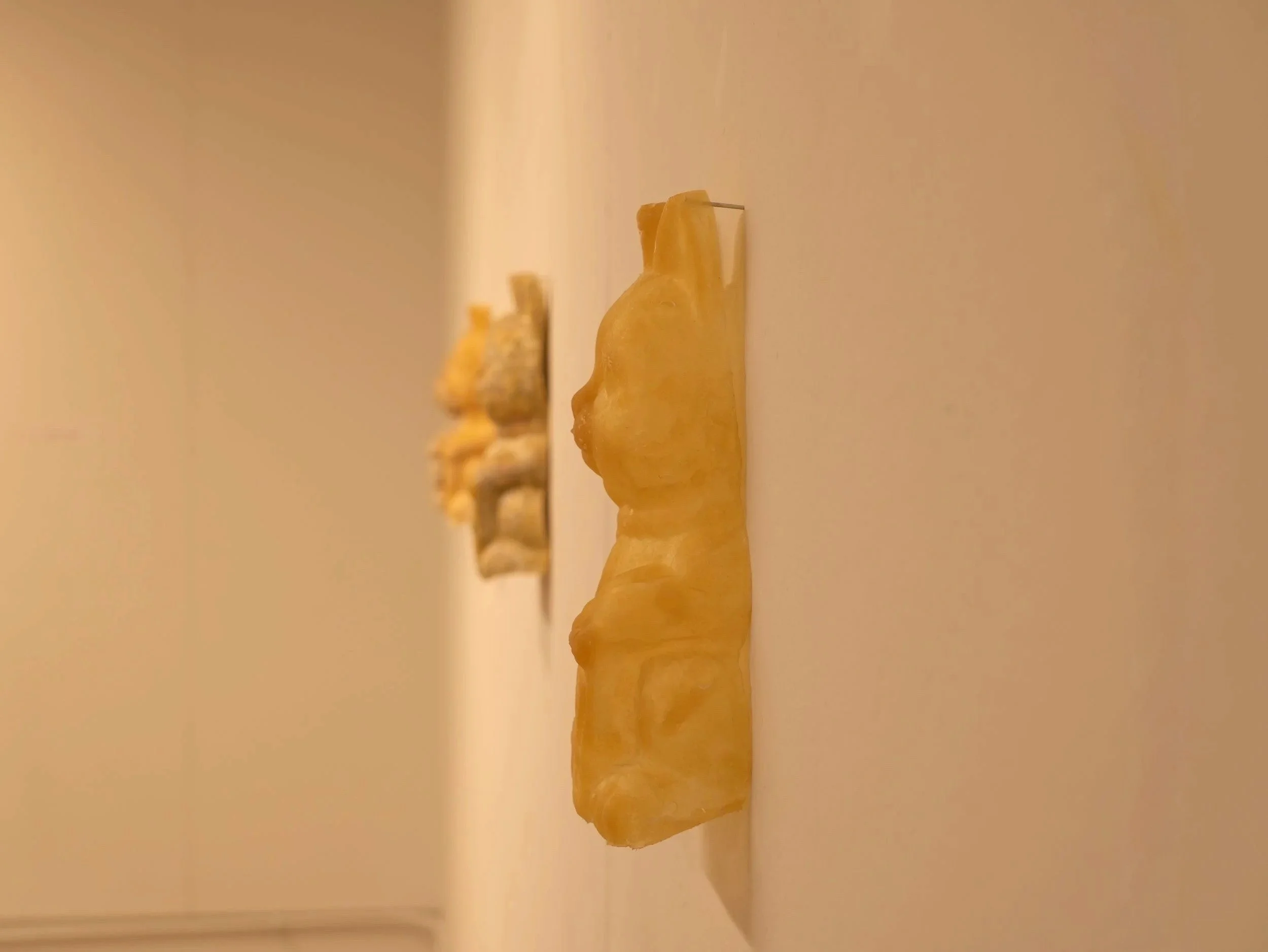
I think smell is actually very bossy. People can choose not to look at an artwork. They can even decide to walk away. But smell doesn't really ask for permission. It has no shape or color, and by the time you notice it, it's already part of your experience. I really like that quality. For me, scent isn't there to illustrate the work. It changes the way people enter it. Instead of just looking, they're suddenly aware of their own bodies, their memories, and even their own reactions. Smell makes the experience much more physical. In my butter lucky cat installation, for example, people first saw these small, playful butter sculptures. They often smiled because they looked cute. But when they leaned in, they suddenly smelled the scent of leftover butter. That completely shifted the work. Something that first felt playful became a little uncomfortable, maybe even a little disgusting. I really enjoy that moment when perception changes so quickly.
Your installations often change subtly over time. How do audiences typically respond to these slow transformations, and does viewer reaction influence your future work?
Time is probably the bossiest material I work with. It doesn't wait for anyone, and it doesn't really care whether we're ready or not. That's what I like about it. Most people don't notice the changes immediately. At first they just see the work, but after spending a little more time with it, they start realizing that something feels unstable. Maybe the butter is beginning to soften, or a sculpture suddenly looks like it can't support itself anymore. I really enjoy that delayed realization. Of course I pay attention to how people respond, but I don't usually change a project because of those reactions. What interests me more is noticing where people pause, what surprises them, or what makes them stay longer than they expected. Those moments often tell me something about perception that I can carry into future work.
The Wrong Body, Silicone, hollow noodles, rice, newspaper, Set of 4 pieces 15 x 10 in each, 2025 © Yidan Chen
You’ve worked in very different contexts, from Jingdezhen’s ceramic tradition to Chicago’s experimental art scene. How have these environments contributed to your ongoing research into fragility and ritual?
Jingdezhen gave me something very practical. It taught me how to work with clay, how to understand the material, and how much patience making actually requires. I spent a really intense period there learning techniques, and soon after I brought those experiences back to Chicago. Chicago was almost the opposite. Instead of asking how to make something, people kept asking why. Why this material? Why this form? Why this experience? I think my practice now exists somewhere between those two places. One taught me how to make, and the other encouraged me to question what making can mean.
As you continue your MFA at SAIC, what directions or materials are you excited to explore next? Are there new sensory or cultural questions you’re eager to investigate?
Lately I've become really interested in food, not just as something we eat, but as a material that already carries history, culture, and memory. When I look back at my recent projects, I realize food keeps appearing, even when I wasn't consciously planning it. Butter, dumplings, leftovers... they all carry different meanings depending on where you are and who you are. I'm becoming more interested in those cultural "accents" that materials already have before I even touch them. I'm also curious about how different senses can work together, not only smell, but texture, temperature, and even the way a material changes over time. I don't think I'm searching for answers as much as I'm collecting better questions. That's probably what excites me most right now.
Artist’s Talk
Al-Tiba9 Interviews is a curated promotional platform that offers artists the opportunity to articulate their vision and engage with our diverse international readership through insightful, published dialogues. Conducted by Mohamed Benhadj, founder and curator of Al-Tiba9, these interviews spotlight the artists’ creative journeys and introduce their work to the global contemporary art scene.
Through our extensive network of museums, galleries, art professionals, collectors, and art enthusiasts worldwide, Al-Tiba9 Interviews provides a meaningful stage for artists to expand their reach and strengthen their presence in the international art discourse.
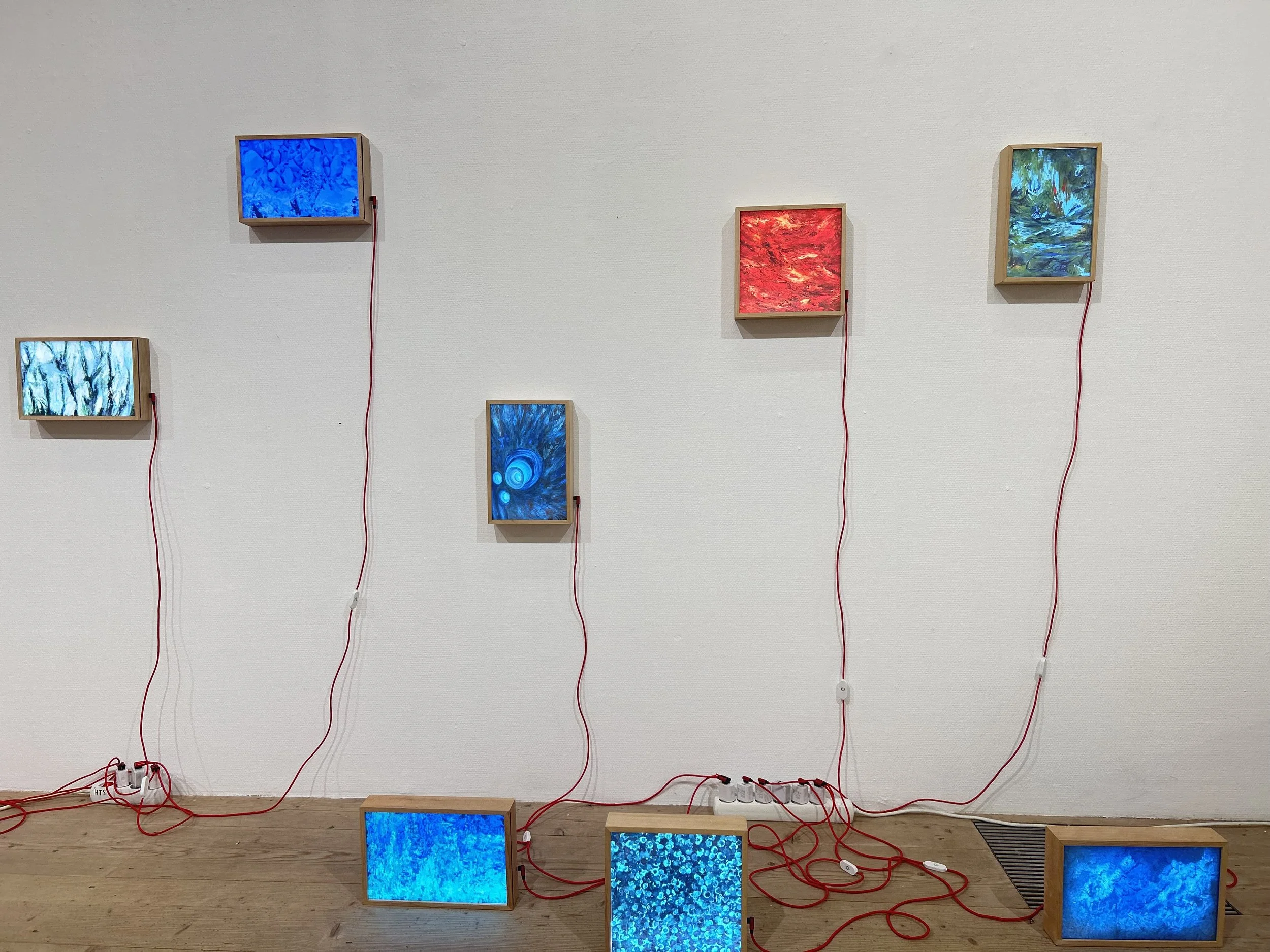



Lim Won Ji (Oneg) is a South Korean artist based in Chicago. Working across sculpture, installation, performance, and process-based experimentation, Lim investigates hypervigilance as a bodily condition shaped by anxiety, uncertainty, anticipation, and the desire for control, constructing unstable situations in which order is continually negotiated through gravity, time, repetition, and chance.