

10 Questions with Yuko Kokubun
Yuko Kokubun is an artist born in Chiba, Japan, in 1982, who currently works and lives in Tokyo. Kokubun graduated from the Tokyo University of the Arts, completing the Master's course in the artistic anatomy laboratory in 2010. Her Master's thesis was titled "Design the circus costumes. Collage of the metamorphose creatures". She also graduated from the university's Oil Painting Department in 2008.
She has held multiple solo exhibitions at TS4312 in Tokyo, including Play Dynamic with Balance (2024), Soft Coercion (2022), and Paranoia Syndrome (2019). Her selected group exhibitions include Swaying Calmly, Gazing Quietly at TOKAS HONGOH (2023), and the VOCA exhibition at The Ueno Royal Museum (2020). She has also exhibited internationally in London, NYC, Paris, and Milano.
She was the recipient of the 16th Taro Okamoto Award for Contemporary Art Prize in 2013 and received the East-West Art Award 2013 Contemporary-II 2nd Place Category Prize. Kokubun also received production cost support from the Japan Artists' Association "Support Project for Artists" in 2024 and support from the Asahi Shimbun Cultural Foundation in 2023. Her residencies include the TOKAS, the Local Emerging Creator Residency Program to Quebec (2022), and the EWAAC summer workshop in Luton, UK (2014).
She has also been involved in stage and performance work, providing production, screenplay, and costume design.
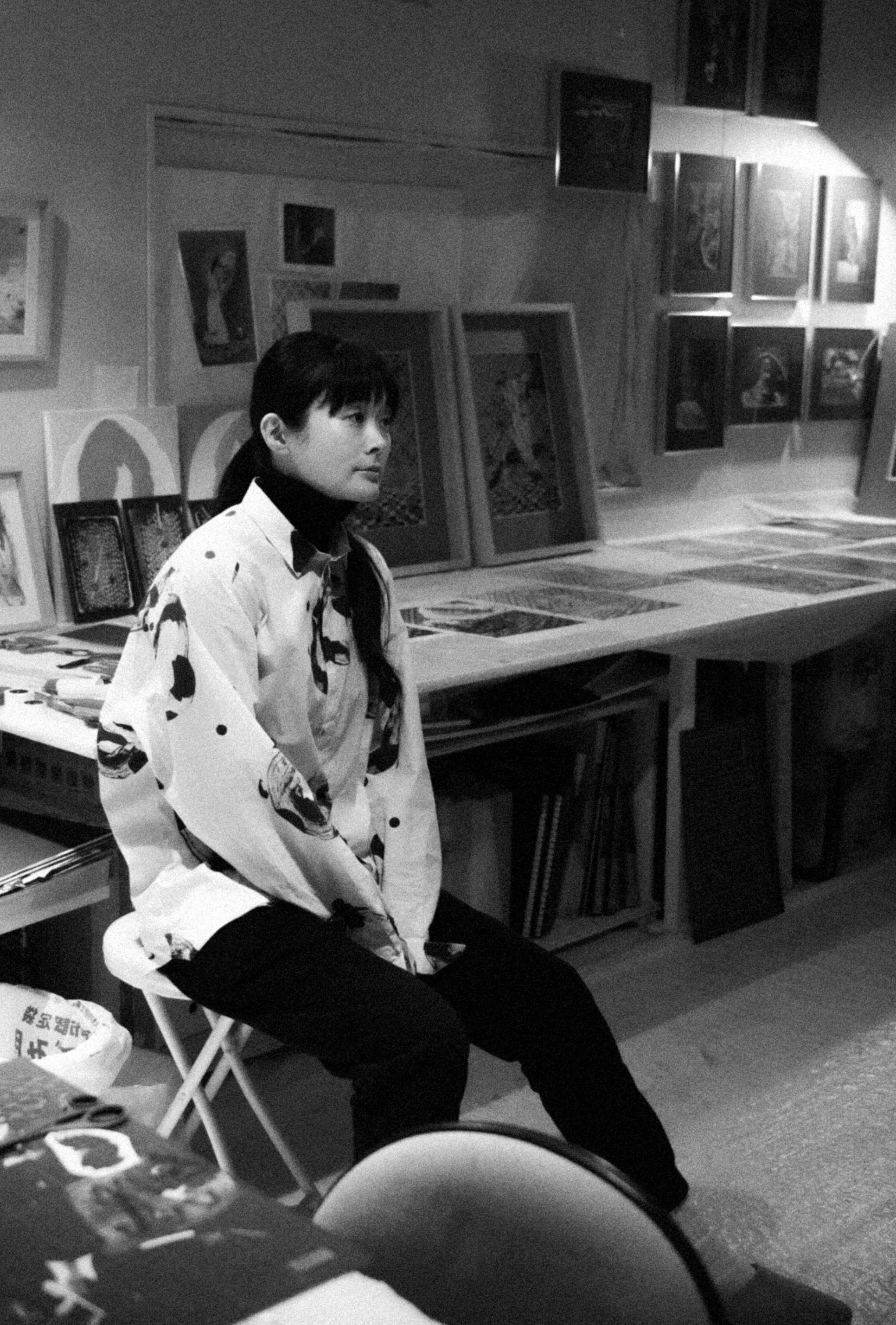
Yuko Kokubun - Portrait
ARTIST STATEMENT
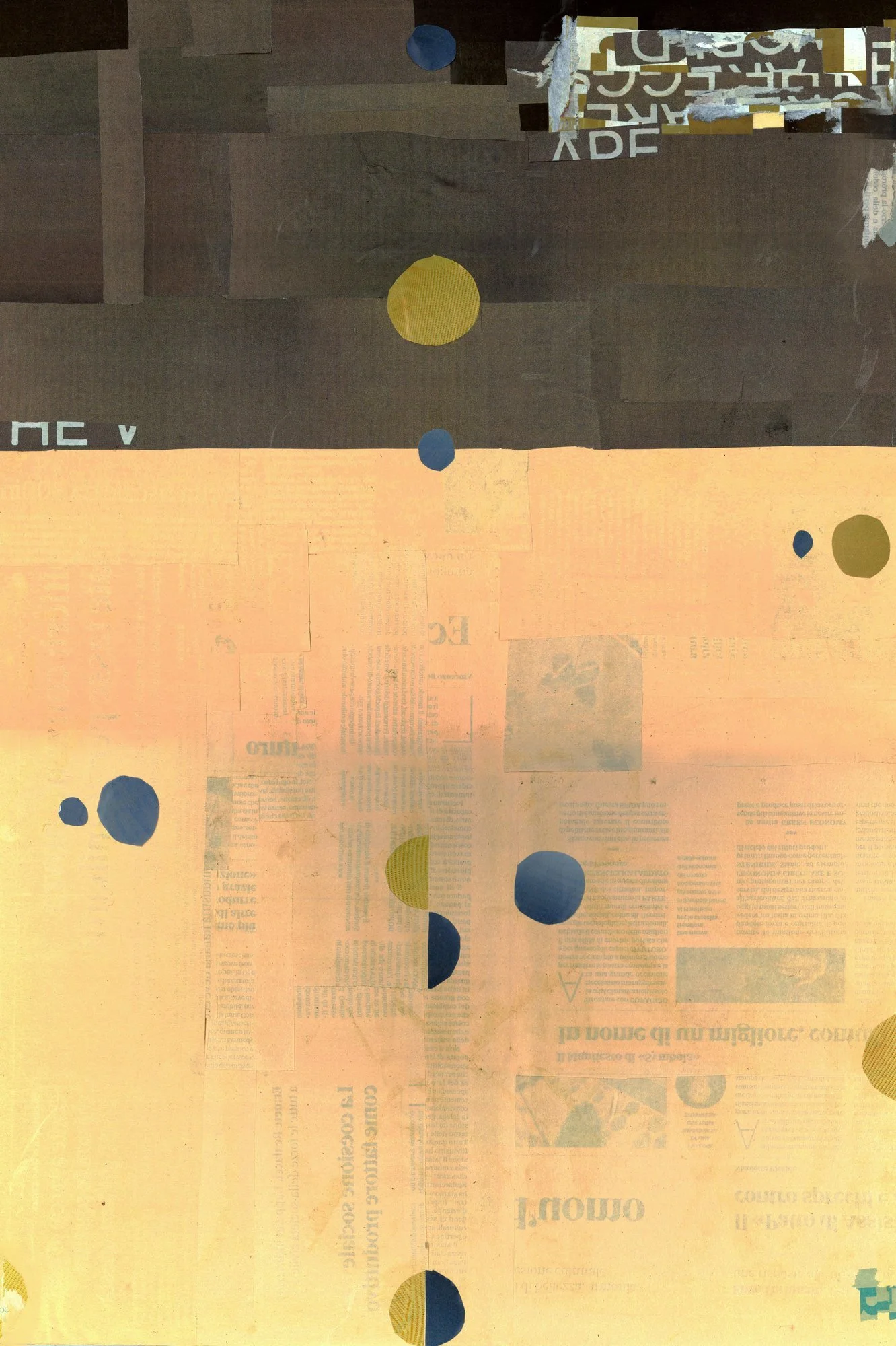
Yuko Kokubun explores the concept of the “Earth Theater,” transforming notions of society, life, space-time, and internal changes in the human mind and body into theatrical interpretations expressed through her works. In recent years, she has primarily employed the technique of collage, meticulously cutting elements derived from living beings and human cultural design, and arranging them within shallow, stage-like spaces. For her, these works function as anatomical theatrical planes.
The act of “cutting” is, for Kokubun, a form of dissection. Every image printed on paper has been designed, photographed, and recorded with a specific intent. By liberating these forms from their original value systems, she reconstructs relationships between meaning and non-meaning, seeking universal visions through newly formed connections between disparate objects. The collage materials she uses exist within the context of cultural DNA, “memes.” Her process and artistic vision propose a way of liberating ourselves from the social conventions and value judgments that shape our everyday lives.
These anatomical collage works reflect a structure of performing arts that affirms the existence of all beings on stage, freely combining diverse races and cultures. They also embody the concept of "play", a metaphor for the margin of possibility, created through the blending of life forms throughout not only human history but also the evolutionary histories of the planet’s flora and fauna.
The mesh-like background patterns frequently seen in her work are made by processing mass-produced synthetic leather, animal hides, and agricultural nets, which she scans and transforms digitally. These undergo rhythmic repetition, deformation, and color adjustments through image editing software.
These background patterns carry three key intentions:
1. To visualize what perceptual psychologist James Gibson referred to as “visual texture.” The world is composed of textures, earth, water, wood, concrete, living organisms, and humans exist within their continuity. Kokubun represents this nested layering of textures, enveloping us like a womb, as a visual metaphor.
2. To echo biological evolution and the transmission of life, as seen in the transformation of skin patterns, copied, repeated, and morphed into forms both like and unlike their origins.
3. To symbolize the entanglements of countless value systems and social customs spun by cultural DNA, memes. She frequently uses textural motifs that resemble woven or embroidered cultural symbols. These deeply embedded rules and millennia-old traditions function as emblems of identity and history. In every community, unique patterns and customs exist. Even when people shift to new environments, new codes and motifs surround them again. Humanity moves through this interwoven world of memes like stepping across stones, each of us born into a pre-existing pattern, charged with weaving a part of this vast tapestry. This might well be the very nature and history of humanity itself.
The colorful objects and patterns featured in Kokubun’s work evoke scenes in which our brief lives, by sheer coincidence, coexist within the same confined space and time as part of an ongoing “play.” Even in a society defined by overwhelming compulsion, Kokubun suggests that pockets of play, spaces of comfort that transcend meaning, are always present around us.
The Annunciation garden, Collage, pen on paper, 18x18 cm, 2019 © Yuko Kokubun
INTERVIEW
Let’s start from the basics. When did you first get interested in art? And what sparked your initial interest?
During my teenage years, I was involved in sports such as table tennis and rhythmic gymnastics. These activities made me conscious of repetition, rhythm, and expression within a defined space. As a result, I became fascinated by the mechanisms of the body and the meanings inherent in form. Later, while studying Artistic Anatomy at Tokyo University of the Arts, I began to explore the relationship between the body and space, an inquiry that naturally led me to art. The desire to unravel the human sense of balance and the potential of form became the foundation of my creative practice.
How did you develop into the artist you are today?
Two turning points were crucial for me: my graduate studies in anatomy and my participation in international artist-in-residence (A.I.R.) programs. During my residency in Montreal, Canada, I researched contemporary circus and the performing arts. There, I encountered a powerful three-dimensional experience of space, colour, and multicultural fusion. This opened up many questions for me, how to translate such theatrical intensity into the two-dimensional medium of painting. The encounter with the performing arts also felt like discovering a community of kindred spirits. That dynamic and open sensibility, much like the performing arts themselves, continues to form the foundation of my work today.

Something passes by that splits us apart, Collage, pen, pencil, acrylic on paper, 29.5x20.8 cm, 2022 © Yuko Kokubun
Let’s talk about your work. Can you tell us about your concept of “Earth Theater” and how it shapes your artistic vision?
The “Earth Theatre” is my way of translating society, life, time, and the internal changes of the human mind and body into a theatrical interpretation. I see the world as a stage in constant motion, never still. On this stage, we coexist by forming communities like amoebas, maintaining unstable balances as we share the same space.
What does the act of “cutting” mean to you in the context of your collage-making process?
Cutting apart forms that have been assigned meaning or function is, for me, a process of release, freeing them from the restrictions of design, utility, or a preconceived notion of beauty. Once liberated, these fragments can be given new potential: a new form, a new role. It is akin to dissecting a stage play on a flat surface; through reconfiguration, I breathe new life into it.
How do you choose the images and materials that go into your work?
I gather a wide range of visual sources, fashion magazines, newspapers, encyclopaedias, anatomical illustrations of living beings, and other designs created by human culture. These fragments do not necessarily need to carry explicit meaning. Instead, I allow accidental combinations to generate their own narratives.

You can hear the old stories here, Collage, pen, pencil, acrylic on paper, 41x29 cm, 2022 © Yuko Kokubun

Where the faceless bluebird rests, Collage, pen, pencil, acrylic on paper, 41x29 cm, 2022 © Yuko Kokubun
Could you explain the symbolism behind the mesh-like patterns in your backgrounds?
The mesh pattern symbolises both “connection” and “constraint.” Social structures and human networks are underpinned by implicit customs that exist everywhere, in any country, in any community. One cannot escape them. The mesh is a sign of how we are always navigating between these different customs (or constraints). At the same time, it makes visible the tension we constantly live within.
Your work explores the balance between society and the individual. How do you personally navigate this tension as an artist?
Human beings are always balancing themselves against the turbulence of society and the external forces surrounding them. Yet at the same time, I believe we have also learned to turn these pressures into a kind of play. By embracing unstable equilibrium, we have survived, passing life forward through history. That very contradiction and tension is what reveals our humanity.
What would you like viewers to feel or reflect on when they see your work?
I would like them to feel a sense of comfort that does not require the pursuit of meaning. My works are questions, but they also contain spaces for play. Within those spaces, I hope viewers can discover their own sense of balance and their own emotions.

Molding of one leg 2, Collage, pen, pencil, acrylic on paper, 41x29.6 cm, 2023 © Yuko Kokubun
Looking ahead, is there any new theme or technique you would like to experiment with?
I would like to expand the theatrical elements of my work even further and experiment with integrating installation and moving image. Building on collage, I aim to create larger-scale environments and unexpected settings in which audiences can experience the “Earth Theatre” more directly.
And lastly, what are you working on now? Do you have any upcoming projects or series you would like to tell our readers about?
Recently, I have been working on a series titled Play with Dynamic Balance. It symbolises the fact that our very existence rests upon balance. Alongside large-scale paintings and intricate collages, I have also begun creating moving-image works. I plan to continue deepening this theme and to present it further through exhibitions both in Japan and abroad.
Artist’s Talk
Al-Tiba9 Interviews is a promotional platform for artists to articulate their vision and engage them with our diverse readership through a published art dialogue. The artists are interviewed by Mohamed Benhadj, the founder & curator of Al-Tiba9, to highlight their artistic careers and introduce them to the international contemporary art scene across our vast network of museums, galleries, art professionals, art dealers, collectors, and art lovers across the globe.



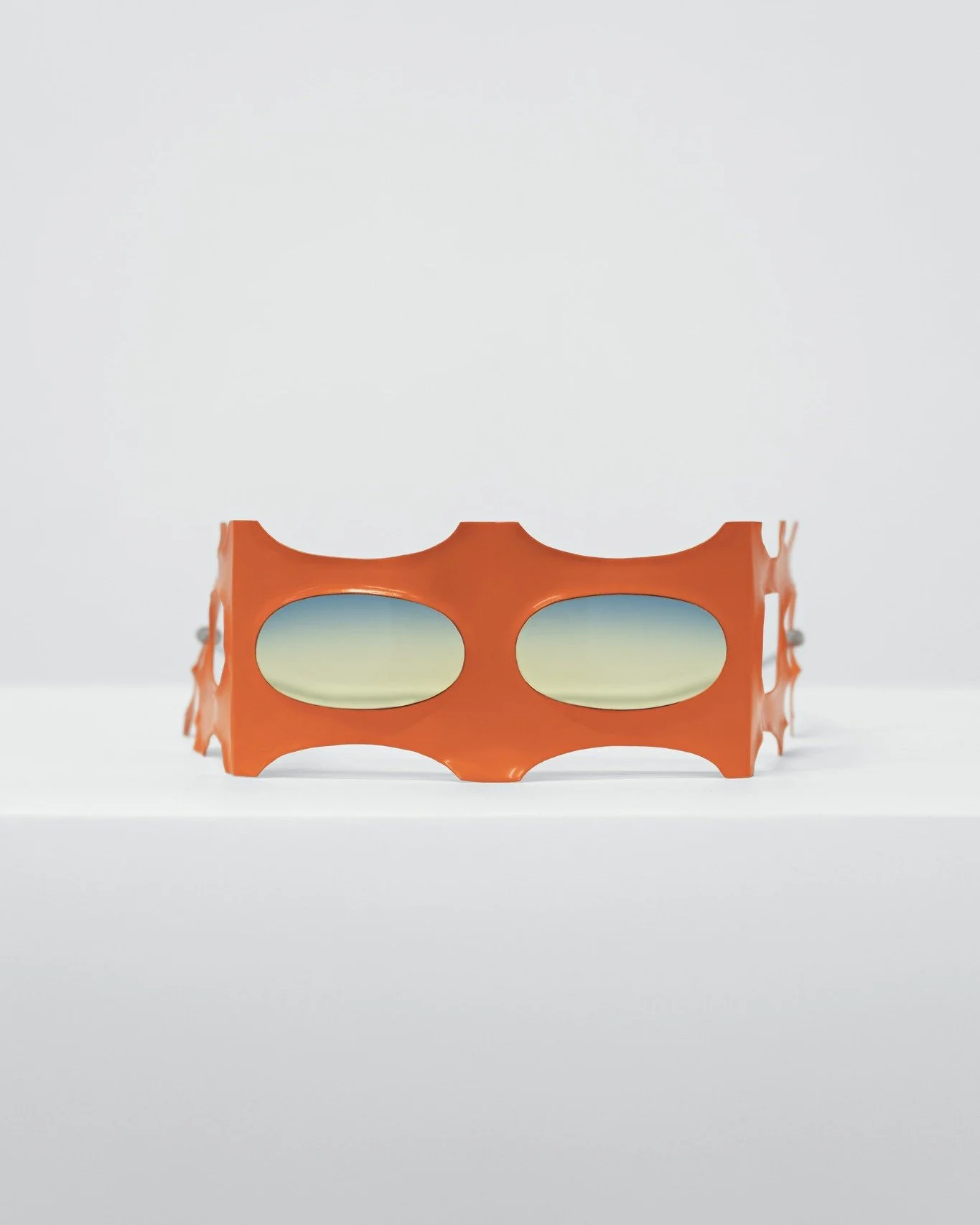
Yuko Kokubun explores the concept of the “Earth Theater,” transforming notions of society, life, space-time, and internal changes in the human mind and body into theatrical interpretations expressed through her works. In recent years, she has primarily employed the technique of collage, meticulously cutting elements derived from living beings and human cultural design.