
10 Questions with Moozhan Gholinataj
Moozhan Gholinataj is an Iranian contemporary painter based in Istanbul, Türkiye. Her practice centers on expressive abstraction and psychological portraiture, using acrylic on canvas to investigate identity as an evolving emotional landscape rather than a fixed likeness.
Through recurring eyes, fragmented faces, exaggerated mouths, instinctive gestures, and layered color, she creates figures that embody memory, vulnerability, curiosity, fear, and resilience. Her paintings do not represent identifiable individuals; instead, they invite viewers to recognize shared emotional experiences in unfamiliar forms.
Gholinataj studies architecture at Bahçehir University, an influence visible in her attention to composition, spatial relationships, scale, and the position of the observer. Her work has been presented in group exhibitions in Vienna, London, and New York, including at The Names Gallery and The Holy Art, and featured in Visual Art Journal.
Her nine-part collection Little Humans develops a community of distinct psychological presences that together examine the complexity and interconnectedness of human identity.
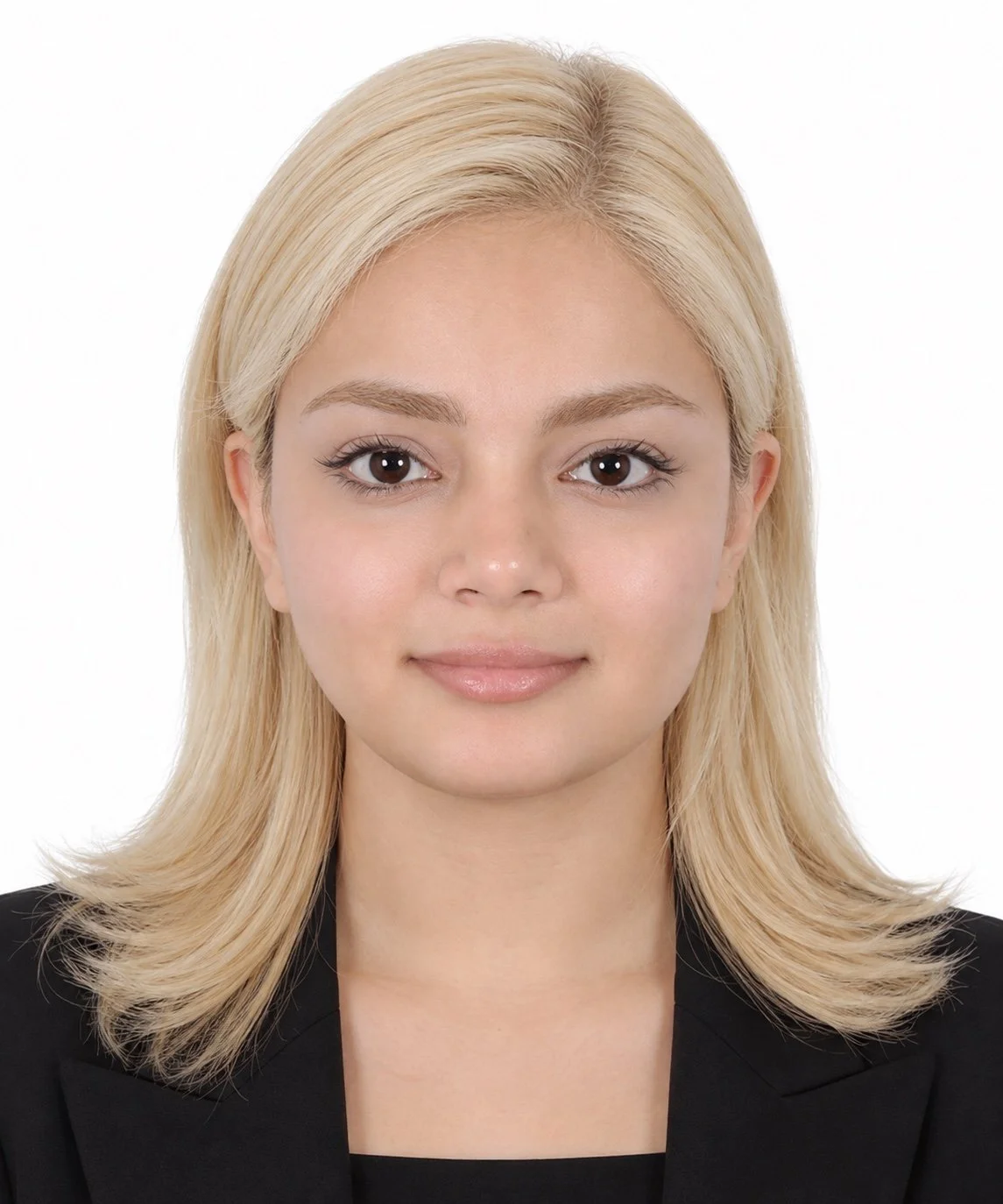
Moozhan Gholinataj - Portrait
Little Humans | Project Description
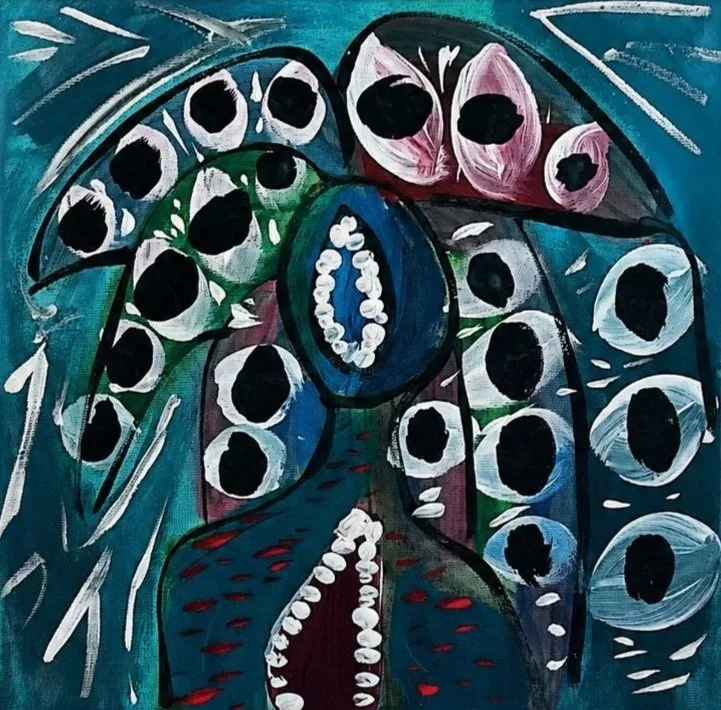
In Moozhan Gholinataj’s painting practice, identity is not a stable portrait but an emotional construction. Through expressive abstraction and psychological figuration, she assembles presences from recurring eyes, fragmented faces, exaggerated mouths, simplified bodies, and layered gestures. These forms are not intended to resemble specific people. They give visible shape to emotions and memories that resist straightforward description.
Her nine-part collection Little Humans presents a community of personalities. Each work stands alone as a distinct psychological voice, while the repeated motifs and shared scale create a collective identity. The eye is central to this visual language: it suggests memory, awareness, curiosity, vulnerability, surveillance, and the reciprocal desire to observe and be understood.
Working intuitively in acrylic on canvas, Gholinataj retains gestural brushstrokes, revisions, and spontaneous marks. The painting process remains visible, allowing moments of instinct, hesitation, and discovery to become part of each image. Distortion functions not as a disguise but as a way of approaching emotional truth beyond conventional portraiture.
Each painting measures 20 × 20 cm. This intimate format asks viewers to approach closely, encountering an unfamiliar face that may nevertheless reflect something recognizable in their own experience. Taken together, the nine paintings suggest that identity is multiple and continually shaped by relationships, imagination, memory, and resilience.
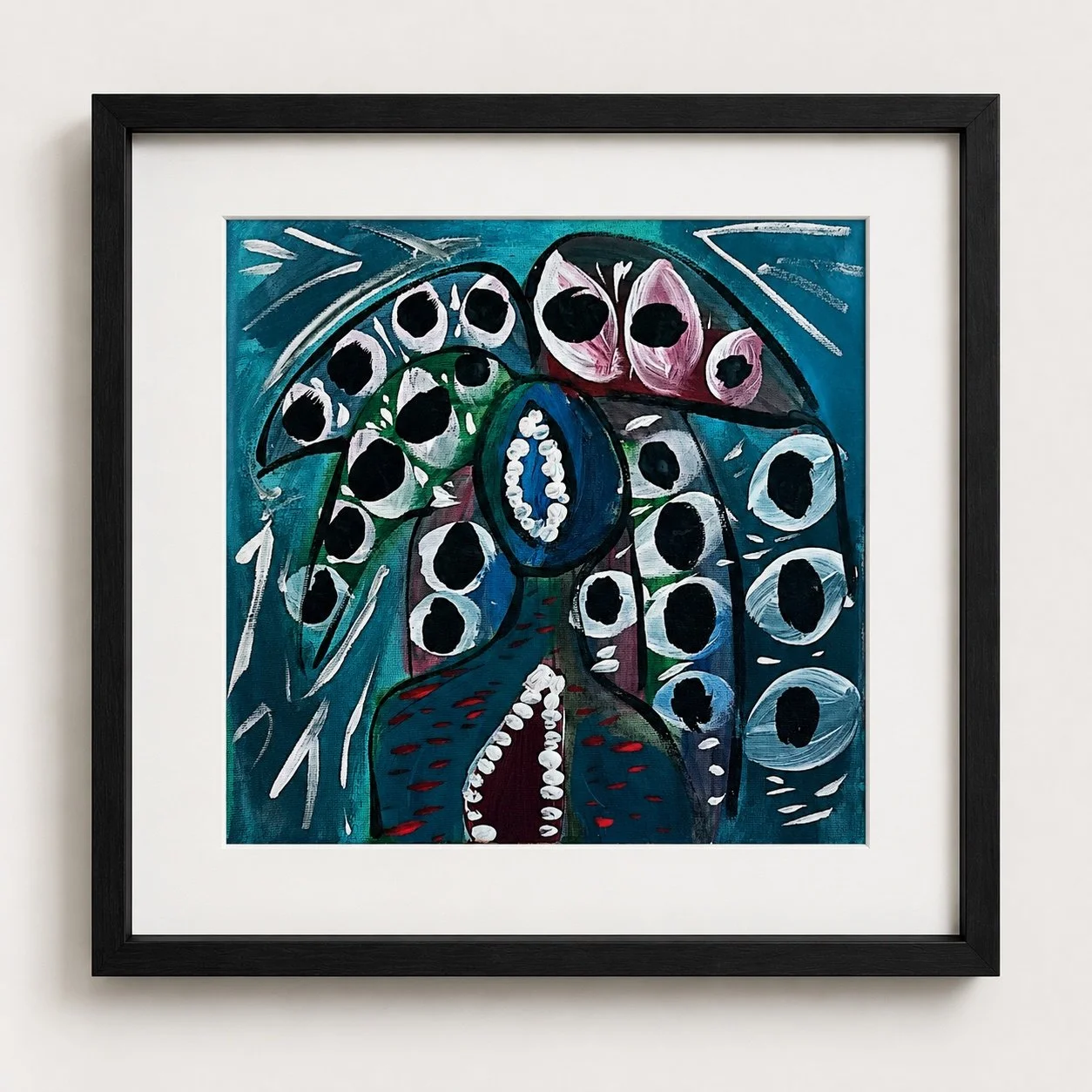
Little Human IX, Acrylic on Canvas, 20 x 20 cm, 2026 © Moozhan Gholinataj
INTERVIEW
First of all, could you tell us a little about your background and how you first became interested in painting?
I am an Iranian artist from Sari, currently based in Istanbul, where I study architecture. My earlier work involved realistic pencil drawing, which developed my attention to observation and the human face. As my practice evolved, I became increasingly interested in what a likeness could leave out: the contradictions, anxieties, and impulses that shape someone internally. Working with acrylic allowed me to approach those subjects more freely. A face could become distorted, a colour could carry tension, and a mark could suggest something I could not easily articulate. That possibility continues to draw me to painting.
You are currently studying architecture. How has this influenced the way you approach composition, space, and form in your paintings?
Architecture has made me attentive to the relationship between a form and the space around it. In a painting, I consider how closely a figure approaches the edge, how much room it has, and where the composition feels compressed or exposed. Those decisions affect how we encounter the figure psychologically. A small area of empty canvas can feel like distance, while an oversized face can make the frame feel restrictive. My painting remains intuitive, but architectural thinking helps me recognise the underlying structure: how separate elements hold together and where a deliberate imbalance can give the work its intensity.
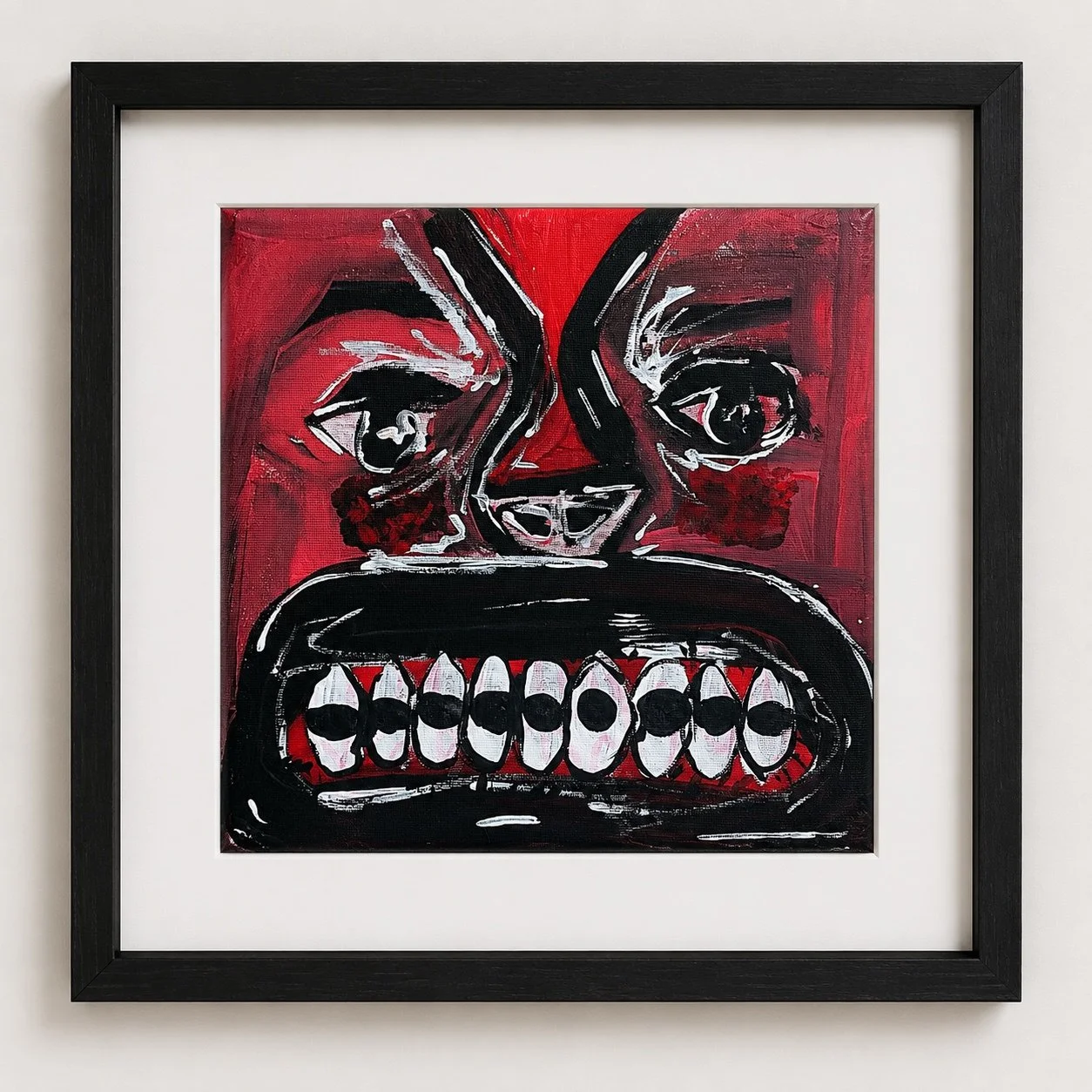
Little Human VIII, Acrylic on Canvas, 20 x 20 cm, 2026 © Moozhan Gholinataj
Your work explores identity through expressive abstraction rather than traditional portraiture. What interests you about representing emotions instead of physical appearances?
I am interested in the difficulty of containing a person within a single, coherent image. We can feel confident and frightened, affectionate and defensive, sometimes within the same moment. Expressive abstraction allows those conflicting states to occupy the same face. Distortion gives me a way to make that instability visible without having to explain it through a narrative. I still need something recognisably human in the image, because that recognition creates an entry point. From there, I want the painting to suggest a presence that is familiar but difficult to define completely.
Eyes, fragmented faces, and exaggerated mouths appear throughout your work. What do these recurring elements mean to you?
The eyes establish an encounter. They can make a figure seem watchful, vulnerable, suspicious, or unexpectedly direct. I am interested in the moment when the viewer feels that the painting is looking back. Mouths introduce another kind of tension: they can suggest speech, appetite, laughter, or something held back. Fragmentation allows these expressions to disagree with one another. An eye may appear calm while the mouth feels unsettled. Although these elements recur, their meaning changes through their relationship to colour, scale, and the surrounding marks. I want them to remain expressive rather than become a fixed code.
You describe your creative process as intuitive. Could you walk us through how a painting typically develops, from the first mark to the final image?
I usually begin with a colour, a gesture, or the suggestion of a face. The first marks give me something to respond to, and the painting develops through that exchange. I build, cover, scrape back, and reconsider relationships as they emerge. Sometimes a small alteration to an eye changes the character of the whole work; sometimes an accidental mark becomes essential to it. Intuition guides those decisions, but it also requires close attention. I stop when the figure has a convincing presence and further adjustments would merely make it tidier. I want the painting to retain some uncertainty.
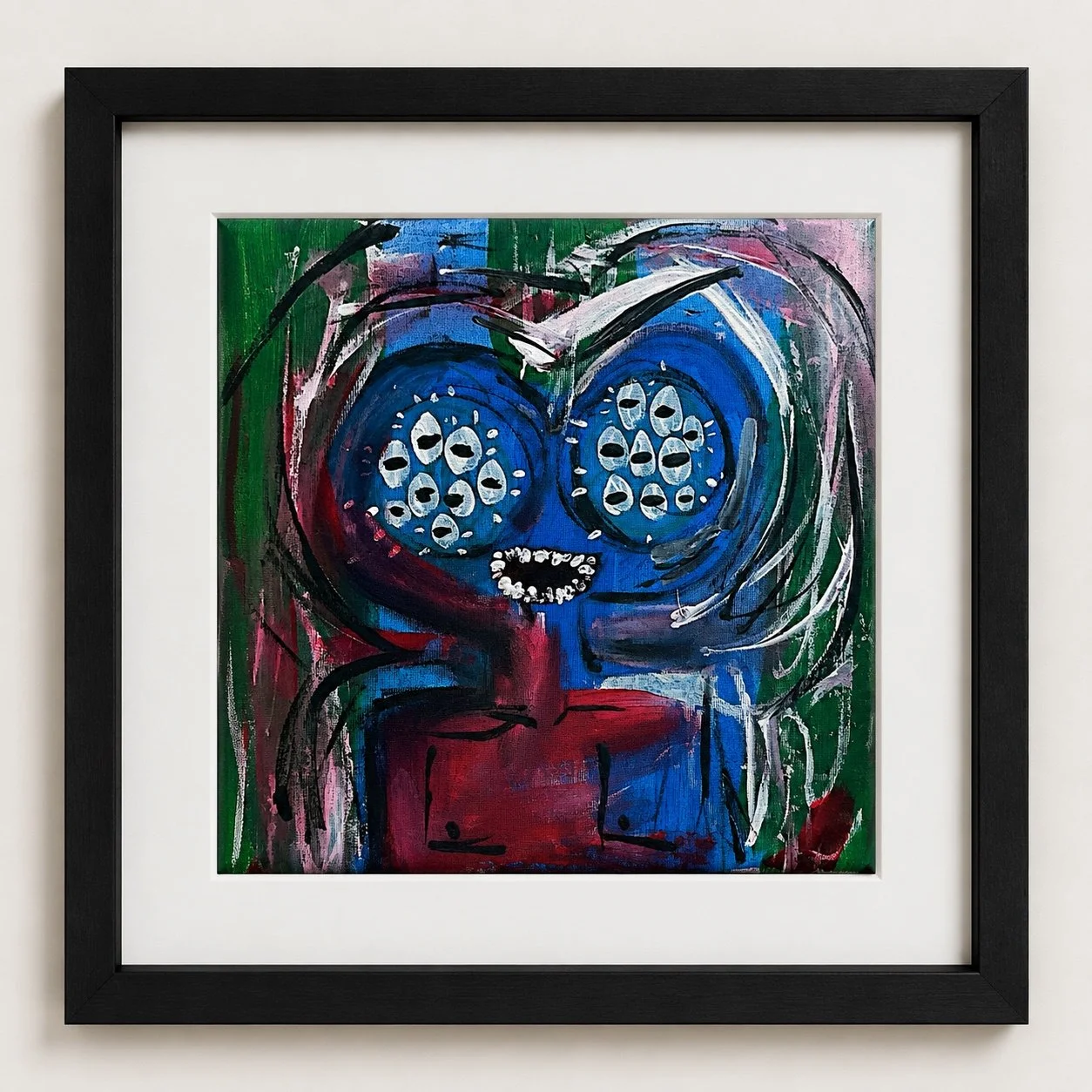
Little Human VI, Acrylic on Canvas, 20 x 20 cm, 2026 © Moozhan Gholinataj
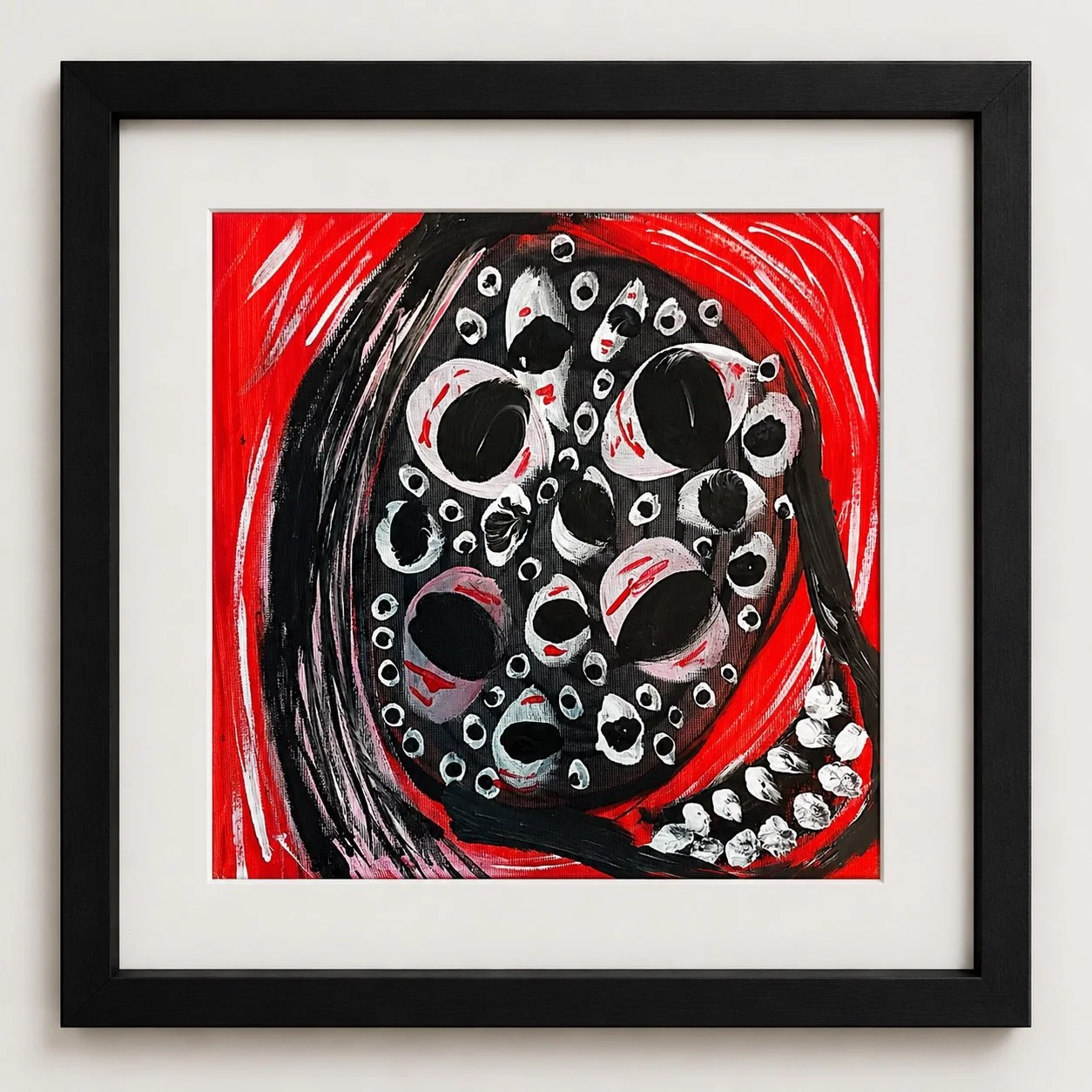
Little Human V, Acrylic on Canvas, 20 x 20 cm, 2026 © Moozhan Gholinataj
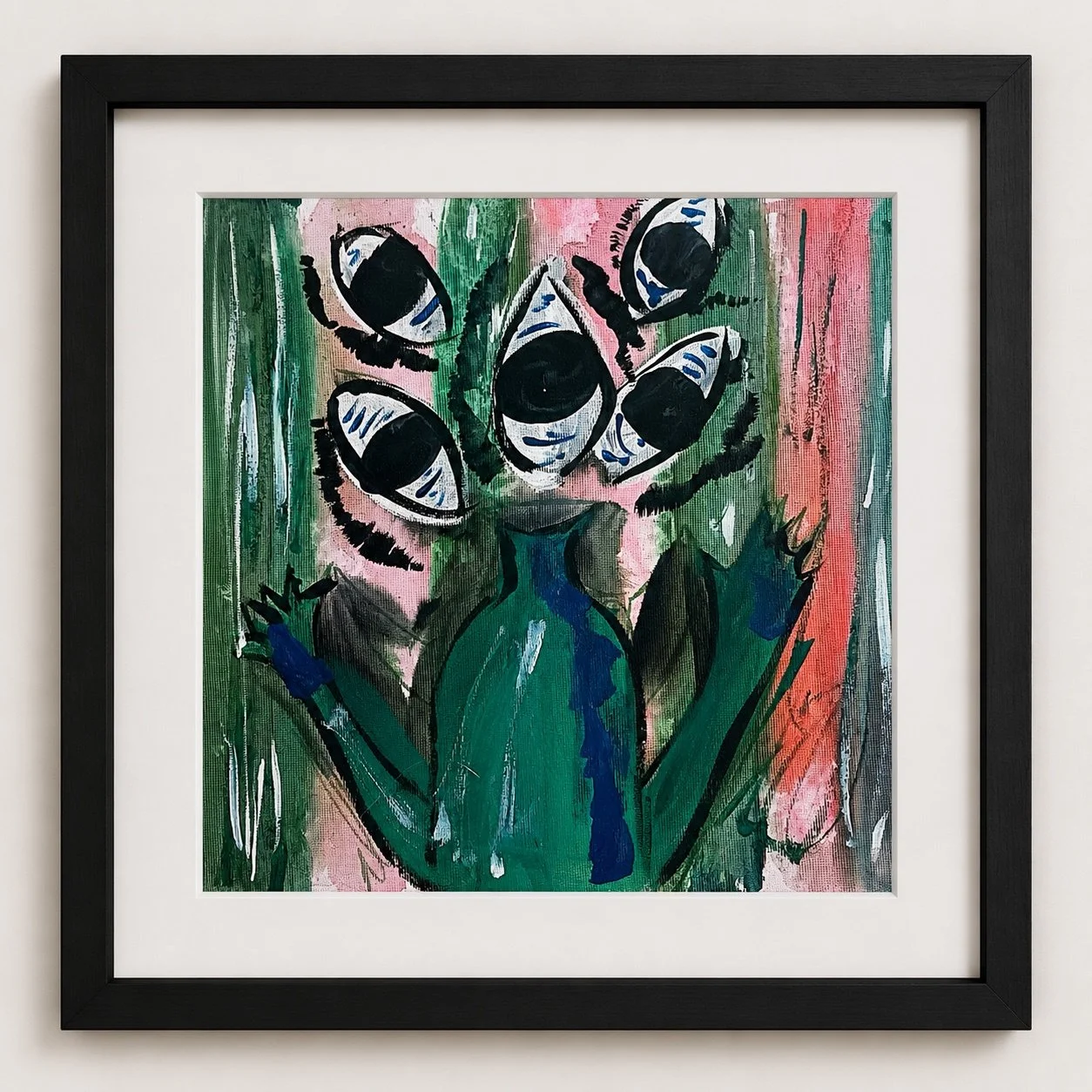
Little Human VII, Acrylic on Canvas, 20 x 20 cm, 2026 © Moozhan Gholinataj
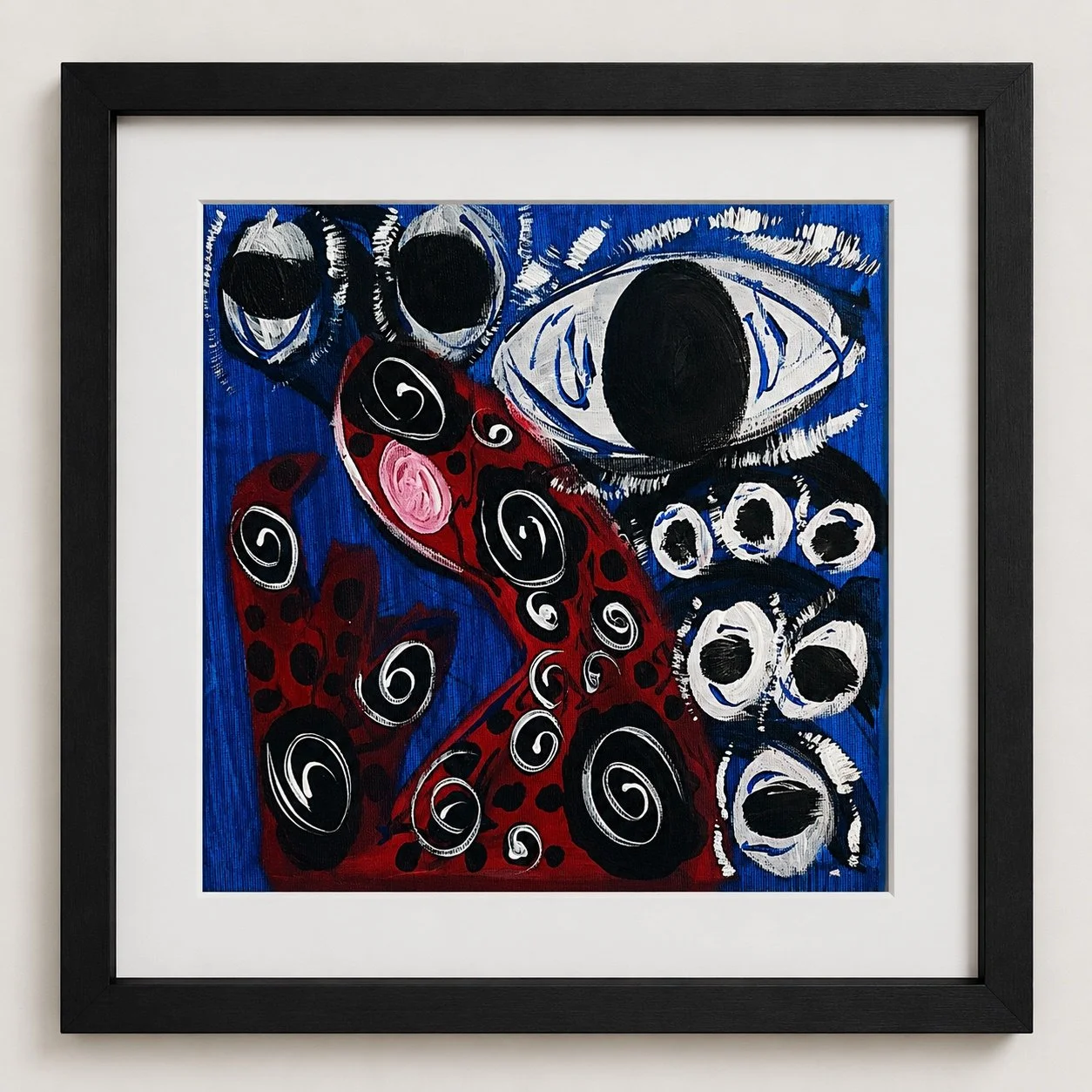
Little Human II, Acrylic on Canvas, 20 x 20 cm, 2026 © Moozhan Gholinataj
Your paintings often preserve spontaneous gestures, revisions, and imperfections. How important is this sense of spontaneity to your work?
Spontaneity is important because the speed and pressure of a gesture can carry feeling. A hesitant line and an abrupt one communicate differently, even before they describe anything recognisable. Visible revisions also give the surface a history: an earlier decision can remain partly present beneath a later one. However, I am selective about what I preserve. An accidental mark has to contribute to the painting. I spend time deciding which irregularities give the image energy and which weaken it. What may appear immediate in the finished work often depends on careful editing.
Your collection Little Humans consists of nine small-scale paintings, each representing a different psychological presence. How did this series begin, and how do the individual works relate to one another?
Little Humans grew from my interest in how a small painted figure could hold a strong psychological presence. The intimate scale asks the viewer to come closer, yet the characters can be quite assertive within those limits. Across the nine works, recurring features create a shared visual language, while differences in expression, colour, and gesture give each figure its own temperament. I think of them as individuals belonging to the same world. Each painting can stand independently, but together they create relationships: one may seem withdrawn beside a more confrontational character, or unexpectedly vulnerable beside another.
Although your figures are not portraits of specific people, viewers may recognise something of themselves in them. What kind of connection would you like people to experience when looking at your paintings?
I would like viewers to have the freedom to recognise something without being told exactly what it is. It might be a familiar expression, an uncomfortable feeling, or a contradiction they recognise in themselves. That connection does not have to be reassuring; curiosity, unease, and even humour can sustain attention. I am particularly interested when someone’s first impression changes as they spend time with a painting. A figure that initially seems amusing might become vulnerable, or one that seems threatening might begin to look frightened. I want there to be room for that reconsideration.
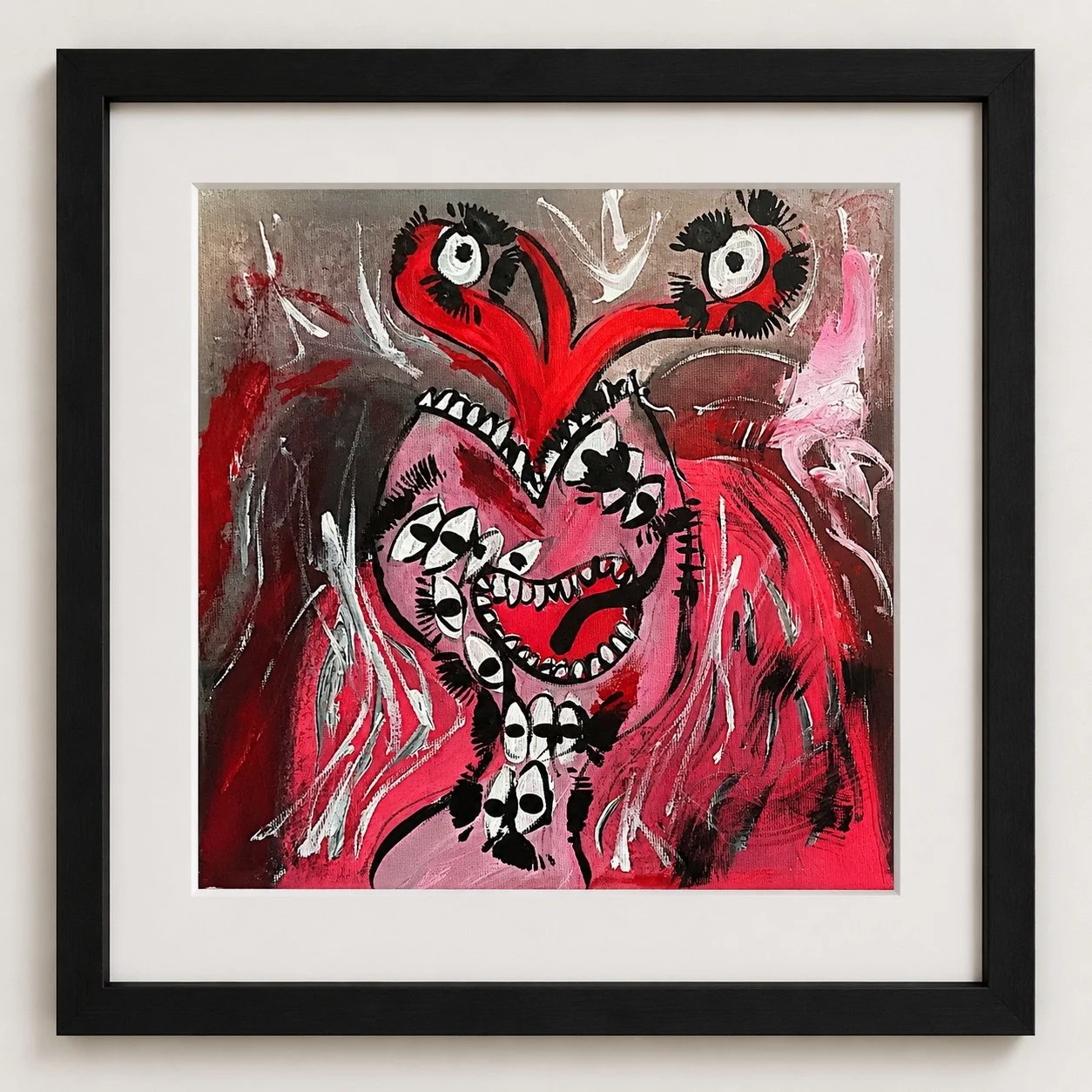
Little Human III, Acrylic on Canvas, 20 x 20 cm, 2026 © Moozhan Gholinataj
Your work explores emotions such as vulnerability, fear, curiosity, and resilience. Do you see painting as a way to understand your own emotions, or is it more about exploring shared human experiences?
The two are connected for me. My own perceptions provide a starting point, but making a painting requires me to give them a form that can exist independently. Through decisions about colour, proportion, and expression, something initially personal becomes open to someone else’s experience. I am interested in emotions that resist simple categories: vulnerability can coexist with defiance, and fear can produce both withdrawal and aggression. Painting gives me time to examine those relationships. Viewers may recognise something very different from what I felt while working, and I value that difference.
Lastly, looking ahead, are there new themes, techniques, or projects you would like to explore, and how do you see your artistic practice evolving in the future?
I would like to develop the world of Little Humans further, particularly through sculpture and collectible objects. Moving into three dimensions raises questions that interest me as both an artist and an architecture student: what happens when a painted character acquires volume, occupies a room, or is encountered from different directions? I am also interested in how the characters might develop through writing, where their relationships can unfold over time. Painting remains central to my practice. As I explore other forms, I want to preserve the ambiguity and individual presence that first made these figures compelling to me.
Artist’s Talk
Al-Tiba9 Interviews is a promotional platform for artists to articulate their vision and engage them with our diverse readership through a published art dialogue. The artists are interviewed by Mr. Mohamed Benhadj, the founder & curator of Al-Tiba9 Contemporary, to highlight their artistic careers and introduce them to the international contemporary art scene across our vast network of museums, galleries, art professionals, art dealers, collectors, and art lovers across the globe.



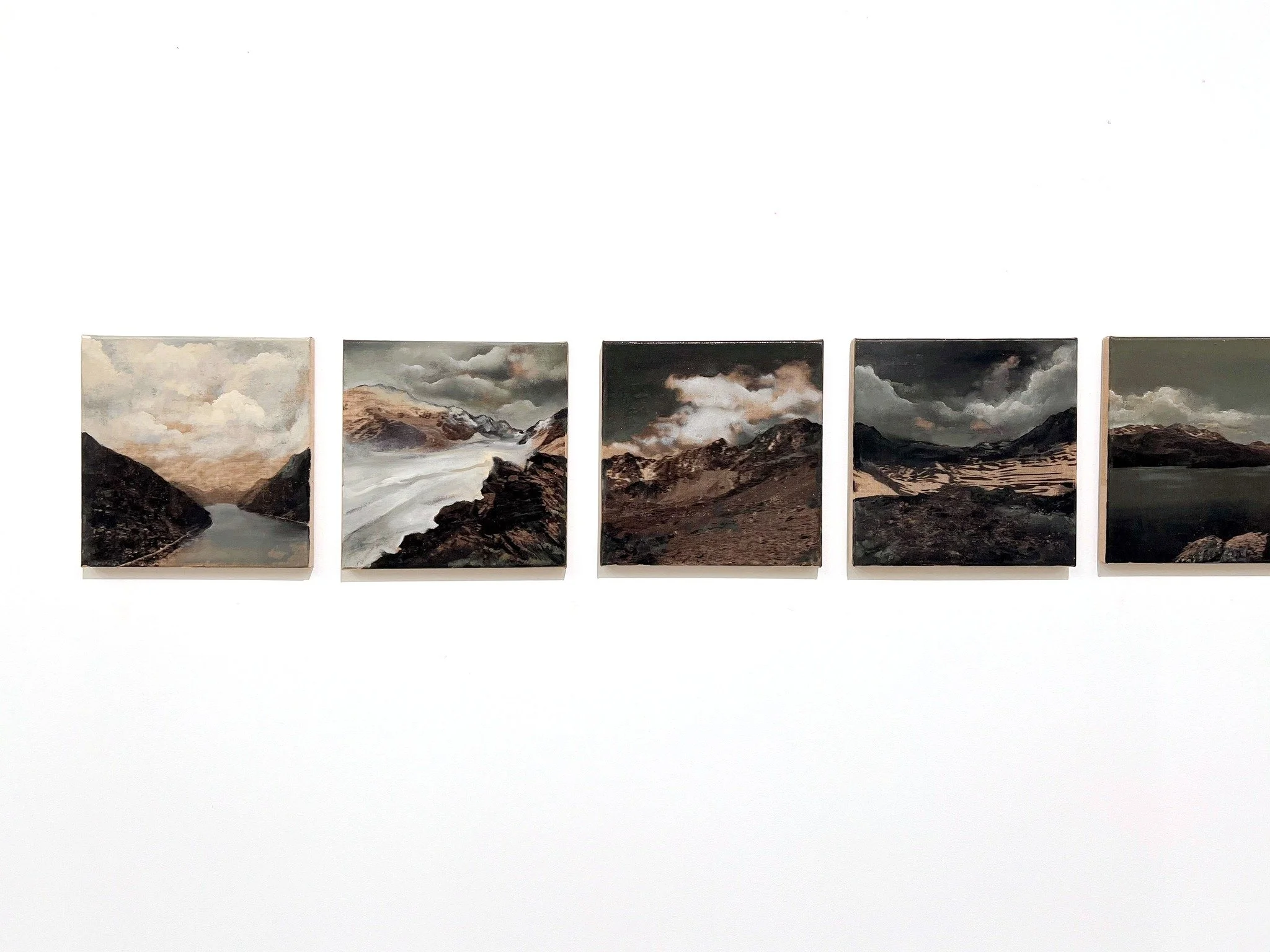
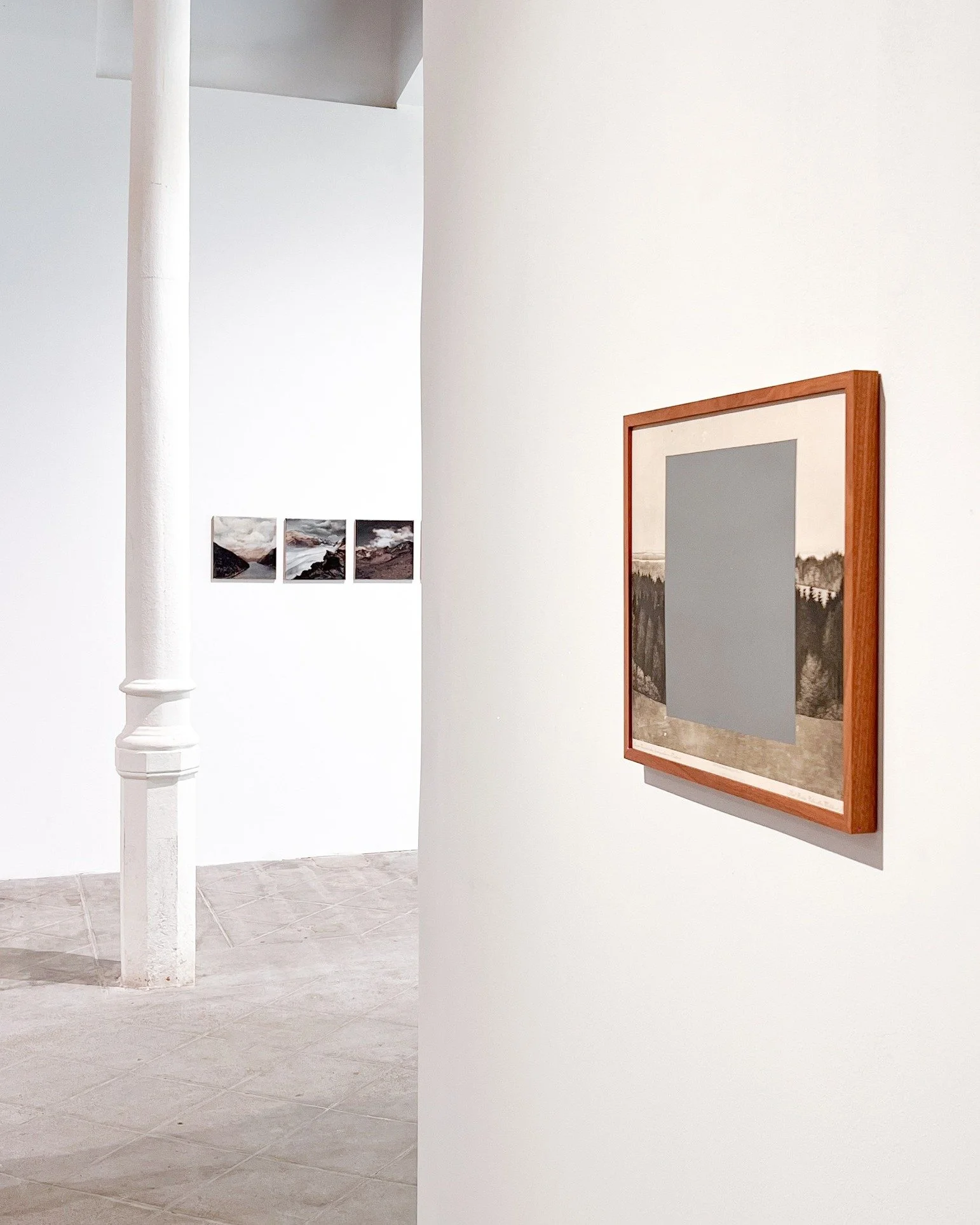
Nataraj von Allmen is a painter based in Switzerland. Often taking photographic material as a starting point, he weaves together landscapes, mythological archetypes, Christian symbolism, and contemporary socio-political themes into complex paintings. Oscillating between figuration and abstraction, his work investigates transformation, collective memory, and the human condition.