

10 Questions with Lu Ren
Lu Ren is an MFA student majoring in Experimental Animation at CalArts. She also has a research background in the fields of the environment and climate change, and earned both a Bachelor's and Master's degree at Tsinghua University. Her latest animated documentary short film “Why is Climate Changing?”(2026) has won the NewNarratives Environmental Awareness Grant Award, Funding Provided by NewFilmmakers LA (NFMLA) and Athens Services. She has created some animations with a theme of expressing certain emotions in her previous works, “Scars” (2025), “A Drop of Dew” (2024), “Good Night”(2023), like discussing anxiety and depression. Her exhibition experience includes Art Nova 100 Exhibition (2025) and GAF Shanghai Illustration Art Festival (2025).
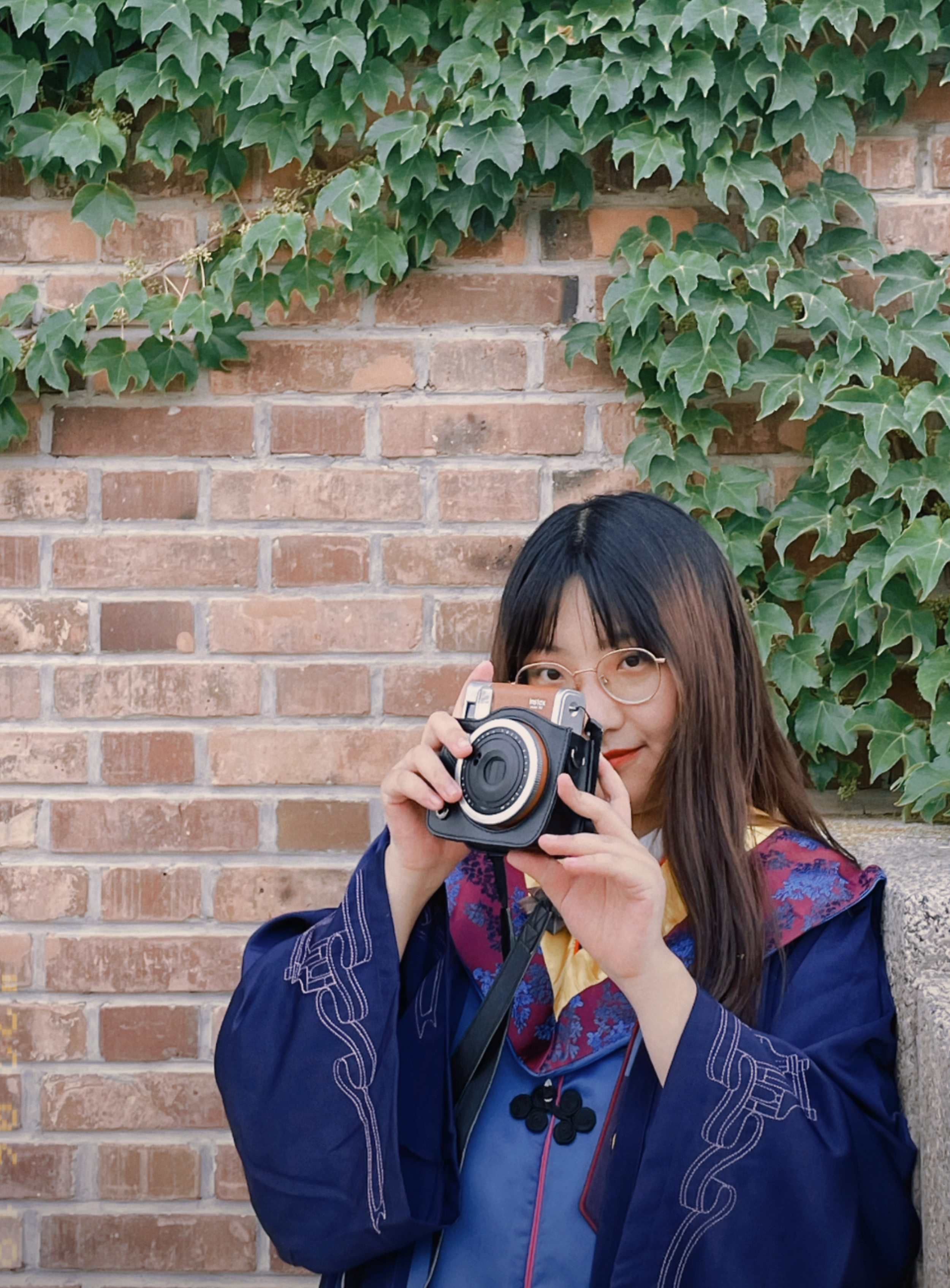
Lu Ren - Portrait
ARTIST STATEMENT
Lu Ren is an MFA student majoring in Experimental Animation at CalArts. She earned both a Master’s and Bachelor's degree in Environmental Engineering from Tsinghua University, one of China's top universities. However, when reflecting on herself, she realised her true ambition is not scientific research, but expressing herself through imagination and creativity. So she turned to making animation.
In her recent film, "Why is Climate Changing?", she interviewed 22 people about their views on climate change and created an animated documentary. Drawing on her research background in the fields of the environment and climate change, Lu views climate change as an urgent global issue; we must recognise that it is caused by human beings and take immediate action.
Lu has created some animations with a theme of expressing certain emotions in her works. In “Scars”, she explores the experience of physical and psychological pain. In “A Drop of Dew”, she tells the story of a character who has lost her shadow and embarks on a journey to find her true self. "Good night" is inspired by the anxiety she experienced during lockdowns. Lu is exploring a more experimental narrative approach in her future animation practice.
A Drop of Dew, Animation Screenshot, 1920×1080 px, 2024 © Lu Ren
INTERVIEW
First, could you tell us a little about your background and what first inspired you to become an artist?
I was born in Zhangjiakou, Hebei Province, a small city in northern China. In 2015, I began studying Environmental Engineering as an undergraduate at Tsinghua University, and in 2019 I became a PhD student directly. Because I have always loved drawing, I joined the Future Animation × Game Student Technology Team at Tsinghua, where I met many friends who love making animation and games. In 2020, my friends and I made a game called Biphase, and the lead designer asked me to create the storyboard for an animated segment at the end of the game. At the time, I knew nothing about animation; I made the storyboard in PowerPoint, and our programmer completed the animation. This was my first animation project and sparked my interest. In 2020, because I was home for so long during the COVID-19 pandemic, I had a long stretch of free time to think about what I really wanted to do. I felt I didn't have enough interest in research or the determination to pursue a career in it, and that making animation made me happier. So I chose to graduate with a master's degree and took animation courses at the Academy of Arts & Design, Tsinghua University. After graduating, I first worked for two years as a game designer while also making animated films. Now I am an MFA2 student in Experimental Animation at CalArts. My greatest motivation to become an artist comes from the sense of accomplishment I get from creating animation; the feeling of creating a uniquely styled world with my own hands is incomparable.

A Drop of Dew, Animation Screenshot, 1920×1080 px, 2024 © Lu Ren
You studied Environmental Engineering before turning to animation. How has your scientific background influenced your artistic practice?
Science and art are two completely different fields, but they also share some common ground. Science requires rationality, solving scientific or engineering problems through rigorous analysis and repeated experiments. Art, on the other hand, requires sensibility, using imagination to create unique works that have the artist’s personal style and to express a certain emotion or atmosphere. I think science and art share human curiosity: research begins with posing a pressing problem to solve, while creating an artwork begins with the desire to explore the world and oneself. I think my scientific background has greatly influenced my artistic practice. First, I have abundant curiosity and hope to answer questions like what kind of person I am through artistic practice. Second, I am very organised and planful in my creative process, which is also closely related to my research experience. In addition, my artistic style has also been influenced by my scientific background; many people say my drawing style looks like I studied architecture, with very regular lines. Of course, long-term scientific training has also constrained my artistic practice; sometimes I worry too much about making mistakes and don't dare to draw boldly and freely. My scientific and artistic backgrounds have together shaped who I am now, and I am very grateful to have had such a unique growth experience.
Why did you choose animation as your main medium of expression?
I have always loved animation. As a child, I watched many animations produced by Shanghai Animation Film Studio, which were my earliest aesthetic enlightenment. Later, I watched a lot of Anime, and I really love Puella Magi Madoka Magica and the animated films of director Satoshi Kon. When I took animation courses at the Academy of Arts & Design, Tsinghua University, I saw Georges Schwizgebel's experimental animation for the first time. I suddenly felt that animation could actually be done this way; it could break the framework of narrative and use leaping colours to purely express feelings and atmosphere. This also sparked my interest in studying experimental animation. When I first created the animation storyboard for the game Biphase, the moment I saw the character come to life on the screen, I could feel that animation has the magic to bestow life. Animation is a very unique medium; it can achieve many things that live-action films, illustration, and other media cannot. I think animation can greatly unleash my imagination and creativity; in the world of animation, there are no limits, and anything can flow, transform, and be exaggerated freely. At the same time, animation can be very personal and highly authorial. Through this medium, I can express many of my unique inner thoughts.
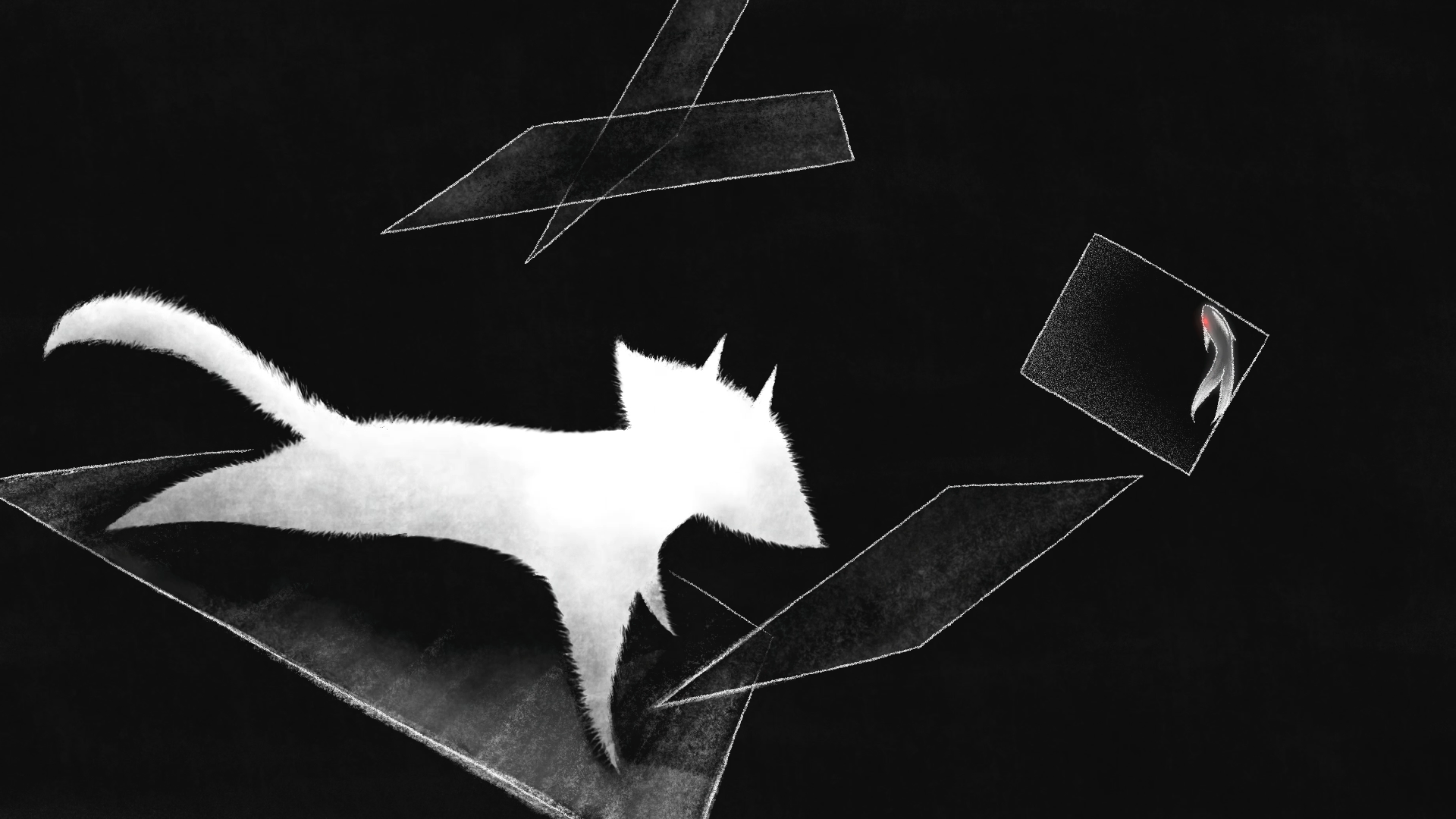
Good Night, Animation Screenshot, 1920×1080 px, 2023 © Lu Ren
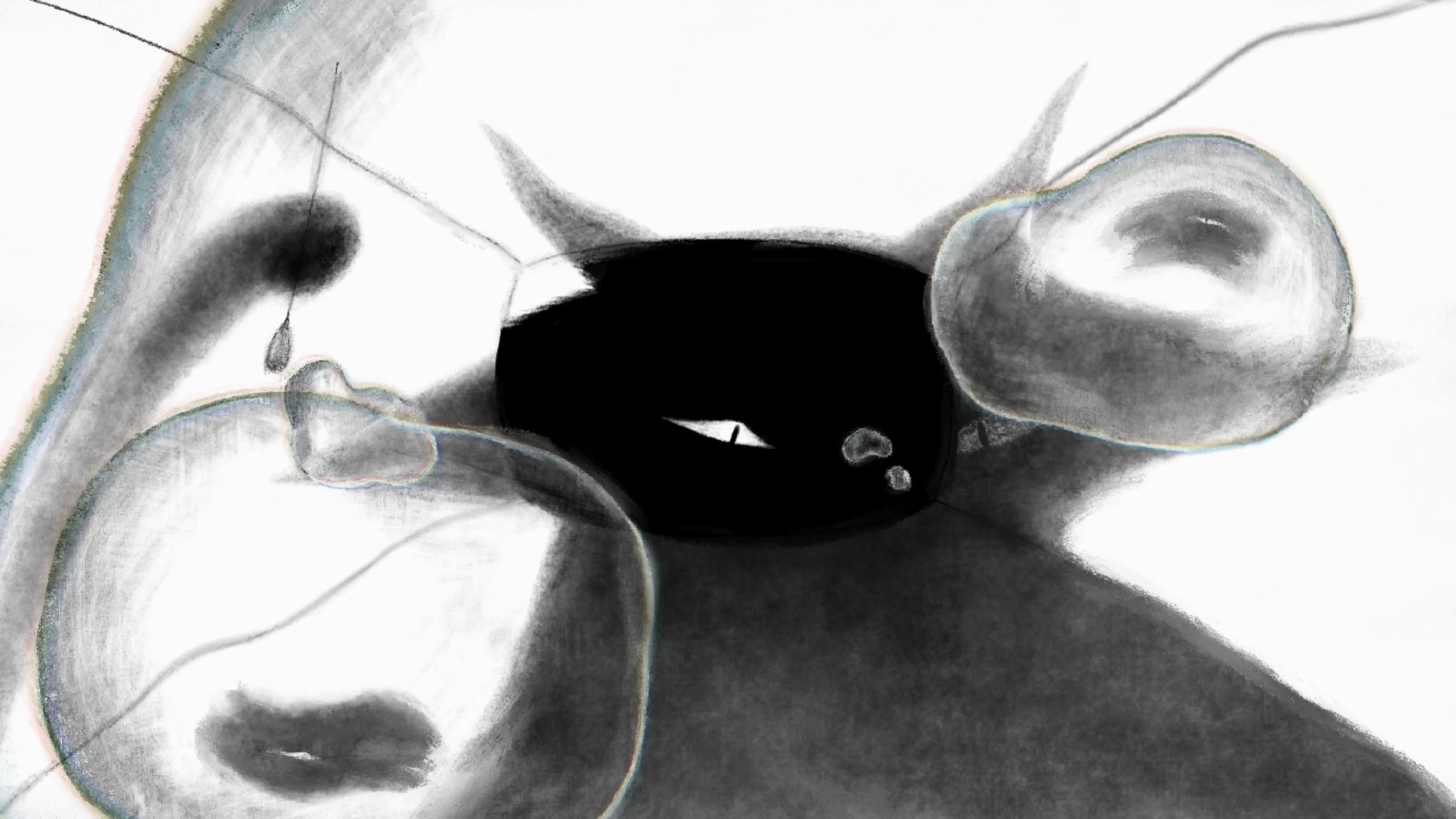
Good Night, Animation Screenshot, 1920×1080 px, 2023 © Lu Ren
Can you tell us about your creative process, from the initial idea to the final animated film?
Once I have an initial idea or concept, my animation creation process generally starts with the storyboard. I first draw a very small-sized storyboard, which allows me to quickly produce an initial version of the design. After that, I work on character and scene design, often starting with sketches, iterating through several versions, and finally settling on the final character and scene design. None of my first few short films had a script, but after coming to CalArts, I took a screenwriting course that taught me a lot and helped me develop the habit of writing a script early in the process. I create the script and storyboard simultaneously, revising them repeatedly until I reach a version I am relatively satisfied with. At the same time, I also do some color concept design, selecting a few still frames from the film that most inspire my creative urge and bringing them close to a finished state, which also sets the color and style tone for the entire film. After that, I create an animatic, drawing animation at 2 or 3 frames per second based on the storyboard. At this stage, I repeatedly adjust the timing and rhythm of the animatic to ensure the characters' performances are timed appropriately and to give the whole film a reasonable emotional arc. Then comes the longest phase: mid-production animation, where I draw frame by frame at 8 or 12 frames per second; some work is digital painting, while other work is hand-drawn on paper. Once the visuals are complete, sound design is needed. I am not very good at this myself, but I work closely with a sound designer who has completed the sound for three of my short films. Finally, the film goes through post-production compositing, after which it can be presented to the audience.
Your works often explore emotions such as anxiety, depression, and psychological pain. What draws you to these themes?
My first personal short film, "Good Night," was inspired by the COVID-19 pandemic. At that time, I had spent more than half a year staying at home, and I felt very anxious and uncertain about the future, along with a strong feeling of being trapped. So I created an image of a fish trapped in a fish tank, facing unknown threats in the world outside the tank, just as I faced an uncertain world and future. I hope this short film can convey a feeling of tension and anxiety to the audience. The inspiration for another of my personal short films, "Scars," came from my feelings about injury and pain. Originally, I was a very insensitive person, often unable to feel that I was hurt, and only long afterwards did I suddenly discover that some small scars had appeared on my body. It was the same psychologically. I often couldn't feel pain at the moment it occurred. But after becoming an adult and experiencing more things, I gradually became a very sensitive person. I could feel not only my own pain but also empathise quite deeply with the pain of others. This made me afraid of getting hurt or hurting others, and I became cautious in what I do. Later, in the film, I used the image of picking out and cutting off an ingrown toenail to metaphorically say that getting a little hurt is no big deal. It's the same in life. Sometimes people get hurt; they feel pain, but it's no big deal. I think the process of making animation is also an exploration of my inner feelings, and to some extent, I have healed myself through creation.
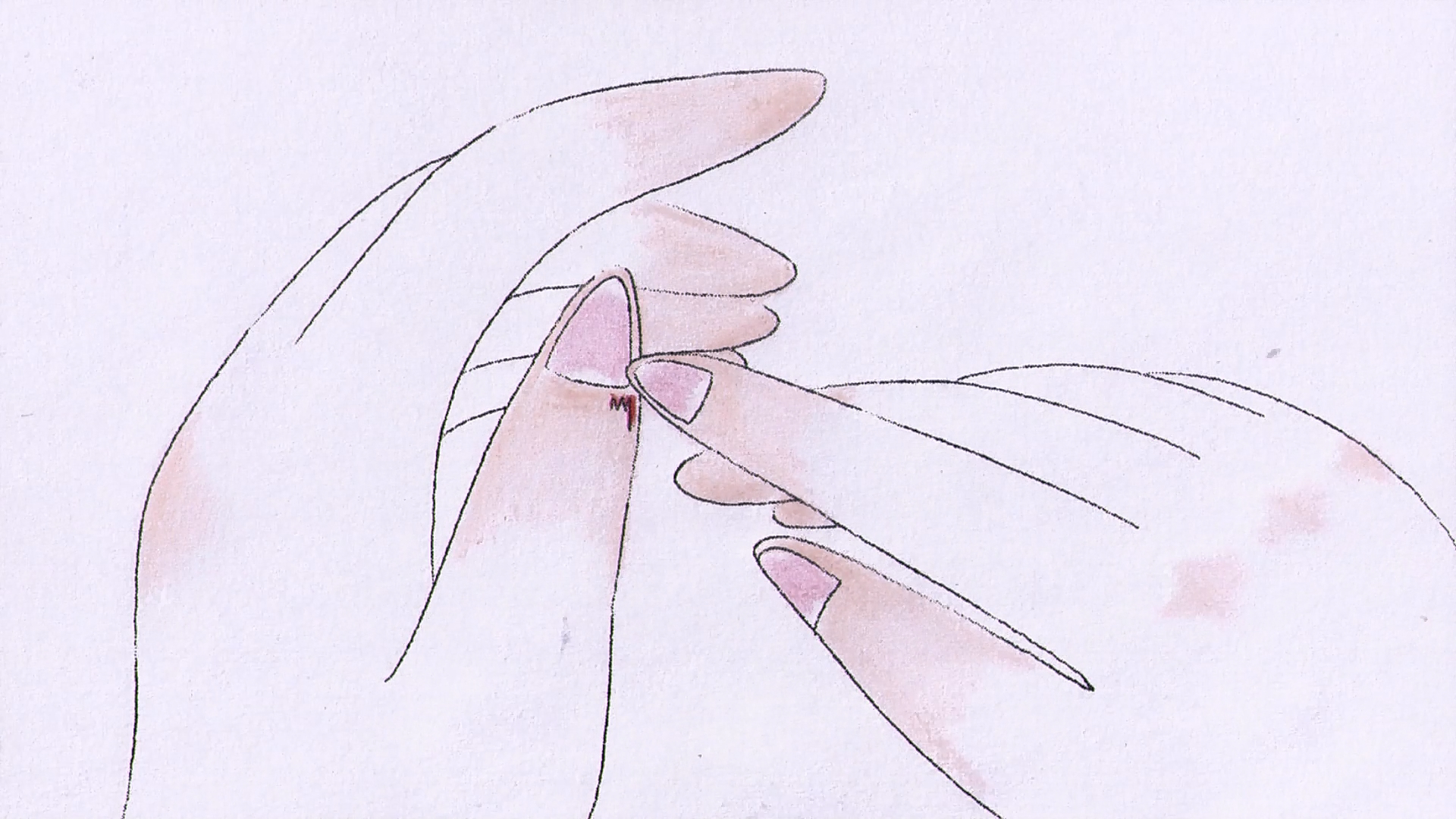
Scars, Animation Screenshot, 1920×1080 px, 2025 © Lu Ren
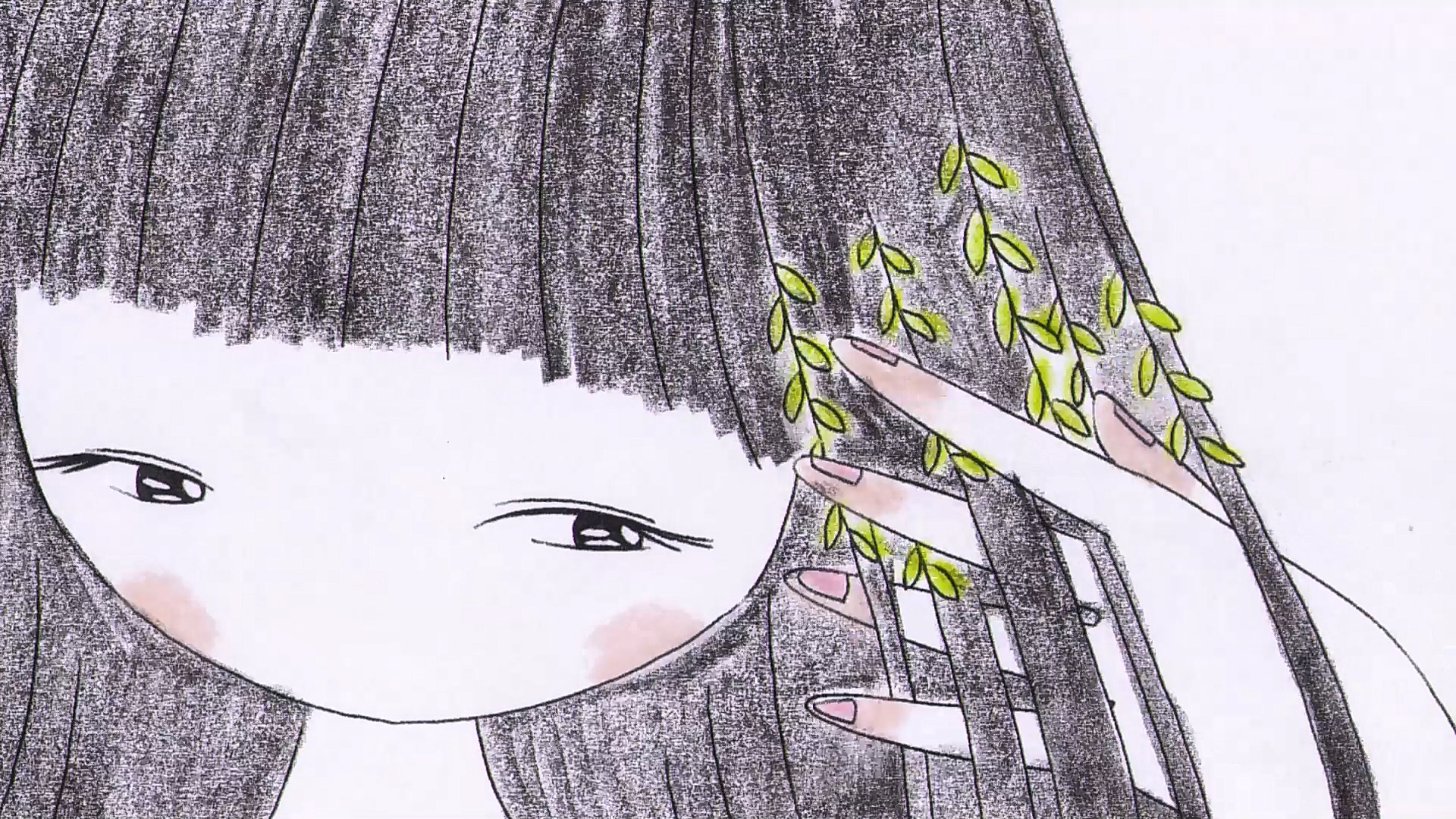
Scars, Animation Screenshot, 1920×1080 px, 2025 © Lu Ren
In A Drop of Dew, the main character loses her shadow and searches for her true self. What inspired this story, and what does the shadow represent to you?
The inspiration for the short film "A Drop of Dew" came from a piece of music. In July 2023, a friend who makes music and I took part in a game jam where games are made within 48 hours, and he wrote several pieces of music for our game. One of the melodies particularly moved me and made me think of the theme of seeking one's true self. Afterwards, building on the art assets I had made at the time, I redesigned the character and backgrounds and began creating an animated short film that fits this piece of music. This music gives me a very gentle, light, and fluid feeling, so I chose a drop of dew as the protagonist. "Dew" (Lu) is also the meaning of my name; I like to draw water and love to depict a sense of free flow. The world I created is blue; I also like blue, which gives me a sense of tranquillity and also a faint sadness. The shadow is the protagonist's reflection in the water. In the film, the shadow turns into a fish and swims away, guiding the protagonist along the way in search of herself. To me, the shadow also means a kind of projection of oneself; losing the shadow means losing a part of oneself. At the end of the film, the shadow leads the protagonist to a place without water, and she chooses to sacrifice herself and turn into water so that this place can be revived. This also represents some of my idealism.
Your film, Why Is Climate Changing?, explores climate change through interviews with 22 people. What did you learn from this experience, and how did it shape the final film?
The initial concept for the short film "Why is Climate Changing?" was a lecture-style popular science piece, meant to teach the audience about climate change. After that, I made a second version: a dialogue between two people, but it felt too much like one person preaching to someone who knew nothing. I then sought advice from many teachers and cohorts, and ultimately adopted real interviews to make an animated documentary. The most important thing I learned from making this short film is to listen to others' suggestions; some key suggestions can change the direction of an entire project. Another point is that when conducting interviews, the interviewer should not bring presuppositions or lead the interviewee, but rather listen to the interviewee's genuine views. Among my interviewees, everyone had their own views on the causes of climate change. I did not selectively edit, but preserved every authentic voice. My 22 interviewees came from various countries, which also reflects that climate change is an urgent international issue. One interviewee from South Korea suggested that I let everyone express their views in their own national languages. I adopted this suggestion and re-recorded the audio, which made the final film more authentic and more moving.
What message or feeling would you like audiences to take away from your work?
If the audience feels even a little touched or emotionally resonated after watching my animated short films, then I will be very happy. For the short film "Good Night," I hope to convey tension and anxiety, as well as a sense of being trapped. At the end of the short film, the audience's perspective shifts to the fish's point of view, and I also hope the audience can empathise with the fish facing unknown dangers. For the short film "A Drop of Dew," I hope the audience can feel a kind of inner tranquillity through the protagonist's journey of seeking the self. The message "Scars" wants to convey is that even a small injury isn't a big deal, so don't be overly sensitive or afraid of getting hurt. I hope the audience can relate this short film to their own lives. The message I most want to bring to the audience is "Why is Climate Changing?" After watching it, I hope the audience will have their own thoughts and answers to this question. I did not directly tell the audience that the climate change we are experiencing is mainly caused by humans; instead, I presented each interviewee's views so the audience can think for themselves and draw their own conclusions. The title of the short film itself is a question, and I hope the audience can watch it with this question in mind, recall the viewpoints and knowledge in the film in their lives, and take action to mitigate climate change.
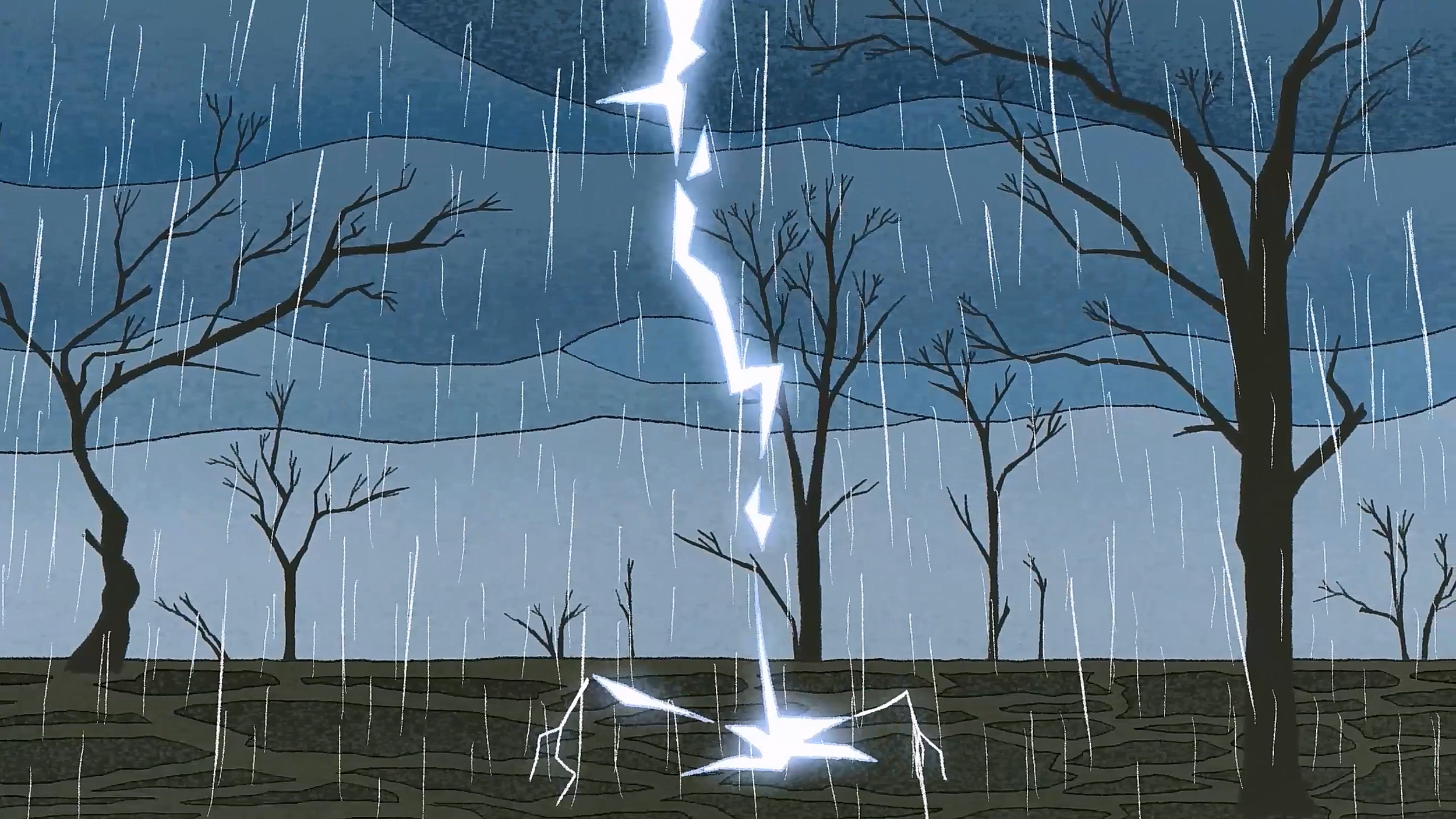
Why is Climate Changing, Animation Screenshot, 2560×1440 px, 2026 © Lu Ren
You have mentioned wanting to explore more experimental narrative approaches in your future work. What would you like to experiment with, and why?
First, I want to try some more experimental materials and techniques. This summer I tried painting a lot of watercolours, and I really love the translucent texture of watercolour. The animated short film I am currently working on is planned to use hand-drawn watercolour on paper, which is something I have never tried before. I also want to try some irregular lines and freer, more flexible colours to step outside my current stylistic framework and do some bolder experiments. In addition, I hope to try some experimental narrative approaches, such as nonlinear narrative, interweaving and telling stories that happen in different times and spaces. I really like Yoriko Mizushiri's animation, which is very good at nonlinear narrative. For example, the short film "Maku" interweaves and juxtaposes many different images. I also hope to try some non-narrative methods of expression, not telling a specific plot, but using graphics and colours to build emotion and atmosphere. I really like the animated works of Georges Schwizgebel; he is good at using flowing colours and constantly changing spaces to let the audience experience emotions. For example, in the film "Retouches," the interleaving of light and shadow portrays the characters, and undulating green expresses the breathing of a forest; it is very atmospheric.
Lastly, what projects or creative goals are you most excited about for the future?
My most anticipated recent project is my graduation project, a narrative animated short film. In this project, I hope to try the technique of hand-drawn watercolor on paper and to create some surreal, dreamlike plots. My inspiration for this short film comes from my experiences of receiving help from others. I hope to convey to the audience that connection between people is important, and that one should dare to seek and accept help. In the future, I hope to create animated works that can move the audience, and I also look forward to maintaining my passion for creation and my idealism.
Artist’s Talk
Al-Tiba9 Interviews is a promotional platform for artists to articulate their vision and engage them with our diverse readership through a published art dialogue. The artists are interviewed by Mr. Mohamed Benhadj, the founder & curator of Al-Tiba9 Contemporary, to highlight their artistic careers and introduce them to the international contemporary art scene across our vast network of museums, galleries, art professionals, art dealers, collectors, and art lovers across the globe.


Peilin Li is an illustrator and designer at BUCK, based in Los Angeles. She works across illustration, branding, and motion. Inspired by picture books, comics, and everyday life, she creates lively, character-driven scenes that capture the humor, chaos, and warmth of ordinary moments.