
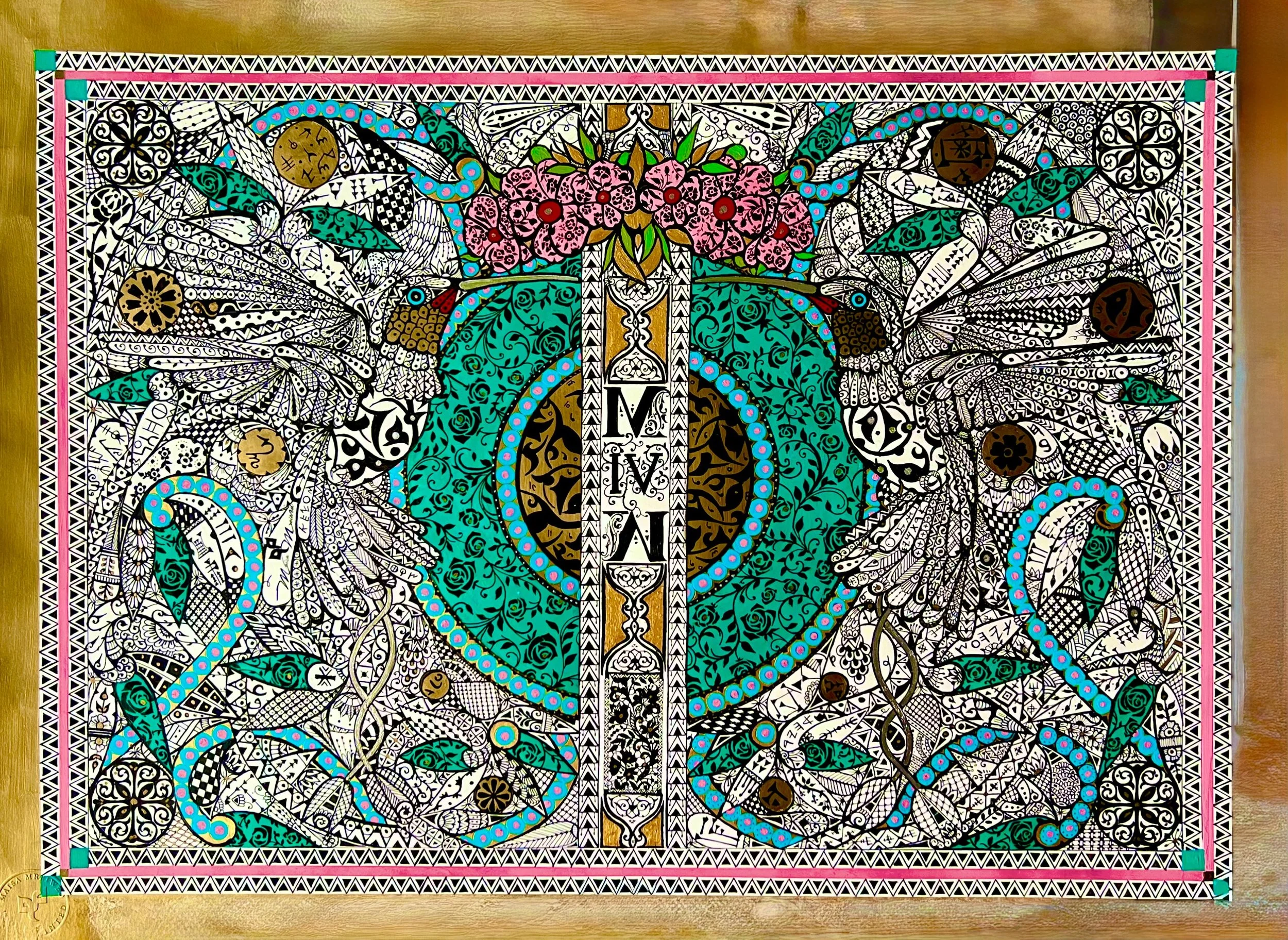
10 Questions with Maisa Mreiwed
Maisa Mreiwed is a Syrian-Canadian multidisciplinary artist, designer, researcher, and educator based in London, Ontario, Canada. She holds a Fashion Design Diploma from LaSalle College, a BA in Religious Studies, and an MA in Art Education from Concordia University in Montréal.
Deeply passionate about the arts in all its forms, Maisa creates intricate artworks that incorporate signs and symbols to explore thought-provoking themes from both historical and contemporary contexts. She views art as a powerful visual narrative that fosters meaningful connections between people and their environment.
Maisa’s work has been presented nationally and internationally through exhibitions, residencies, public art projects, and academic conferences. She has exhibited at venues such as Forest City Gallery in London, Ontario, the Toronto Outdoor Art Fair, and Art à la Carte at the Legislative Assembly of Ontario. Her public art practice includes contributions to the London Arts Council’s Live Mural Walk Program and Joy, a permanent mural created through the Songlines Project and installed at the South London Community Centre.
Her temporary public installation The Rag-and-bone Man / Le Chiffonnier was presented during Promenade Parlante: Episodes in a Changing Neighbourhood, part of the Cultural Programming 2018 Conference at Concordia University in Montréal. The project explored neighbourhood histories and community engagement through site-responsive artistic practice.
Her work has also been featured in academic contexts, including presentations at the Comparative and International Education Society (CIES), the International Society for Education through Art (InSEA), The European Association for Research in Learning and Instruction (EARLI) and the Canadian Association for Curriculum Studies (CACS). Maisa further expanded her research and studio practice through an artist residency at the Icelandic Textile Centre in Blönduós, Iceland.
In 2022, Maisa received the Arts Integrated Research Award from Lakehead University in recognition of her work inspired by climate change and environmental action. Her most recent publication is “Storytelling through Textiles: The Re-birth of a Phoenix Called Damascus,” published in Connections in and through Arts-based Educational Research (2023), and her artwork is on the cover of the book Art as an Agent for Social Change (2021) and featured in the climate action art and research catalogue One Cell, The World (2024).
Her current academic research-creation project explores how traditional Syrian costumes function as narrative forms serving as living archives of memory, identity, and resilience. Maisa is also interested in the stories and messages that textiles relay before and after being transformed into usable and artistic items. She believes that textiles and traditional costumes are not just passive cultural artefacts but legitimate forms of storytelling that can provide insights, particularly into Syria’s rich and diverse history as well as its present.

Maisa Mreiwed - Portrait
ARTIST STATEMENT
Maisa’s artwork reflects her personal, academic, and professional journey as a Syrian Canadian multidisciplinary artist, educator, and designer within an interconnected global world. Drawing inspiration from both the tangible realities of her surroundings and the ethereal landscapes of her dreams, each artwork tells a story of survival through the eyes of different living beings embedded within layers of geometric patterns, intricate details and symbols, inviting viewers on a journey of exploration and wonder. The overarching message is one of unity emphasizing the importance of safeguarding our oceans, skies, lands, and all beings for a more promising present and future.
The artistic process for each artwork varies as it is guided by the story, canvas, and scale. To tell each story, Maisa uses a quill and ink with black as a dominant colour, complemented by secondary colours such as gold, copper, and silver acrylics, to create a harmonious balance and accentuate key symbols. Each stroke of the quill helps capture the beauty and emotions that manifest in Maisa's subconscious, transcending the limitations of verbal communication, inviting the audience to join her in the exploration of a world where words are unnecessary, and the language of the soul is depicted in shades of ink.
The materials employed in her work are integral to its conceptual framework. The use of eco- friendly inks minimizes harmful chemical impact, reflecting a commitment to the integrity of the natural systems represented. Systems that, like certain species, play an active role in ecosystem restoration. Handmade and recycled papers further reinforce this approach by materially embodying cycles of growth, decay, and renewal. Together, these materials allow the artworks to be a part of the narrative honouring the connection between humans and nature while highlighting the resilience and ecological impact of these vital species.
Maisa sees art as a powerful visual narrative that enables reflection, critical thinking, and connects people to each other and the environment. Each element and symbol that she weaves into her artworks is intentional. While the meaning may vary, the intention is for the viewers to discover something new every time they look at a piece and use their imagination to decipher the messages.
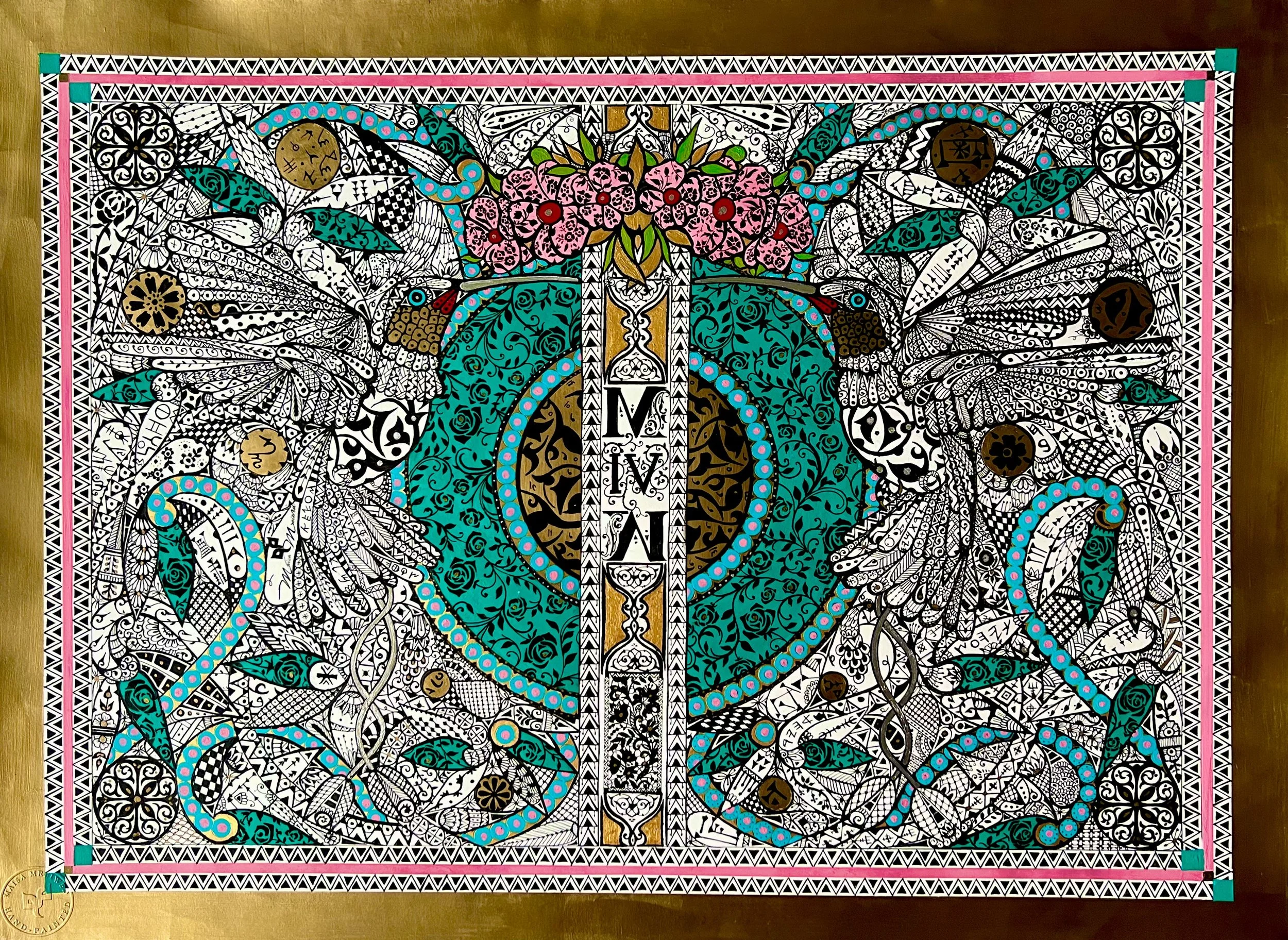
Whispers Vol. V, Hand-painted with quill, ink, and acrylics on Paper, 22x30 inches, 2024 © Maisa Mreiwed
INTERVIEW
First, your background combines fashion design, religious studies, and art education. How do these different fields come together in your artistic practice?
My artistic practice is shaped by the intersection of fashion design, religious studies, and art education. Fashion design gave me an understanding of textiles, craftsmanship, and the cultural significance of clothing. Religious studies deepened my appreciation for symbols, patterns, and the ways visual language communicates identity, spirituality, and shared human values. Art education encourages me to approach my work through research, critical inquiry, and community engagement. Together, these disciplines allow me to create work that bridges tradition and contemporary practice while exploring identity, memory, resilience, and cultural dialogue.
How has your experience as a Syrian-Canadian artist shaped the themes you explore in your work
Living through both cultures has profoundly influenced my work. As a Syrian-Canadian artist, I draw from my personal journey while reflecting on broader experiences of Immigration, belonging, resilience, and cultural continuity. My work explores how memories, traditions, and identities evolve across time and place. I am interested in celebrating human connection, hope, and our shared responsibility to care for one another and for the natural world.

Hidden Chords, Hand-painted with quill, ink, and acrylics on Paper, 30x 42 inches, 2024 © Maisa Mreiwed
Symbols and signs are central to your visual language. How do you decide which symbols belong in a particular piece?
Every symbol in my work carries meaning. Some are inspired by nature, architecture, textiles, geometry, or historical motifs, while others emerge from personal experiences and research. I carefully select symbols that support the story I want to tell. Rather than using them as decoration, I see them as a visual language that invites viewers to discover multiple layers of meaning and to form their own connections with the art pieces.
You work across disciplines, from textiles to public art and research. How do you choose the medium for each project?
The concept always determines the medium. Each project requires a different approach in order to achieve the desired message through to the audience. Sometimes ink on paper provides the precision and intimacy I need, while textiles connect naturally to themes of heritage, identity, and storytelling. Public art allows me to engage directly with communities and shared spaces, creating opportunities for dialogue and collective reflection. I enjoy working across disciplines because each medium offers unique possibilities for communicating ideas.
Much of your work connects storytelling with textiles. What draws you to fabric and traditional costumes as narrative forms?
Textiles are among humanity's oldest forms of storytelling. Traditional garments preserve histories, beliefs, craftsmanship, and cultural identity across generations. I am fascinated by the way a single embroidered pattern, woven structure, or garment silhouette can communicate place, memory, and belonging. Through my work, I reinterpret these traditions in contemporary ways, honouring their cultural significance while exploring how they continue to evolve in today's interconnected world.
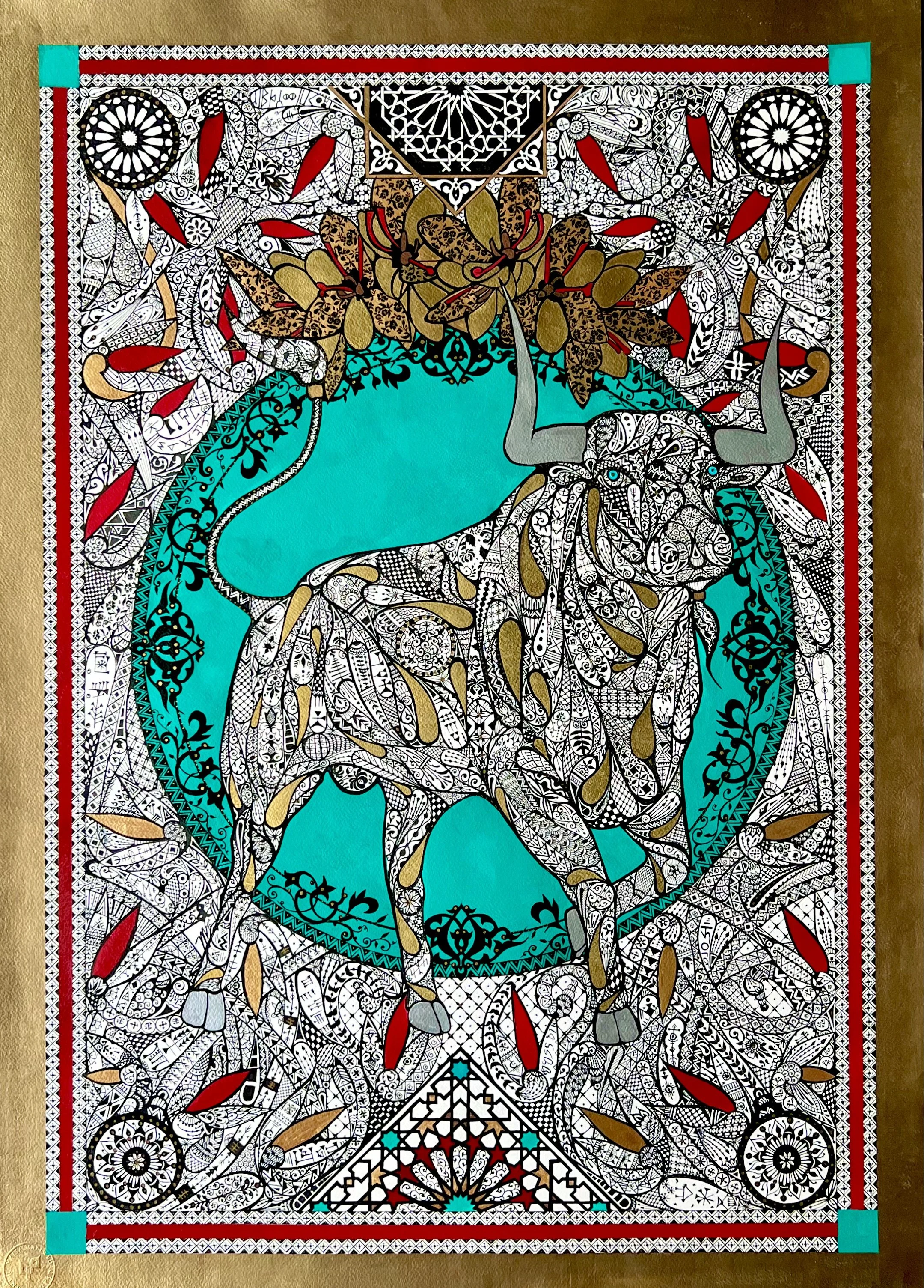
Resilience, Hand-painted with quill, ink, and acrylics on Paper, 30x40 inches, 2023 © Maisa Mreiwed

Tortosa, Hand-painted with quill, ink, and acrylics on Paper, 22x30 inches, 2024 © Maisa Mreiwed
Your practice often engages with history and memory. How do you balance personal stories with collective or cultural narratives?
I begin with personal experiences as they provide an authentic point of entry. However, I aim to expand those stories into broader conversations that resonate across cultures and communities. Memory is both individual and collective. By weaving together personal narratives, historical references, and cultural symbols, I hope viewers can recognize aspects of their own experiences while reflecting on our shared human history.
Black ink plays a dominant role in your work. What does this restrained palette allow you to express emotionally or conceptually?
Black ink is the foundation of my visual language. It offers clarity, precision, and timelessness while allowing every line to carry intention. Using a quill and ink creates a direct and meditative process where each mark becomes part of the story. I often complement the black with touches of gold, copper, or silver acrylic, creating moments of light, transformation, and hope within the composition. This restrained palette allows the symbolic imagery and intricate details to speak with greater clarity.
Environmental awareness and sustainability are important in your material choices. How do eco-friendly materials influence the meaning of your work?
Sustainability is both a practical and conceptual consideration in my practice. Choosing environmentally responsible materials reflects my belief that artists have a role in caring for the world we share. These choices reinforce the themes of interconnectedness, stewardship, and respect for nature that appear throughout my work. The materials themselves become part of the narrative, reminding us that artistic creation and environmental responsibility can exist together.

Joy, Hand-painted with quill, ink, and acrylics on Paper, 30x42 inches, 2024 © Maisa Mreiwed

Time, Vol. II, Hand-painted with quill, ink, acrylic paint, and salmon leather on paper, 23x31.5in, 2026 © Maisa Mreiwed
You are also an educator and researcher. How does teaching inform your artistic process, and vice versa?
Teaching and artistic practice continually enrich one another. As an educator, I encourage curiosity, experimentation, and critical thinking, and these same values shape my own creative process. Research keeps my work grounded in historical, cultural, and contemporary contexts, while making art allows me to test ideas through visual exploration. Together, teaching, research, and studio practice create an ongoing cycle of learning, reflection, and discovery.
Lastly, what directions or questions are currently guiding your research-creation projects and future artistic work?
My current research-creation explores the relationships between cultural heritage, textiles, symbols, public space, and environmental responsibility. I am interested in how traditional knowledge can inspire contemporary artistic practices while encouraging dialogue across cultures. Through exhibitions, public art, and interdisciplinary collaborations, I hope to continue creating work that connects people through shared stories, celebrates cultural diversity, and inspires reflection on our collective future.
Artist’s Talk
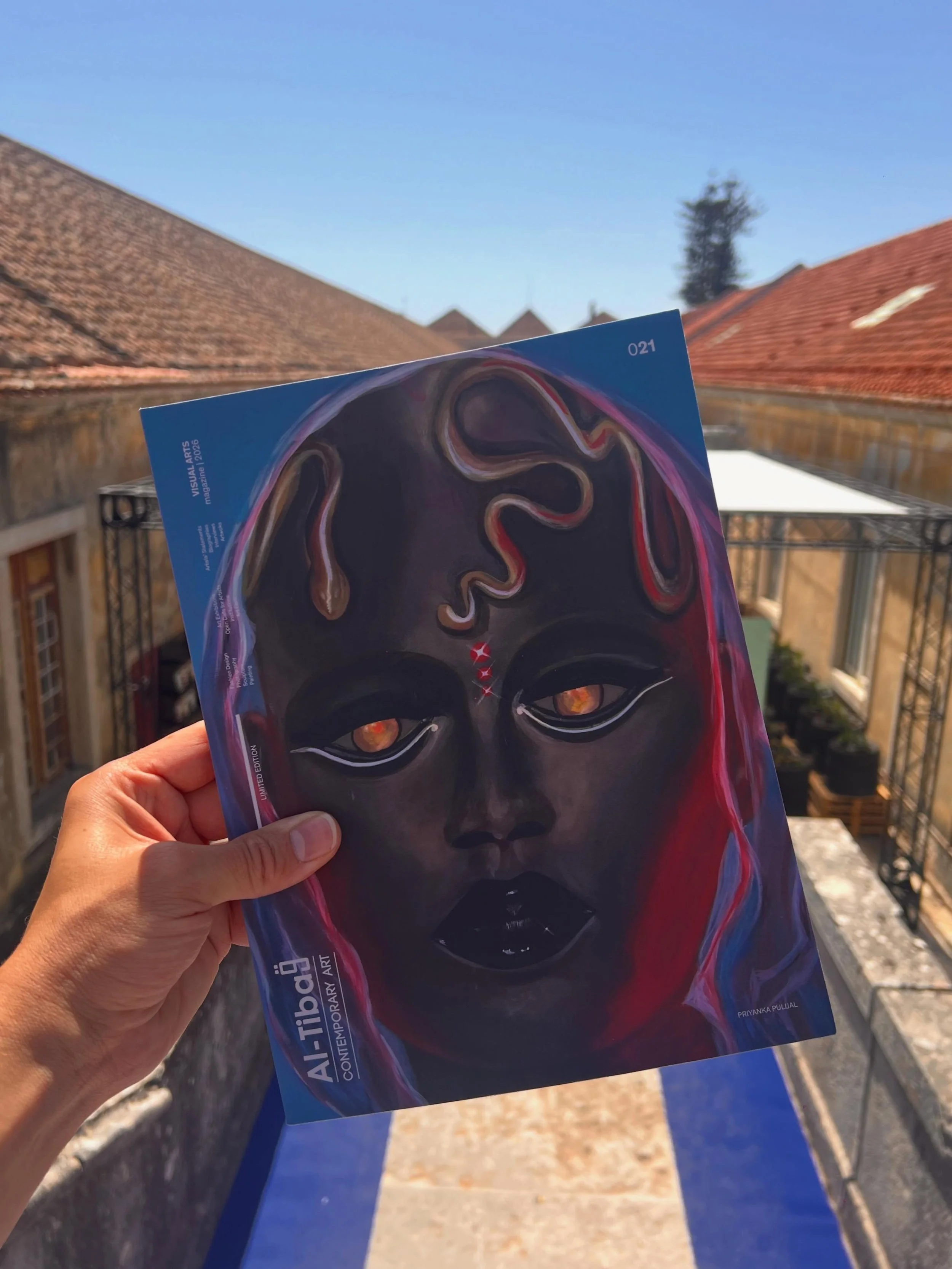
Al-Tiba9 Interviews is a promotional platform for artists to articulate their vision and engage them with our diverse readership through a published art dialogue. The artists are interviewed by Mr. Mohamed Benhadj, the founder & curator of Al-Tiba9 Contemporary, to highlight their artistic careers and introduce them to the international contemporary art scene across our vast network of museums, galleries, art professionals, art dealers, collectors, and art lovers across the globe.
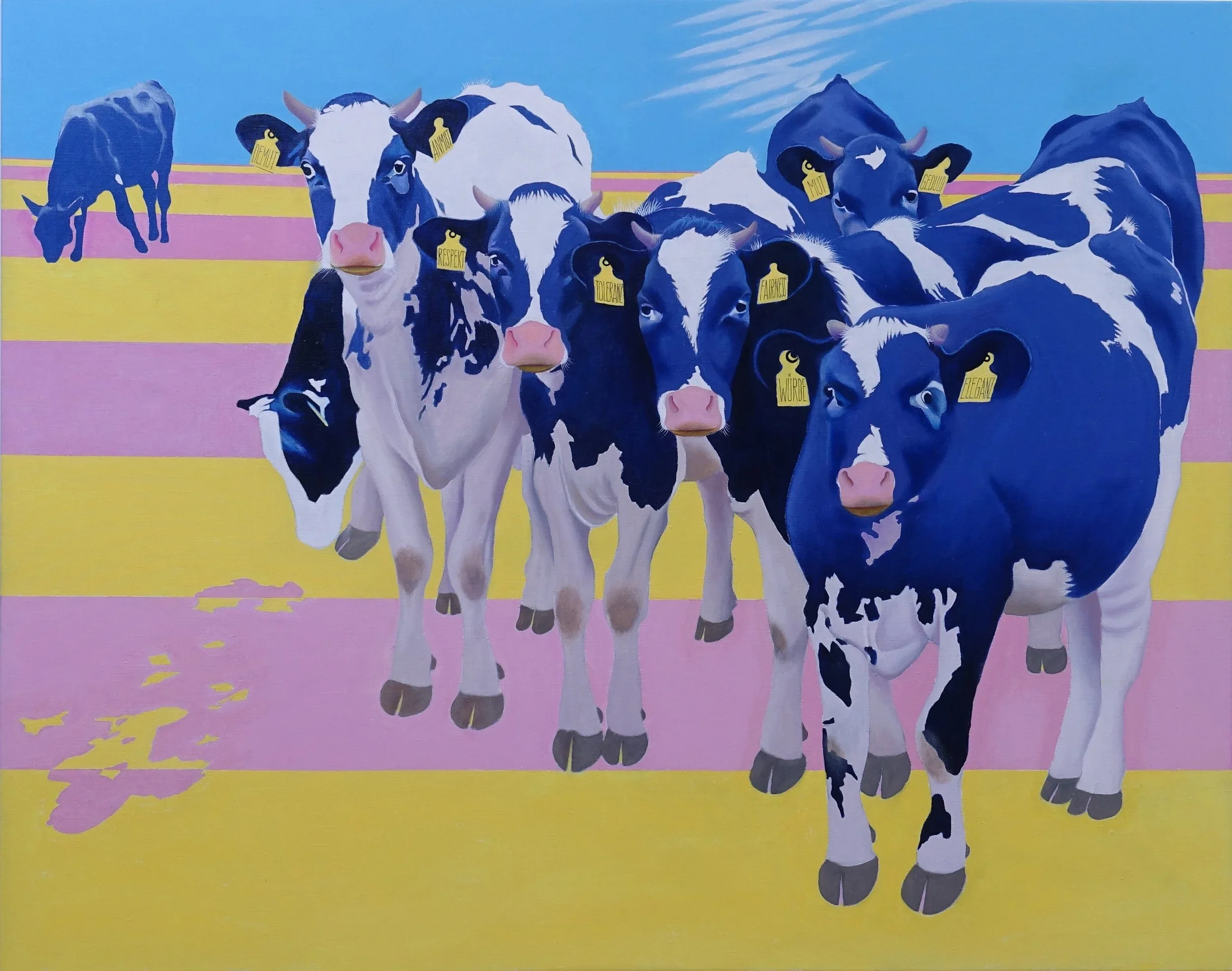


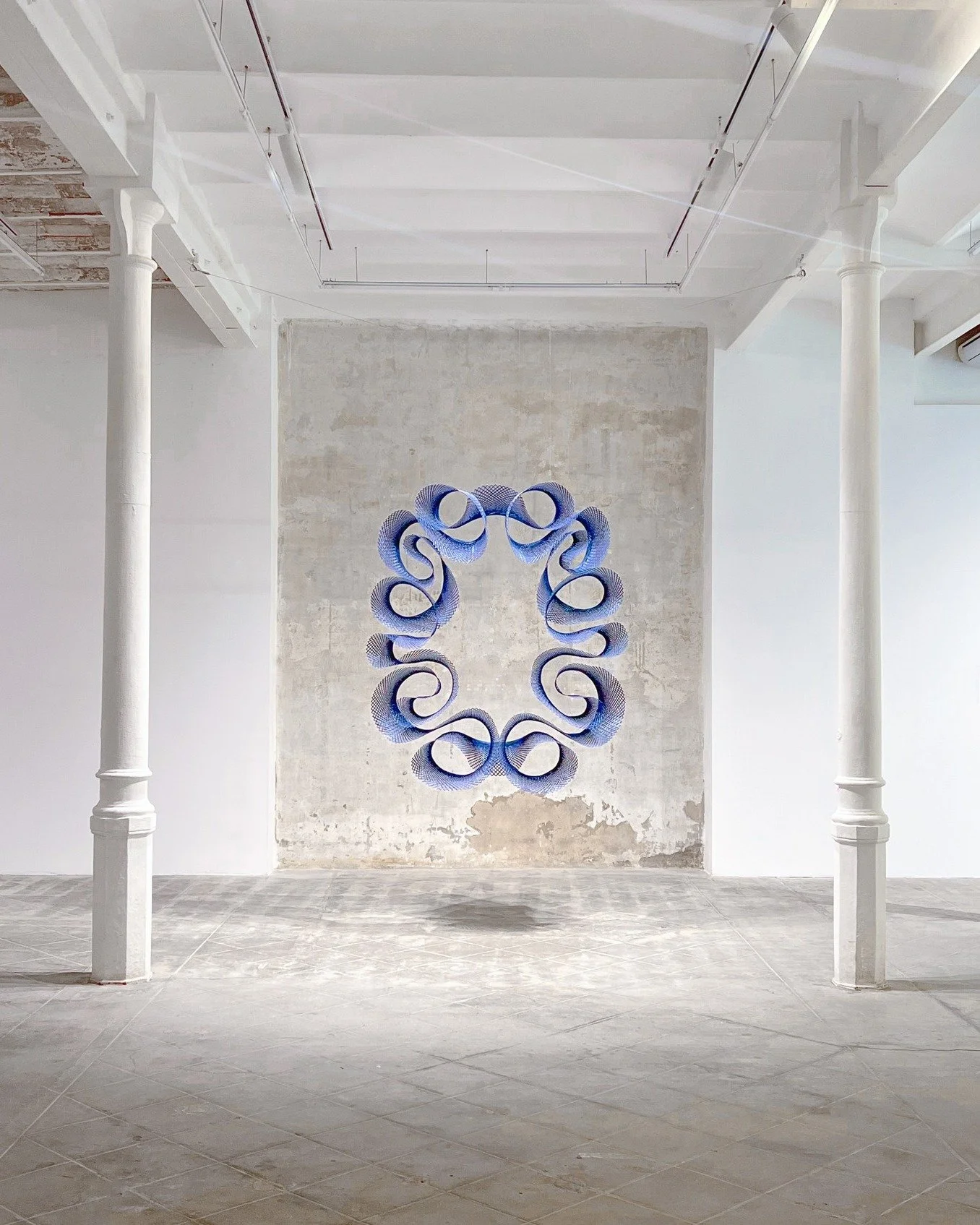
David Moješčík - MojDa is a Czech sculptor. His work is centred on figurative sculpture, the human body, and the female figure. Modelling in clay and with digital tools, he ultimately prioritises manual engagement with materials. . He draws inspiration from yoga philosophy with the concepts of non-violence and human-centeredness, as well as from Egyptian, ancient, and European classical sculpture.