
10 Questions with Jia Min
Jia is an award-winning British-Chinese artist based in Denmark, known for her distinct ability to weave the serene aesthetics of both Eastern and Scandinavian cultures into her exclusive works. A painter, writer, and philosopher, Jia explores the contemporary expression of Artistic Femininity, a concept she defines and refines through her creative practice. Her work is a meditative inquiry into form, soul, and meaning, offering a visual dialogue between tradition and modernity.
Jia’s life journey spans China, Singapore, London, Chicago, and now Copenhagen, each place contributing to her profound understanding of diverse cultures, histories, and the inner human experience. Trained in classical fine art at the prestigious Florence Academy of Art, Jia combines rigorous technical mastery with a deeply philosophical lens. Her artistic vision is further informed by her academic role as a teaching staff at the University of Cambridge, where she specialises in High Impact Leadership.
For Jia, art and philosophy are not separate pursuits, but integrated pathways to soul empowerment, tools for aligning inner purpose with meaningful outward impact and service to humanity. Her work embodies a rare synthesis of global perspectives, emotional depth, and timeless elegance.

Jia Min - Portrait
ARTIST STATEMENT
Jia is the creator of the contemporary concept of Artistic Femininity, which embodies qualities traditionally associated with the feminine, such as grace, intuition, sensitivity, and nurturing to its core. It encompasses a deep and intuitive understanding of emotions, requires a courageous and truthful connection to others and to the innermost self, and a penchant for expressing beauty and kindness in confident, elegant, subtle and nuanced ways.
Artistic femininity also involves embracing vulnerability, dark times and past experiences. Constantly striving for rebirth, awakenings and nurturing new, free fluidity of expressions, and celebrating the interconnectedness of all experiences, cultures, languages and forms.
Out of which, most significantly, this purest and omnipotent energy derives from the interconnectedness one shall have with themselves and their souls, where arts are the best vessels through which this profound connection can be intuitively expressed, transcending boundaries and resonating with the essence of existence.
To Jia, it is a manifestation of this divine feminine energy, the Artistic Femininity, that flows through the creation of many of the greatest arts and all living things, inspiring Jia to infuse her artworks and her being with presence, empathy, compassion, love and a reverence for life.
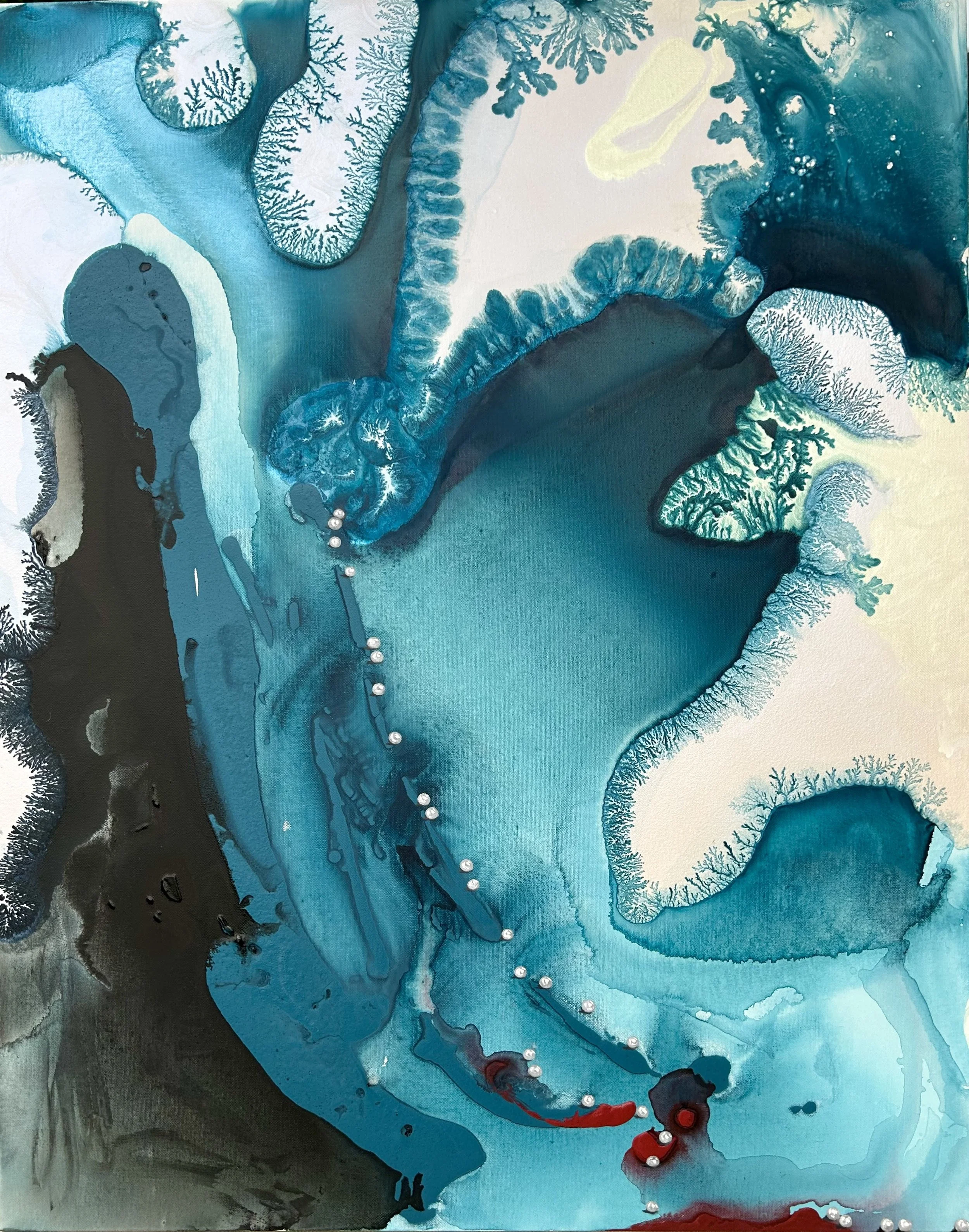
Currents of Reincarnation © Jia Min
Fleurs Collection | Project Description
A Timeless Dialogue on Femininity, Soul, and the Art of Becoming
The Fleurs Collection is an evocative body of work that explores the multidimensional experience of femininity through a unique blend of symbolism, abstraction, and classical technique. It is more than a visual body of work; it is a philosophical and emotional landscape. Each painting is a delicate intersection of nature’s ephemerality and the human soul’s enduring strength. Through her signature symbolism of flowers and pearls, Jia elevates art as a vessel for self-discovery and soul empowerment, crafting compositions that hold not only aesthetic beauty but a profound invitation to explore the shared journey of becoming. Jia Min’s paintings invite the viewer into a deeply meditative space, one that celebrates softness not as fragility, but as power.
This collection flows from Jia’s lived experiences across continents, China, Singapore, London, Chicago, and now Denmark, and her classical training at the Florence Academy of Art. Her brushstrokes carry the discipline of realism and the freedom of abstraction, weaving Eastern contemplation and Western structure into a singular, expressive voice. Her work, as noted in Contemporary Art Curator Magazine, speaks not just to the eye, but directly to the heart and spirit. The collection has also been exhibited internationally in Spain, Italy, the UK and recently in the MEAM Museum in Barcelona.
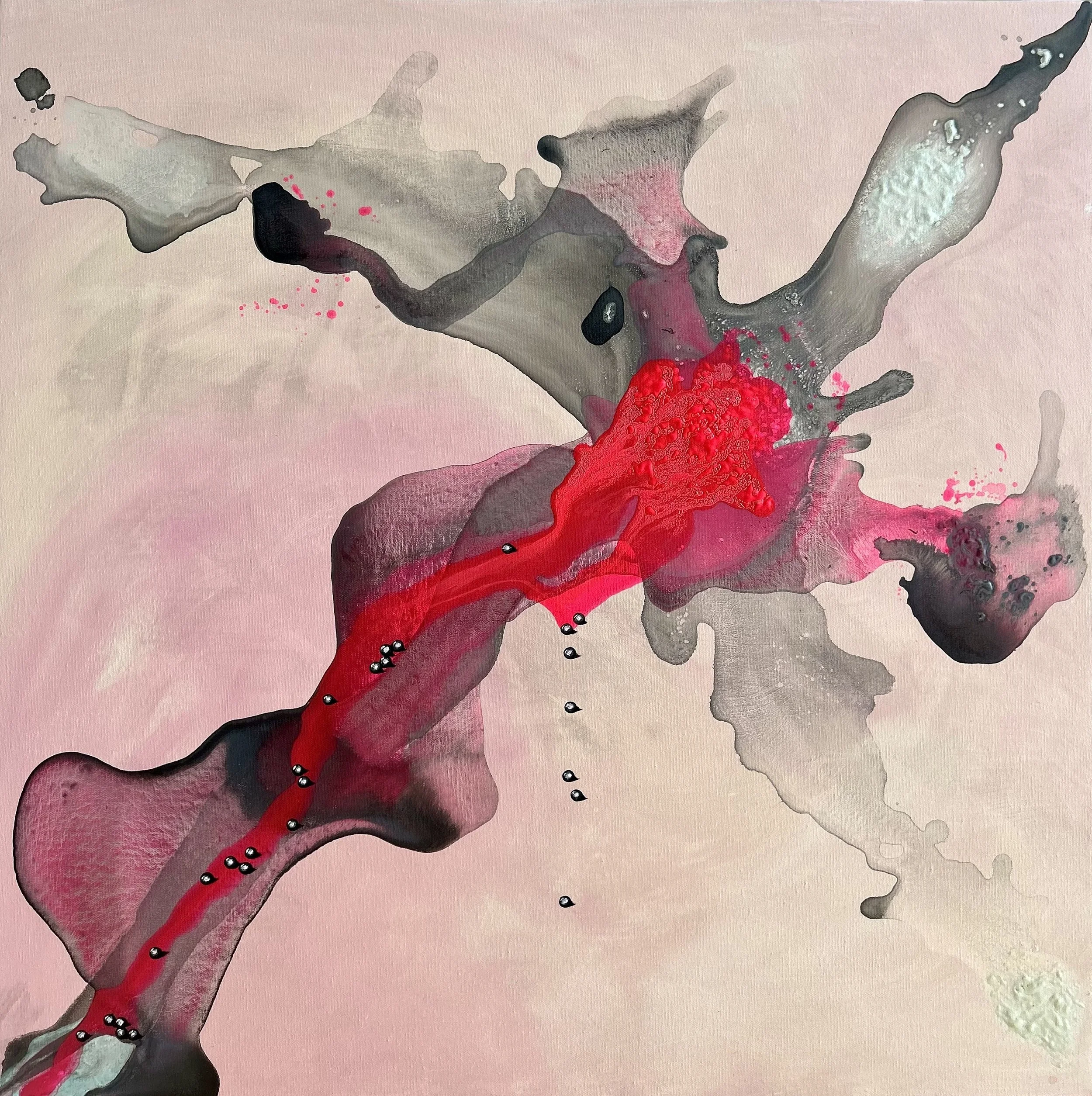
In Fleurs, Jia redefines femininity as a source of intuitive power, not through dominance, but through grace, resilience, and vulnerability. Her paintings are a response to a fragmented world, offering unity and reflection. Whether it is the intimate softness of Lovers’ Correspondence or the inner awakening captured in Hope, each canvas becomes a bridge between the personal and the universal, between the fleeting and the eternal.
This collection is imbued with emotional literacy, a timeless sensitivity to human complexity. Through layered textures, symbolic motifs, and restrained palettes, Jia reveals her vision of femininity as sacred, empowered, and evolving. The frequent presence of pearls, silent and luminous, whispers of wisdom forged through quiet endurance. Flowers suspended mid-bloom or subtly fading mirror the soul’s natural rhythms of expansion, pause, and rebirth.
Jia Min is not only a remarkable artist but a modern philosopher, positioning her work within a greater narrative of humanity’s inner transformation. Her art does not merely reflect life; it helps shape it. In Fleurs, she offers more than paintings; she offers a visual sanctuary for anyone seeking beauty, clarity, and the courage to feel.
This is not simply a collection to be viewed, it is one to be felt, contemplated, and carried. A timeless offering in a transient world.
Happy Tidings © Jia Min
INTERVIEW
First of all, introduce yourself to our readers. Who are you, and how did you first get interested in art?
I am an artist working at the intersection of classical technique and contemporary expression, at the convergence between the East and West, with a practice rooted in what I call Artistic Femininity. My interest in art began quite intuitively, it was never a single moment, but rather a gradual awareness that visual language allowed me to express what words could not. Over time, this instinct evolved into a disciplined pursuit, leading me to formal training and, eventually, to developing a practice that bridges technical mastery with emotional and philosophical inquiry.
I see myself less as someone who “became” an artist and more as someone who gradually recognised art as a necessary mode of thinking. My practice originates in a persistent need to investigate what cannot be resolved through language, questions of presence, identity, perception and awakening. Early on, drawing and painting offered a way to hold ambiguity without collapsing it into certainty. That tension, between articulation, quest and hope, remains central to my work today.
You’ve lived in China, Singapore, London, Chicago, and now Copenhagen. How have these different cities shaped your visual language and way of thinking about art?
Each geography has contributed not just visually, but epistemologically, shaping how I construct meaning. China instilled a sensitivity to symbolic compression, philosophical, cultural depth and historical continuity; Singapore introduced a layered hybridity where identities coexist without resolution; London sharpened my engagement with critical discourse; Chicago encouraged a more expansive, less restrained physicality; and Copenhagen has brought a kind of reductive clarity, where silence and space become active elements. These contexts have not merged into a singular identity but rather coexist as a productive tension within my work, as well as offering a more refined minimalism. Together, these environments have shaped a visual language that moves fluidly between structure and emotion, East and West, tradition and reinvention.
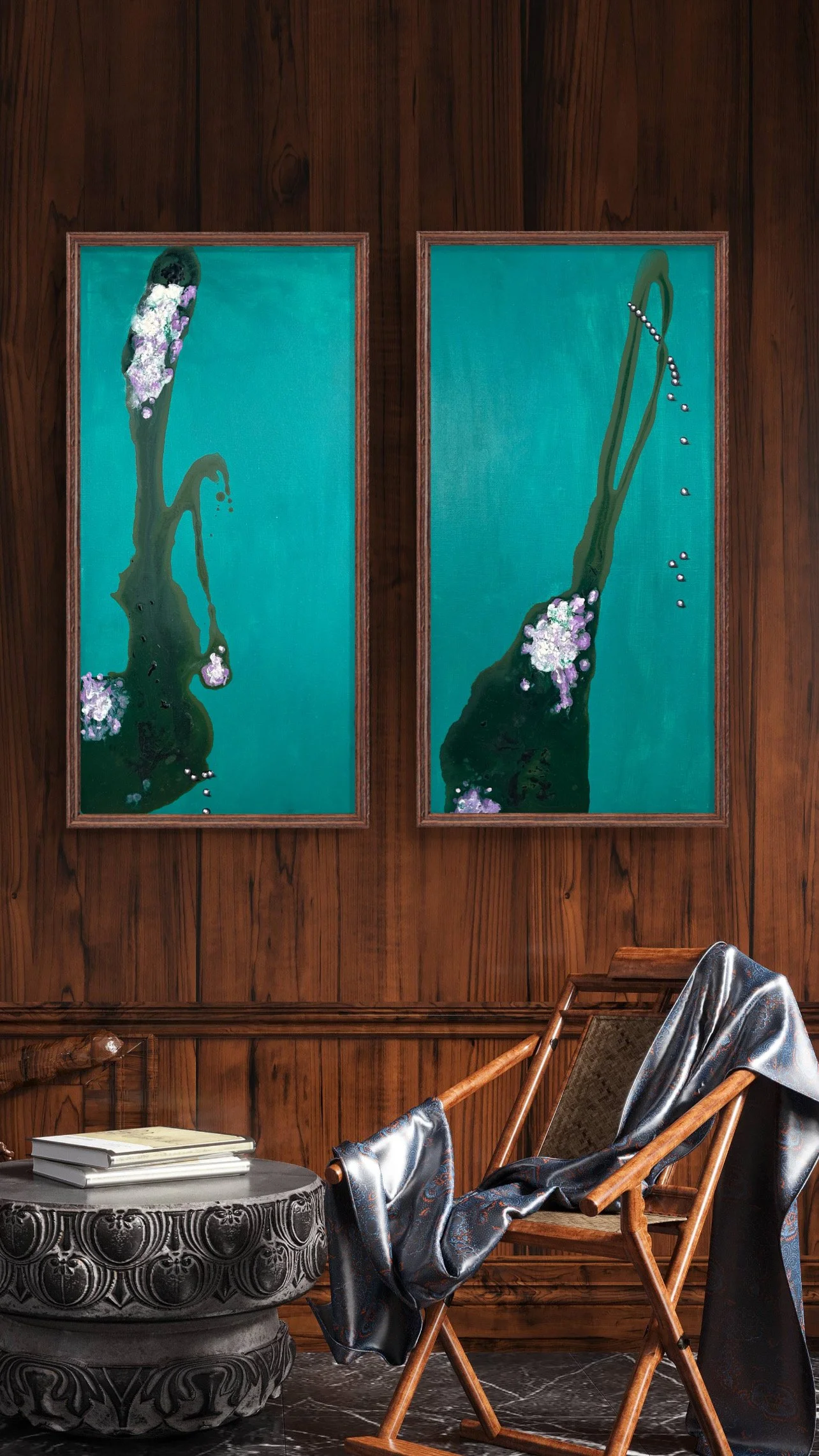
Rebirth © Jia Min
Your training at the Florence Academy of Art is rooted in classical technique. What did that experience give you, and where did you feel the need to move beyond it?
The Florence Academy provided a disciplined methodology, a way of seeing that is both analytical and embodied. It offered a language of structure, proportion, and light. However, its inherent premise is resolution: the image tends toward completion and coherence. My divergence began when I became more interested in rupture than resolution, when I wanted the painting to retain uncertainty, true to resist closure. Moving beyond classical technique was not a doubt or rejection, but a reconfiguration and deep appreciation: I began to treat it as a framework to be centred at the core rather than fulfilled.
Can you walk us through your creative process, from the initial idea or emotion to the finished painting?
The process does not begin with a clear idea, but with a condition, an atmosphere of thought or feeling that is not yet formed. The early stages involve constructing an image that appears coherent, almost resolved. Then begins a process of deconstruction: surfaces are interrupted, forms dissolve, layers obscure and reveal simultaneously. What emerges is not a linear progression but a negotiation between presence and absence. The work is finished not when it is complete, but when it sustains tension, when it resists being fully known.
Your work moves between realism and abstraction. How do you decide when a painting requires structure and when it calls for more openness?
I don’t approach realism and abstraction as opposites, but as interdependent conditions. Realism establishes a point of entry; it situates the viewer within recognition. Abstraction destabilises that recognition, opening the work to multiplicity. The movement between the two is guided by the internal logic of the painting. When an image becomes too legible, it risks closure; when it becomes too diffuse, it loses resonance. The balance lies in maintaining a state of suspended resolution. I always say the most critical skill of a good artist is knowing exactly when the painting is considered finished.
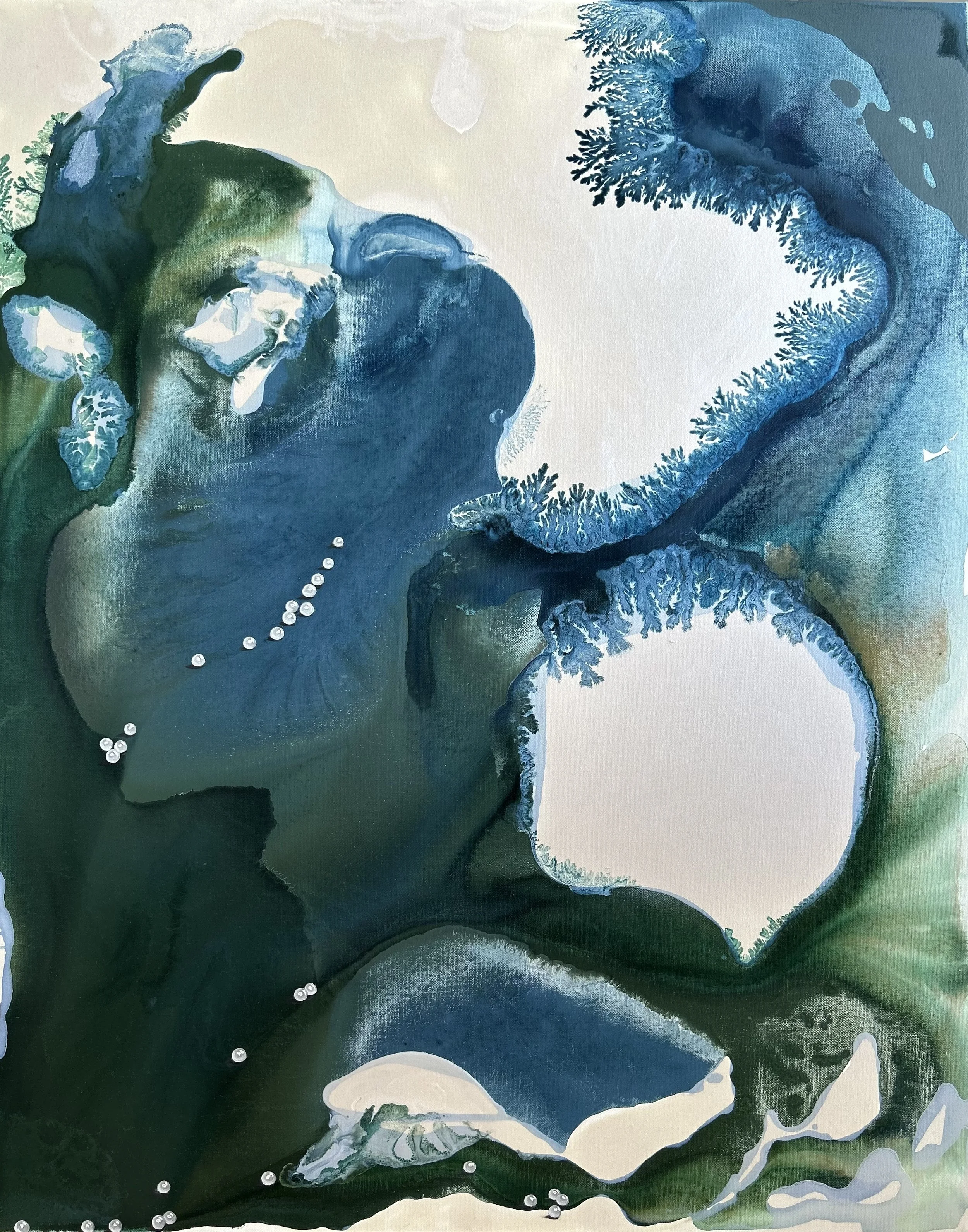
Silent Eternity © Jia Min
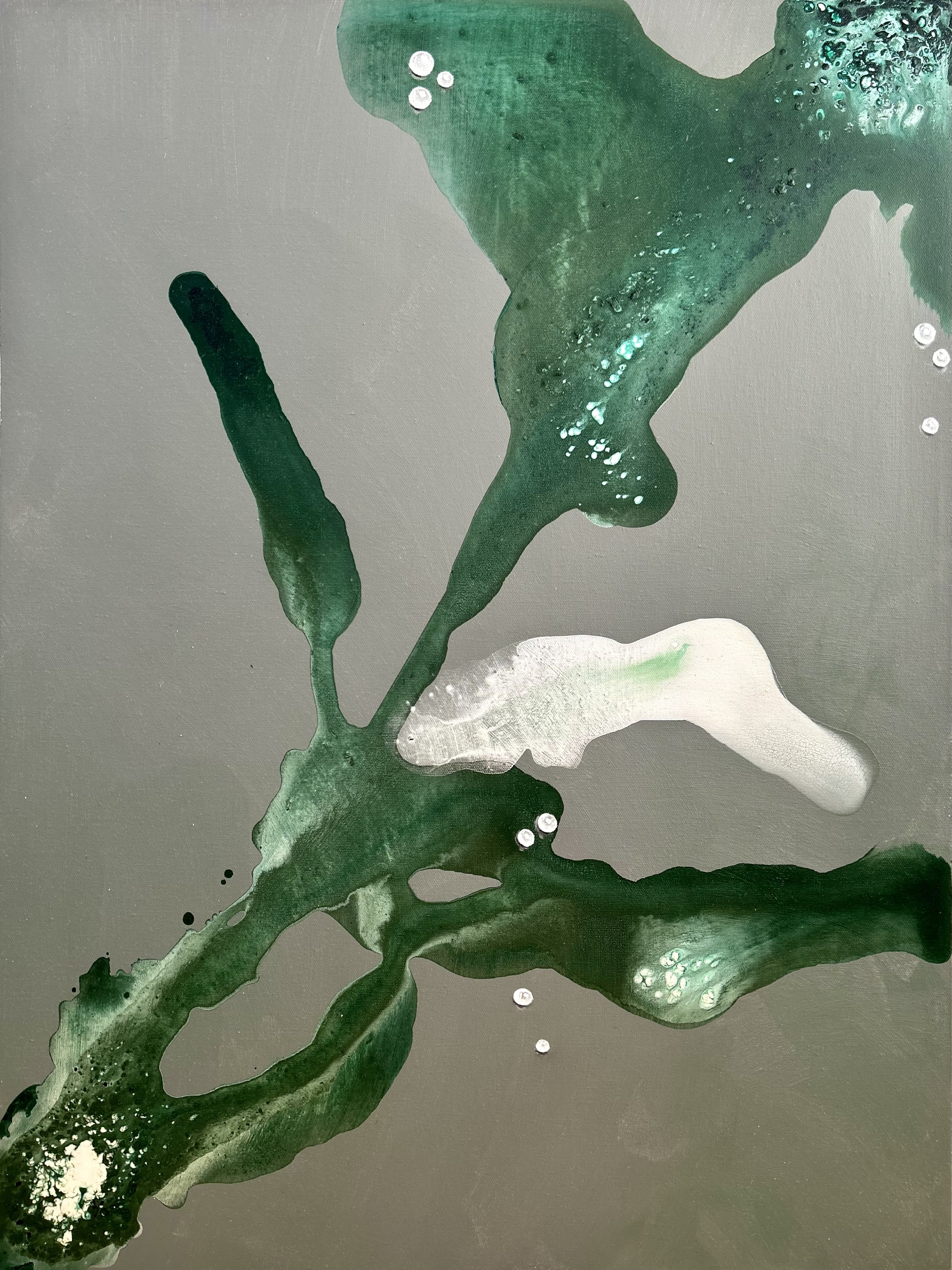
Hope © Jia Min
The concept of Artistic Femininity is central to your practice. How has this idea evolved over time, and how does it manifest in your current work?
Artistic Femininity has evolved from a personal inquiry into a broader ontological framework. It is not a fixed identity, but a mode of being, one that embraces contradiction, permeability, and transformation. It resists binary structures: strength and vulnerability, construction and dissolution, are not opposites but coexisting states. In my current work, this manifests through fragmentation, layering, and the refusal of singular interpretation. It is a language that operates through suggestion rather than declaration.
In the Fleurs collection, recurring elements like flowers and pearls carry strong symbolic weight. How did this series begin, and what ties the works together conceptually?
The Fleurs series emerged from an interest in how meaning is embedded in form through time and transformation. Flowers represent temporality, while pearls embody accumulation, formed through irritation and persistence. Conceptually, the series explores how fragility and endurance are not opposing qualities but are intrinsically linked. Each work functions as a site where these conditions intersect, without resolving into a singular narrative.
The Fleurs collection began as a quiet meditation on transformation, on how beauty, fragility, and resilience coexist rather than oppose one another. Flowers, for me, are not simply decorative forms; they embody impermanence. They exist in a state of becoming and fading at the same time. Pearls, in contrast, carry a different temporality; they are formed slowly, through layers of response to irritation, through time and pressure. Bringing these two elements together allowed me to explore a shared condition: how something delicate can also be enduring, how fragility and endurance are not opposing qualities but are intrinsically linked. Each work functions as a site where these conditions intersect, without resolving into a singular narrative.
Conceptually, the series is held together by this tension between the ephemeral and the eternal. Each work does not aim to represent flowers or pearls in a literal sense, but to evoke their symbolic resonance, cycles of growth, decay, and renewal, and the quiet strength that emerges through vulnerability.
Within the broader framework of Artistic Femininity, these motifs also reflect a redefinition of femininity itself, not as fragility, but as a dynamic force that transforms, adapts, and endures.
Your work has been exhibited internationally. Have you noticed different responses to your practice across cultural contexts?
What shifts across contexts is not the work itself, but the frameworks through which it is read. In some cultures, there is a stronger emphasis on technique and lineage; in others, the conceptual or emotional dimensions take precedence. What interests me is that despite these differences, there is often an immediate, pre-verbal response, suggesting that the work operates on a level that precedes cultural interpretation, even as it is inevitably shaped by it.
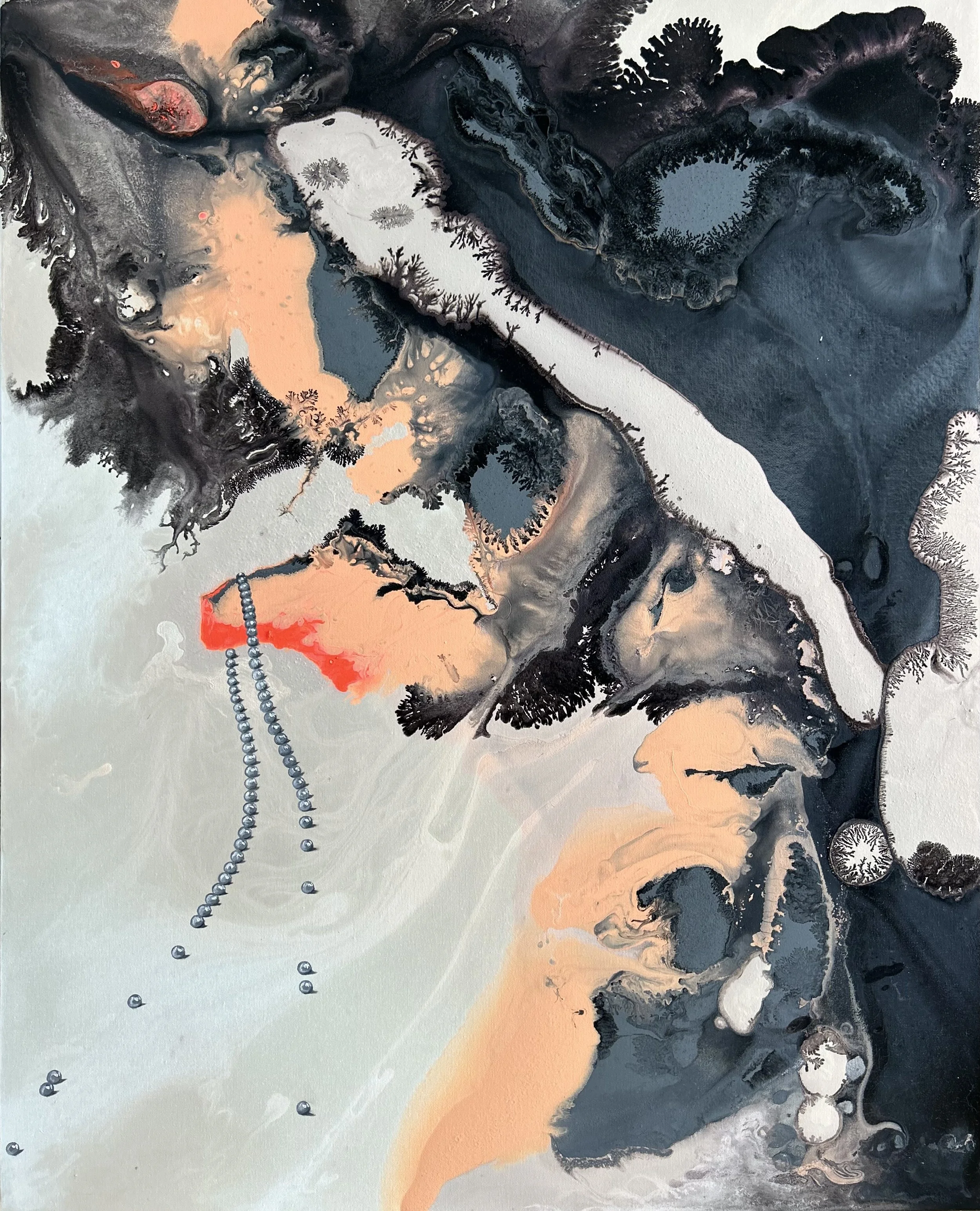
Veiled Relics © Jia Min
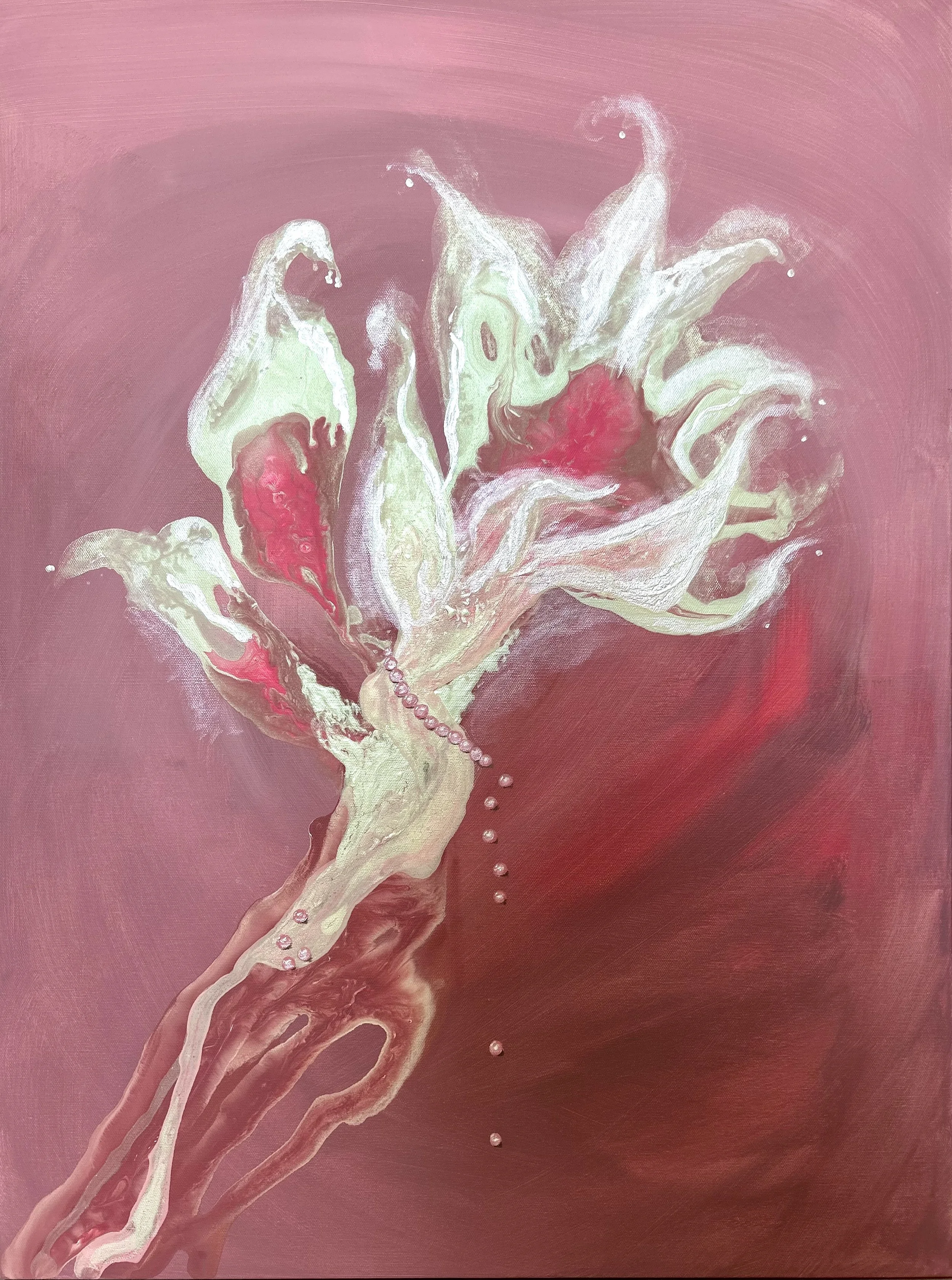
Lovers correspondence © Jia Min
There is a strong philosophical dimension in your work. Do you see your audience engaging more emotionally, intellectually, or somewhere in between?
I see the engagement as unfolding in layers rather than as a choice between emotional or intellectual response. My work is rooted in what I describe as Artistic Femininity, a philosophy that brings together intuition, empathy, and resilience, drawing from both Eastern and Western traditions. Because of this, the first point of contact is often emotional: a sense of calm, introspection, or even quiet tension that invites the viewer in. But that emotional response is only the beginning.
As one spends more time with the work, a more reflective, intellectual engagement emerges, through the symbolism of flowers and pearls, through the interplay between abstraction and structure, and through the themes of transformation, vulnerability, and interconnectedness. The paintings are not meant to resolve into a single meaning, but to open a space for contemplation.
So ideally, the experience exists in between, where feeling and thinking are not separate, but intertwined. The emotional draws you in, and the philosophical dimension sustains the dialogue.
Looking ahead, are there new directions, themes, or projects you’re currently developing or hoping to explore?
I am increasingly interested in expanding the conditions of painting, both materially and conceptually. This includes exploring scale, spatial relationships, and potentially interdisciplinary formats that extend beyond the canvas. Philosophically, at the same time, I want to deepen the philosophical inquiry into femininity. My aim is not to provide definitive answers, but to create spaces where questions around classical femininity and spirituality can remain open, held, experienced, and reinterpreted in a more balanced and nuanced way. Ultimately, I see the work as an ongoing dialogue, one that invites reflection rather than resolution.
Looking ahead, I’m continuing to deepen the philosophical foundation of my practice while allowing the visual language to evolve more quietly and inwardly.
A new body of work I’m currently developing is titled Lan — 「蘭」, the classical form of orchid. In many ways, it is a natural continuation of my exploration of Artistic Femininity, but distilled into a more essential and contemplative expression. The orchid, in Eastern philosophy, represents purity, integrity, and quiet elegance. It does not demand attention, yet it carries a profound presence. The concept guiding this series is 虚怀若谷,清气若兰 — to hold a mind as open as a valley, and a spirit as pure as an orchid. This idea speaks to a state of being rather than a form: openness without emptiness, strength without force, and beauty that emerges without intention.
In contrast to the more expressive tension in earlier works, Lan moves towards a quieter language, less about contrast and more about resonance. It reflects a deeper interest in stillness, in the unseen forces that shape us, and in the subtle balance between inner clarity and external expression.
More broadly, I am also exploring how my work can extend beyond the canvas, into spaces that allow for a more immersive and reflective experience. But at its core, the direction remains the same: to create work that invites not only to be seen, but to be felt, and perhaps, to be inhabited.
Artist’s Talk
Al-Tiba9 Interviews is a promotional platform for artists to articulate their vision and engage them with our diverse readership through a published art dialogue. The artists are interviewed by Mohamed Benhadj, the founder & curator of Al-Tiba9, to highlight their artistic careers and introduce them to the international contemporary art scene across our vast network of museums, galleries, art professionals, art dealers, collectors, and art lovers across the globe.
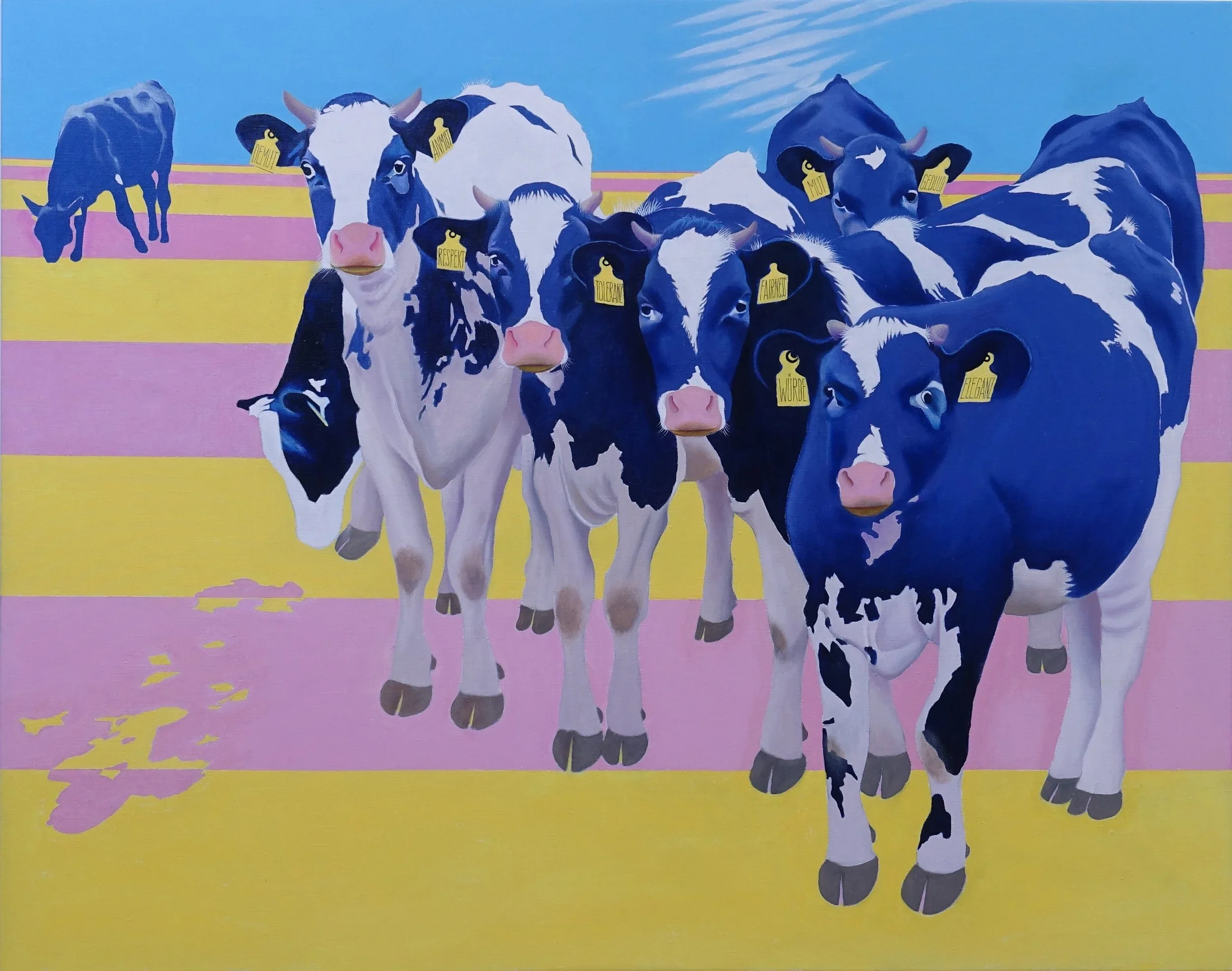


David Moješčík - MojDa is a Czech sculptor. His work is centred on figurative sculpture, the human body, and the female figure. Modelling in clay and with digital tools, he ultimately prioritises manual engagement with materials. . He draws inspiration from yoga philosophy with the concepts of non-violence and human-centeredness, as well as from Egyptian, ancient, and European classical sculpture.