
10 Questions with Irene Cabasa
Irene is an emerging abstract artist based in Sydney, Australia. Working primarily in textured abstract painting, her work explores themes of emotion, resilience, identity, and transformation through layered surfaces and expressive mark-making. Irene's artistic foundation began from a young age when she was first able to draw, paint and sing. Irene continued her visual art studies throughout high school and attained a Bachelor's degree in Performance and Popular Music from JMC Academy in 2012. Drawing on both formal education and independent creative practice, they create intuitive works that reflect the complexity of human experience and the beauty found within imperfection. Based in her home studio, Irene runs an independent art practice dedicated to creating expressive, textured abstract works.

Irene Cabasa - Portrait
ARTIST STATEMENT
Emerging visual artist working in textured abstract painting, Irene’s practice explores expressive movement, layered surfaces, and intuitive storytelling. Through a process that embraces spontaneity and experimentation, Irene creates works that reflect the complexity of human experience and the emotional landscapes that shape us. Drawing inspiration from themes of emotion, identity, resilience, and the beauty found within chaos, Irene's paintings invite viewers to engage with both the seen and the felt. The interplay of texture, colour, and gesture becomes a visual language through which personal narratives and universal emotions can coexist. Irene's work has been deeply influenced by her breast cancer diagnosis in 2025, an experience that transformed her perspective on vulnerability, strength, and healing. Through abstraction, she seeks to translate these experiences into layered compositions that embody both fragility and endurance, creating space for reflection, connection, and hope.
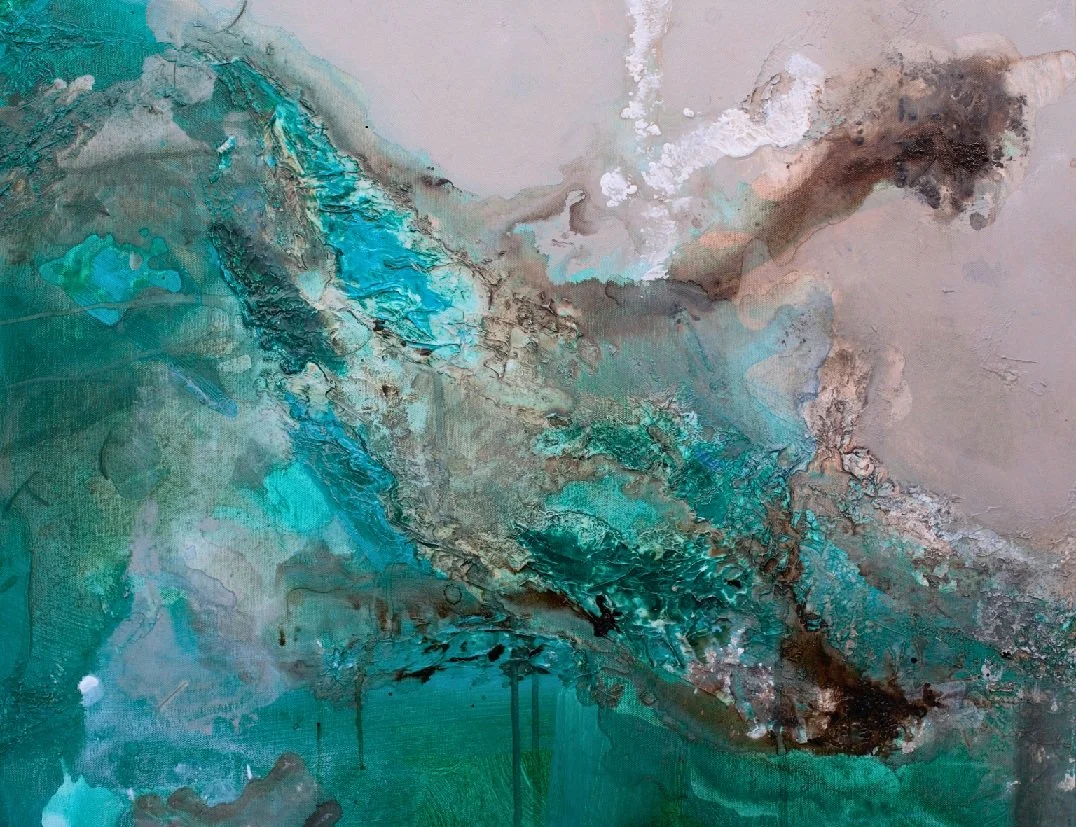
Pandora, acrylic on canvas with modelling paste, crackle paint, water and coffee, 76 x 60 cm, 2025 © Irene Cabasa
INTERVIEW
First of all, can you tell us a little about your background and how you first became interested in art?
From an early age, creativity was a natural part of my life. As soon as I could speak, I was singing, and as soon as I could hold a crayon, I was drawing. My Father is one of the biggest influences on my artistic practice. He studied architecture and immigrated to Australia from the Philippines in 1985, bringing with him a strong appreciation for design, creativity, and craftsmanship that has shaped my perspective on art. Growing up, I spent a lot of time around his home office, where he designed display homes, created physical architectural models, and produced digital projects using AutoCAD.
I have vivid memories of rummaging through his draft plans and being fascinated by the precise lines and intricate details. I remember hearing about his meetings with local councils and seeing plans for sleek, three-storey homes that felt larger than life. Inevitably, I would get my hands on his pencils and explore his collection of oil paints, discovering my own love for creating.
While architecture was his profession, abstract art was his passion. He painted bold, colourful works filled with dynamic shapes and movement. The contrast between the structured precision of his architectural work and the freedom of his abstract paintings captivated me. Those early experiences sparked my passion for art and creativity, and they continue to shape who I am today.
My love for the arts stayed with me throughout primary school and high school, where I studied both music and art. I later went on to complete a Bachelor of Performance and Popular Music at JMC Academy, graduating in 2012.
You studied Performance and Popular Music before focusing on visual art. How has your creative journey evolved over the years?
From the age of three, I was constantly performing and dreaming of becoming a rock star. Throughout high school, music was a huge part of my life. I performed regularly as a solo vocalist and also played with several bands. At one point, I even considered becoming a tattoo artist, which probably explains the collection of tattoos I have today.
After graduating from JMC Academy in 2012 at the age of 19, I began studying towards a Master's degree in Music Teaching. However, it didn’t take long for me to realise that teaching music wasn’t the path I wanted to pursue. Something about it didn’t feel right, so I made the decision to leave and focus on supporting myself through work instead.
Throughout my early twenties, I did shift work, and as a result, both painting and music gradually took a back seat. I still created when I could, but only sporadically. At the time, I felt like I never had enough time to dedicate to my creative pursuits and became heavily focused on the demands of work and everyday life.
For a long period, I stepped away from both art and music and found myself questioning where I truly belonged creatively. I felt disconnected from my artistic identity and often wondered if I had lost the spark that had driven me for so many years.
Although I primarily worked with acrylic paints, I never felt confident pursuing traditional portrait or landscape painting, despite admiring those styles. My drawings naturally leaned towards the distorted, expressive, and unconventional rather than realism. Over time, my artistic practice evolved organically into surrealism and abstract work, allowing me to embrace the way I naturally saw and interpreted the world.
Along the way, I also had the opportunity to collaborate with other artists and was fortunate enough to be featured in several of their music videos, experiences that kept me connected to the creative community even during periods when my own artistic practice had slowed.

Sacred Feminine, acrylic on canvas, 30.5 x 30.5 cm, 2020 © Irene Cabasa
When did you decide to pursue a career as an artist, and what motivated that decision?
Having my own art studio had always been a dream of mine. When I purchased my first home in Sydney in 2024, it felt like I had finally created a space where I could truly live, breathe, and create on my own terms.
I know that creativity can happen anywhere, but there was something special about having a space that was entirely my own. I could make a mess, get paint all over my hands, clothes, and hair, and not think twice about it. It became a place where I could fully immerse myself in the creative process. Hours would pass without me noticing, completely absorbed in what I was making.
Although I have been creating art and music for over two decades, 2024 was the year I made the conscious decision to fully commit to being an artist. I began dedicating more time, energy, and discipline to developing my practice, treating it with the seriousness and intention it deserved.
Looking back, I can see how every experience, from my childhood surrounded by art and music to the periods where creativity took a back seat, has led me to where I am today. I feel incredibly grateful to have the opportunity, the space, and the freedom to pursue what I love and continue growing as an artist.
Why did you choose textured abstract painting as your primary medium of expression?
During high school, I submitted my Year 10 body of work, a mixed-media project that combined painting, collage, and photographs collected from people within the body modification community. The work explored a subculture fascinated by tattoos, piercings, stretching, branding, suspension, and other forms of body art.
One of the photographs featured a woman with a bare pierced nipple. My Catholic school was not particularly impressed and decided that canvas wouldn't be making it into the final exhibition. Looking back, it still makes me laugh.
At the time, I was already experimenting with layering different materials and visual elements, but I wasn't entirely satisfied with the outcome. Although the concept was strong, the work felt flat to me and lacked the energy and depth I was trying to achieve.
It has taken many years of experimentation to realise that my greatest strength as an artist lies in creating complex, multi-layered compositions. I am drawn to works that feel dynamic, immersive, and slightly unconventional, pieces that invite the viewer to step closer, examine the details, and spend time wondering what they are looking at and what it might mean.
For me, abstract art is about transforming thoughts, emotions, and ideas into something tangible. Through abstraction, those visual connections can be distorted, reimagined, and translated onto a canvas. Abstract art is not just a style I work in, it is how I perceive and process the world around me.
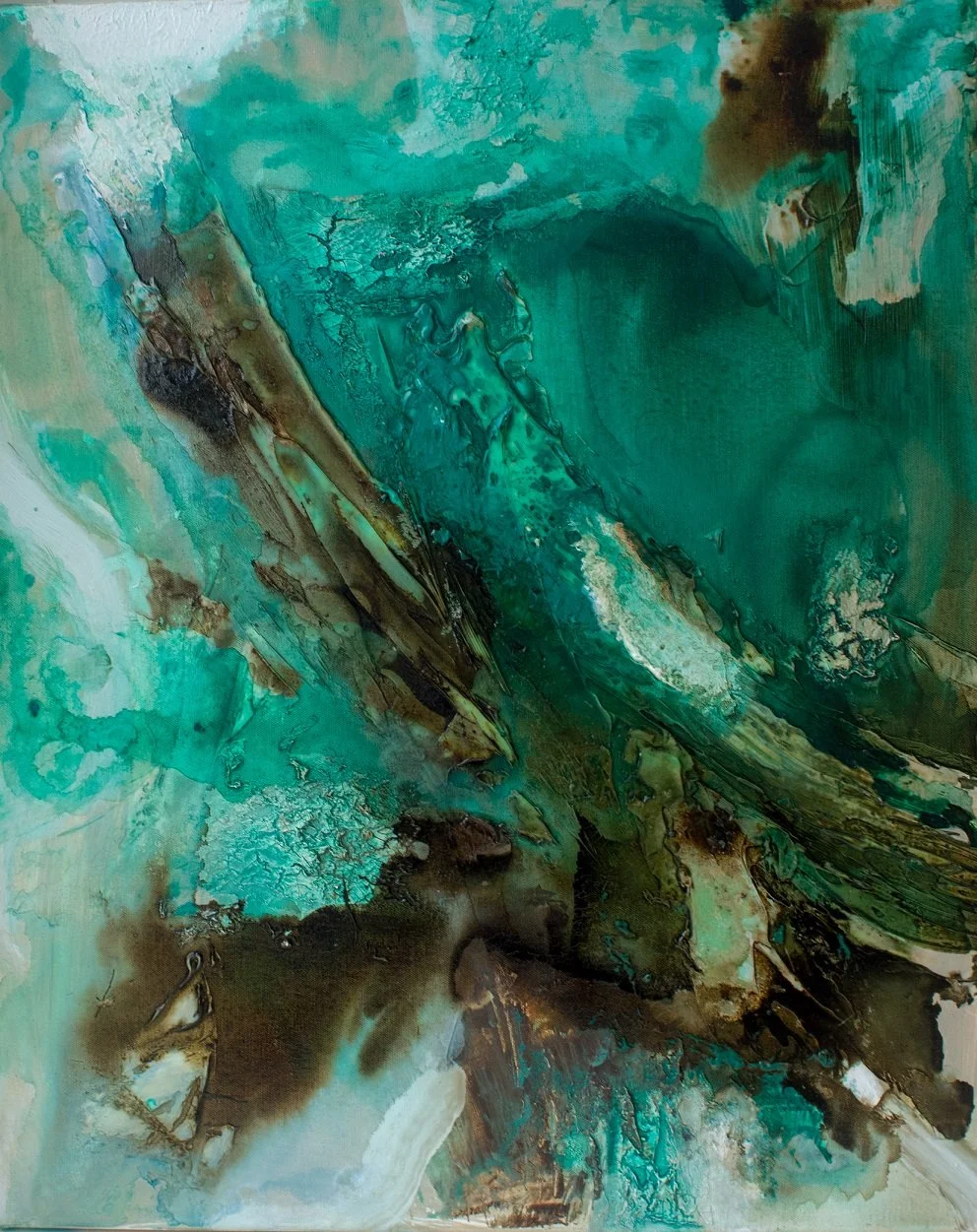
Mirror, acrylic on canvas with modelling paste, crackle paint, water and coffee, 76 x 60 cm, 2025 © Irene Cabasa
Can you describe your creative process and how a painting typically develops in your studio?
My creative process always begins in my studio. I am very much a homebody and find that I create best when I am in my own space or immersed in nature. Inspiration can come from anywhere, other artists, images I discover on Pinterest, something I encounter unexpectedly, or simply my own experiences and observations of the world around me.
When I begin a new piece, I usually start by gathering inspiration and putting on my headphones to help me focus. Music plays a huge role in my creative process. I begin by building the physical foundations of the work using materials such as modelling paste, crackle paint, coarse texture mediums, and other dimensional elements. Once these layers have dried, I typically return the following day to begin introducing colour.
I spend time selecting and mixing my palette, although sometimes I work directly from the tube or bottle. From there, the process becomes highly intuitive. I make marks using brushes, palette knives, my hands, and occasionally found or unconventional objects. I also enjoy repurposing old acrylic paint skins that have dried from previous works, giving them a new life within a painting rather than allowing them to go to waste.
The concept often evolves as the painting develops. I can spend hours working on a piece before stepping away to allow layers to dry and gain a fresh perspective. Sometimes I take extended breaks between sessions while I consider more complex areas of the composition. A single artwork can take weeks to complete, and I’ll often have several pieces in progress at once. The fluid movement and layered water effects I frequently use require significant drying time, making patience an important part of my practice.
As a painting nears completion, I spend time observing it from different distances and under varying light conditions. I often photograph sections of the work on my phone or camera to study details more closely and identify whether anything feels unresolved. I continue refining the piece until I reach a point where it feels complete, not because it perfectly matches my original vision, but because it communicates everything I wanted it to.
More often than not, my finished abstract works look entirely different from what I initially imagined. Over time, I have learned to trust the process, trust my instincts, and trust my ability to let the work become what it needs to be.
Your work explores themes such as emotion, identity, resilience, and transformation. What draws you to these subjects?
I am drawn to these themes as I question them in my daily life. They’re essential to the human experience as we’re constantly evolving, navigating challenges and trying to understand ourselves and our place in the world. Through my work, I explore those moments of vulnerability, growth, and change that connect us.
I’m interested in how emotions shape our stories, how identity develops over time, and how resilience can emerge from difficult hardships and experiences. These themes give me a way to reflect on both personal and collective journeys, creating work that invites connection, reflection, and conversation.

Dune, acrylic on canvas with modelling paste and crackle paint, water and coffee, 40 x 50 cm, 2025 © Irene Cabasa
How do texture, colour, and gesture help you communicate ideas and emotions in your paintings?
Texture, colour, and gesture are some of the most important tools I use to communicate emotion and meaning in my paintings. Texture helps create a sense of depth and physical presence and body, inviting viewers to connect with the work on a more sensory level. Colour allows me to set a mood or express feelings that can be difficult to put into words, while gesture brings energy, movement, and spontaneity to the surface. Together, these elements help me convey emotional experiences and create a visual language that feels both personal and open to interpretation.
Your breast cancer diagnosis in 2025 had a significant impact on your practice. How has this experience influenced your work and perspective as an artist?
My breast cancer diagnosis became a major turning point in both my life and my artistic practice. During one of the most difficult periods I have ever faced, creating art became one of the few things that kept me moving forward, alongside the unwavering support of my family and loved ones.
Being diagnosed with cancer at the age of 33 completely changed my perspective on life. In an instant, the future I had imagined for myself disappeared. The ability to make choices about my own body and my own path felt as though it had been taken away. I found myself navigating a world of uncertainty, painful treatments, and emotional upheaval while desperately trying to hold on to the faint light at the end of the tunnel.
The journey was far from easy. I underwent a double mastectomy with immediate reconstruction, followed by urgent IVF treatment to preserve my fertility through egg freezing, and then intensive chemotherapy. Today, I am on a ten-year treatment plan that includes hormone therapy to help prevent recurrence and manage any remaining cancer cells.
I also need to attend regular ongoing medical appointments as part of my long-term care and monitoring. My art became both a refuge and a form of survival. It allowed me to retreat into a deeper, subconscious world when the physical reality of treatment and recovery felt overwhelming. Creating gave me a sense of purpose, freedom, and control when so much else felt beyond my reach.
Cancer taught me that life is both fragile and precious. It forced me to reassess what truly matters and to recognise the importance of investing in myself, my passions, my health, and my happiness. It challenged many of the fears and insecurities that had held me back for years and reminded me that there is no guarantee of time.
While cancer temporarily weakened my body, it strengthened my resolve. It taught me resilience, perspective, and the courage to pursue what I love without hesitation. No one knows how much time they have left, and within that uncertainty lies a powerful freedom, the freedom to choose how we live.
I have chosen to spend my life creating. To continue developing my craft, nurturing curiosity, and pursuing the things that bring me joy and meaning. Regardless of the challenges my body may face, I remain committed to living with passion, purpose, and gratitude for every opportunity to create.
What projects or bodies of work are you currently focusing on?
At the moment, I am focusing on creating larger-scale paintings and exploring how working at a greater scale influences the way I express ideas, emotions, and movement. Painting on larger surfaces challenges me both technically and creatively, pushing me beyond the comfort of smaller works and encouraging a more physical relationship with the canvas. Rather than simply painting on a surface, I find myself moving around it, responding to it with my whole body and becoming more immersed in the process.
The larger format allows me greater freedom to experiment with gesture, mark-making, fluid movement, and layered textures. It creates space for complexity, enabling me to build intricate compositions that invite viewers to slow down and discover new details the longer they engage with the work. I am particularly interested in how scale can influence emotional impact, creating pieces that feel immersive, energetic, and almost experiential rather than simply something to be observed from a distance.
As my practice continues to evolve, I am also interested in developing a cohesive body of work through a series. Creating a series would allow me to explore a concept, emotion, or visual language in greater depth, rather than resolving it within a single painting. I am drawn to the idea of allowing themes to unfold organically across multiple works, creating connections and conversations between pieces while giving myself the freedom to investigate an idea from different perspectives.

Whispers of Earth, acrylic on canvas with modelling paste and coarse texture paint, 30 x 40 cm, 2025 © Irene Cabasa
Lastly, looking to the future, what are your long-term goals for your artistic career, and what would you like audiences to take away from your work?
My goal is to continue evolving as an artist by deepening my practice, expanding my ideas, and creating increasingly ambitious bodies of work. I am committed to pushing the boundaries of my creativity, exploring new concepts, techniques, and materials, while continuing to develop the distinctive visual language that has emerged through my work. As my practice grows, I hope to share my paintings with wider audiences through exhibitions both nationally and internationally, creating opportunities for connection, dialogue, and artistic exchange.
At the heart of my work is a desire to create experiences that invite people to pause, reflect, and engage with their own thoughts, emotions, and memories. Abstract art offers a unique space for personal interpretation, and I am fascinated by the different meanings that viewers bring to a single piece. If someone can find a part of themselves within my work, whether that is a feeling, a memory, a question, or a sense of recognition, then I feel I have created something truly meaningful.
My experience with breast cancer has also become an important part of my journey as both a person and an artist. I am passionate about raising awareness and encouraging open, honest conversations around the realities of diagnosis, treatment, recovery, and survivorship. Art has been a powerful source of healing, resilience, and self-expression throughout my experience, and I hope that sharing my story can help others feel seen, understood, or less alone in their own challenges.
I welcome connection and conversation with those who engage with my work. Whether someone is drawn to a painting, curious about my creative process, or wishes to share their own experiences, I believe some of the most meaningful aspects of art happen through the relationships and discussions it inspires.
Finally, I would like to extend my sincere gratitude to Al-Tiba9 Contemporary Art for featuring me and my work. I am deeply grateful for the opportunity to share my art and story with a wider audience, and for the platform to connect with people around the world through creativity, resilience, and self-expression.
Artist’s Talk
Al-Tiba9 Interviews is a promotional platform for artists to articulate their vision and engage them with our diverse readership through a published art dialogue. The artists are interviewed by Mr. Mohamed Benhadj, the founder & curator of Al-Tiba9 Contemporary, to highlight their artistic careers and introduce them to the international contemporary art scene across our vast network of museums, galleries, art professionals, art dealers, collectors, and art lovers across the globe.


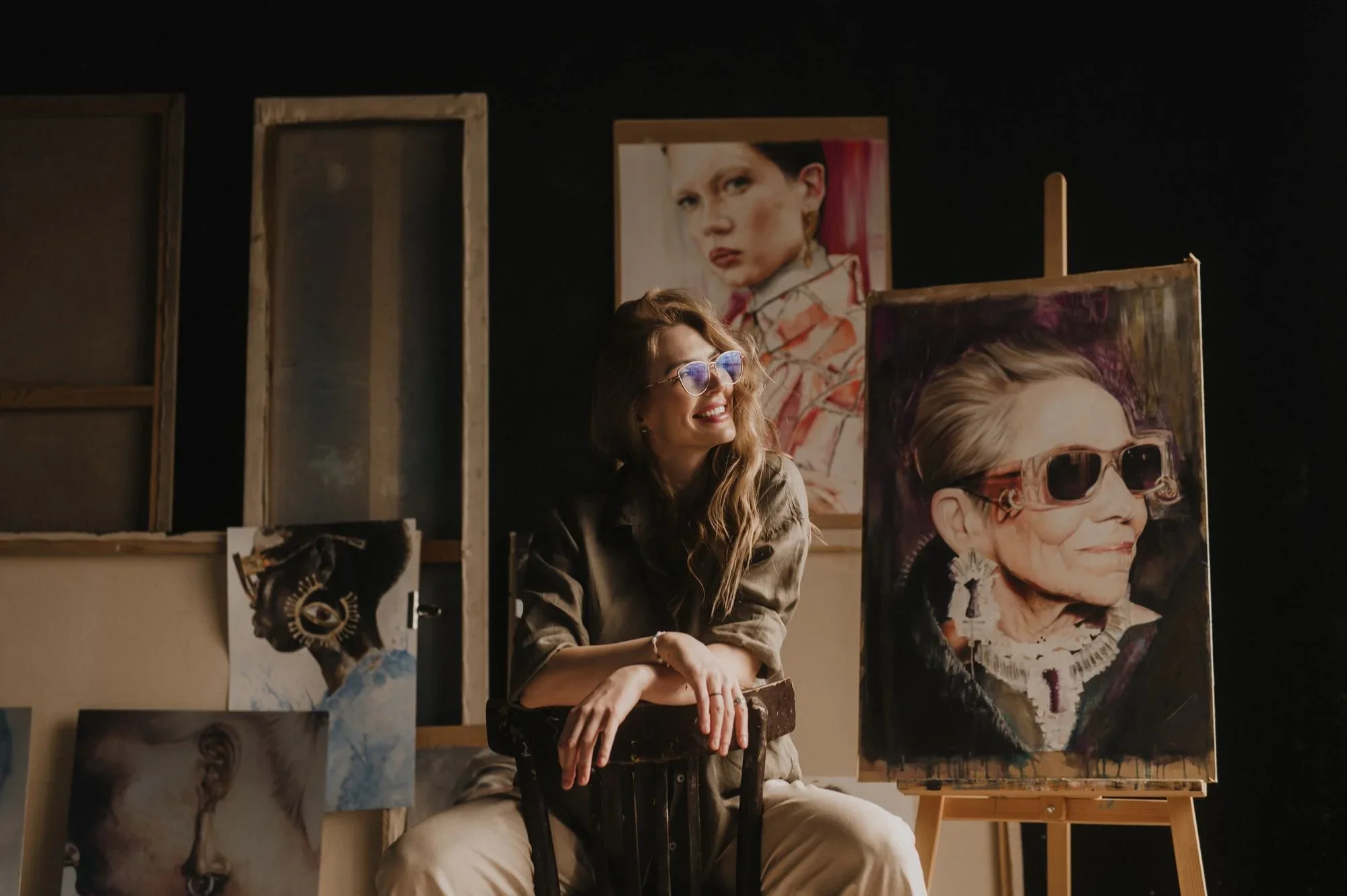
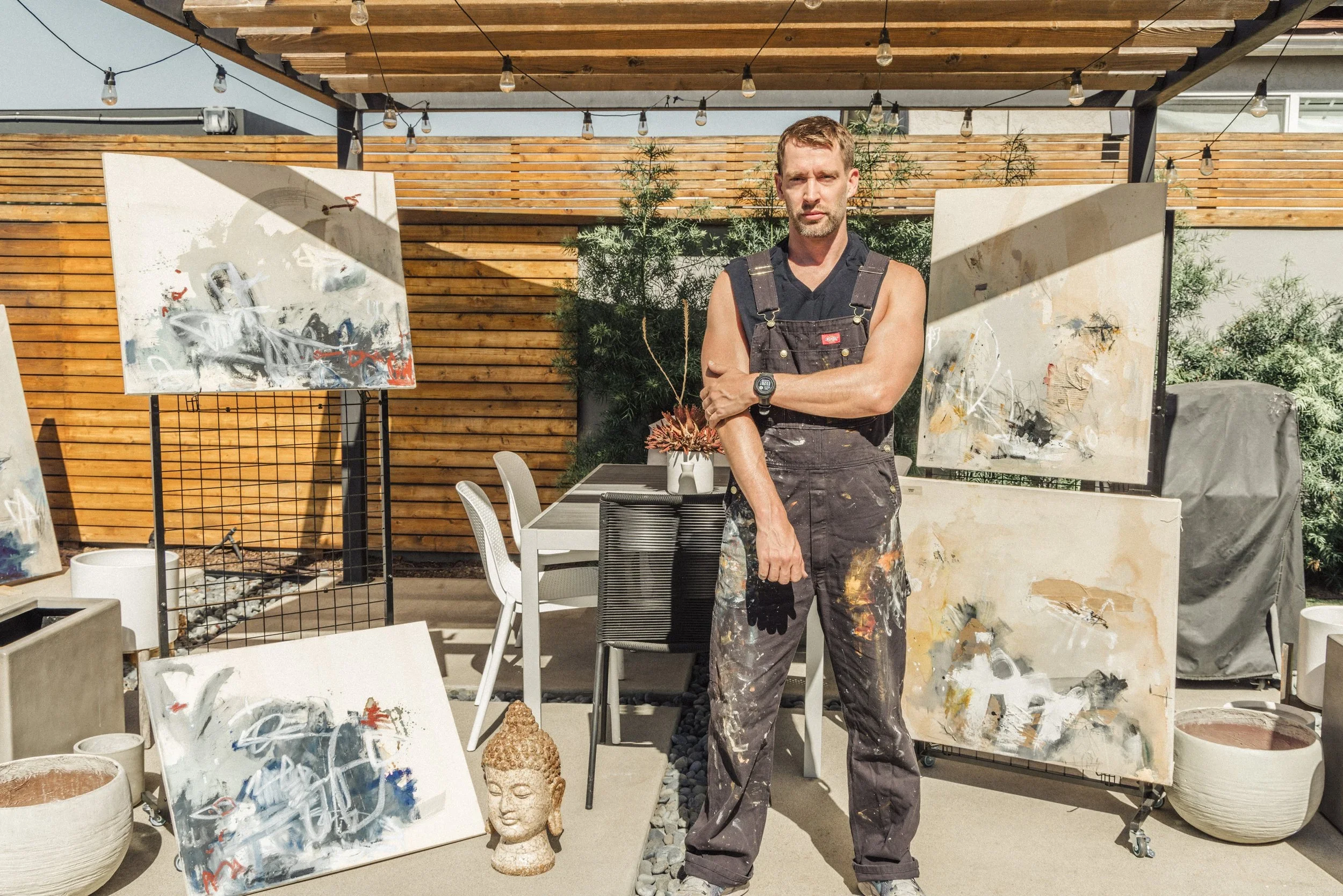

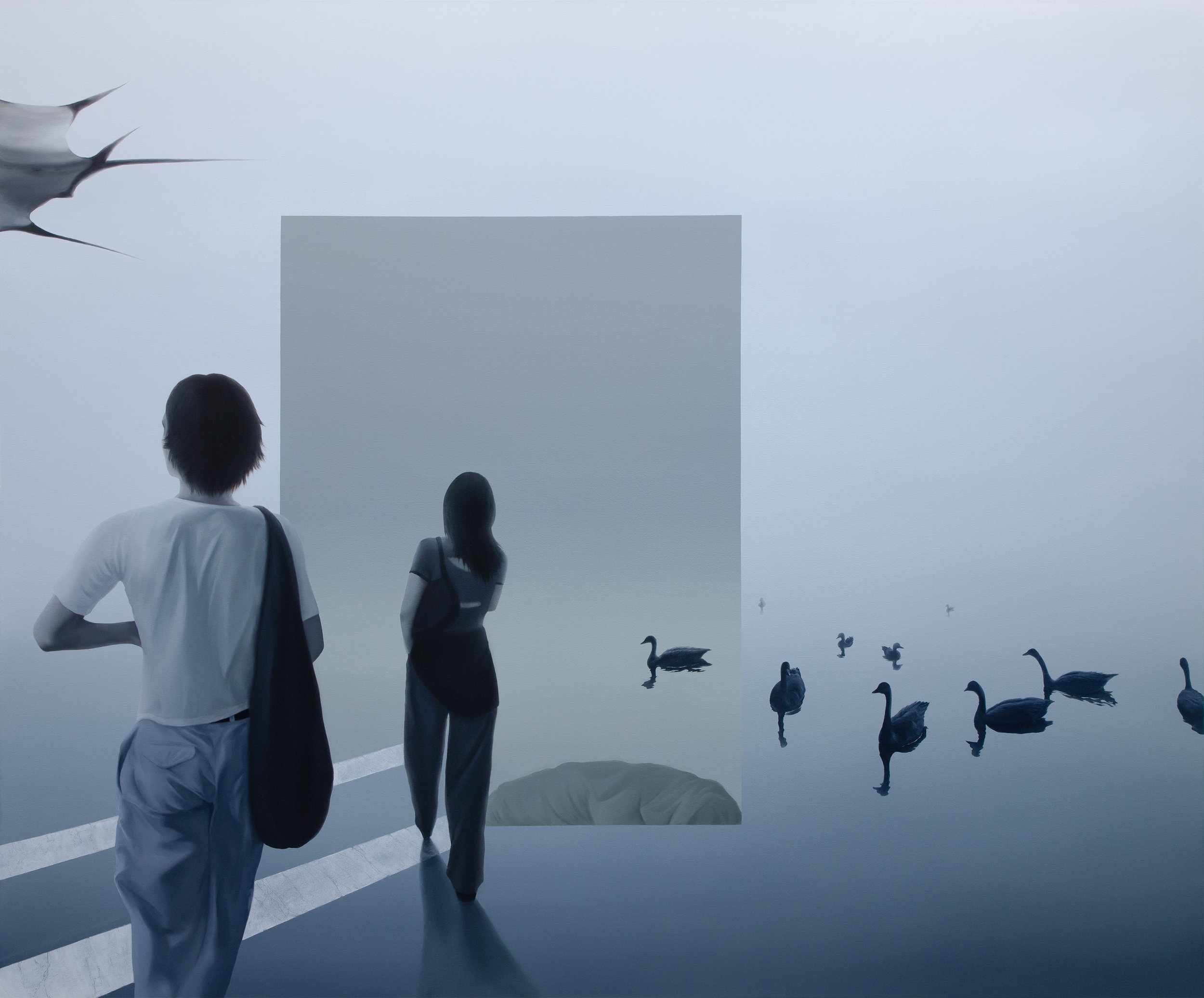
Brooklyn-Born Allan Gorman is a contemporary fine artist based in Jersey City, NJ, with a unique artistic vision cultivated by a distinguished commercial career that helped refine a sense of aesthetics and unwavering commitment to excellence that continues to define his artistic process to this day. His latest series of paintings is titled Imaginary Spaces.