

10 Questions with Yiming Zhai
Yiming Zhai is an illustrator, mural artist, and children’s picture book creator based in Dallas, Texas. He received his BFA in Illustration from the School of Visual Arts in New York and later earned his MFA in Illustration from the Savannah College of Art and Design.
His creative practice focuses on narrative, space, and the relationship between people and their environments. Influenced by children’s picture books, travel experiences, and observations of everyday life, Zhai constructs open and approachable narrative spaces between reality and imagination through bold linework, simplified perspective, and a visual language shaped by humor.
In addition to his long-standing illustration practice, Zhai has extended his visual language into public art and large-scale mural projects. Through these works, he seeks to reactivate the relationship between people and space through art. He is currently preparing for the publication of his original children’s picture book, Look! This Is My Dinosaur!, while continuing to explore the possibilities between illustration, public art, and spatial storytelling.
His work aims to bring warmth, curiosity, and imagination to viewers, inviting them to observe everyday life with greater openness and creativity.
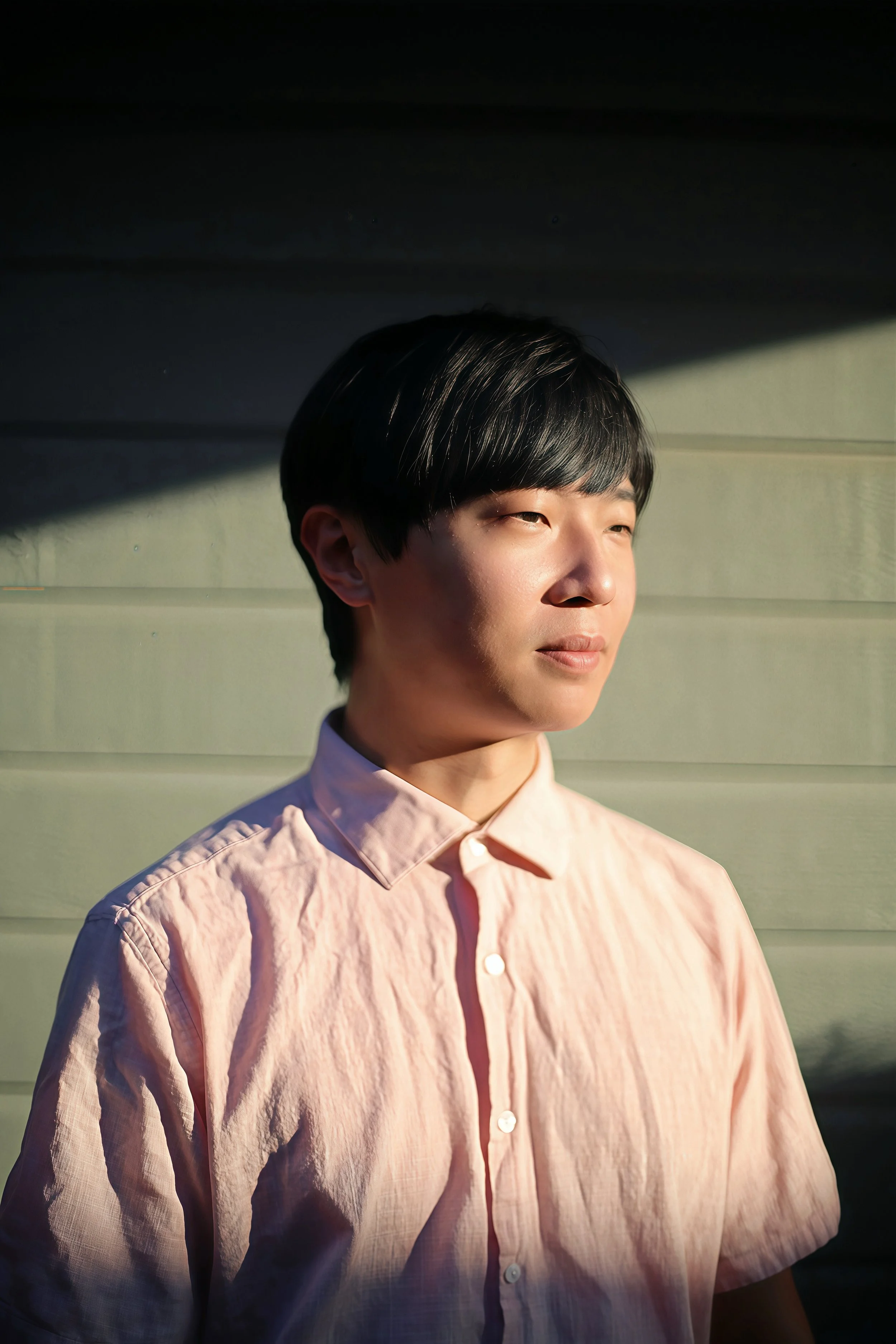
Yiming Zhai - Portrait
ARTIST STATEMENT
Yiming Zhai’s practice centers on narrative, space, and the relationship between people and their environments. Drawing inspiration from children’s picture books, travel experiences, and everyday observations, he creates works that are approachable, expressive, and rich with imaginative possibility.
His visual language is often built through bold contours, simplified perspective, and distinctive character forms. By reducing unnecessary visual information, he makes his work accessible to viewers from different backgrounds while leaving room for personal interpretation and association.
Across children’s picture books, illustration, and large-scale mural projects, storytelling remains at the center of his practice. He is interested in how art shapes people’s perception of space and how an ordinary environment can be transformed into a place that encourages curiosity, communication, and imagination.
Zhai believes that art is not only a form of visual expression, but also a way of connecting people with one another and with the spaces they inhabit. Through his work, he hopes to bring more warmth, humor, and a sense of discovery into everyday life.
Cola Marks Everywhere © Yiming Zhai
INTERVIEW
First, can you tell us a little about your background and how you first became interested in art and illustration?
My name is Yiming Zhai, and I am originally from China. For as long as I can remember, I have been making art. As a child, I covered nearly every part of the walls I could reach in our home with drawings and doodles. After I started school, I spent a great deal of time in the library copying images from comic books and illustrated novels. It was during that period that I first decided I wanted to become an illustrator.
I later moved to New York to pursue that ambition at the School of Visual Arts, where I earned my BFA in Illustration. My MFA studies at the Savannah College of Art and Design completed another important stage in my development and helped me turn my lifelong commitment to drawing into a focused professional practice.
What drew you specifically to illustration, and what continues to inspire you to work in this medium today?
I think I was drawn to illustration because I have always had a strong need to express myself. In everyday life, I tend to be relatively quiet, but I often have emotions and thoughts that I want to share with others.
Making art gives me the most natural way to communicate those experiences. Through illustration, I can express feelings and ideas that may be difficult to explain through words alone. That need to communicate continues to give me the motivation and enthusiasm to create.

Cola Marks Everywhere © Yiming Zhai
How did your studies at the School of Visual Arts and Savannah College of Art and Design influence your artistic development?
My experiences at SVA and SCAD influenced different stages of my artistic development. At SVA, my professors often encouraged me to “be myself.” That advice stayed with me and gave me the confidence to trust my own instincts rather than follow whatever visual style happened to be popular.
As I continued working, I began to pay closer attention to the qualities that appeared naturally in my images, including playful characters, humor, bold shapes, dense compositions, and small narrative details. I gradually understood that these were not simply isolated habits. Together, they formed the basis of my own artistic language.
At SCAD, I learned to develop that language with greater clarity and intention. I began thinking more carefully about how art functions in different settings, whether it appears in a book, on a wall, or within a public or commercial space. I also became more aware of audience, scale, and context, all of which are now central to the way I approach my practice.
Together, these experiences helped me build a visual voice that is personal, playful, and direct. They also taught me how to maintain a consistent point of view across illustration, storytelling, and murals.
Your work often explores the relationship between people and their environments. What interests you most about this theme?
I am especially interested in how a space can influence the way people feel. When I begin a project, I often imagine the mood in which someone might enter the space and whether encountering my work could change that feeling, even slightly, by the time they leave.
My mural, Howdy, for LandDesign’s Dallas office, is a good example. Although the setting is a professional workplace for adults, I chose a highly playful, cartoon-like visual language. I wanted the mural to offer people a brief pause during a busy workday and perhaps make them smile when they saw it.
I created the work using only black lines. From a distance, the mural can blend into the environment almost like a visual texture, without demanding constant attention. When viewers move closer, however, they can discover more playful and unexpected details. I am interested in creating work that becomes part of a space while still rewarding people who take the time to look more closely.

Cola Marks Everywhere © Yiming Zhai

Cola Marks Everywhere © Yiming Zhai
Can you walk us through your creative process, from the initial idea to the finished artwork?
My process usually begins with an idea or a story. I first think about the feeling I want the work to give the audience, and then I create many quick thumbnails to explore possible compositions and directions.
Once I have identified the overall structure, I begin adding details. I enjoy hiding small, interesting elements throughout an image because they make the work more engaging and give viewers a reason to return to it.
After that, I refine the design. Adding details is one of the most enjoyable parts of the process for me, and I sometimes have to remind myself when to stop. I remove anything unnecessary and make sure the composition remains clear and balanced. At that point, the design is complete.
The final stage is transferring the design onto the wall. It is physically demanding, but it is also a joyful process. Watching the image gradually take shape at full scale is always deeply satisfying.
Children’s picture books, travel, and everyday observations are important sources of inspiration for you. How do these influences find their way into your work?
I often feel that children understand art more instinctively than adults do. They respond directly to images, characters, stories, and emotions without worrying too much about whether they are interpreting something in the “correct” way. For that reason, I enjoy studying how picture-book artists communicate with children through images.
Whether I am creating a children’s book or a mural, I prioritise story and emotional connection rather than simply trying to make a polished or attractive image.
Travel allows me to encounter different cities, cultures, landscapes, and ways of living. At the same time, I cannot always bring my beloved dog, Cola, with me. Whenever I am especially drawn to a place, I often find myself thinking, “I wish Cola could be here too.”
That small sense of regret inspired me to create illustrations in which Cola visits all the places he could not experience with me. In these images, he travels through the snow-covered landscapes of Alaska, explores deserts filled with enormous cacti, and even ventures into outer space. These works bring together fragments of travel, everyday life, and imagination.
Your illustrations balance reality and imagination with humor and simplicity. How did you develop this distinctive visual language?
My visual language developed through a gradual process of reduction. When I first began studying drawing, I was very concerned with perspective, structure, and technical accuracy. I spent a great deal of time studying these areas, but I gradually realized that drawing something correctly was not enough to make an image feel complete or satisfying to me.
As I encountered more picture books and illustrations, I began to understand that the images that attracted me most were not necessarily the most complex. They were often the ones who could communicate emotion and story through simple and direct visual choices.
From that point on, I began simplifying my compositions more consciously. I reduced unnecessary details and complicated perspective, placing greater emphasis on characters, narrative, and emotional expression. I want viewers to encounter the story and sense of play before they begin thinking about the technique behind the image.
As for the humor, I do not think I developed it deliberately. It seems to emerge naturally in my work. I rarely begin by deciding that an image must be funny. The humor simply appears as I draw.
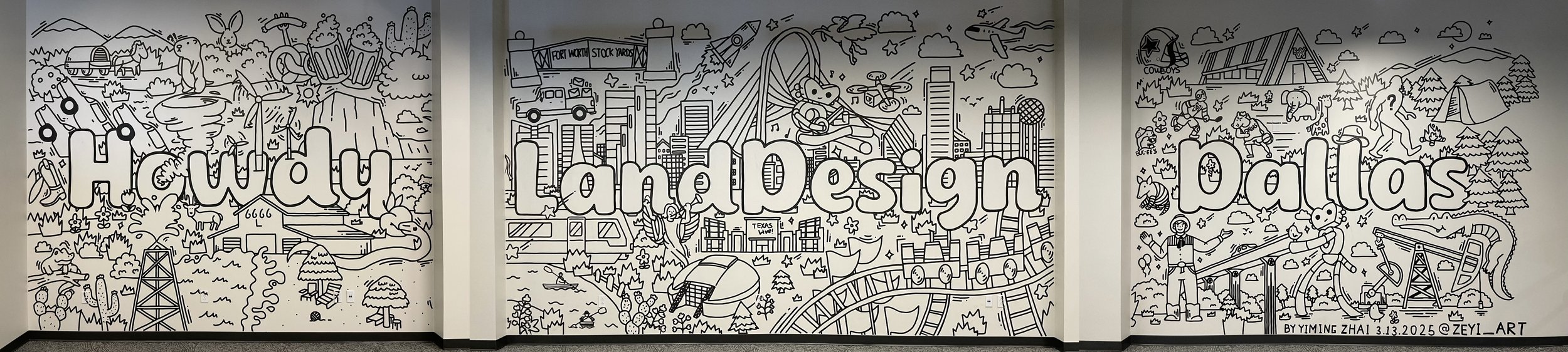
Howdy © Yiming Zhai
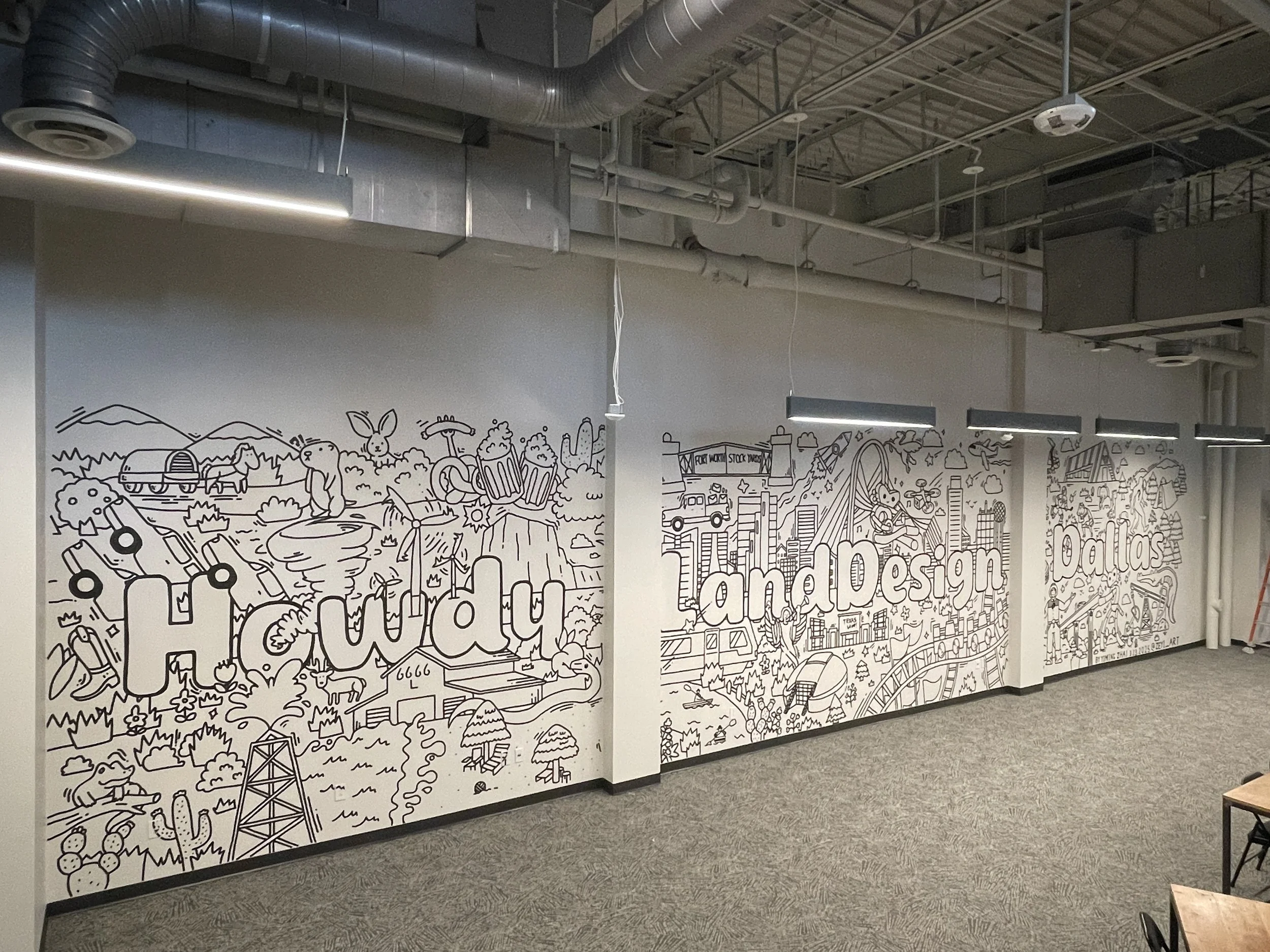
Howdy © Yiming Zhai
In addition to illustration, you create large-scale murals and public art projects. How does working in public spaces differ from creating illustrations or picture books?
The greatest difference is the way viewers encounter the work. When people read a picture book, they have actively chosen it from a shelf and opened it. They have made a conscious decision to enter the artist’s world.
A mural works differently. People do not necessarily enter a workplace, restaurant, or public space in order to see my art. They are already there for another purpose, and the mural becomes an unexpected part of their experience.
When I create a mural, I therefore think more carefully about how the work relates to the architecture, the function of the space, and the everyday activities of the people who use it. I also consider how the mural will be seen from different distances and how it can become part of the surrounding environment.
Although the mediums are different, their core purpose is the same for me. Both allow me to connect with an audience through visual storytelling.
You are currently preparing for the publication of your original picture book, Look! This Is My Dinosaur!. What can readers expect from this project, and what inspired the story?
When I was a child, I constantly imagined having a small dinosaur as a pet. For a while, I genuinely believed that dinosaurs were simply very rare animals. When I grew a little older and my parents told me that dinosaurs were already extinct, the news felt devastating.
I carried that disappointment with me as I grew up. Eventually, I decided that although I could not make the dream possible in reality, I could make it possible in a parallel world of my own creation. In Look! This Is My Dinosaur!, I created a world in which another boy who loves dinosaurs as much as I did can experience that dream.
I believe many readers had similarly impossible wishes when they were children. I hope both children and adults can enter this picture book and continue a dream that may once have ended too soon.

Cola Marks Everywhere © Yiming Zhai
And lastly, looking ahead, what are your main goals as an artist, and are there any upcoming projects or ideas you are particularly excited about?
Last year, a company invited me to create a mural on the exterior of an entire building. Unfortunately, I already had other work commitments at the time and had to decline the opportunity, which I genuinely regretted.
Over the next few years, I hope to have another opportunity to create on a much larger “canvas,” particularly on the exterior of a building. I am interested in seeing how my work can develop at that scale.
At the moment, however, I am most excited about the upcoming publication of Look! This Is My Dinosaur!. I am very eager to see how children respond to the book and its story.
Artist’s Talk
Al-Tiba9 Interviews is a promotional platform for artists to articulate their vision and engage them with our diverse readership through a published art dialogue. The artists are interviewed by Mr. Mohamed Benhadj, the founder & curator of Al-Tiba9 Contemporary, to highlight their artistic careers and introduce them to the international contemporary art scene across our vast network of museums, galleries, art professionals, art dealers, collectors, and art lovers across the globe.
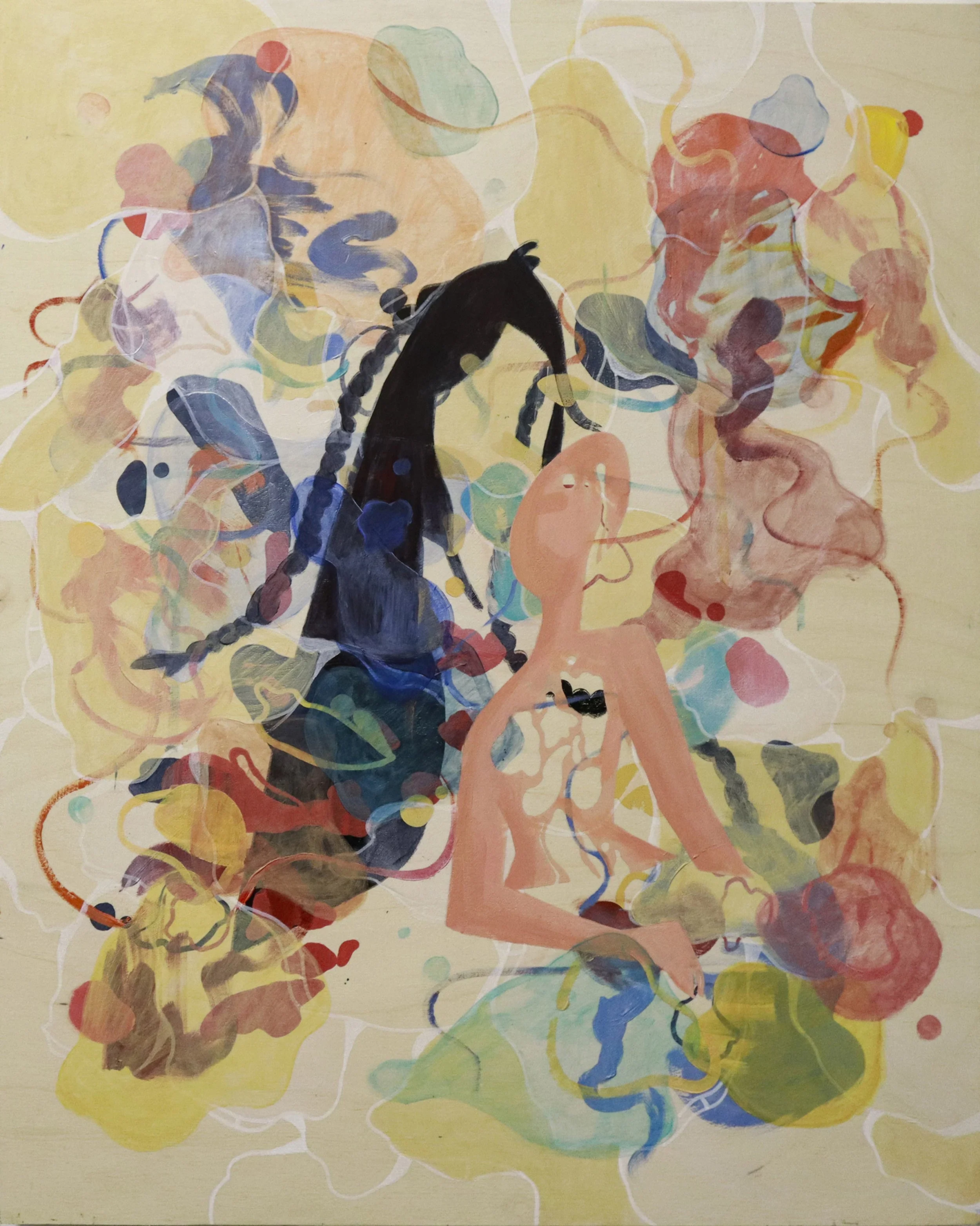


Peilin Li is an illustrator and designer at BUCK, based in Los Angeles. She works across illustration, branding, and motion. Inspired by picture books, comics, and everyday life, she creates lively, character-driven scenes that capture the humor, chaos, and warmth of ordinary moments.