

10 Questions with Anita Horvath
Anita Horvath is a Hungarian-born artist based in Baden, Austria. She completed eight years of formal artistic training, including four years at an art secondary school followed by two advanced two-year programs. Working primarily with acrylic and mixed media on canvas, she develops abstract compositions that explore the relationship between structure, emotion, and contemporary human experience.
Over the past years, her work has been exhibited internationally in Argentina, Italy, and Austria. Among these presentations is a permanent digital exhibition on an Austrian contemporary art platform. In 2026, she will participate in the Vienna Art Sommer exhibition in July and the Winter Exhibition 2027 organized by the Pennsylvania Journal of Arts and Sciences (PJAS) in December.
While she is active on social media under her artist name, she exhibits professionally under her legal name, Anita Horvath. Through her practice, she continues to develop a visual language that balances symbolic abstraction, personal reflection, and contemporary themes.
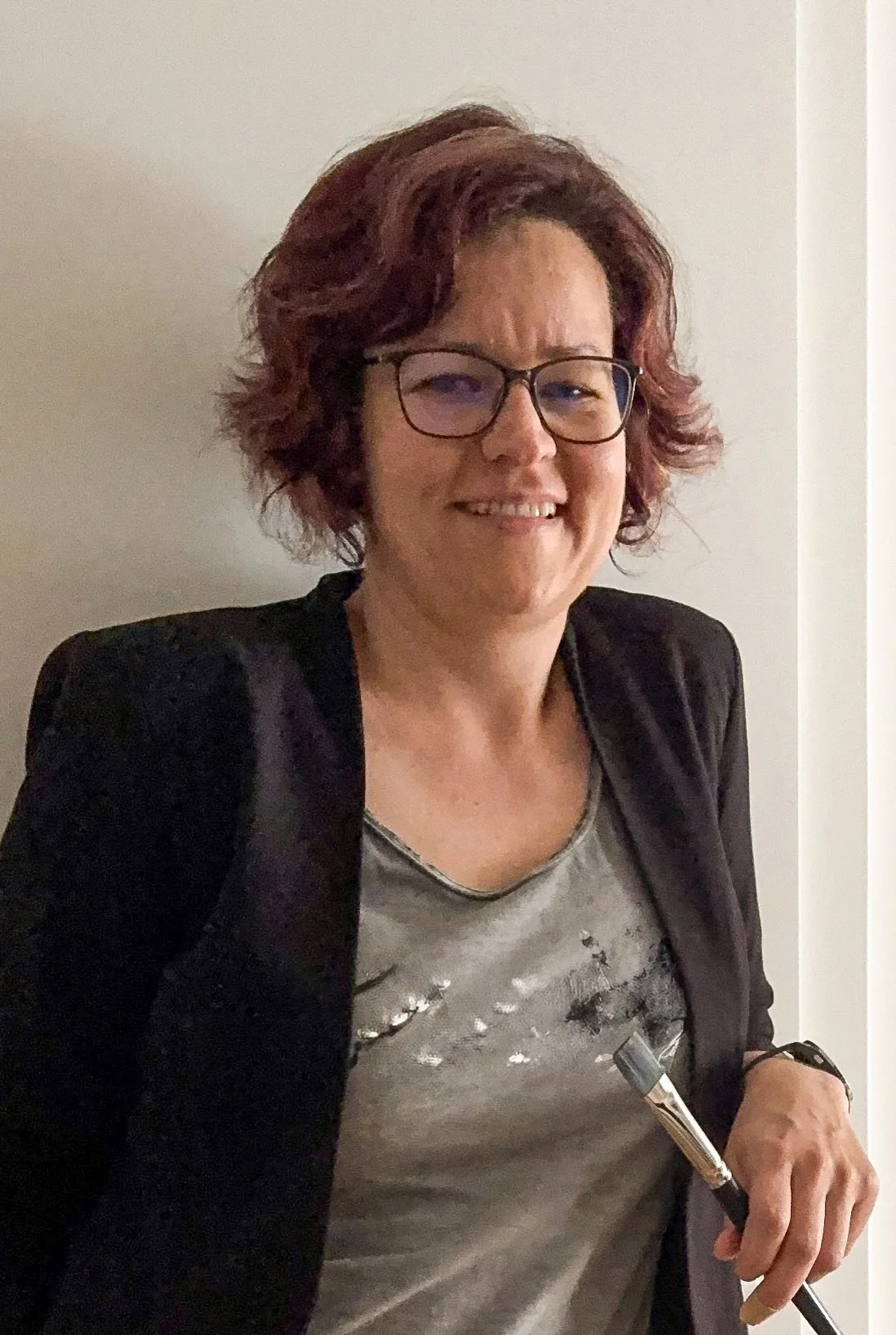
Anita Horvath - Portrait
ARTIST STATEMENT
Anita Horvath’s work explores the balance between system and emotion through abstract forms, layered structures and symbolic elements. Working primarily with acrylic and mixed media on canvas, she creates compositions that move between control and fragmentation, harmony and tension.
Recurring motifs such as butterflies, circular forms, textures and geometric structures function as visual metaphors for transformation, identity and the search for orientation within contemporary life. Many of her works are influenced by the emotional and psychological impact of modern digital environments, where personal experience and external systems increasingly overlap.
She is particularly interested in the relationship between vulnerability and structure, how emotions can exist within rigid systems, and how moments of instability can create new forms of balance. Through contrasts in color, material and composition, her paintings aim to create spaces that are both visually dynamic and emotionally reflective.
Rather than presenting fixed narratives, her work invites open interpretation and encourages viewers to engage with their own emotional and perceptual experiences.

Silent Rhythm, Acrylic on canvas, 50x70 cm, 2026 © Anita Horvath
INTERVIEW
Can you tell us about your artistic journey and how you first became interested in art?
My interest in art began when I was around eleven years old. After my parents divorced, my mother, my sibling, and I moved to a new town. Although that period brought many changes to our lives, it also opened up new opportunities for me. At my new school, there were after-school drawing classes in addition to the regular art lessons. At the time, I was not yet consciously aware of how important art would become in my life, but those classes left a lasting impression on me. A few extra hours of drawing each week may not sound significant, but for me they made it clear that I wanted to continue my education in an artistic direction. This also meant moving away from my family at a relatively young age, but that never discouraged me. I attended a four-year secondary school specializing in the arts, followed by two additional two-year art programs. During my studies, I was particularly interested in design and the world of fashion. At the time, I had no idea that my fascination with forms and structures would later become such a defining element of my artistic practice. Although there was a period in my life when I had fewer opportunities to engage with art, the need to create never disappeared. A few years ago, art once again became a central part of my life, and since then I have been actively developing my artistic career.
You completed several years of formal artistic training. How did this education shape your approach to making art?
Today, I meet many talented self-taught artists, and I have great respect for their work. Nevertheless, I am deeply grateful for the years I spent learning from established artists who were actively practicing their craft. My education provided far more than technical skills. Looking back, I feel that it was during those years that I developed the mindset that continues to shape my sensitivity toward systems, structures, and compositional relationships. This way of thinking remains an essential part of my creative process. Perhaps even more importantly, those years gave me confidence. They helped me realize that art was not simply an interest, but a path worth pursuing. The self-belief I gained during that period still plays an important role in my life as an artist.
Navigating the Digital Swarm, Mixed media on canvas, 50x40 cm, 2026 © Anita Horvath
What led you to focus on abstract painting as your primary form of expression?
I have enormous respect for the great masters of the past. I am particularly drawn to Renaissance painters and to the sense of order, discipline, and intention that characterizes their work. Perhaps that is precisely why I feel I could never follow the same path myself. For me, abstract painting is the visual language in which I feel most at home. It allows me to express the inner processes, tensions, and emotional layers that interest me in the most direct and authentic way. I am especially fascinated by the relationship between reason and emotion. In my paintings, I often try to place these two forces side by side, or even in opposition to one another. Abstraction gives me the freedom to explore this relationship through forms, colors, structures, and gestures rather than through literal narratives or figurative representation. Over the years, I have experimented with various techniques. I enjoy drawing with pencil and have also worked with ink and pastel. My mother still keeps some of those early works. Even so, painting has always felt like the most natural form of expression for me. What attracts me even more is the use of mixed media and the possibility of occasionally disrupting the very order I have created. Some of the most exciting visual moments emerge from that encounter between structure and disruption.
Your work often explores the relationship between structure and emotion. What draws you to this theme?
I think I am drawn to this theme because it reflects something I experience personally. But I suspect I am far from alone in that. The tension between reason and emotion is present in everyone's life. Just as the world is built on contrasts such as light and shadow, good and bad, order and chaos, human experience is shaped by opposing forces that constantly interact with one another. I am particularly interested in how balance can be found between these forces. Perhaps that is why this question returns again and again in my work. In many ways, I am searching for answers myself. There are periods when life feels brighter, and others when it feels more difficult. Everything is in constant motion and transformation. My paintings often become reflections of these internal processes. They are a way for me to observe, examine, and translate them into visual form.

Controlled Descent, Acrylic on canvas, 50x70 cm, 2026 © Anita Horvath
Many of your paintings include recurring motifs such as butterflies, circles, and geometric forms. What do these symbols represent for you?
For me, the butterfly symbolizes freedom and the desire for growth. Interestingly, it was not originally a consciously chosen motif in my work. Not long ago, someone pointed out how frequently butterflies appeared in my paintings. I was surprised to realize that they were absolutely right. That observation encouraged me to think more deeply about why this image kept returning. Perhaps it is because transformation, change, and the search for new possibilities have always played an important role in my life. The circle, on the other hand, represents continuity, cycles, and constant movement. It reminds me that nothing in life is permanent; everything changes, evolves, and takes on new forms. Geometric forms symbolize order, structure, and the human tendency to organize and make sense of the world around us. I often feel that we live within invisible systems and frameworks that we are constantly trying to navigate. In my paintings, these forms frequently serve as points of stability amidst emotion and change. Perhaps that is why I am so drawn to them: they create a balance between freedom and order.
You work with acrylic and mixed media on canvas. What do these materials allow you to express that other mediums might not?
I enjoy the sense of freedom and spontaneity that working with acrylics provides. It is a fast, direct, and very natural medium for me. One of the things I appreciate most is how easily acrylic can be combined with other materials and techniques. Whether I am using pencil, pen, textured materials, or even natural elements such as tree bark, acrylic offers almost limitless opportunities for experimentation. Mixed media is particularly close to my heart because it allows the individual character of different materials to become part of the artwork itself. I am not only working with color and form, but also with the dialogue between surfaces, textures, and materials. Another aspect I value is the quick drying time of acrylic paint. While oil painting often requires long waiting periods, acrylic allows the energy of an idea to flow through the creative process almost without interruption.

Fragments of Order, Acrylic on canvas, 50x70 cm, 2026 © Anita Horvath
How does contemporary digital life influence your work and creative thinking?
I have to admit that when I first started sharing my work online, I felt a certain amount of uncertainty. Today, we often see people reacting instantly and only reflecting on what they have written afterwards. Fortunately, my own experiences have been overwhelmingly encouraging. I have received a great deal of support and positive feedback from both people I know and complete strangers, for which I am deeply grateful. For this reason, I truly value the opportunities that the digital world and social media provide. I find it remarkable that today we can connect with artists, galleries, creative projects, and people who, twenty years ago, would in many cases have only been accessible on a local level. As both an artist and an art enthusiast, I find this openness incredibly inspiring. With just a few clicks, I can explore the work of other artists, follow their creative journeys, and connect with people I would most likely never have had the chance to meet otherwise. At the same time, as an artist, I am interested in the digital environment not only as an opportunity but also as a subject of reflection. I am fascinated by the way it influences our thinking, our attention, and the way we relate to one another. My painting Navigating the Digital Swarm, for example, reflects on these questions. It explores the paradox that, although we are surrounded by more information and more connections than ever before, it is becoming increasingly difficult to find our own direction and preserve our individual perspective. I believe this duality, the opportunities offered by the digital world alongside the questions it raises, has become a natural part of our lives, and it continues to appear in my work.
Your paintings balance harmony and tension, control and fragmentation. How do you approach finding this balance during the creative process?
For me, the creative process often begins with an idea that arrives shortly after I wake up. I used to think I would remember these ideas, but I soon realized that was not always the case. That is why I started writing them down. At first, they exist only as sketches or fragments of thought. Some paintings remain in my mind for months before they ever reach the canvas. I let them mature, change, and develop naturally before I begin painting. Interestingly, the finished work often turns out to be very different from what I originally imagined. At first, this frightened me because I never knew where the process would lead. Today, I see it as a natural and essential part of creating. Once I begin painting, I do not feel the need to follow my original idea too rigidly. Instead, I treat it as a starting point and allow the work to find its own direction. There are moments when I genuinely feel as though I am simply a mediator in a process unfolding through me. The order, structure, and composition usually come from the initial concept I begin with. The tension, emotion, and energy, however, often emerge during the process itself. It sometimes feels as though I have to let go of control and trust my instincts in order to create something authentic. Perhaps that is where balance is found, in the meeting point between consciously built structure and the spontaneity that emerges during the act of painting.

Encoded Flight, Acrylic on canvas, 50x40 cm, 2026 © Anita Horvath
Rather than presenting fixed narratives, your work invites interpretation. What do you enjoy most about leaving space for viewers to create their own meanings?
As someone who also deeply appreciates contemporary art, I have always been drawn to works that do not try to answer every question for the viewer. I enjoy artworks that leave room for thought, association, and personal connection. Those are the works in which I find myself becoming truly immersed. I would like to offer the same freedom to those who encounter my own work. I do not want to dictate what people should see or feel when they stand in front of one of my paintings. Every person brings their own experiences, memories, and emotions. Because of that, the same artwork can inspire completely different thoughts and feelings in different people. To me, this is one of the most fascinating qualities of art. I truly believe there is no single correct interpretation. Very often, it is simply a matter of perspective.
Lastly, what are you working on at the moment, and do you have any upcoming exhibitions or projects that you would like to share with us?
I usually work on several projects at the same time, even if some of them still exist only as ideas. At the moment, I am completing a new composition while already planning another work that will require a longer period of preparation. At the same time, I would like to return to an earlier painting that I started some time ago and that holds a particularly personal meaning for me. Recently, I was invited to illustrate a book that is expected to be published in 2027. It is an exciting opportunity and a completely new creative challenge for me. Starting at the end of June, my painting Navigating the Digital Swarm will be featured in a group exhibition at Voghera Gallery. In July, I will also participate in Vienna Art Summer 2026 in Vienna. My work is also permanently featured on the Winstage digital exhibition platform. In addition, I am delighted that my painting Exposed has been selected by the Pennsylvania Journal of Arts and Sciences for its Winter Exhibition 2027 digital exhibition. This is a particularly exciting period in my artistic journey, and I am looking forward to seeing where these projects and exhibitions will lead, as well as the new opportunities and connections they may bring.

Between Anger and Love, Mixed media on canvas, 30x40 cm each, 2025 © Anita Horvath
Artist’s Talk
Al-Tiba9 Interviews is a promotional platform for artists to articulate their vision and engage them with our diverse readership through a published art dialogue. The artists are interviewed by Mr. Mohamed Benhadj, the founder & curator of Al-Tiba9 Contemporary, to highlight their artistic careers and introduce them to the international contemporary art scene across our vast network of museums, galleries, art professionals, art dealers, collectors, and art lovers across the globe.



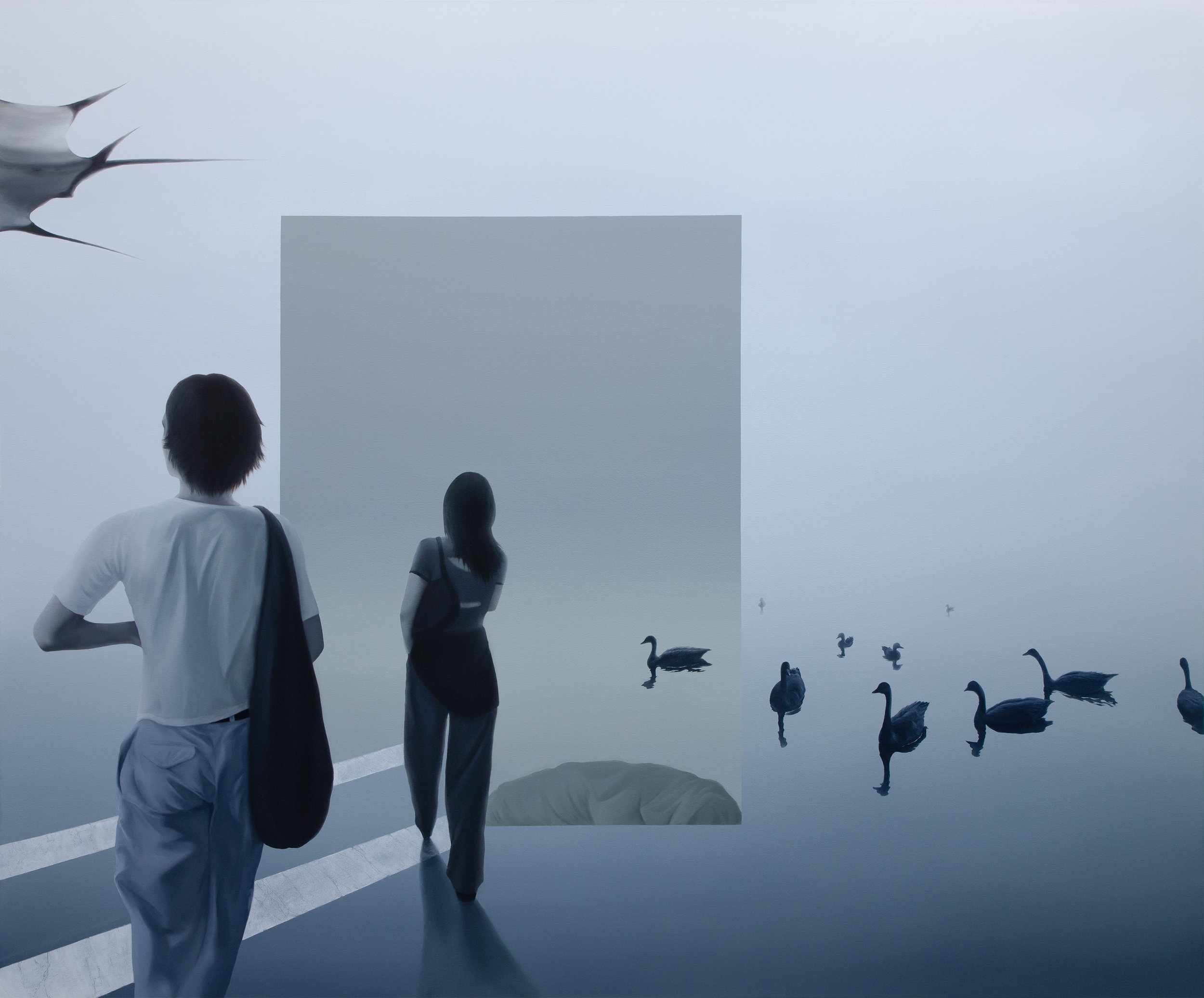
Brooklyn-Born Allan Gorman is a contemporary fine artist based in Jersey City, NJ, with a unique artistic vision cultivated by a distinguished commercial career that helped refine a sense of aesthetics and unwavering commitment to excellence that continues to define his artistic process to this day. His latest series of paintings is titled Imaginary Spaces.