

10 Questions with Olga Niekrasova
Olga Niekrasova is an internationally recognized Ukrainian filmmaker and visual artist. Her interdisciplinary practice navigates the fragile terrain of memory, trauma, displacement, and the invisible threads that bind us to one another. Blurring the boundaries between cinema, visual art, and poetic inquiry, her work unfolds through immersive, emotionally resonant forms that invite contemplation and collective reflection. Her films and artworks have been exhibited and screened across Europe, the United States, the United Kingdom, and Australia in galleries, festivals, and institutional contexts.

Olga Niekrasova - Portrait
ARTIST STATEMENT
“My practice is anchored in memory, emotion, and the lingering imprints of human experience. I am drawn to the fragile thresholds where trauma, resilience, and connection converge, exploring these landscapes through layered, non-linear narratives that resist singular interpretation. By weaving together film, animation, poetry, and mixed media, I create immersive spaces that invite contemplation, evoke empathy, and resonate on an emotional level.
My creative process embraces experimentation as a way of dissolving the boundaries between disciplines, forms, and ways of seeing. Through this fluid, hybrid language, I seek to reveal the delicate, often invisible threads that connect us, threads woven from memory, trust, vulnerability, and shared experience. Rather than offering conclusions, my work invites audiences to linger, to witness, to feel, and to reflect on the quiet complexities of being human.”
— Olga Niekrasova

Posters © Olga Niekrasova
INTERVIEW
Your practice spans film, photography, animation, poetry, and mixed media. How do you decide which medium is best suited to a particular idea?
For me, the medium usually emerges from the emotional nature of the idea itself. Some experiences ask to exist as moving images, others feel more still, fragmented, or language-based. I rarely begin by deciding on a form intellectually. It is more intuitive than that, almost a question of texture or emotional rhythm.
What draws me to the moving image is its ability to hold time emotionally. Cinema is not only about image, but about rhythm, silence, duration, and the way emotion can slowly accumulate through movement and observation.
For me, film becomes less about storytelling in a conventional sense and more about creating an emotional and perceptual experience that unfolds gradually.
In both Valise and Shadows, children become witnesses to war. What drew you to telling these narratives from their perspective?
What really drew me to a child’s perspective is how immediate and unfiltered everything feels. Kids experience war in a very direct way, they don’t process it through politics or big ideas, just through what’s happening to them at the moment. For me, the child’s perspective removes explanation and leaves only emotional truth. It brings everything closer to its emotional core.
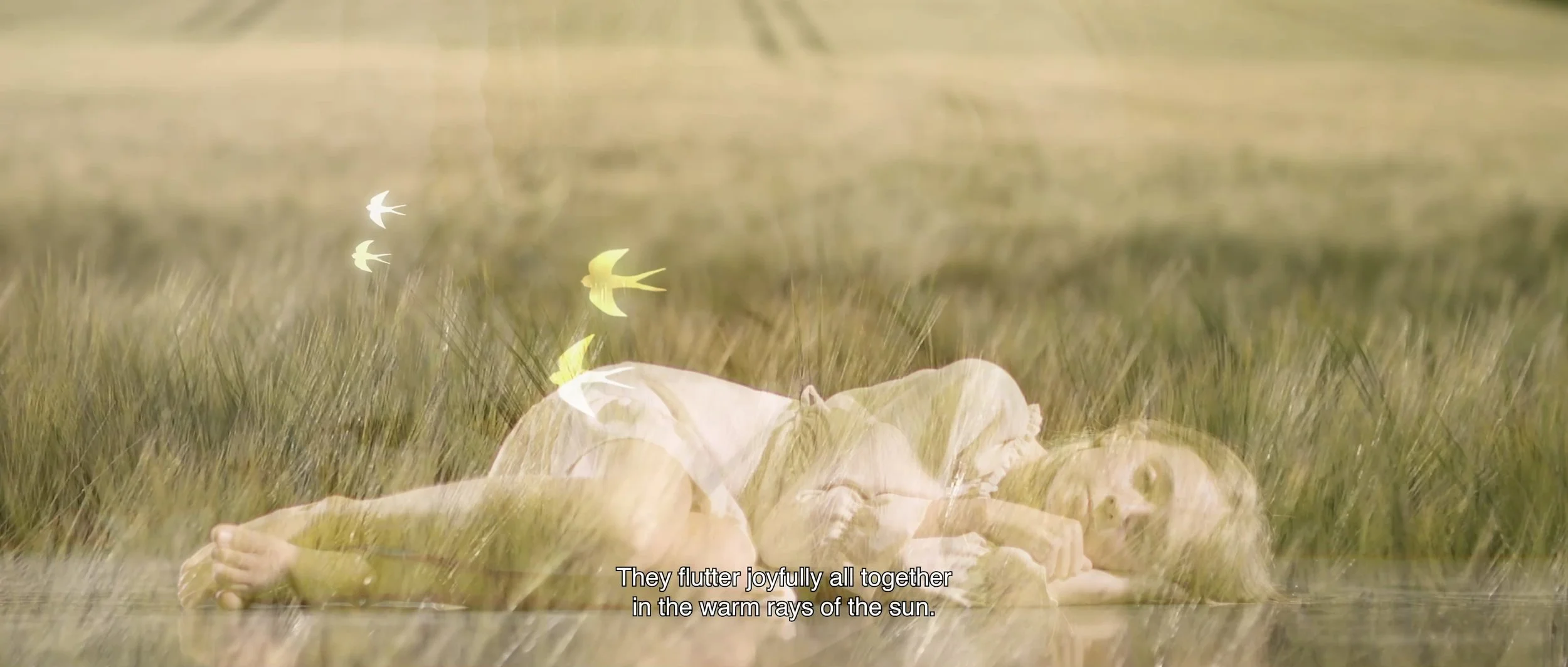
Shadows, 2023 © Olga Niekrasova
Your work often engages with painful realities. How do you combine emotional intimacy with broader social context?
I always begin from the human experience, not the political framework. The social context is present, it shapes everything, but I’m interested in how those forces are felt rather than explained. I don’t approach cinema as a form of commentary or analysis. Politics exists in my films more as an invisible pressure, something that shapes relationships without ever needing to be fully articulated.
In Shadows, forced separation is not an abstract condition, it is felt through the emotional distance between a mother and her child. In Valise, war is never directly shown, but it exists in what is being quietly preserved, and what is already beginning to disappear.
In the end, I see the films as a kind of bridge. They’re not trying to explain the political situation, but more to help the audience feel its impact in a personal and human way.
Your films often emerge from emotionally intense subject matter. How do you process these themes through cinema?
For me, filmmaking is primarily an act of communication. It transforms something internal into something external, something that can exist beyond me and reach others.
It doesn’t dissolve the emotional weight of the themes I explore, but it gives them form. And that act of giving form is where the meaning lies.
The process itself is what creates a sense of release, not resolution, but transformation. What matters most is when a film stops belonging only to me and begins to resonate elsewhere, in completely different contexts. That moment of connection is what gives the work its purpose.

Ball of Yarn=Trust, 2024 © Olga Niekrasova
Ball of Yarn = Trust uses a simple object to explore something very complex—the fragility of trust between people. Why did yarn feel like the right metaphor for this idea?In Valise, the suitcase becomes a powerful symbol for memory and loss. How did this image emerge for you?
A ball of yarn felt like a natural metaphor for trust. It is made of connection—threads that bind, tangle, and slowly unravel. Trust works in much the same way: often invisible, yet deeply felt, and always fragile.
There is also a quiet warmth to it, a sense of softness and protection that reflects what trust can hold between people.
What interests me most is its fragility. It can come apart in an instant, and although it may be gathered again, it is never quite the same. That process of unraveling and imperfect repair feels very close to the way trust exists in life.
The suitcase emerged very naturally from the idea of the boy trying to preserve fragments of his world. He is not packing objects in a practical sense; he is collecting pieces of lived experience—things that define home and belonging.
I was also intentional about the specificity of those memories: summers spent with grandparents in rural places. For many Ukrainian children, these moments carry a particular emotional weight. They are often among the most vivid and formative memories of childhood.
The suitcase becomes a container for memory, but also a vessel for shared cultural recognition.
You used AI as part of the visual development process for your recent animation El Parque. How did working with AI tools change your workflow?
What fascinated me most about AI was not only efficiency, but expansion—how it opens new ways of thinking visually.
It allowed me to move between ideas more fluidly, testing emotional and atmospheric directions without being tied to fixed production conditions.
I didn’t approach AI as a shortcut, but as a space for exploration—almost like sketching with images rather than constructing them directly.
At the same time, the emotional structure of the film remained entirely human. AI expanded the visual vocabulary, but not the authorship of meaning.
El Parque, 2026 © Olga Niekrasova
How do you ensure AI-generated imagery carries emotional intention rather than spectacle?
For me, emotional intention must exist before the image exists. AI can generate form, texture, and possibility, but it cannot originate meaning. So, I always begin from something internal.
In that sense, AI is not the origin of the image but part of a broader process of translation. The emotional structure is always human; the technology simply expands the vocabulary available to express it.
Do you see El Parque as a traditional act of directing, or something closer to curating and shaping a visual system?
I wouldn’t describe El Parque as purely a traditional act of directing, but I also don’t see it as something that steps outside of directing altogether. For me, it exists somewhere in between.
There is still a very clear directorial intention at its core—the emotional structure, the pacing, the atmosphere, the underlying logic of how the film should feel. That part remains deeply authored and very much rooted in traditional filmmaking instincts.
But the way the images are brought into being shifts the role slightly. It becomes less about physically orchestrating a set and more about shaping a visual language—guiding a system, refining outputs, and gradually steering them toward a coherent emotional and aesthetic universe. In that sense, curation becomes a form of direction.
So, I think of El Parque as a hybrid practice: a space where directing and curating overlap. The film is not simply “made” or “assembled,” but slowly composed—almost like constructing a visual ecosystem where each element has to belong to the same emotional frequency.

Valise, 2023 © Olga Niekrasova
Did AI expand your creative freedom or introduce new boundaries?
It did both. AI expands creative freedom by opening up an almost infinite field of visual possibility. Ideas can be tested, transformed, and reimagined.
At the same time, it introduces a different kind of boundary—one that is less physical and more perceptual. When everything becomes possible, the challenge shifts toward discernment. The limitation is no longer about resources, but about clarity of vision: knowing what truly belongs to the emotional and narrative world of the film, and what is merely possible but unnecessary.
In that sense, AI doesn’t remove structure; it transforms it. It replaces external constraints with internal ones. Freedom is real, but it demands a strong sense of intention.
If viewers leave your films with one feeling or question, what would you want it to be?
I would hope they leave with a quiet awareness of how fragile human presence can be. Not necessarily a clear answer or conclusion, but a kind of emotional afterimage—something subtle that stays with the viewer rather than resolves itself.
I am less interested in providing closure than in leaving space for reflection. I would hope viewers leave with a sense of attentiveness toward the unnoticed.
If there is a question embedded in that, it might simply be: how often do we truly see one another—and what remains when we begin to look more closely, even at what at first appears quiet or invisible?
Artist’s Talk
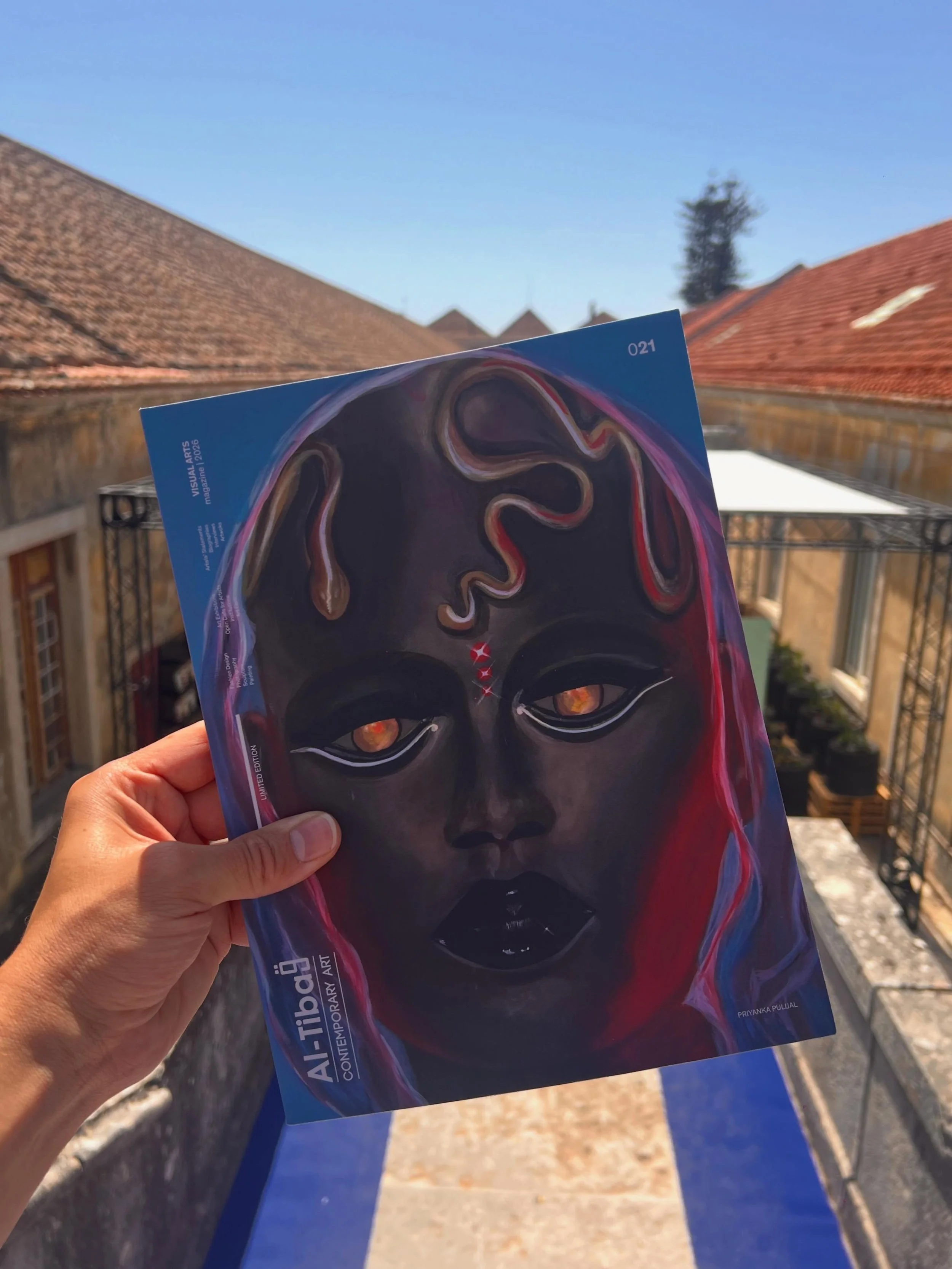
Al-Tiba9 Interviews is a promotional platform for artists to articulate their vision and engage them with our diverse readership through a published art dialogue. The artists are interviewed by Mr. Mohamed Benhadj, the founder & curator of Al-Tiba9 Contemporary, to highlight their artistic careers and introduce them to the international contemporary art scene across our vast network of museums, galleries, art professionals, art dealers, collectors, and art lovers across the globe.
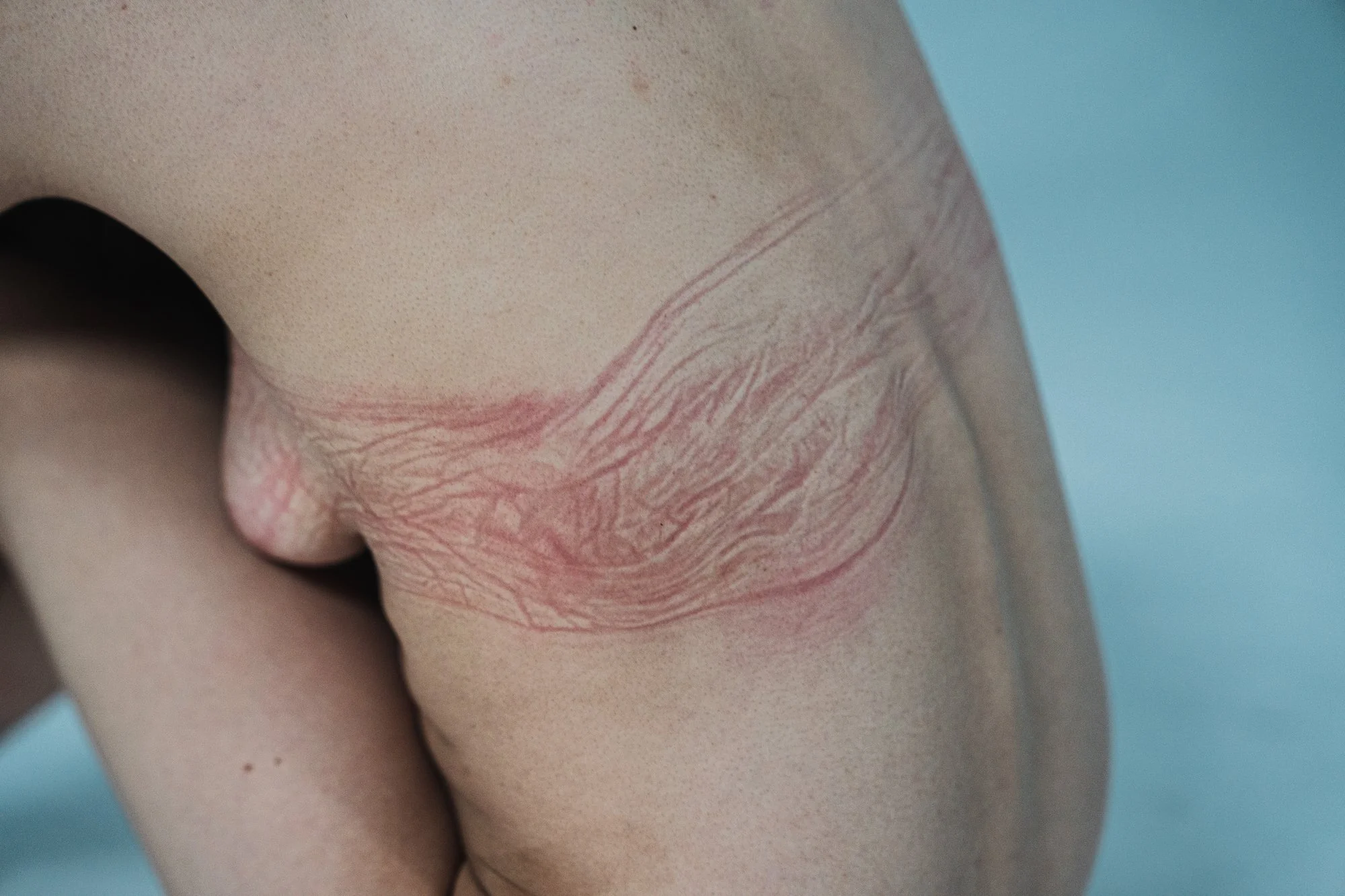


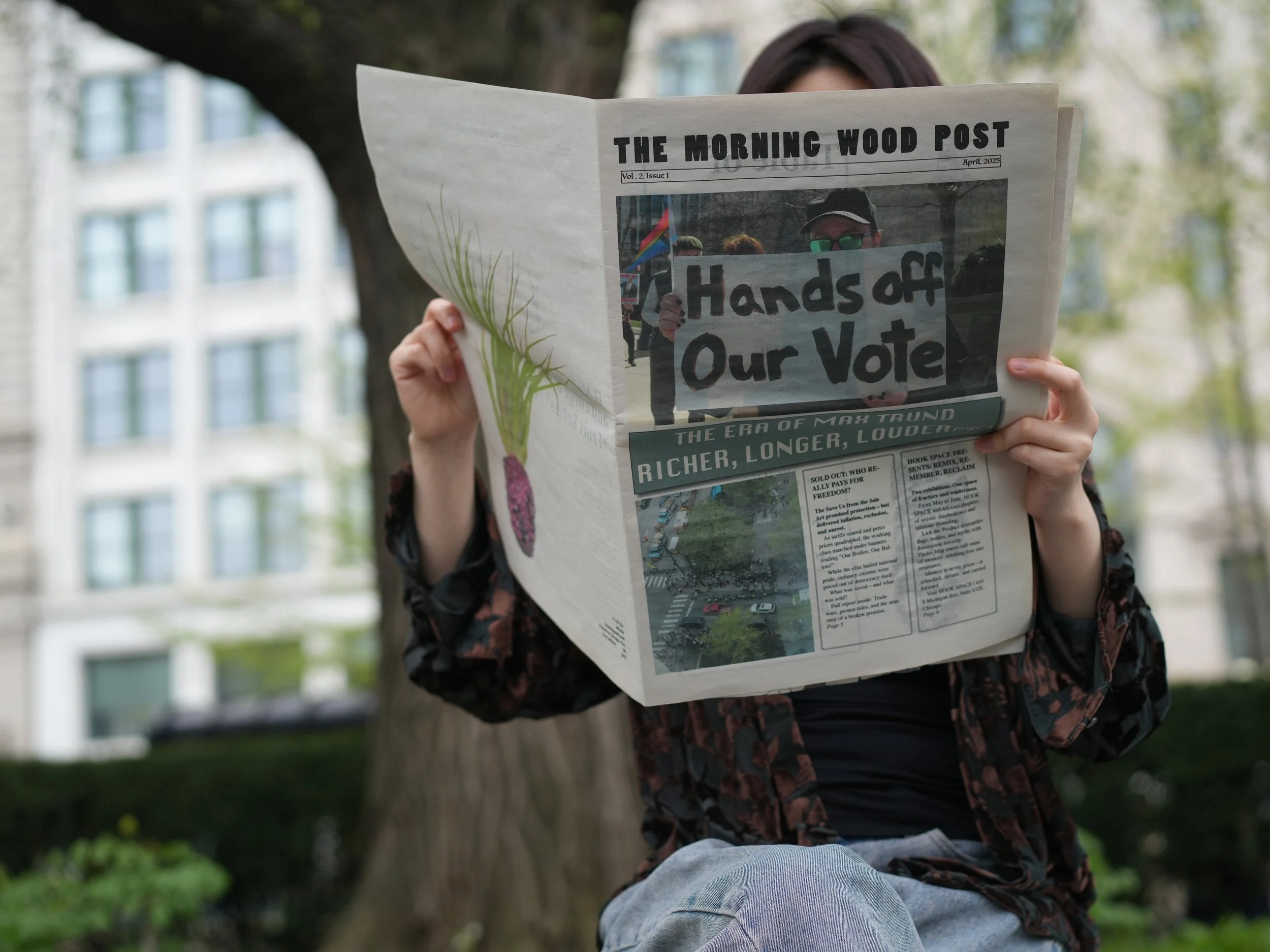


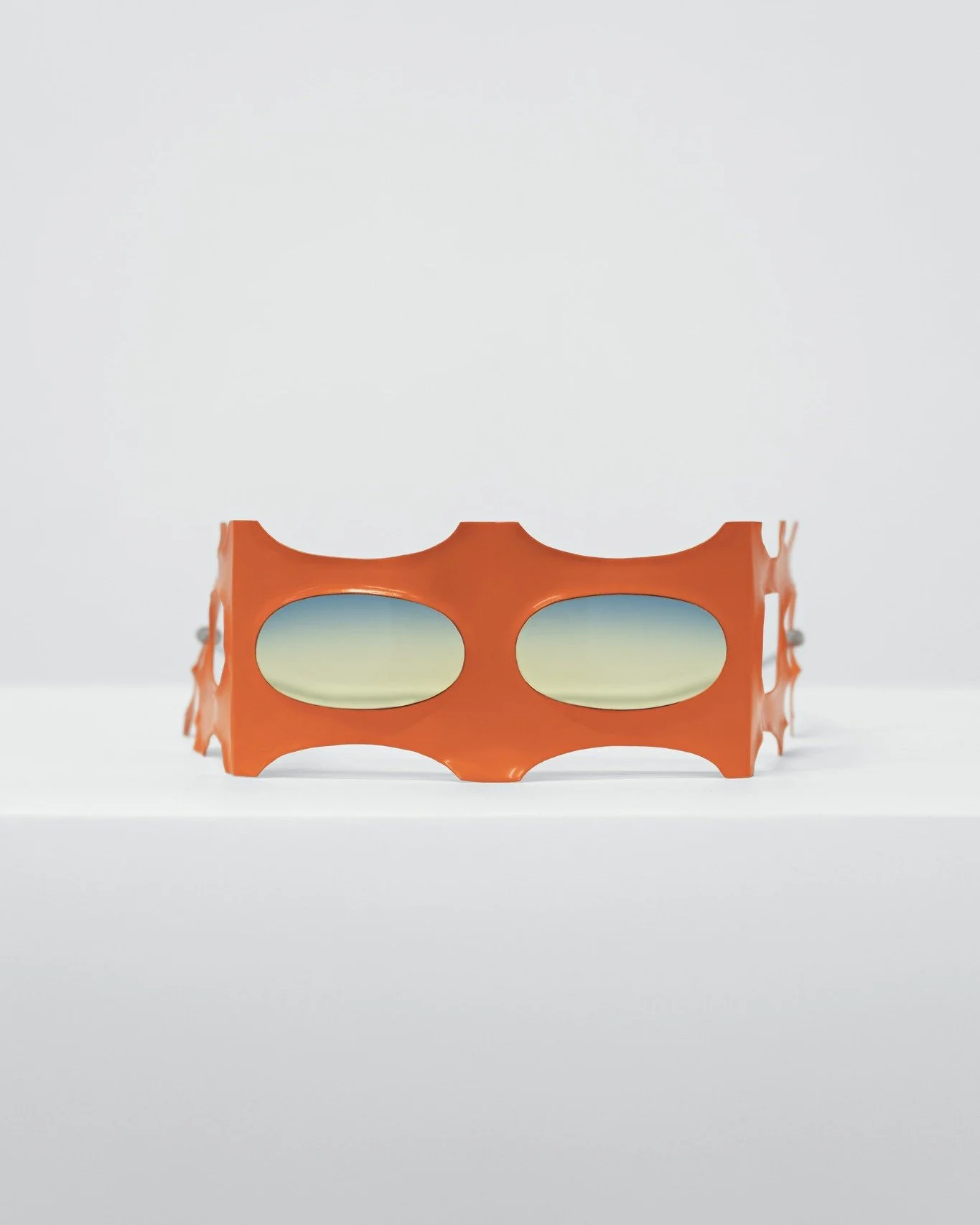
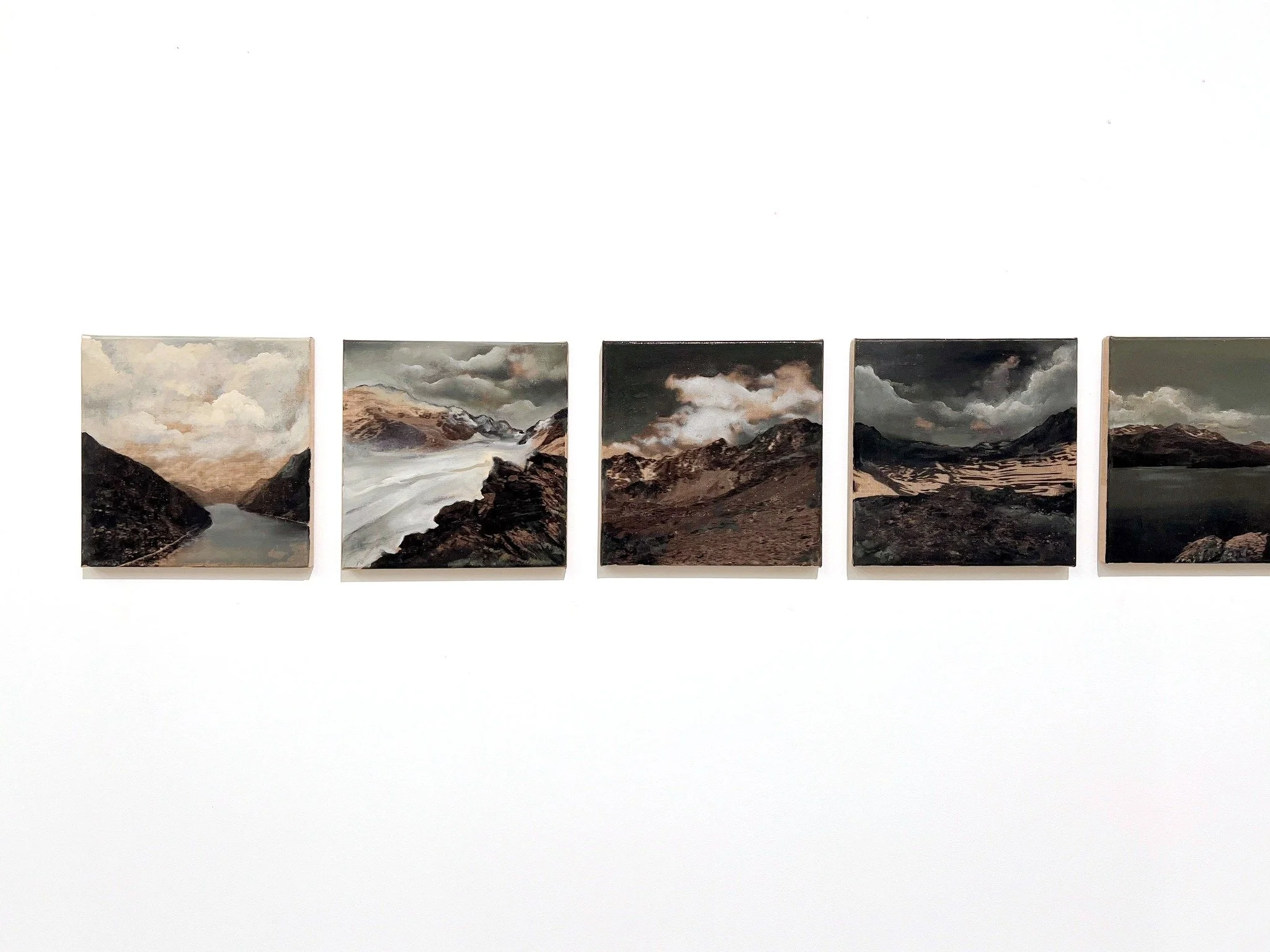
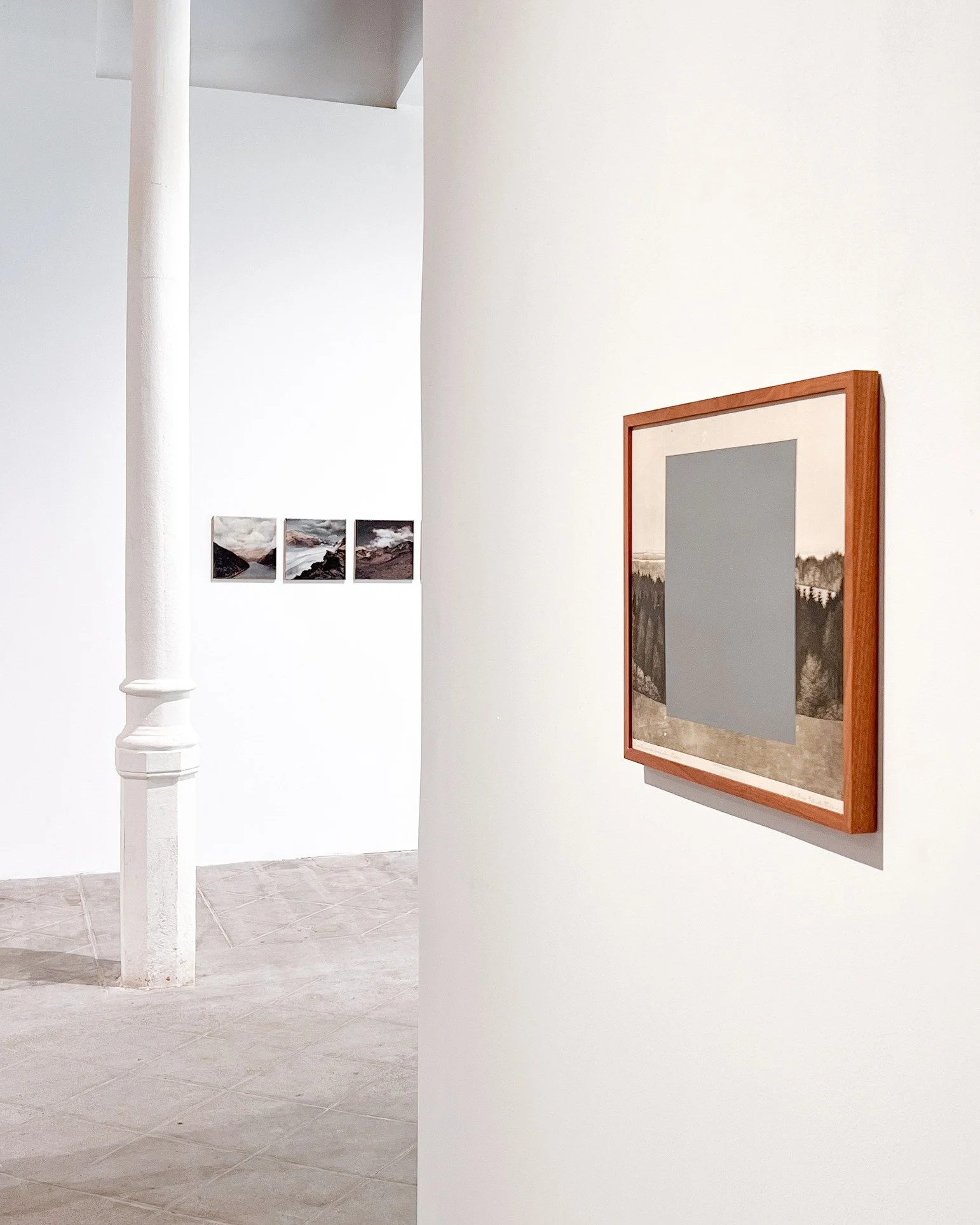
Bin Fang is a multimedia artist working across language, video, installation, image, sound, and drawings. The work engages with labour, fragmented memory, and performance, often tracing ideas and materials that resist or are misread in translation in daily life. Through a poetic approach to space, Bin explores how body, identity, culture, and perception are deferred, reframed, or misunderstood.