
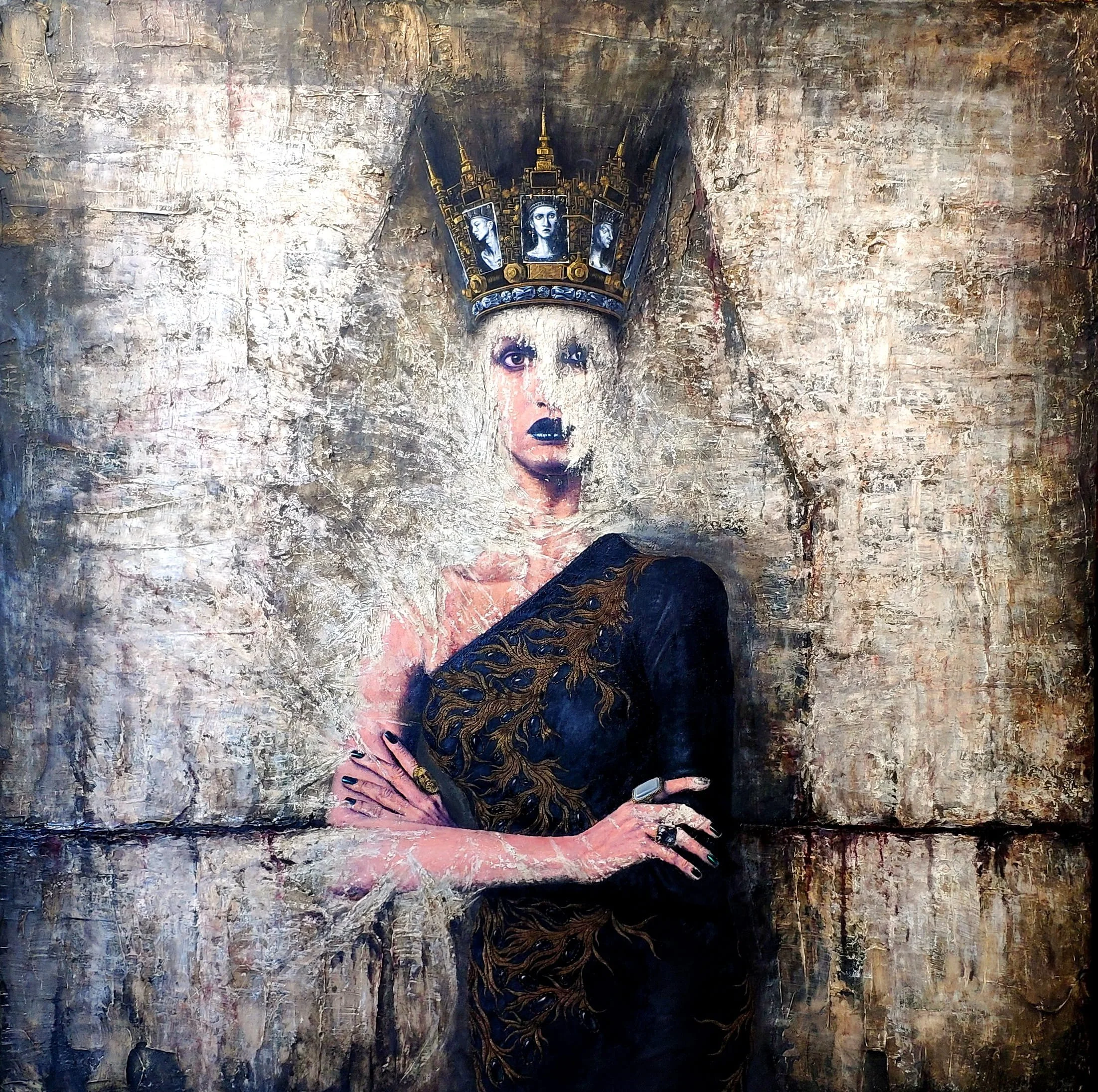
10 Questions with Ali Esmaeillou
Ali Esmaeillou is a multidisciplinary visual artist based in Dubai. Originally from Tehran, he was born in 1982 and holds a background in architecture. Since 2003, he has developed a studio-based practice centered around painting and ceramics. His works have been exhibited internationally in solo and group exhibitions across Iran, France, Germany, the United States, Portugal, and Switzerland. Esmaeillou’s visual language draws from mythology, memory, and social narratives, blending symbolic figuration with textural depth and sculptural form.
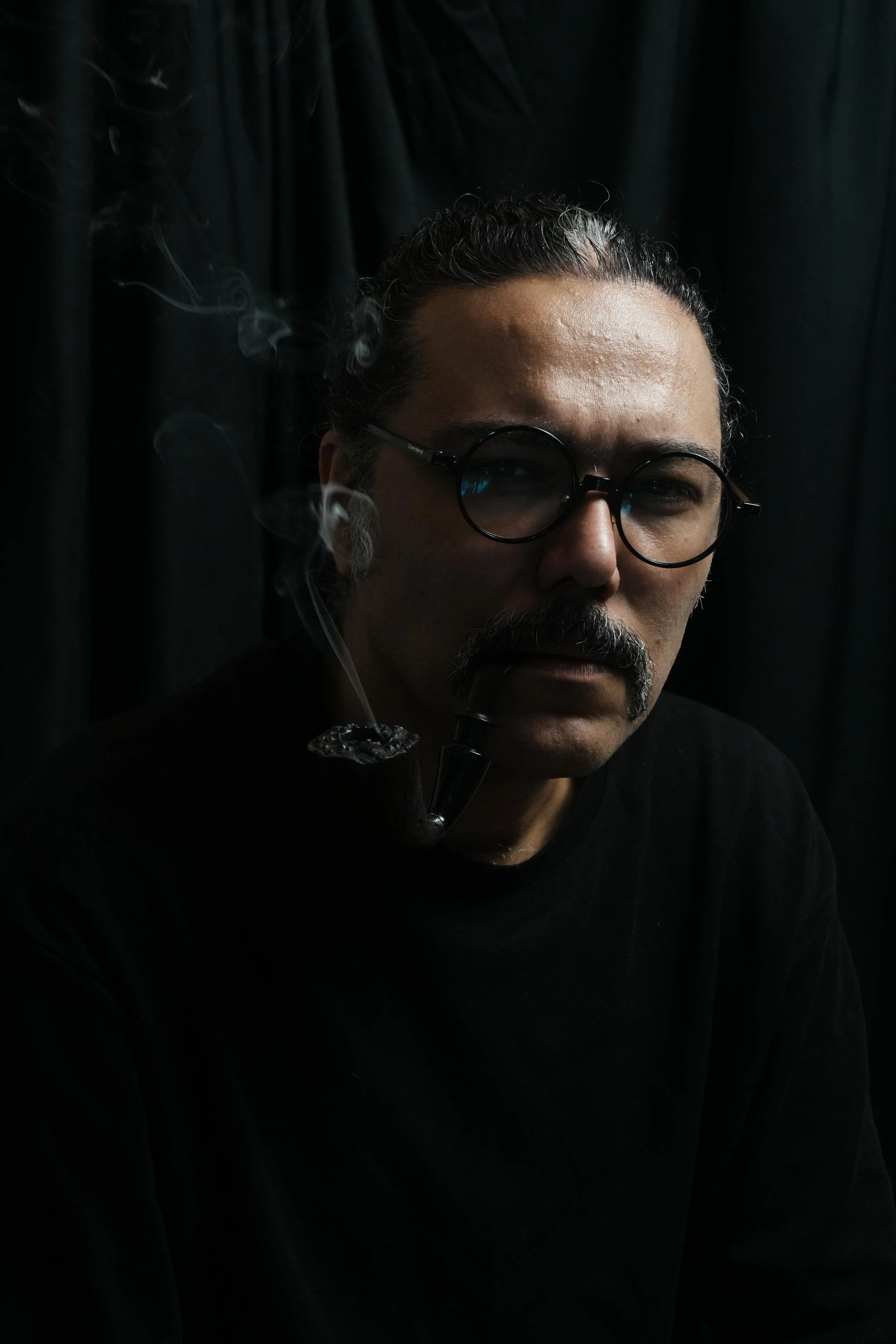
Ali Esmaeillou - Portrait
ARTIST STATEMENT
Ali Esmaeillou’s practice investigates the tension between memory and presence, using painting and ceramics as tools for quiet narrative. With a background in architecture, he builds layered visual spaces where symbolic figures, sculptural forms, and surface depth evoke histories both personal and shared.
His subjects often inhabit suspended moments, isolated, yet burdened by the weight of myth, social structures, and collective memory. Through touch, resistance, and raw materiality, his ceramic works carry a bodily weight and fragility, contrasting the stillness of painted forms. He sees each work as a negotiation between visibility and silence, a space where meaning is sensed rather than declared.
His work exists in the space between memory and presence, where narrative becomes quiet, and form speaks first.
© Ali Esmaeillou
INTERVIEW
You have a background in architecture. How has that training shaped the way you approach your paintings and ceramics?
I began with drawing and painting before architecture became part of my path. Architecture later taught me to see form, space, balance, and structure differently. When I returned to painting, and later to ceramics, this way of seeing remained with me,not as a rule, but as another layer within the work.
Speaking of your work, how do you decide whether an idea becomes a painting or a ceramic piece?
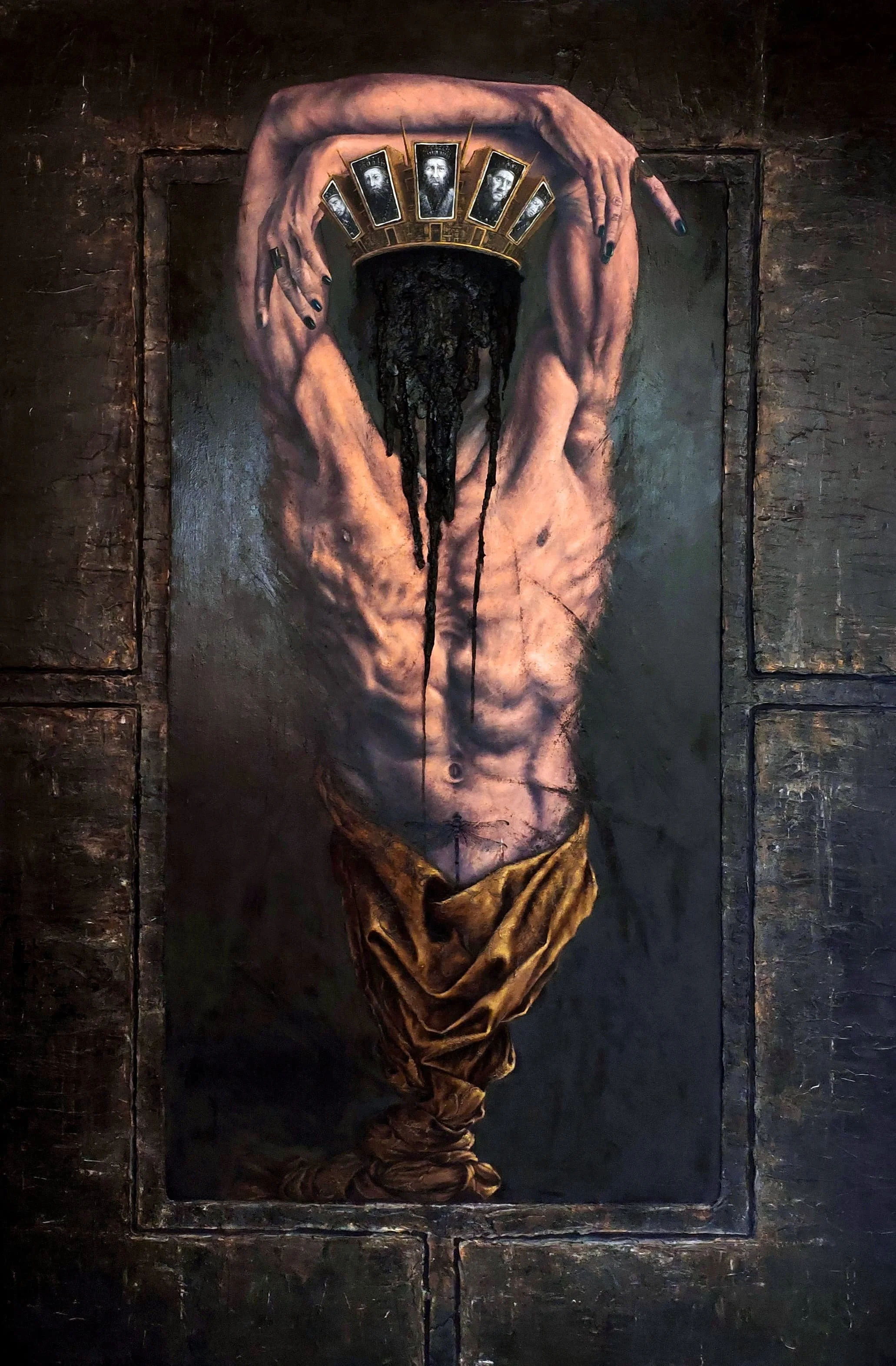
I usually don't decide at the beginning. Some ideas need the distance and illusion of an image, while others need weight, volume, and physical presence. Painting allows me to construct a world; clay asks me to enter into a dialogue with material, fire, and chance.
© Ali Esmaeillou
What first inspired you to explore the relationship between memory and presence in your work?
I have always been interested in what remains when something is no longer there. A person, an event, or a period of time may disappear physically, while its presence continues within us. For me, memory exists somewhere between absence and presence, and many of my figures inhabit that same uncertain space.
Your art blends mythology, social narratives, and symbolic figuration. Where do these stories come from for you?
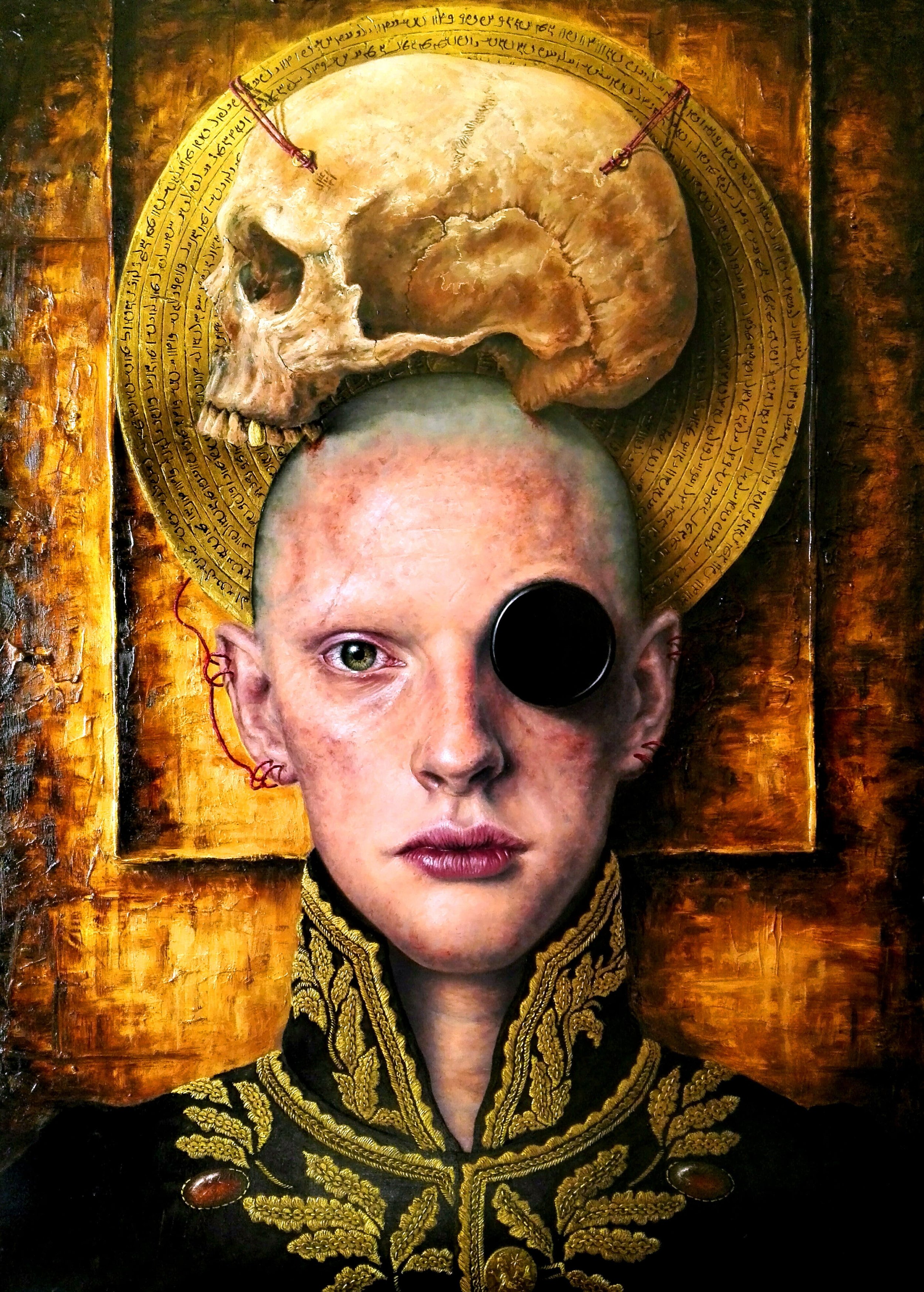
They come from history, mythology, society, and from observing human nature. I am interested in symbols that have survived through time, crowns, wounds, halos, animals, rituals, and how their meanings change when placed in another context. I don't want to tell a complete story; I prefer to leave the viewer somewhere between recognition and uncertainty.
You describe your ceramic works as carrying both bodily weight and fragility. Could you tell us about your process of achieving this balance?
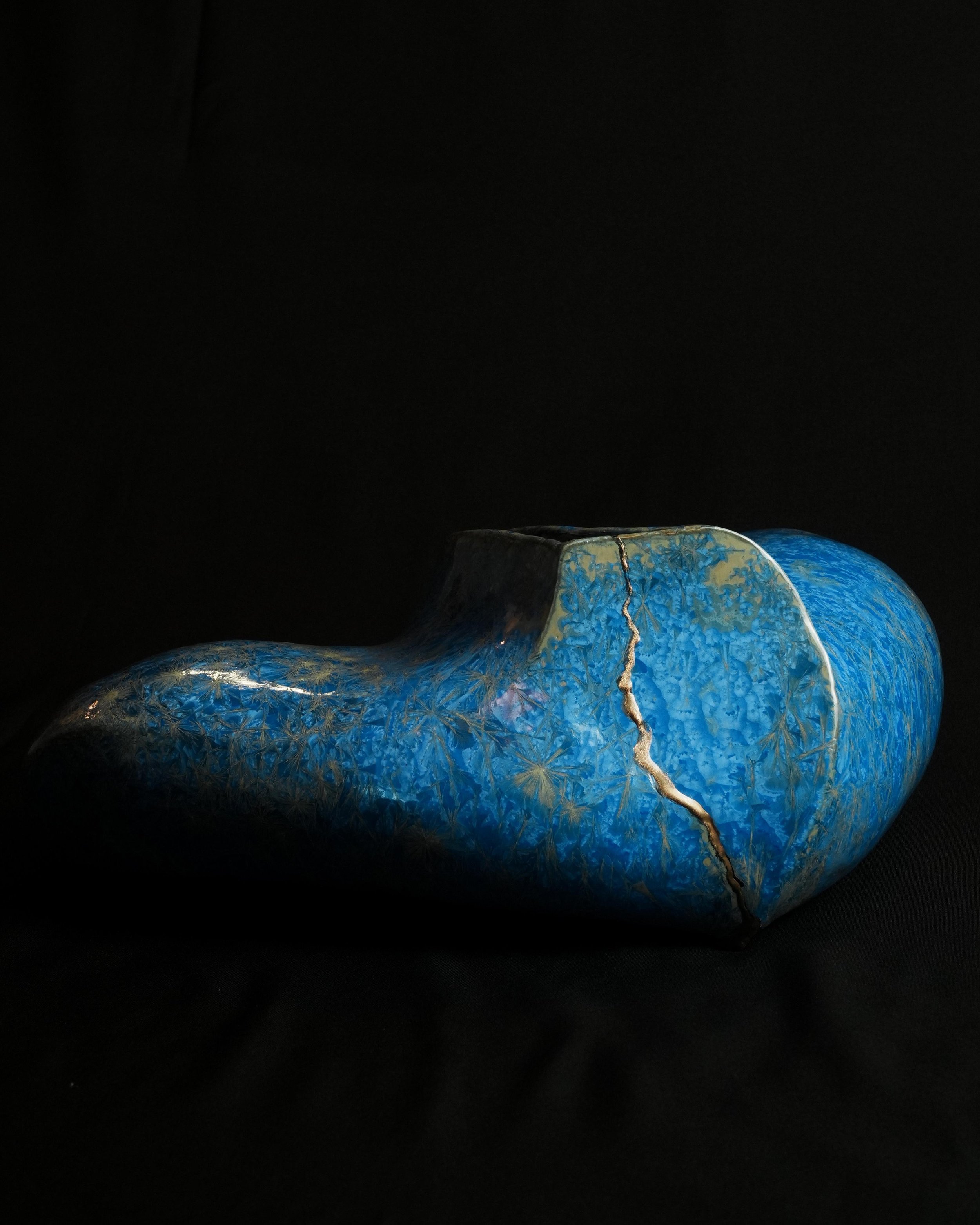
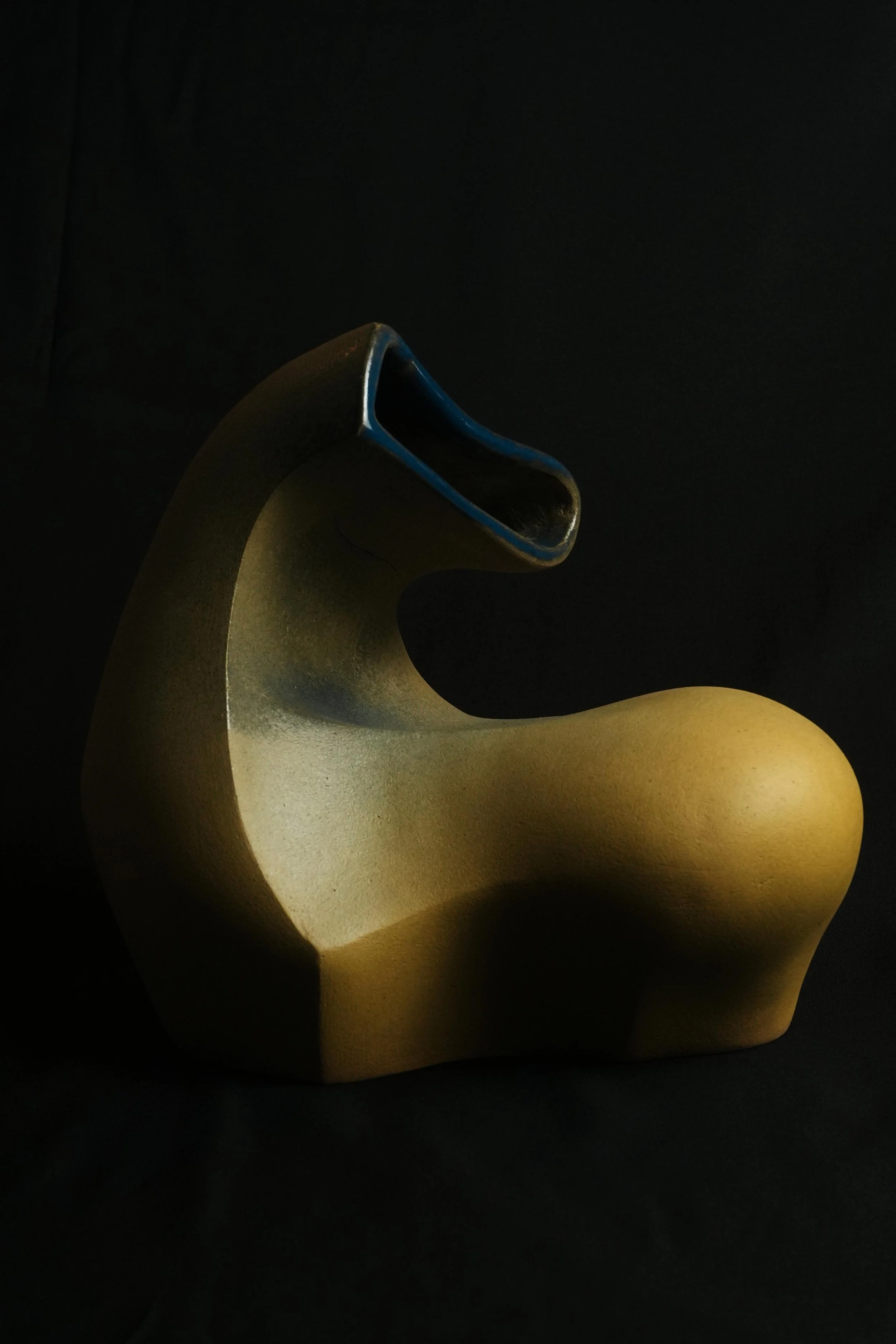
Ceramics entered my practice through a long process of research into traditional techniques and forgotten glaze formulas. I build most of the forms by hand, mainly through coiling, and then fire and glaze introduce something I can guide but never completely control. That uncertainty is important to me. Clay can become something solid and almost bodily, while remaining extremely fragile. Sometimes even a crack or a break becomes part of the work rather than something to hide.
© Ali Esmaeillou
© Ali Esmaeillou
Many of your figures appear suspended in isolated moments, as you mention in your statement. What draws you to this sense of stillness?
Stillness gives me a space where the inner condition of a figure can become louder than its movement. I am often interested in the moment before or after an event, when nothing seems to be happening but something has already changed. Many of these figures are alone, but their isolation is not empty. It holds fear, memory, desire, and the contradictions they carry within themselves.
How do you approach texture and surface depth to create the layered visual spaces in your works?
I see the surface almost as a memory of the process. I add, remove, cover, scratch, and reveal until different moments begin to exist on the same surface. I like when a work carries traces of what has been hidden beneath it. The material is not simply there to create texture; it becomes part of the history of the image.
Having exhibited internationally across several continents, how has showing your work in different cultural contexts influenced your practice?
It has shown me how unstable the meaning of an image can be. The same symbol can carry history for one person and something completely different for another. Once a work leaves the studio, its meaning no longer belongs entirely to me. I have become more interested in allowing that ambiguity to exist rather than trying to control how the work should be understood.
© Ali Esmaeillou
What are you currently exploring in your work? Do you have any new theme, technique, or idea you are working with?
At the moment, I am interested in bringing old material knowledge into contemporary forms. In ceramics, I continue to explore mineral-based and historical glaze formulas, crystalline surfaces, and firing processes in which chance has its own role. Conceptually, I still return to the human figure, its vulnerability, contradictions, transformation, and the distance between what is visible and what remains hidden.
And lastly, where do you see yourself and your work in five years from now?
In five years, I would like to look back and see that the work has reached a place I cannot fully predict today. For me, success is not simply about being seen. It is about reaching a point where the work can stand independently, move beyond the place where it was created, and continue its dialogue with people from different cultures. What matters to me is not changing the questions, but finding new ways to ask them. Human nature, memory, fear, desire, power, and fragility are questions that I don't think ever really end.
Artist’s Talk
Al-Tiba9 Interviews is a promotional platform for artists to articulate their vision and engage them with our diverse readership through a published art dialogue. The artists are interviewed by Mr. Mohamed Benhadj, the founder & curator of Al-Tiba9 Contemporary, to highlight their artistic careers and introduce them to the international contemporary art scene across our vast network of museums, galleries, art professionals, art dealers, collectors, and art lovers across the globe.
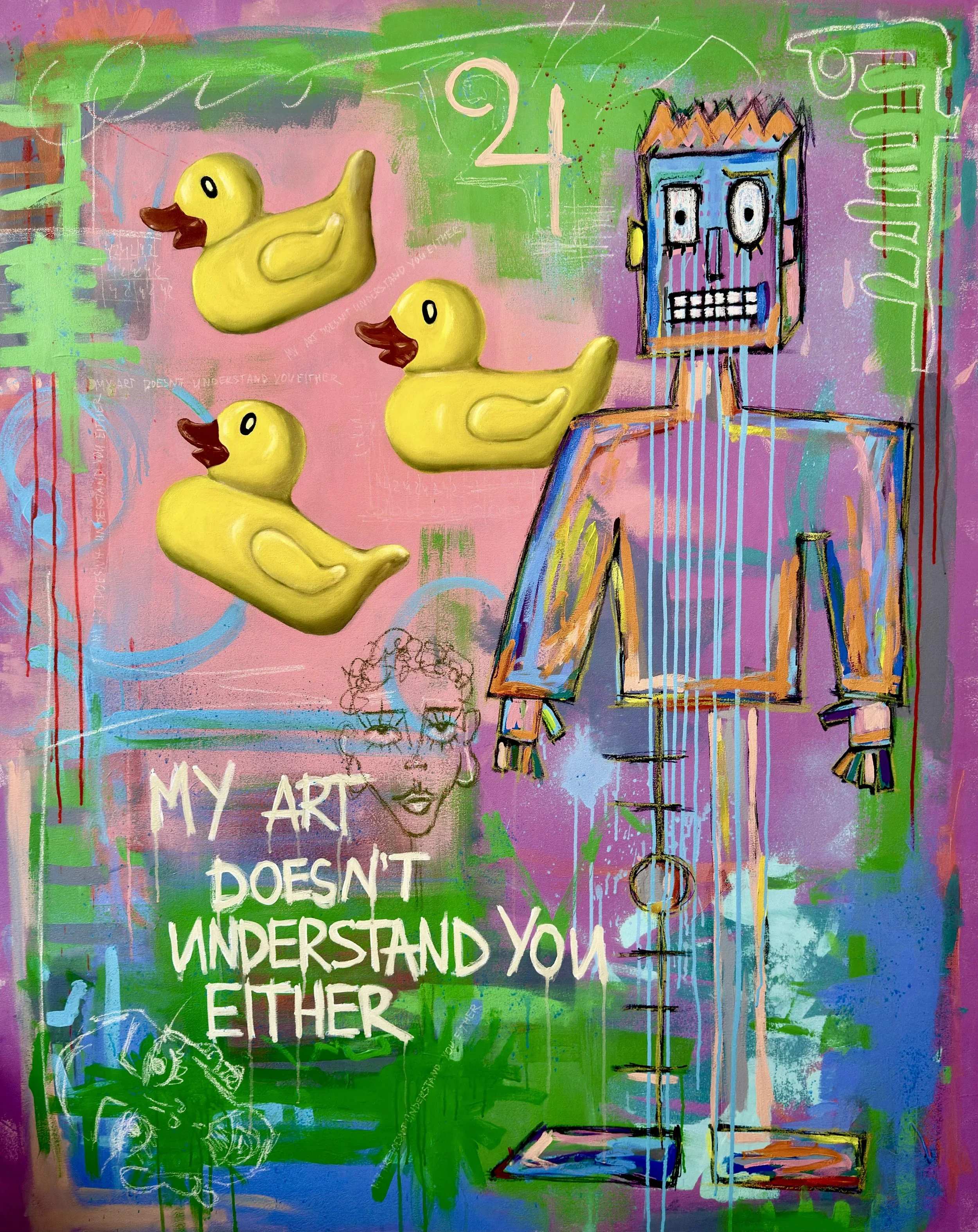
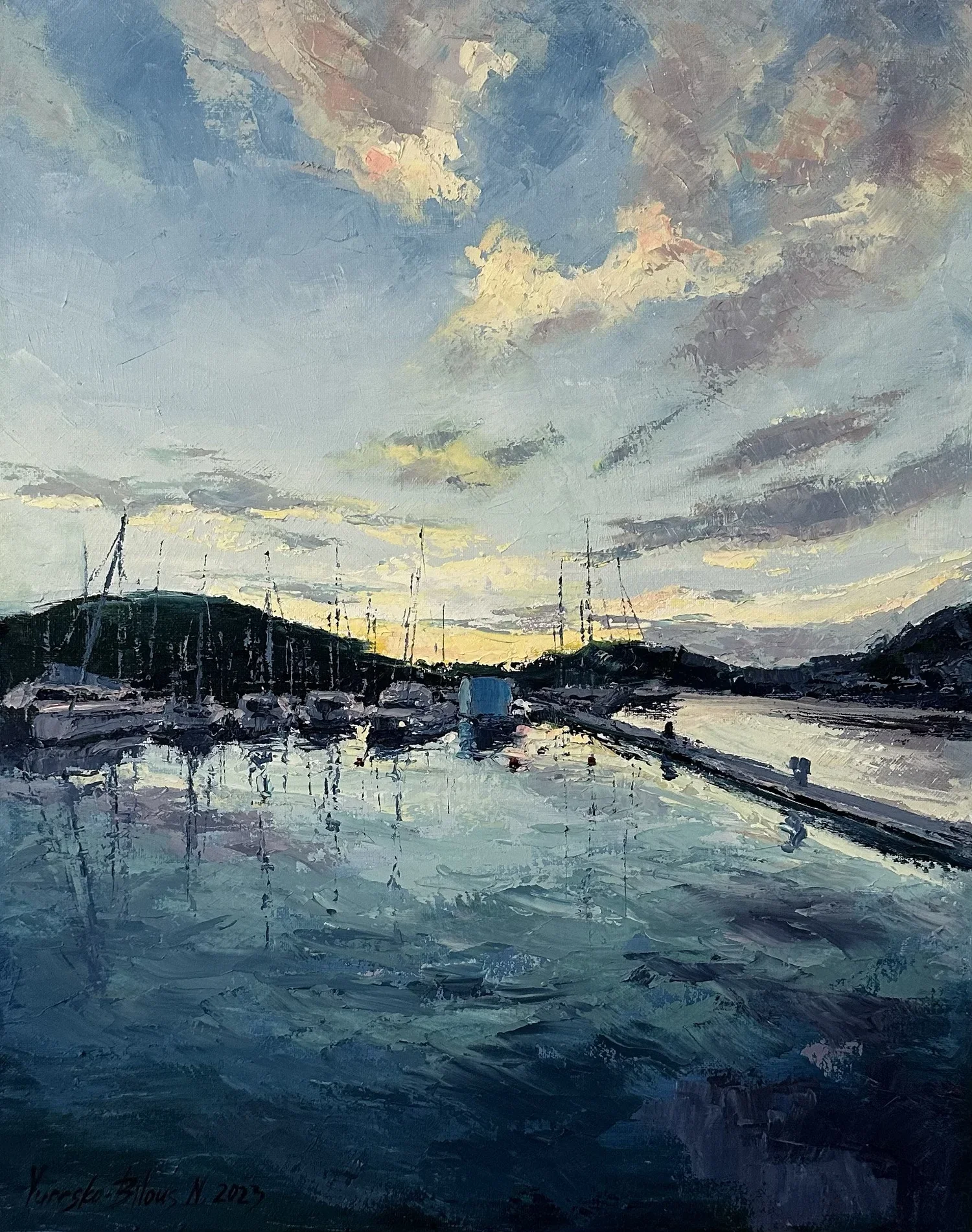



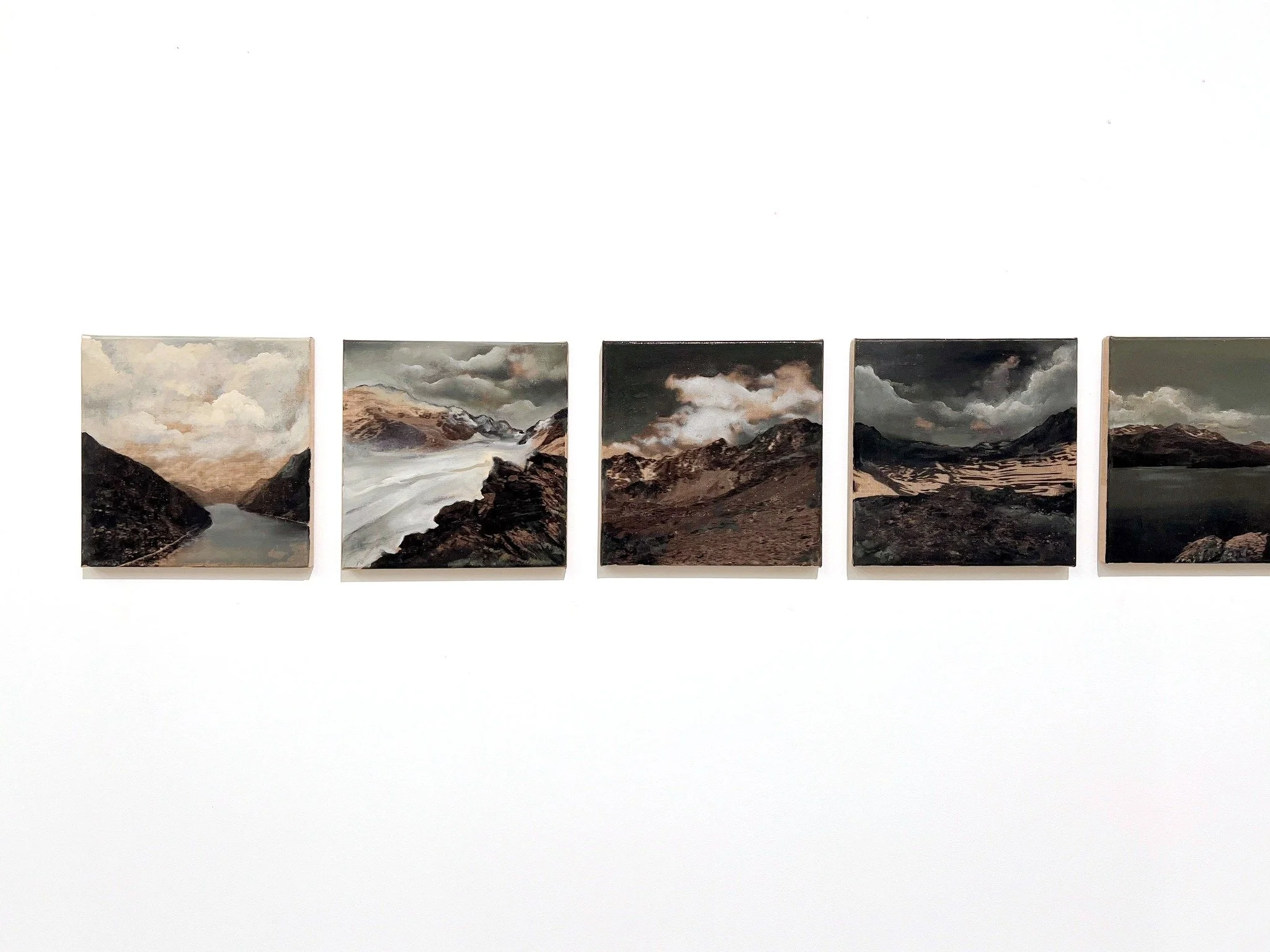
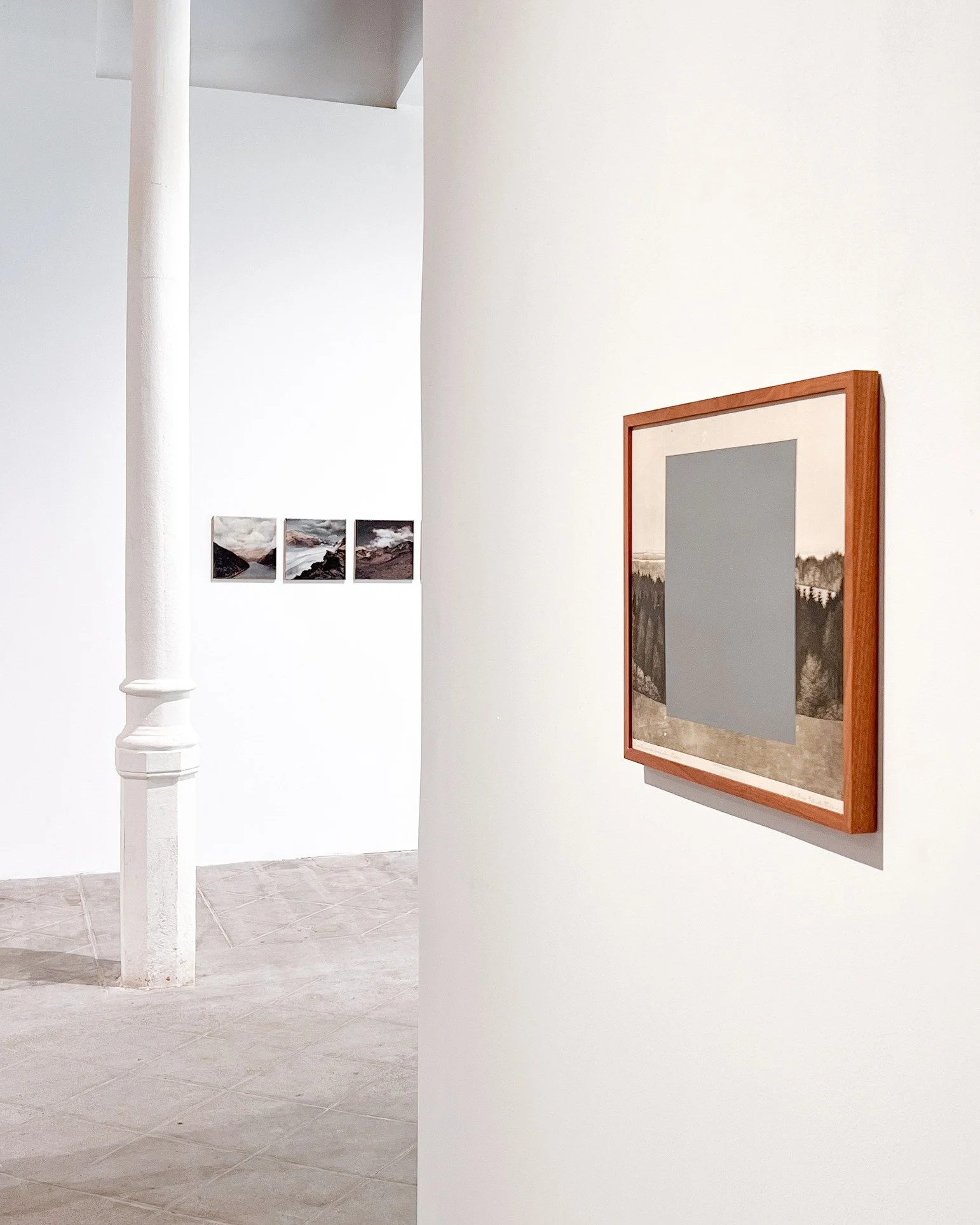
Nataraj von Allmen is a painter based in Switzerland. Often taking photographic material as a starting point, he weaves together landscapes, mythological archetypes, Christian symbolism, and contemporary socio-political themes into complex paintings. Oscillating between figuration and abstraction, his work investigates transformation, collective memory, and the human condition.