
10 Questions with Randong Yu
Yu Randong (b. 2000) softens doctrines and belief structures in the face of collective intimacy, desire, and playful autonomy within grounds where sentiments verge on the uncontainable: burial grounds, postwar ruins, research laboratories, and playgrounds. Through didactic narratives, theological texts, and documentative remnants, Yu examines how disparate frameworks converge in their search for certainty. His work investigates the tension between fragility and assurance, and how belief, reliance, and ontological security surface through material presence. As thresholds and limitations grow porous, his practice illuminates the friction between play, logic, and emotion, tracing the fragile architectures that hold tangible perception and intangible faith together.
Yu is based in Tokyo and Shanghai. He received an A.B. degree from Brown University and a Master’s degree from Harvard University. He has led research-based projects that interrogate the necessity of belief amid rational paradigms at Harvard Medical School, Massachusetts General Hospital, and MIT.

Randong Yu - Portrait
ARTIST STATEMENT
Yu examines grounds that harbor extreme sentiments approximating the unreal, burial grounds, postwar ruins, research laboratories, and playgrounds. The surreality of these spaces offers an interval in which logic, belief, and play coexist within matter itself, touching reality and breathing through the interludes between rigid thresholds. At times, places, forms, materials, and experiences gather intensities that exceed perception and render the uncontainable: appearing familiar while concealing affect. Yu’s work presses into these moments through manipulated forms, didactic narrative structures, and archival remnants, unbinding the quiet assumptions that obscure their surreality. His practice stems from an understanding that matter remembers, that inert forms carry residues of feeling, memory, and fragile certainty. These charged grounds delineate a porous border between the sentient and insentient, the rational and the spiritual. Through sculpture, painting, and research-based installations, Yu treats these surreal intermissions as testing grounds, sites where forms can breathe, hesitate, contradict themselves, and reveal their latent tensions. His work seeks not to stabilize meaning but to expose how reality is touched fleetingly and vulnerably through the gaps opened between rigid systems and the unruly sentiments they fail to contain.
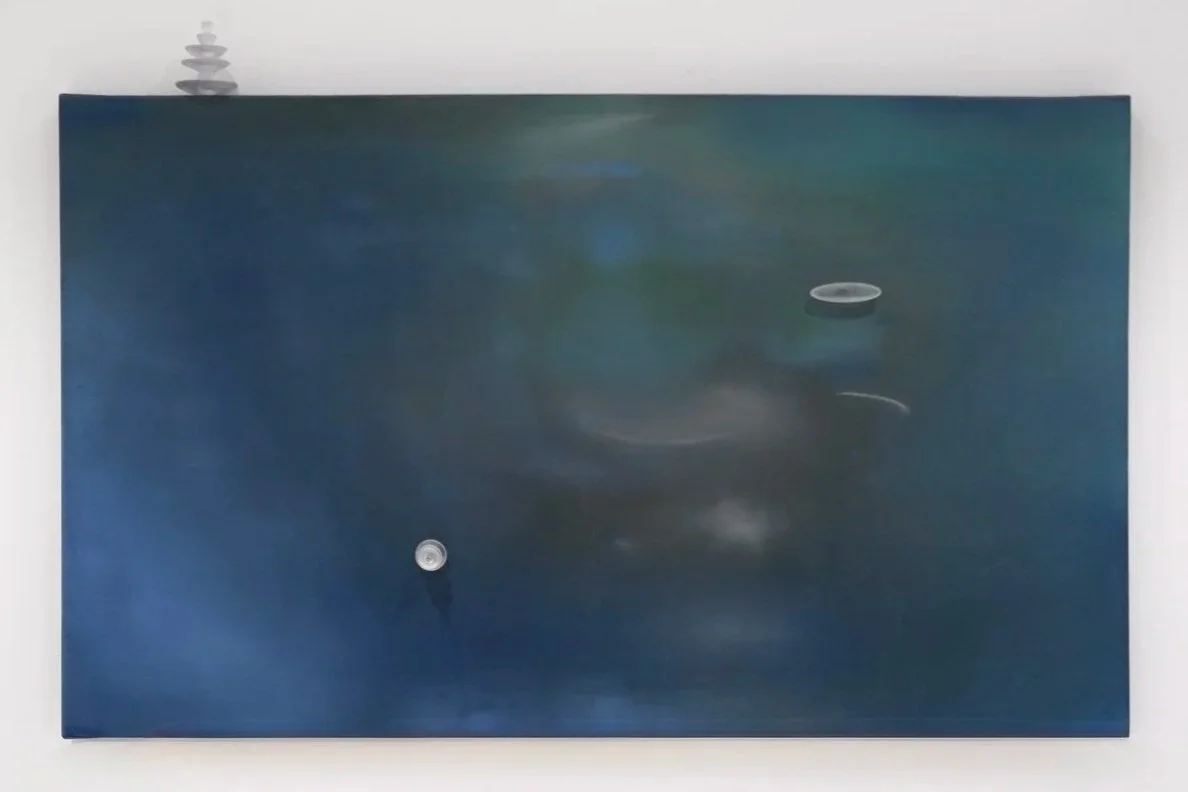
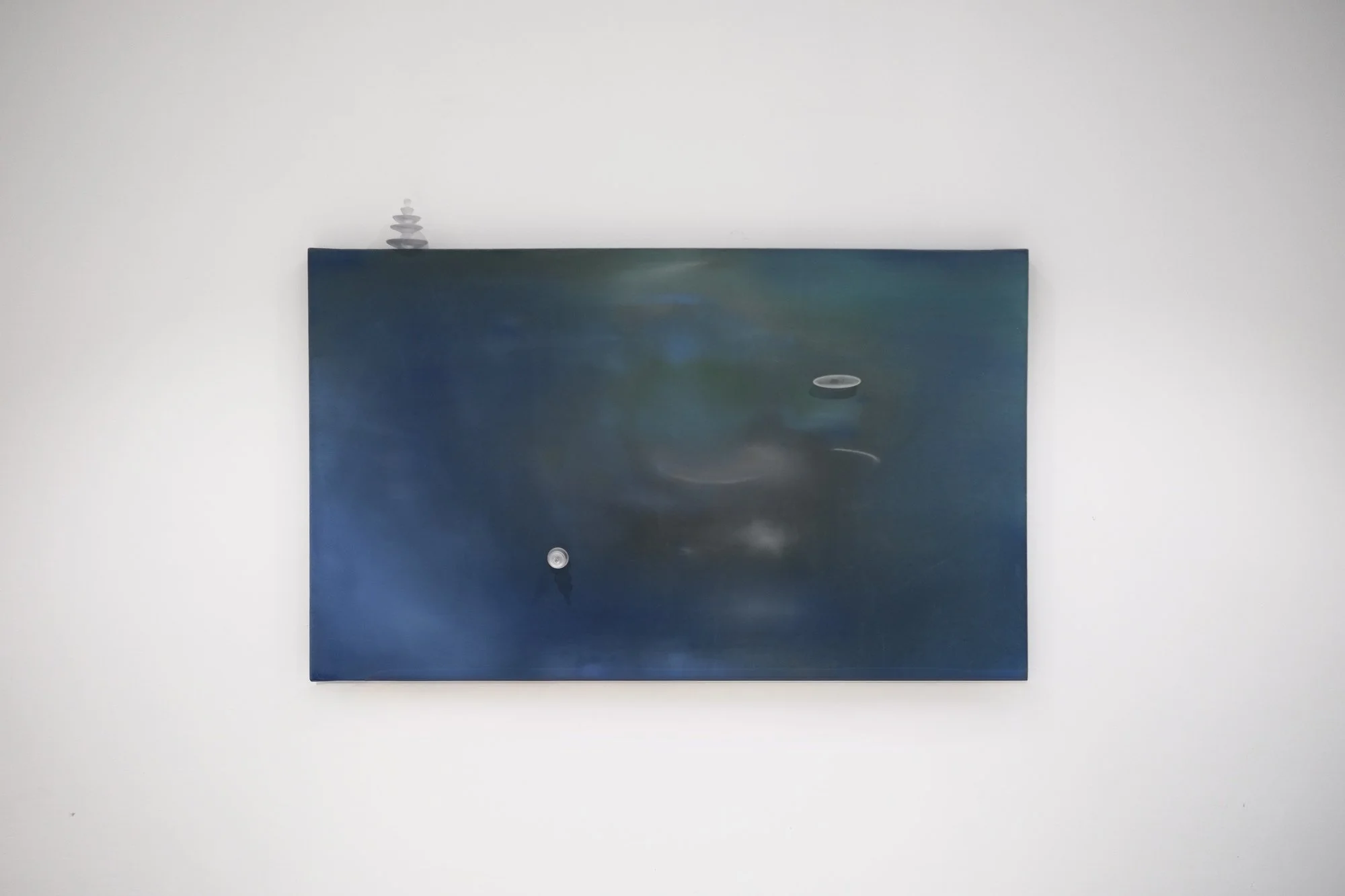
Fountain Lake, Oil on Canvas, Moss, Aqua Resin, 66x100x6 cm, 2025 © Randong Yu
INTERVIEW
You are still very young, yet you have already navigated academic and cultural environments across the U.S., Japan, and China. How has this international trajectory shaped your way of thinking about art and art making?
Moving between countries with distinct cultural and academic contexts taught me to stay attentive rather than decisive. Each place carries its own assumptions about knowledge, authority, and sincerity, and I learned that what appears as clarity in one context can feel excessive or even hollow in another. Instead of trying to resolve these differences, I began working in the spaces where translation, hesitation, and misalignment become productive. This trajectory shaped my approach to art as a form of testing rather than declaration. I’m less interested in making arguments than in constructing conditions where belief, doubt, and care can quietly coexist, and where meaning remains contingent on context and encounter.
Your academic background includes Brown and Harvard Universities, with research conducted at medical and scientific institutions. How did this rigorous, rational framework influence your artistic language?
While the two systems conflict at times, working within scientific and medical institutions sharpened my awareness of the capacity of rational systems to accumulate belief and emotional reliance. I became drawn to moments when precision begins to soften, and instruments or protocols start to carry reassurance or anxiety. Rather than illustrating science, I borrow its language of testing and support, using rigor within my artistic practice to expose how fragile and human our reliance on certainty can be.
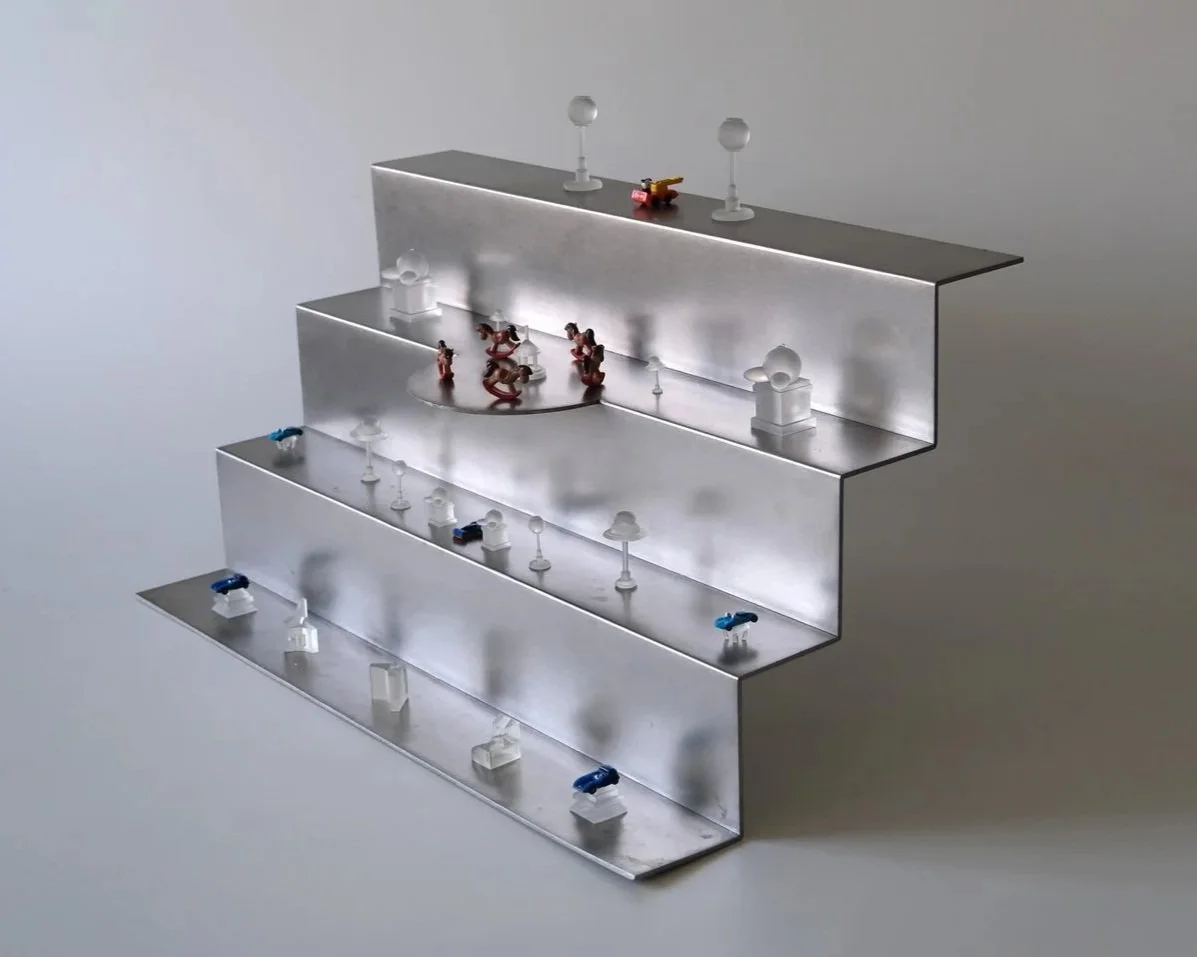
Boyish Prayers, Metal, Aqua Resin, Propylene, Flower Petals, 25x35x25 cm, 2025 © Randong Yu
Many of your projects emerge from research-based contexts such as laboratories, hospitals, and archives. What does “research” mean within your practice, and how does it differ from academic or scientific inquiry?
Research is less about producing knowledge than about staying with what resists resolution. Unlike academic or scientific inquiry, which moves toward clarity and conclusions, my research lingers around what remains affective, contradictory, or unmeasurable. I treat research sites as emotional and ideological environments, not just functional ones. Working with them allows me to observe how care, belief, and dependency quietly form around systems meant to be rational. Research becomes a way of listening and testing, where materials and situations reveal pressures that data alone cannot register.
You often work with spaces charged with extreme or unresolved sentiments, such as burial grounds, postwar ruins, or playgrounds. What draws you to these environments, and how do they function as conceptual testing grounds for your work?
I’m drawn to these environments as they hold emotions that have not fully settled, whether grief, reassurance, play, or fear, often layered onto structures meant to contain or regulate them. They carry quiet tensions between care and vulnerability. As conceptual grounds, they allow me to observe how systems built for protection, memory, or order absorb longing and belief. Working from these sites helps me manifest forms that appear stable at first, yet reveal hesitation and emotional pressure on closer encounter.
Your practice spans sculpture, painting, and installation, often incorporating didactic narratives and archival materials. How do you decide which media or formats are necessary for a specific project?
I usually begin with an inquiry, then consider the form that best guides it. Sculpture allows me to work through space, between weight, support, and physical reliance. Painting offers more emotion and ambiguity, where explanatory pressure can remain. Installation becomes necessary when the work is encountered as an environment rather than an object. Didactic or archival materials enter when they can function as anchors or points of friction.
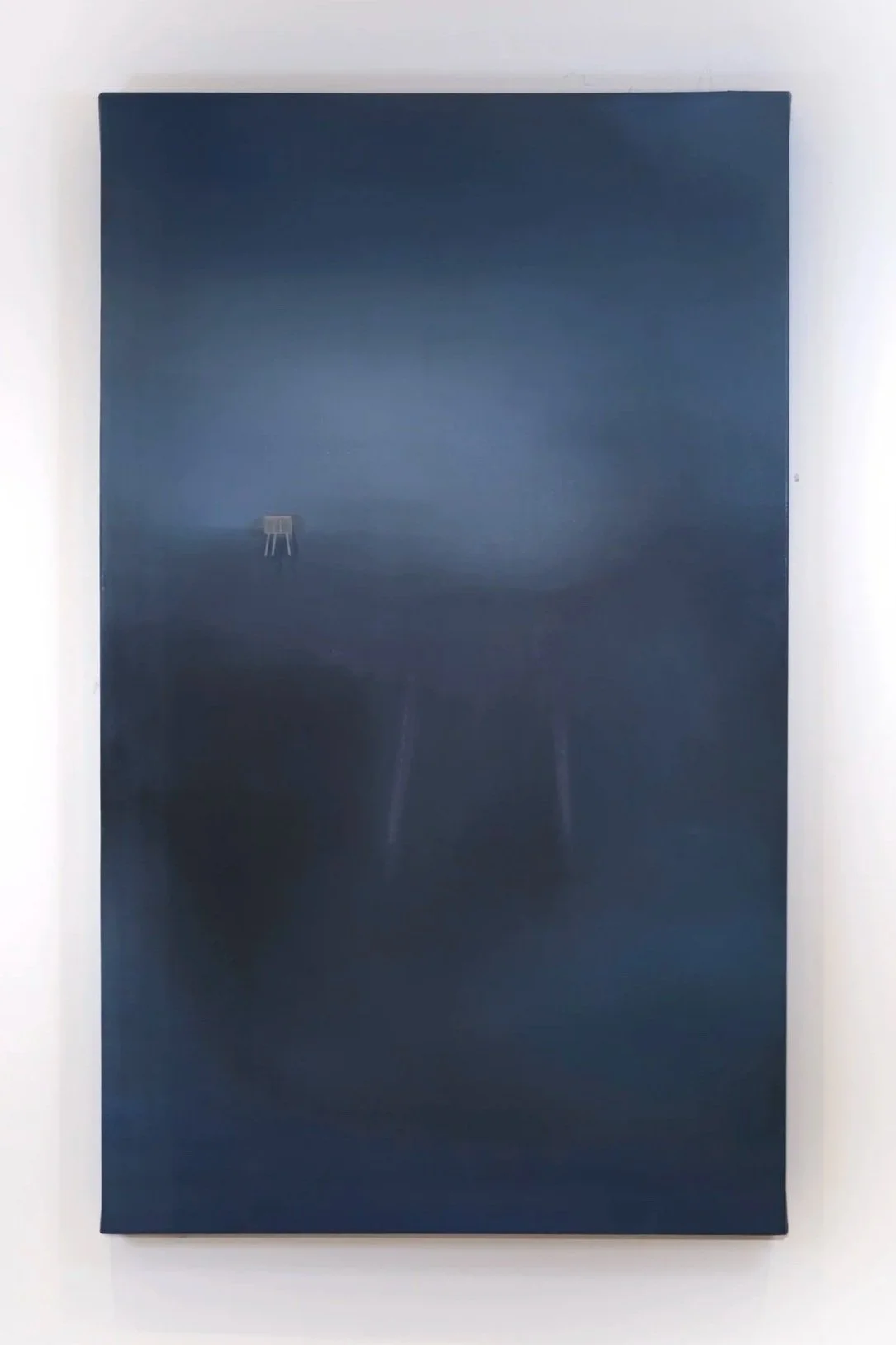
Portable House, Oil on Canvas, Aqua Resin, 100x60x5 cm, 2025 © Randong Yu

Make a Plate, Oil on Canvas, Aqua Resin, 100x60x5 cm, 2025 © Randong Yu
There is a recurring tension in your work between logic and play, fragility and certainty. How does this tension unfold during your creative process, from initial research to material realization?
The tension unfolded gradually rather than planned. Research often begins from a rational structure, a system meant to stabilize or explain, but as I spend time with it, moments of vulnerability start to surface. In my studio, I follow those slippages through both formal and material decisions. Forms that seem logical can hesitate, and play emerges to test structures without fully dismantling them. The process continues as a subtle negotiation.
You describe matter as something that “remembers.” How do you translate intangible elements, such as belief, affect, or ontological security, into physical form without fixing their meaning?
This thinking was always guided by my readings of conflicting views across Buddhist scriptures of different sects, alongside frequent discussions among both popular Eastern and Western philosophers. As an artist, I grew to think of material as a carrier rather than a container. Instead of representing belief or affect, I look for situations where matter has already absorbed pressure through use, repetition, or care. I found that avoiding symbolism keeps meaning contingent, allowing bodily encounters to outweigh simple explanations.
Your works often resist stable interpretation, emphasizing hesitation and contradiction. How do you envision the viewer’s role in navigating these moments of uncertainty?
I think of the viewer’s role as one of staying rather than deciphering. Hesitation and contradiction are entry points, moments where attention slows, and habitual interpretation loosens. Through scale, material tension, or partial instruction, I cherish when the work allows the viewer to negotiate their own need for clarity or reassurance. Meanings form through proximity and duration, not immediate resolution.

Carousel Palace Aftermath, Oil on Aqua Resin, Cement, Stone, 80x90x90 cm, 2025 © Randong Yu
Looking at your practice as a whole, what themes or questions feel most urgent for you right now, and how have they evolved from your earlier works?
Lately, I’ve been preoccupied with the relationship between desire and security, approached through the tension between abstraction and figuration. As I moved between warmer and colder material registers, I began drawing work closer to that friction.
If you look five years into the future, where do you see your practice positioning itself, and what kinds of projects do you hope to be pursuing by then?
I see my practice continuing to operate between artistic, research, and institutional contexts. I want to move between focused, intimate works and contextually responsive projects. Alongside longer-term research embedded in institutional or ecological settings, I hope to keep making works that stay close to human emotion, vulnerability, and reliance. Rather than privileging grandness, I’m interested in how subtle gestures can carry equal intensity.
Artist’s Talk
Al-Tiba9 Interviews is a curated promotional platform that offers artists the opportunity to articulate their vision and engage with our diverse international readership through insightful, published dialogues. Conducted by Mohamed Benhadj, founder and curator of Al-Tiba9, these interviews spotlight the artists’ creative journeys and introduce their work to the global contemporary art scene.
Through our extensive network of museums, galleries, art professionals, collectors, and art enthusiasts worldwide, Al-Tiba9 Interviews provides a meaningful stage for artists to expand their reach and strengthen their presence in the international art discourse.


David Moješčík - MojDa is a Czech sculptor. His work is centred on figurative sculpture, the human body, and the female figure. Modelling in clay and with digital tools, he ultimately prioritises manual engagement with materials. . He draws inspiration from yoga philosophy with the concepts of non-violence and human-centeredness, as well as from Egyptian, ancient, and European classical sculpture.