
10 Questions with Ekaterina Shcherbakova
Al-Tiba9 Art Magazine ISSUE21 | Featured Artist
Ekaterina Shcherbakova is a Paris-based artist working across performance, installation, and painting. Born in Novorossiysk, she has lived and worked in Paris since 2013. She studied at École du Magasin, Université Paris 8, Sorbonne, and the Marina Abramović Institute. Her work has been presented internationally at institutions and art spaces, including the Venice Biennale, Hangar Center for Artistic Research and SAFRA in Lisbon, Matca Art Space in Cluj-Napoca, Kimonos Art Center and Rally Art Space in Paphos, as well as Poush, Jakmousse, and L’AiR Arts in Paris.
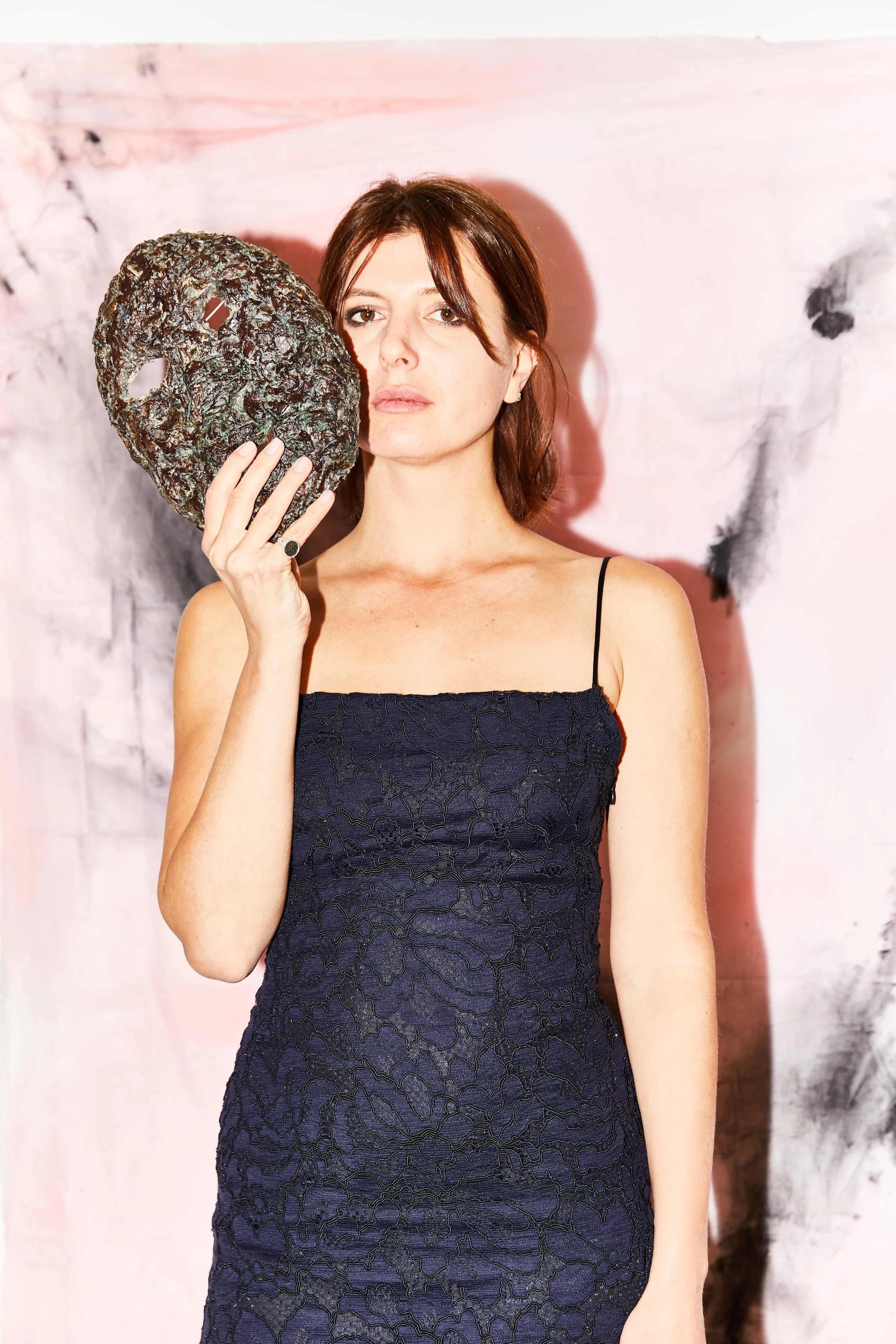
Ekaterina Shcherbakova - Portrait
ARTIST STATEMENT
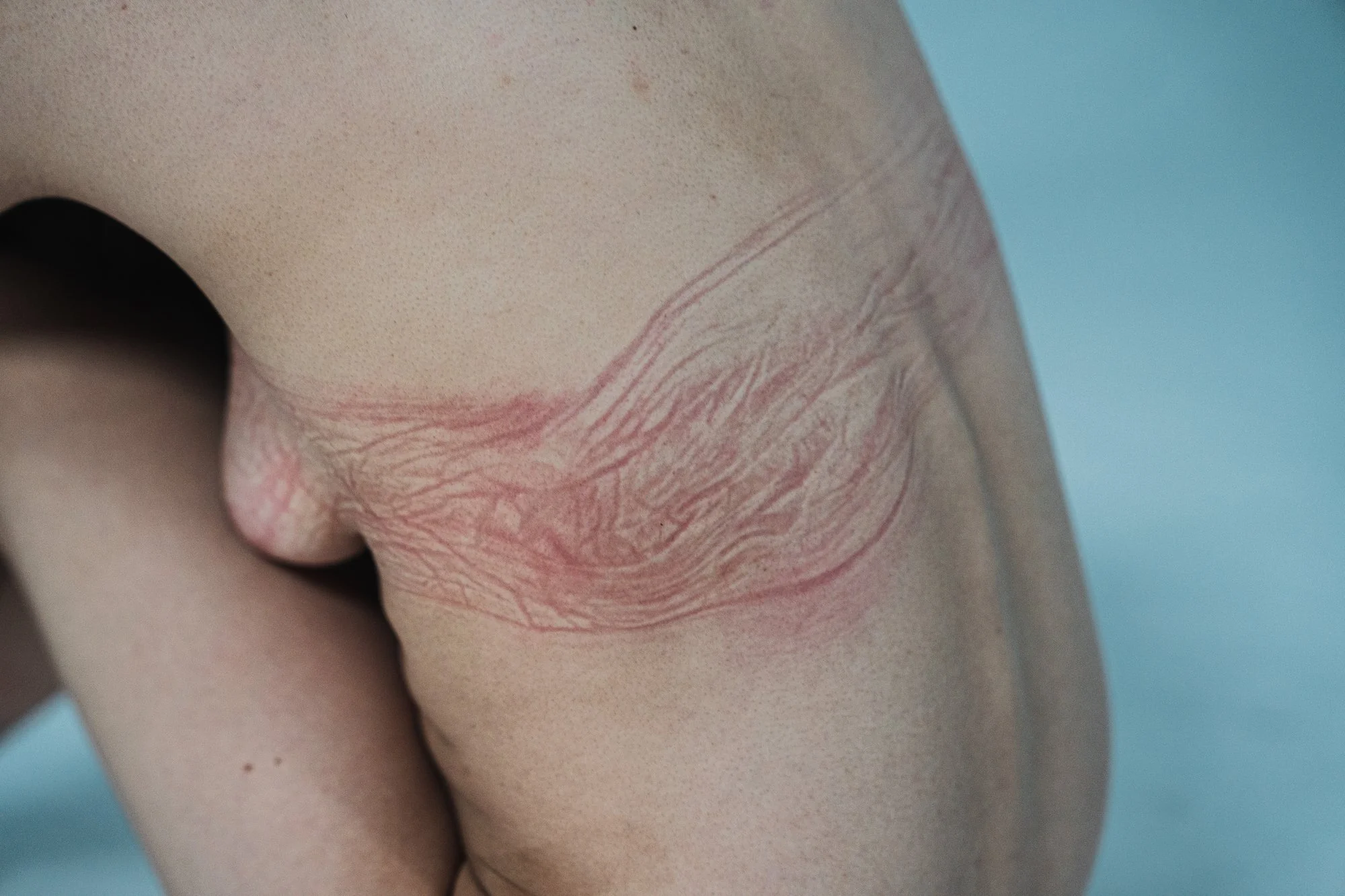
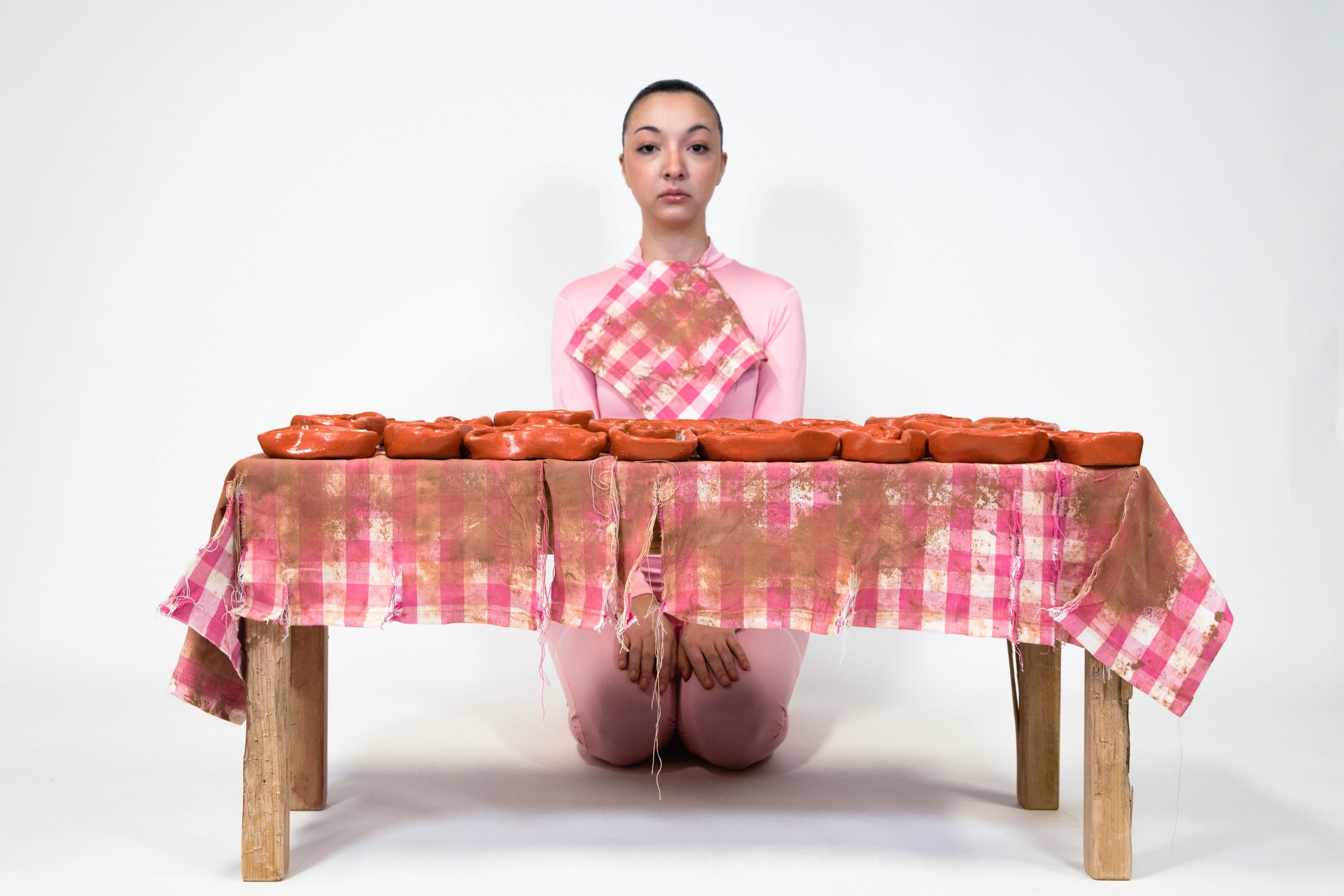
Ekaterina Shcherbakova develops work at the intersection of feminism, body politics, new materialism, and radical intimacies, combining performance and material research to explore the body as a site where personal experience and political structures converge. Through performance and ritual-based situations, she investigates how power, language, and mythology shape lived experience through the body. Working with gestures such as naming, obedience, care, and ingestion, she constructs situations where intimacy becomes a site of exposure, transformation, and control. Shcherbakova’s work is rooted in preverbal states and embodied knowledge. Her practice includes an ongoing material research, from bodily to mineral and organic matter, through which she explores matter as a carrier of memory and invisible structures of law. Using materials such as earth, salt dough, fabric, ash, wax, and metal, she treats matter as a living substance shaped by time, touch, and transformation.
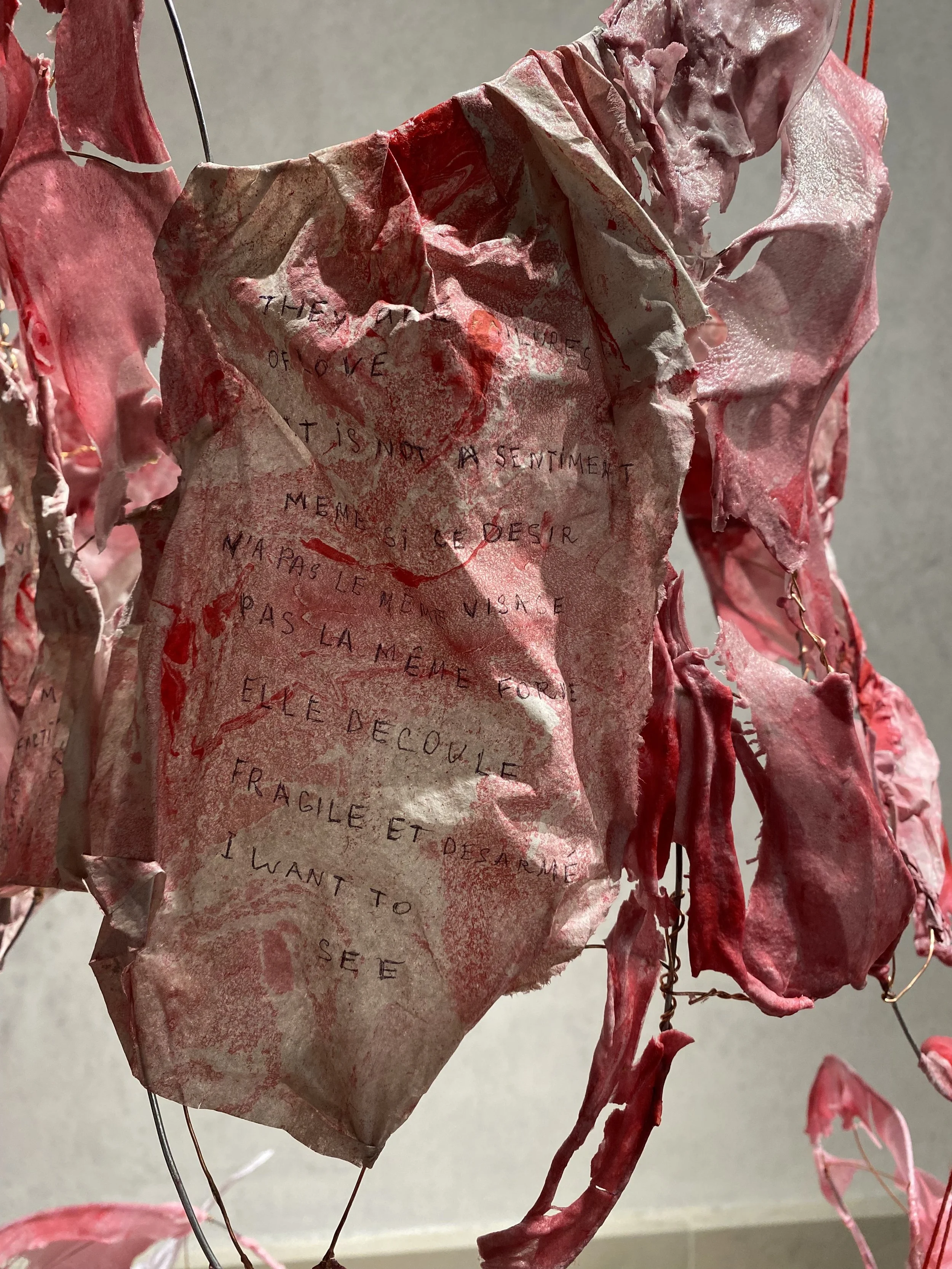
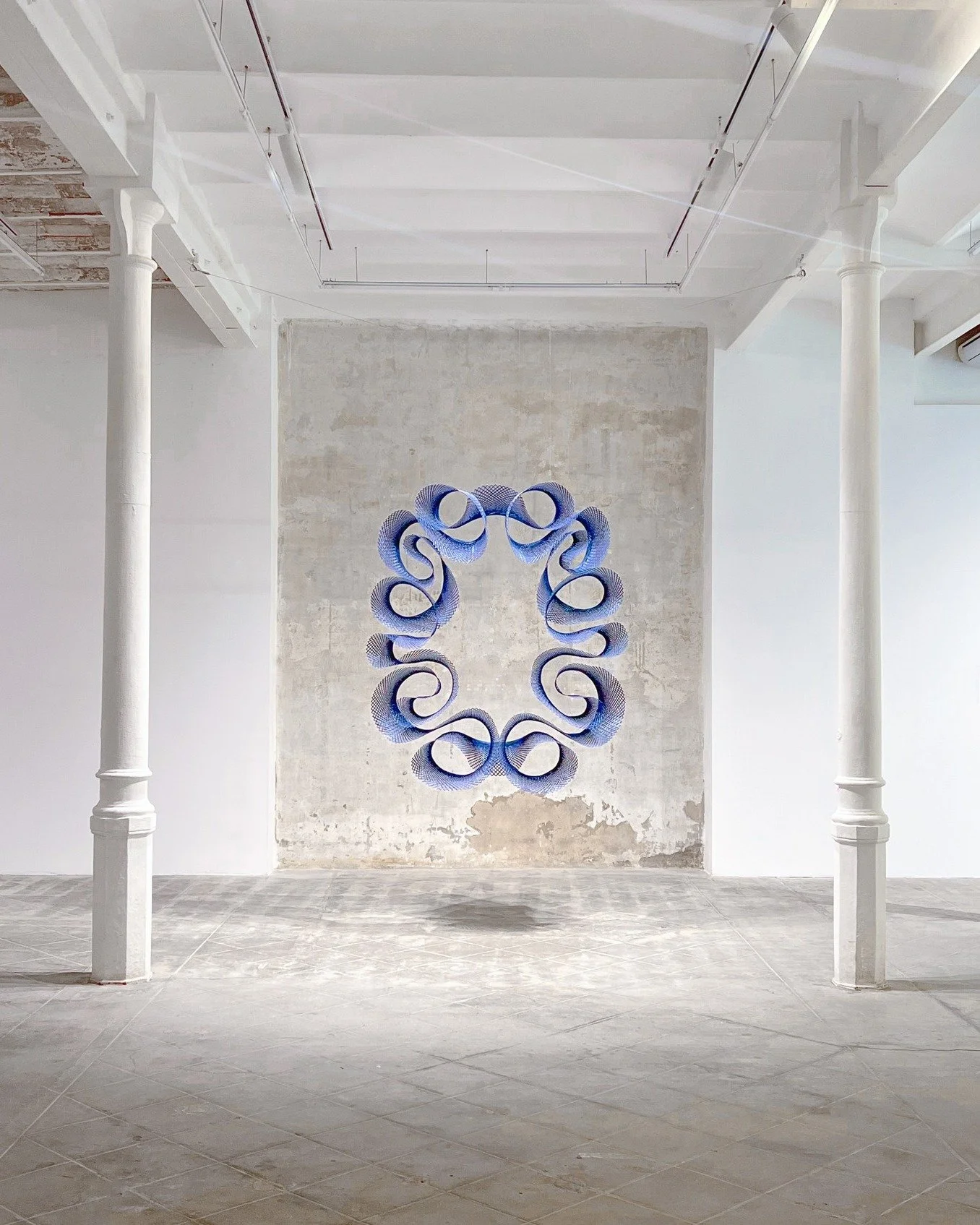
To Swallow (detail), installation (paper, metal wire), performance, Malvasia Space, Venice, 2024 © Ekaterina Shcherbakova
AL-TIBA9 ART MAGAZINE ISSUE21

DISCOVER THE INTERNATIONAL ART SCENE WITH AL-TIBA9
LIMITED EDITION | Shipping worldwide.
Premium museum art paper.
Printed in London.
Grab 3 or more prints and get your FREE digital magazine.

Digital Magazine - Available SOON…
INTERVIEW
Let’s start with your background. Your education ranges from École du Magasin and Université Paris 8 to the Marina Abramović Institute. What did each of these contexts give you, and where did you have to unlearn something to find your own voice?
I arrived at École du Magasin, an experimental program at Le Magasin contemporary art centre, after five years of living and working in Moscow, where I had previously studied philosophy. This was one of my first real encounters with what is often referred to as the “Western” contemporary art world, along with all the structures that come with it. The post-Soviet context was, at that time, far less institutionalised and more literature-centred, with a strong inclination toward conceptualism in contemporary art.
In Grenoble, I encountered for the first time, in a very direct way, the question of form and what defines a specifically Western understanding of contemporary art. There are both positive and negative aspects to this. On one hand, you are given a structure, something to rely on. On the other hand, it often limits you to a single dominant perspective. For me, the multiplicity of viewpoints and the layering of perspectives within the creative subject have always been essential.
At Université Paris 8, I strengthened my approach to research. It is an academic environment, and it taught me how to construct rigorous inquiry, including within artistic practice. At the same time, I understood how different artistic practices can intersect and overlap, becoming more fluid and more playful.
As for the Marina Abramović Institute, what it offers above all is a method. Participants learn through direct, embodied experience, working with exercises that engage perception, duration, and presence. The outcomes can vary greatly, but the sensation is almost as if you have left your body, as if your soul has lived another ten thousand years before returning. This method is deeply rooted in a kind of unlearning, and I return to it periodically, as a tool that reappears at different stages of reflection, research, and production.
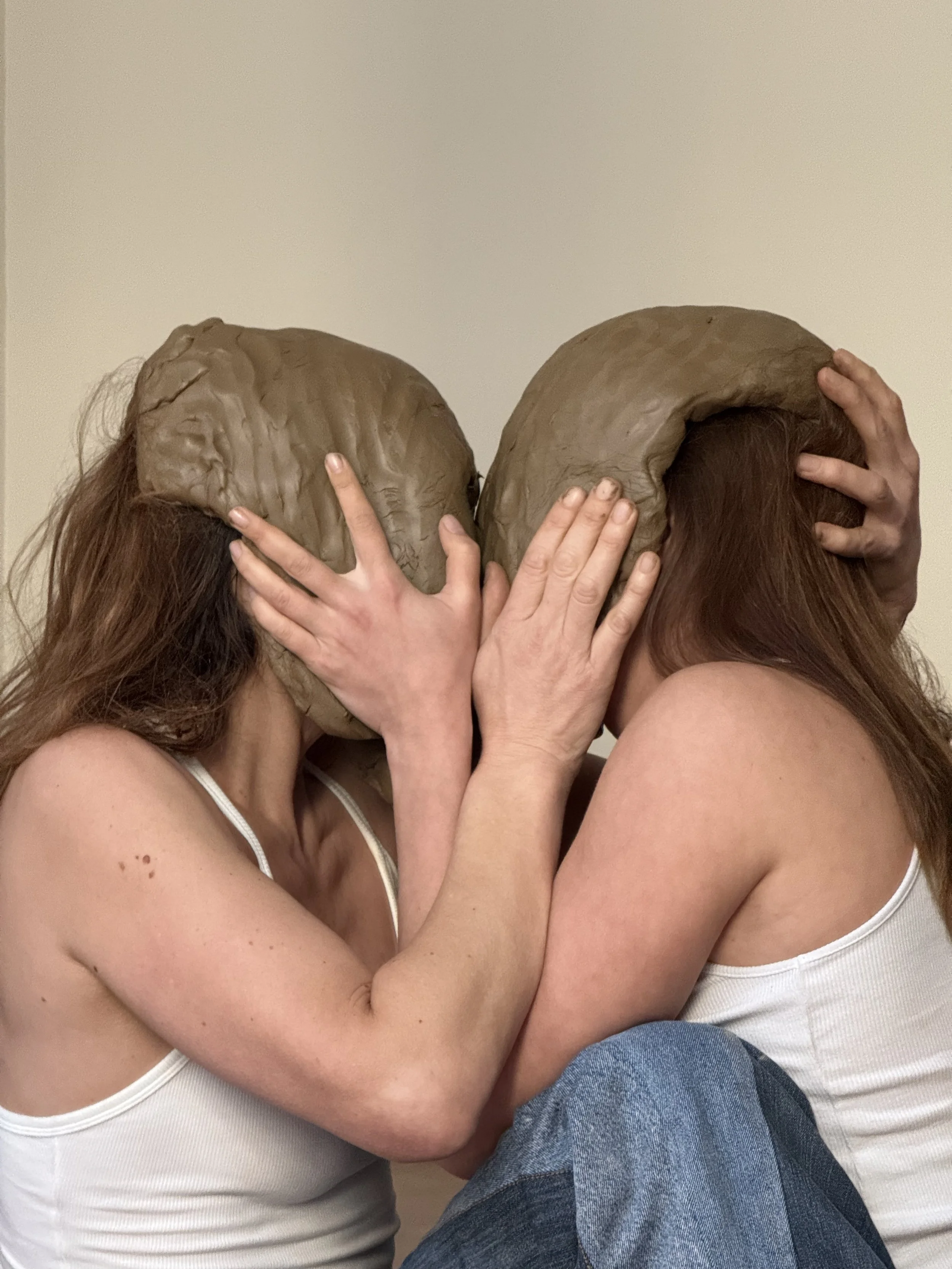
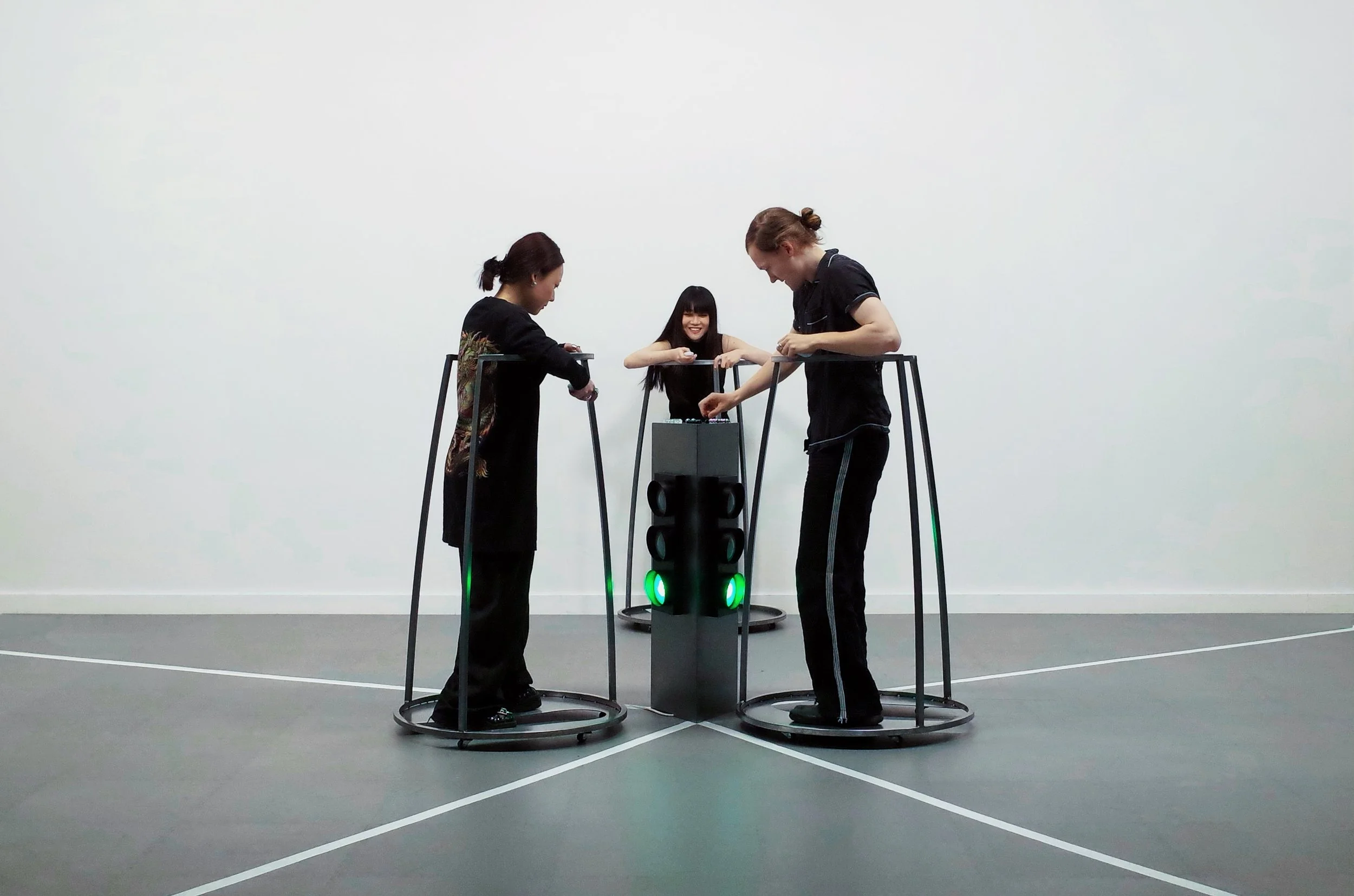
2 Forms 1, performance, Chaos and Cosmos, Paris, 2025 © Ekaterina Shcherbakova & Morgane Tschiember
You were born in Novorossiysk and have lived in Paris since 2013. How has the experience of displacement, or relocation, shaped the way you think about the body, territory, and belonging in your work?
I think the experience of displacement is something I have encountered, in one way or another, throughout my entire life. I was born in a city in the south of Russia called Novorossiysk, which literally means “New Russia.” The history of this place is quite particular. It has been less than two hundred years since the city became part of the first Russian Empire, then the Soviet Union, and now the Russian Federation.
At the same time, this territory is deeply connected to much older histories linked to the Black Sea region, including the ancient Greek colonies and the Bosporan Kingdom. What is now Novorossiysk existed within a shifting network of cultural and political influences that moved across the Bosporus and the wider Black Sea. Over time, these lands were also shaped by Genoese trade routes and later incorporated into the Ottoman Empire. The territory has been repeatedly conquered and redefined.
These historical layers remain present in different ways. On one hand, they exist in an archaeological sense, as artefacts from different periods and cultures continue to surface. On the other hand, they persist in the symbolic and spatial fabric of the city, in place names, monuments, and narratives connected to acts of conquest and territorial control. Even within toponymy, one can trace different linguistic layers.
Because of this, a certain relationship to land was formed in me from an early age, almost subconsciously. It is a perception of territory as something unstable, layered, and contested. Of course, this awareness became stronger later through my own movements and relocations, which were mostly driven by professional reasons.
You move between performance, installation, painting, and text. How do you decide which medium a project requires, and what can performance allow that painting cannot, or vice versa?
I think that all of my works are, in one way or another, connected to a performative gesture. For me, the idea of making is rooted in a process of transgression. I am not interested in production as a way of creating a final object. What matters is the act itself, the gesture of creation, which carries its own significance.
Sometimes this gesture can even take the form of destruction. The physical outcomes can be described, for the sake of recognition, as painting, installation, or sculpture. But in reality, they are traces or residues of an action, of something that has been performed.
For example, in my series Painting Bitten by Womxn, I bite into panels made of salted dough. In other works, I draw in a trance-like state, working with pigment on fabric or bedsheets. In each case, the work emerges from an embodied action, where the boundary between making and undoing, creation and erosion, becomes unstable.

Babies, studio process, 2024 © Ekaterina Shcherbakova | photo Kotaro Iizuka

Babies, studio process, 2024 © Ekaterina Shcherbakova | photo Kotaro Iizuka
Your work engages feminism and body politics through gestures such as naming, obedience, care, and ingestion. Are these gestures autobiographical, symbolic, or strategic tools, or all at once?
They are both autobiographical and universal at the same time. I speak through the experience of my own body, but what I address ultimately extends beyond it, toward situations that reflect the human condition more broadly.
Materials like menstrual blood, ashes, soil, and red threads carry strong symbolic and political weight. How do you balance their emotional charge with formal and aesthetic decisions?
I think it is deeply connected to material research, although I cannot always clearly define the exact moment when I understand how a work should take shape. To arrive at that point, I need to engage directly with the material, to experiment with it. Through this process, the material itself begins to suggest directions. It is intuitive; you feel what is right for a particular work.
I am not interested in material as a purely representational tool, like a pencil used to depict reality. For me, material is not a means of illustration but an active participant in the process, something that resists, responds, and guides the work as it unfolds.
You speak about preverbal states and embodied knowledge. What does your creative process actually look like at the beginning of a project? Do you start with an image, a sensation, a memory, or research?
I think it is more connected to a certain gesture that I feel compelled to make. Depending on the project, it can also begin with an image, something that does not belong only to me but feels shared, almost mythological. I think of myth here as something rooted in the collective unconscious.
At other times, it comes from a physical urge, an internal impulse that pushes me toward a specific action. It is usually a very bodily, almost urgent need, something I have to realise within the artistic field.
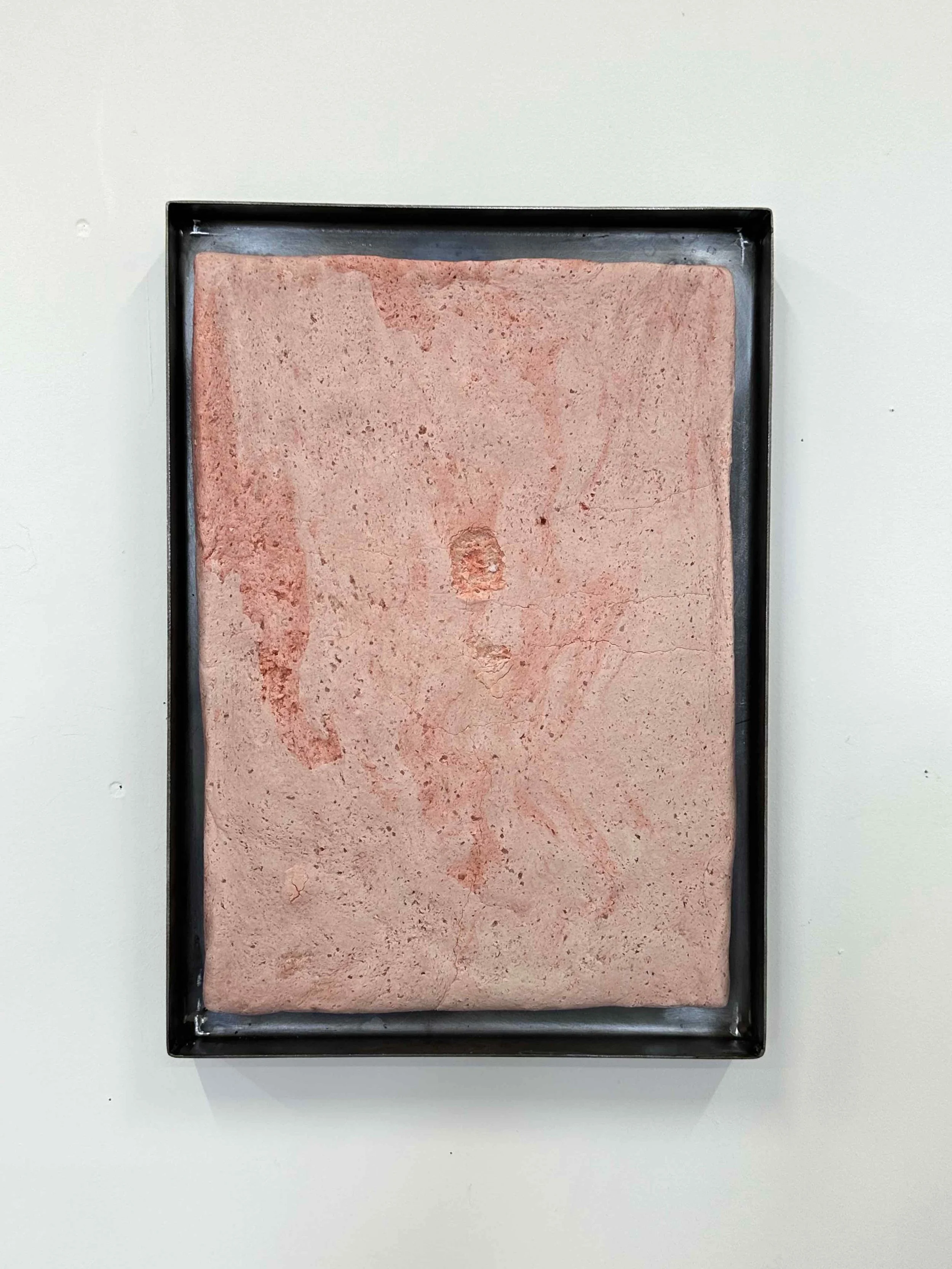
Painting Bitten by a Womxn - Pink, salt dough, artist's frame, 40 x 30 x 3 cm, 2024 © Ekaterina Shcherbakova

Painting Bitten by a Womxn - Red, salt dough, artist's frame, 40 x 30 x 3 cm, 2025 © Ekaterina Shcherbakova
Soil and the act of carrying earth across borders appear central to your recent research. What does soil allow you to say about exile and regulation that language alone cannot?
The practice of carrying soil exists in many cultures. At the same time, soil has a strong symbolic and even mystical dimension. For example, in Slavic pagan rituals, earth from different places is often used. It can be soil from a sacred site, from a graveyard, or from one’s home. In this sense, soil is always symbolically charged, tied to memory, belonging, and the invisible. At the same time, soil can be understood as what one might call a “hyperobject,” something that resists full comprehension. We cannot always distinguish soil from one country and another; to the human eye, it may appear almost identical. Yet it is part of something much larger, a planetary whole that exceeds our ability to fully perceive or grasp. This is where a paradox emerges. Geopolitical borders are constructed and imposed, while soil itself belongs to a continuous, global entity. What interests me is precisely this tension: that something so materially continuous and universal becomes restricted, regulated, and even forbidden to move across the boundaries. Through soil, it becomes possible to speak about exile, control, and belonging in ways that language alone cannot fully articulate.
Intimacy in your work often feels both tender and confrontational. How do you negotiate vulnerability, your own and that of the audience, within live situations?
In my performative works that involve the audience, there is always an internal protocol that I follow. It defines what is possible and what is not, according to my own ethical framework. As for the audience, they are not given a fixed protocol. Instead, they operate within the range of their own ethics, guided by their personal sensibility and vulnerability.

Painting bitten by a woman, process, 2024 © Ekaterina Shcherbakova
When viewers encounter your work, what kind of transformation or awareness do you hope might occur, either emotionally, politically, or even physically?
To be completely honest, I don’t consciously think about this when I am creating or conceiving a work. What I am usually trying to do is to create a situation of paradox, a slight displacement from habitual reality. At the same time, when you speak from something deeply personal, it often resonates on a more universal level. Viewers are able to project their own experiences onto my works, whether they relate to soil, the body, or specifically to female experience.
Looking toward 2026, what questions feel urgent for you now? Are there new materials, collaborations, or geographies you want to explore, and what would growth look like on your own terms?
I definitely want to deepen my research into the human being as a work of art, and to continue exploring this gesture of transformation, this almost magical shift in which something becomes art through a process.
In relation to my ongoing Painting Bitten By a Womxn works, I want to go further into the formal, symbolic, and iconophagic aspects of the gesture, especially the act of biting. When the work passes through me, I also become part of it. At the same time, I am planning several performance collaborations with other artists I admire. In parallel, I will be working on a chamber opera in collaboration with a remarkable singer and composer. For now, this is all I can reveal.
Artist’s Talk
Al-Tiba9 Interviews is a curated promotional platform that offers artists the opportunity to articulate their vision and engage with our diverse international readership through insightful, published dialogues. Conducted by Mohamed Benhadj, founder and curator of Al-Tiba9, these interviews spotlight the artists’ creative journeys and introduce their work to the global contemporary art scene.
Through our extensive network of museums, galleries, art professionals, collectors, and art enthusiasts worldwide, Al-Tiba9 Interviews provides a meaningful stage for artists to expand their reach and strengthen their presence in the international art discourse.



Ekaterina Shcherbakova is a Paris-based artist working across performance, installation, and painting. She develops work at the intersection of feminism, body politics, new materialism, and radical intimacies, combining performance and material research to explore the body as a site where personal experience and political structures converge.