

10 Questions with Yi Wang - Yione Studio
Al-Tiba9 Art Magazine ISSUE20 | Featured Artist
Yi Wang is a licensed architect based in New York and the founder of Studio Yione, an award-winning practice recognised for its innovative engagement with space, materiality, and historical context. Since 2014, she has practised in five countries across three continents, bringing a global perspective to her work. Yi holds a master’s degree in architecture and a bachelor’s degree in landscape architecture. She has worked with renowned offices including Christian Kerez GmbH, SO–IL, Dorte Mandrup Arkitekter A/S, and Kengo Kuma & Associates, contributing to projects such as the Bahrain Car Park, Williams College Museum of Art, and Exile Museum. She currently practices at Meier Partners in New York. Through Studio Yione, Yi explores how design can bridge collective memories and visions, integrating art, technology, and sustainability to shape public perception and urban experience.

Yi Wang - Yione Studio - Portrait
ARTIST STATEMENT
Yi Wang believes in contextual, human-centred design. In every project, she seeks to empathise with audiences and hopes that her work resonates with them in return. Reinterpreted collective memories and visions serve as the most essential materials in her practice. Collective memories connect people with the past, while collective visions connect them with the future. When individuals share the same space, designed materiality becomes the medium that connects them with one another in the present. The idea of the collective is central to her design philosophy. She designs for the past and the future in the present.
Body-as-Site. Ms. Ana & Mr. Tommy — Body Deconstruction, Inkjet print on matte paper, 50.8 x 25.4 cm, 2020 © Yi Wang - Yione Studio
Body-as-Site | Project Statement
Our bodies operate intelligently and unconsciously. We rarely notice their complexity until something goes wrong. We take it for granted that the body will follow the brain's commands, which often leads us to neglect our health. The skin, while beautifully designed to protect our internal organs, also conceals them, further distancing us from an awareness of the body's inner workings.
For people with disabilities, assistive devices like glasses, hearing aids, and braces make the body's needs more visible. This visibility is where my design begins.
The concept originated from sculptural studies using Q-tip models and evolved through a visual language developed from my renderings. The jewellery collection consists of three pieces: Homer, Pharaoh, and Lucia, which function as decorative exoskeletons. Looking ahead, these pieces could serve not only as adornment but as platforms for wearable devices that monitor the body's internal systems.

Body-as-Site. Measurement, Inkjet print on matte paper, 15.35 x 15.35 cm, 2020 © Yi Wang - Yione Studio
AL-TIBA9 ART MAGAZINE ISSUE20
DISCOVER THE INTERNATIONAL ART SCENE WITH AL-TIBA9
LIMITED EDITION | Shipping worldwide.
Premium museum art paper.
Printed in London.
Grab 3 or more prints and get your FREE digital magazine.
Get your limited edition copy now
INTERVIEW
Let’s start with your architectural background. You have practiced architecture across five countries and hold degrees in both architecture and landscape architecture. How have these diverse educational and geographic experiences shaped your design philosophy?
Living and practicing across different countries in my twenties fundamentally shaped how I see design. It made me acutely aware of how differently people think and behave, and more importantly, of what allows us to connect despite those differences. I still remember returning from Japan and being told by my Danish friends that I said “thank you” too often, to the point that it felt almost hypocritical to them. What stayed with me was that they tried to understand me first instead of judging. Since then, I have been consistently drawn to what connects people to one another, to nature, and to the things that deserve extra care.
This focus has become a consistent motif in my work. In today’s global climate, where regionalism and nationalism are rising, I see my practice as a form of architectural cosmopolitanism, one that values shared human ground over difference.
Your architectural work spans cultural institutions, public infrastructure, and urban contexts. What kinds of spaces are you most drawn to designing, and why?
While my recent projects are primarily in residential and hospitality, I’ve never confined myself to a specific scale or program. I see design less as a specialty tied to one typology, and more as a transferable way of thinking.
What excites me most is the pre-design phase, listening, researching, and understanding people and contexts without bias. I believe there are more connections than boundaries between different scales and programs, and that insights from one context often strengthen another.
Ultimately, I’m most fulfilled when designing spaces that serve the broader community. I enjoy working closely with users, responding carefully to their needs, and creating spatial potential rather than fixed solutions.

Fluxwork Office - Columbia Building Addition Proposal © Yi Wang - Yione Studio
How does your architectural methodology translate into smaller-scale works, such as your jewelry pieces? Do you approach them with similar research, models, or conceptual frameworks?
For most of my projects, it is common for me to spend as much, or even more, time on pre-design research as on the design itself. Scale does not mean simplification for me. Smaller objects, like jewelry, often demand a higher level of design resolution.
My process remains consistent. I begin by understanding what existed before, the historical background, and its evolution. I then focus on present conditions to identify tensions or unmet needs, and finally, I project a future image through design.
What changes with the scale is the set of tools I use: Depending on the project, I choose the medium that best supports the idea, whether that’s architectural modeling, landscape mapping, or physical prototyping.
You are also the founder of Yione Studio. Can you tell us more about this project?
I founded Yione Studio in 2023 as a platform to explore ideas at the intersection of architecture, landscape, and emerging technologies. At first, it functioned as a personal space for experimentation, where I could test bold concepts without constraints. Over time, the studio has become more structured. We’ve worked on several interior design projects, primarily restaurant renovations, while continuing conceptual and research-driven work. Alongside the studio, I also work full-time as a project architect in New York City, which keeps my thinking grounded in real construction and project delivery.
Yione Studio explores the relationship between materiality, technology, and public perception. How do you balance innovation with historical context when choosing materials or structural strategies?
I believe innovation in architecture is most meaningful when it grows out of historical understanding. Buildings are deeply tied to physics, material behavior, and human use, and much of that intelligence has been embedded through centuries of architectural evolution.
This does not mean rejecting technological expression or contemporary ambition. There are moments, what I like to call “party times”, when architecture celebrates progress and collective achievement. However, I am more interested in the “daily chores” of architecture, identifying adaptable material and structural strategies, whether innovative or conventional, based on specific contexts.
I become most excited when new forms of connection emerge, often at the intersection between cutting-edge technologies and historical knowledge.

Body-as-Site. Lucia Earrings, 3D-printed PETG, coated with color-shift spray paint, 11.5 x 13.7 cm, 2020 © Yi Wang - Yione Studio

Body-as-Site: Ms. Ana & Mr. Tommy — Body Deconstruction II, Inkjet print on matte paper, 50.8x25.4 cm, 2020 © Yi Wang - Yione Studio
Your practice places collective memory and collective vision, past and present, at the center of design. Can you describe a moment or project where this duality became particularly tangible in your process?
The relationship between collective memory and collective vision is central to my work. A clear example is Fluxwork, an office building proposal built above the remaining fragments of a 19th-century building.
The project preserves a ghosted image of the original structure as a way of acknowledging the past, while introducing a new office volume that incorporates a performance-responsive workplace model. Using behavioral simulations and network analysis, the project studies how people interact at work and allows spatial layouts to adapt to evolving organizational structures, projecting an image of the future workplace.
Fluxwork recently received the Architect’s Newspaper 2025 Best of Design Award in the Unbuilt Commercial category, which further affirmed this approach for me.
The Body-as-Site project reimagines the body as architecture, proposing jewelry as a protective and decorative exoskeleton. At what point did you begin to view the body as a “site” in the same way you might view a building or public space?
The idea of the body as a site was originally introduced to me by my professor, Constance Vale, during my studies at Washington University in St. Louis. Her teaching deeply influenced the way I think about architecture and helped me expand my design boundaries beyond architecture into broader themes.
When we reconsider architecture from its most fundamental scale, its core function is to adapt to the measurements and capabilities of the human body. Jewelry operates in the same way.
If architecture is designed from the body outward, then the body itself becomes the primary context. In that sense, the body functions as the site for jewelry, just as land does for buildings.
In Body-as-Site, visibility and especially disability become critical themes. How do you navigate aesthetics and ethics when designing jewelry pieces inspired by assistive devices?
Navigating ethics through aesthetics was the most challenging aspect of the Body-as-Site project. When working in contexts I am less familiar with, especially on sensitive topics like disability, the relationship between the designer and the subject is critical.
In this project, I wanted to avoid reducing assistive needs to decoration, and I also rejected the idea of assuming I fully understand another person’s experience. The only certainty I held onto was this: If I have to wear something, I would rather wear it boldly. That belief set the ethical tone of this project.
The work intentionally remains conceptual and neutral, allowing space for interpretation rather than prescription. Aesthetically, the exoskeleton language gives users the freedom to decide whether the object feels like an extension of their body or something external. That openness allows the wearer, rather than the designer, to define the meaning of visibility.

Fluxplan © Yi Wang - Yione Studio
What narrative or symbolic ideas guided this project, and how do you see them evolving with innovative or wearable technology?
The project began with observations of my own body. We are intellectually aware that complex biochemical processes occur beneath the skin at all times, yet we rarely notice them unless something goes wrong. The skin protects our internal systems, but it also conceals them, creating distance from our bodily awareness.
For people with disabilities, assistive devices make these bodily needs more visible. That visibility became the starting point of the project.
The concept developed through sculptural studies using simple Q-tip models and was later sculpted into a collection of three pieces, 3D printed in translucent PETG. The works, Homer, Pharaoh, and Lucia, can be read as exoskeletons.
While this project is currently conceptual, a more market-adaptable direction could include frames for glasses, protective housings for devices, and expressive casings for assistive technologies, functioning both practically and as personal statements.
Lastly, looking ahead, how do you foresee Yione Studio expanding its research into both large-scale environments and intimate, wearable architectures? Are there particular collaborations or technologies you hope to explore next?
At Yione Studio, we are deeply interested in the intersection between physical and virtual space. Physical architecture requires significant resources and often becomes permanent over a human lifespan, which can limit its adaptability when it is too specific. The pandemic revealed this clearly through the widespread vacancy of office buildings.
Our approach is to let physical space provide long-term potential, while allowing virtual or temporal layers to express specificity. This separation can make environments more resilient and responsive.
We have explored this idea through projects such as Portable Workstation, a mixed-reality application for architects, and Fluxplan, a conceptual office management system that adapts spatial configurations based on occupant behavior.
For us, virtual space is not only digital, but any layer that extends experience beyond the physical, whether seasonal, perceptual, or even psychological.
Artist’s Talk
Al-Tiba9 Interviews is a curated promotional platform that offers artists the opportunity to articulate their vision and engage with our diverse international readership through insightful, published dialogues. Conducted by Mohamed Benhadj, founder and curator of Al-Tiba9, these interviews spotlight the artists’ creative journeys and introduce their work to the global contemporary art scene.
Through our extensive network of museums, galleries, art professionals, collectors, and art enthusiasts worldwide, Al-Tiba9 Interviews provides a meaningful stage for artists to expand their reach and strengthen their presence in the international art discourse.

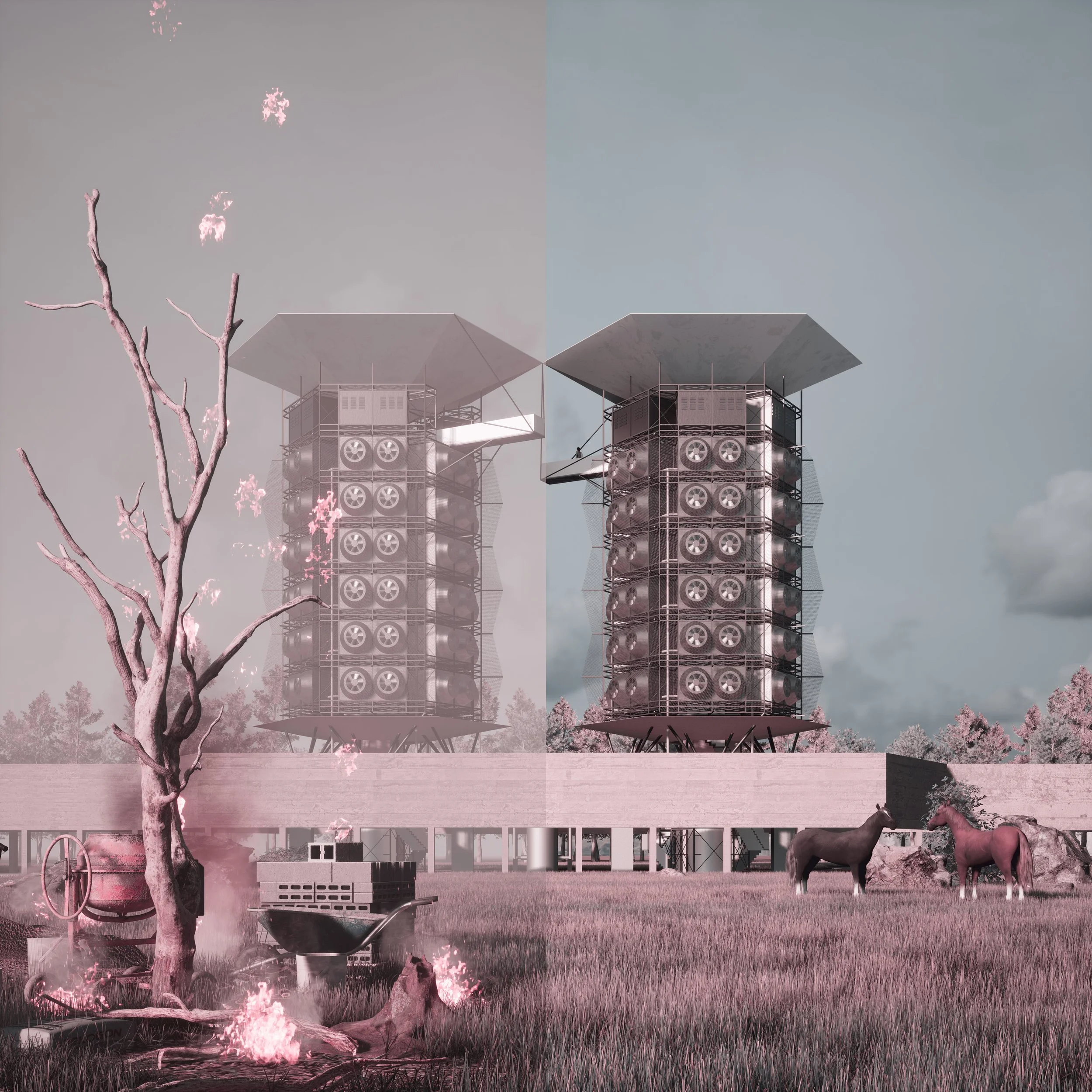


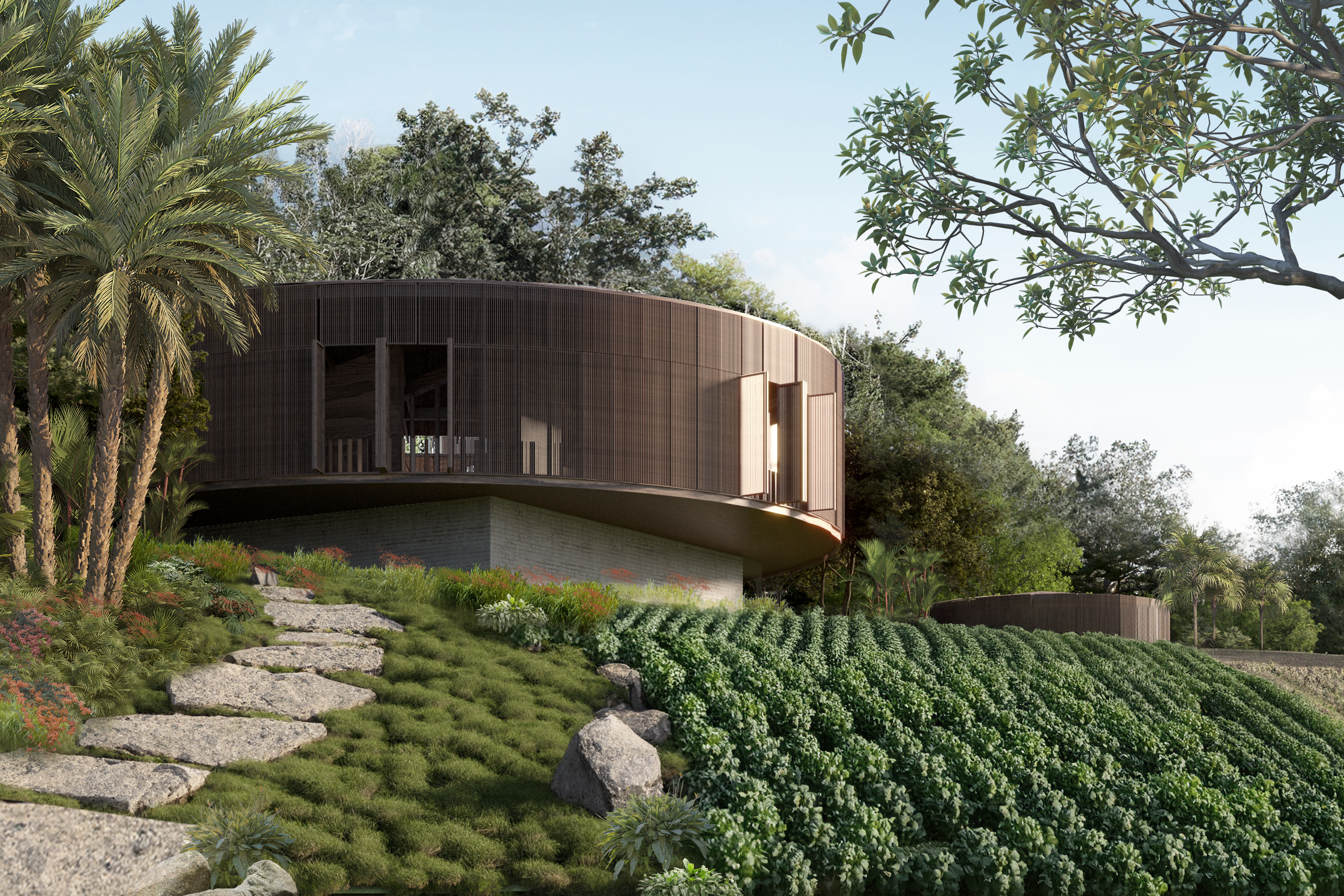

Huichao Dong is an architectural designer focused on adaptive reuse, public-serving infrastructure, and socially responsive environments. Her latest project, CORA Community: Adaptive Reuse of a Grain Terminal reimagines a historic grain silo on the Brooklyn waterfront as affordable housing and cultural infrastructure for dancers, to support new forms of community, movement, and urban life.