
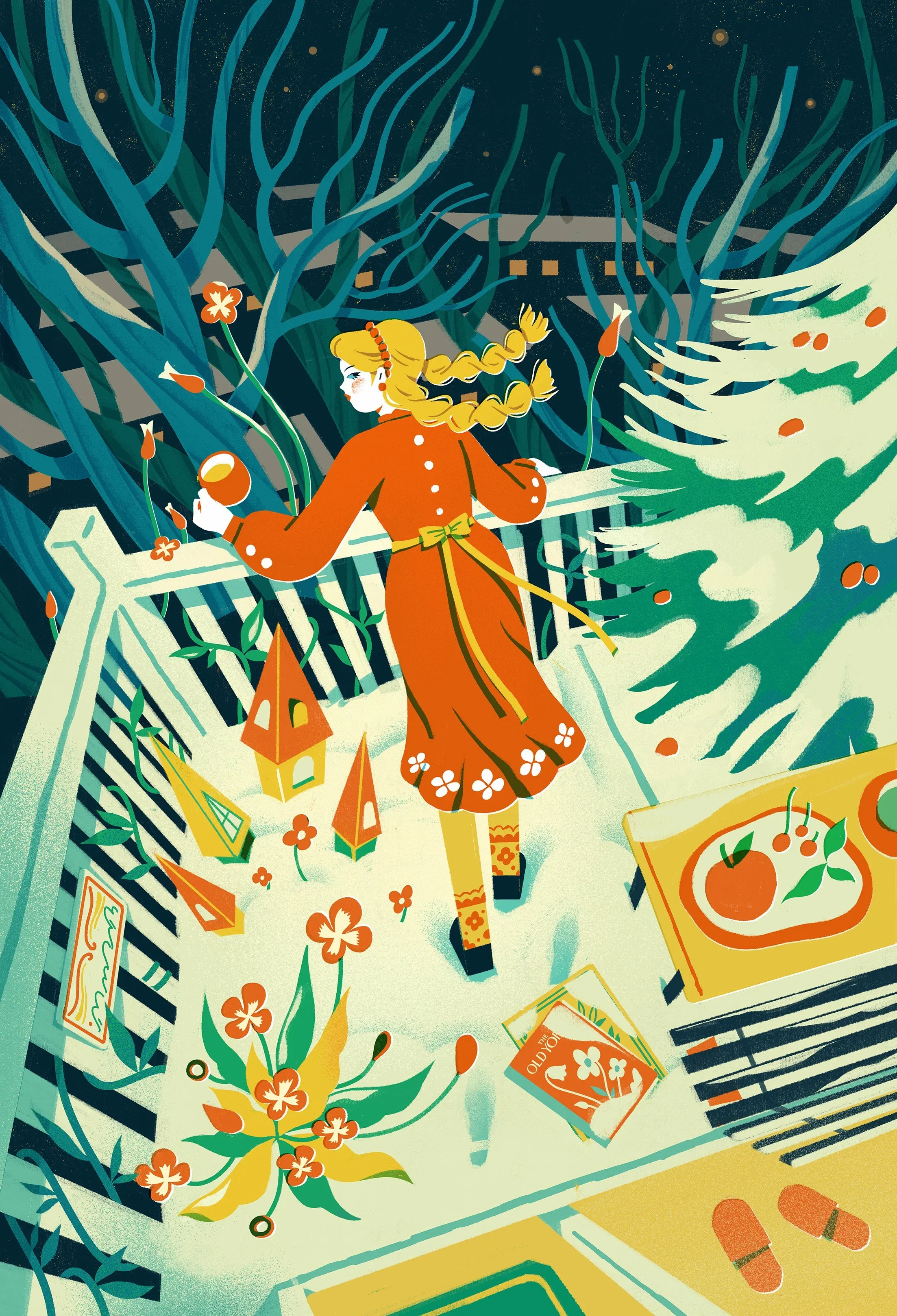
10 Questions with Peilin Li
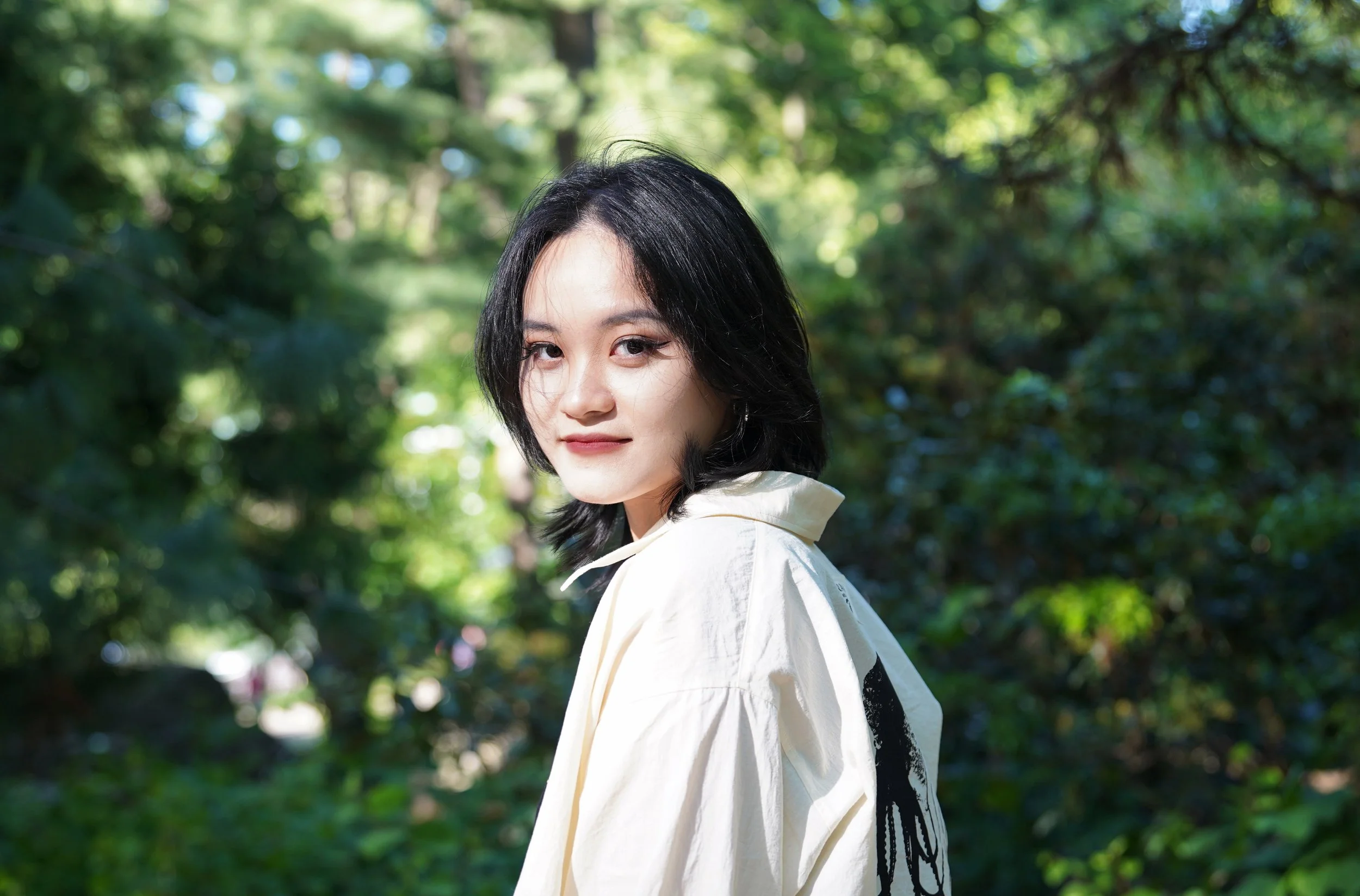
Peilin Li is an illustrator and designer at BUCK, based in Los Angeles. She works across illustration, branding, and motion. Inspired by picture books, comics, and everyday life, she creates lively, character-driven scenes that capture the humor, chaos, and warmth of ordinary moments. Her work has been recognized by the Society of Illustrators, American Illustration, Communication Arts, and the World Illustration Awards.
Peilin Li - Portrait
ARTIST STATEMENT
Peilin Li’s work grows out of close observation of everyday life. Rather than focusing on grand narratives, she pays attention to small moments such as messy rooms, quiet pauses on a balcony, shifts in friends’ moods, or sudden disruptions in daily routines. These often-overlooked details form the texture of real life and gradually shape her unique visual perspective.
In her practice, illustration is a direct and personal form of expression. She is less interested in isolated objects than in the relationships between them, including relationships between people and spaces, people and things, and people and their own inner states. Her scenes are usually character-driven, placing these relationships within a single moment that feels more like a lived situation than a constructed image.
She is particularly sensitive to the coexistence of contradictions, such as fatigue and humour, responsibility and escape, tenderness and disorder. Although her compositions may appear exaggerated, they are rooted in careful observation. Rather than stating a clear theme, she uses rhythm and movement to carry emotion, leaving space for viewers to experience resonance and imagination.
Through these everyday scenes, Peilin explores how people navigate creativity, relationships, and self-reflection at the same time. Her work does not idealise life but presents it as it unfolds, inviting viewers to feel familiarity, understanding, and a quiet sense of comfort.
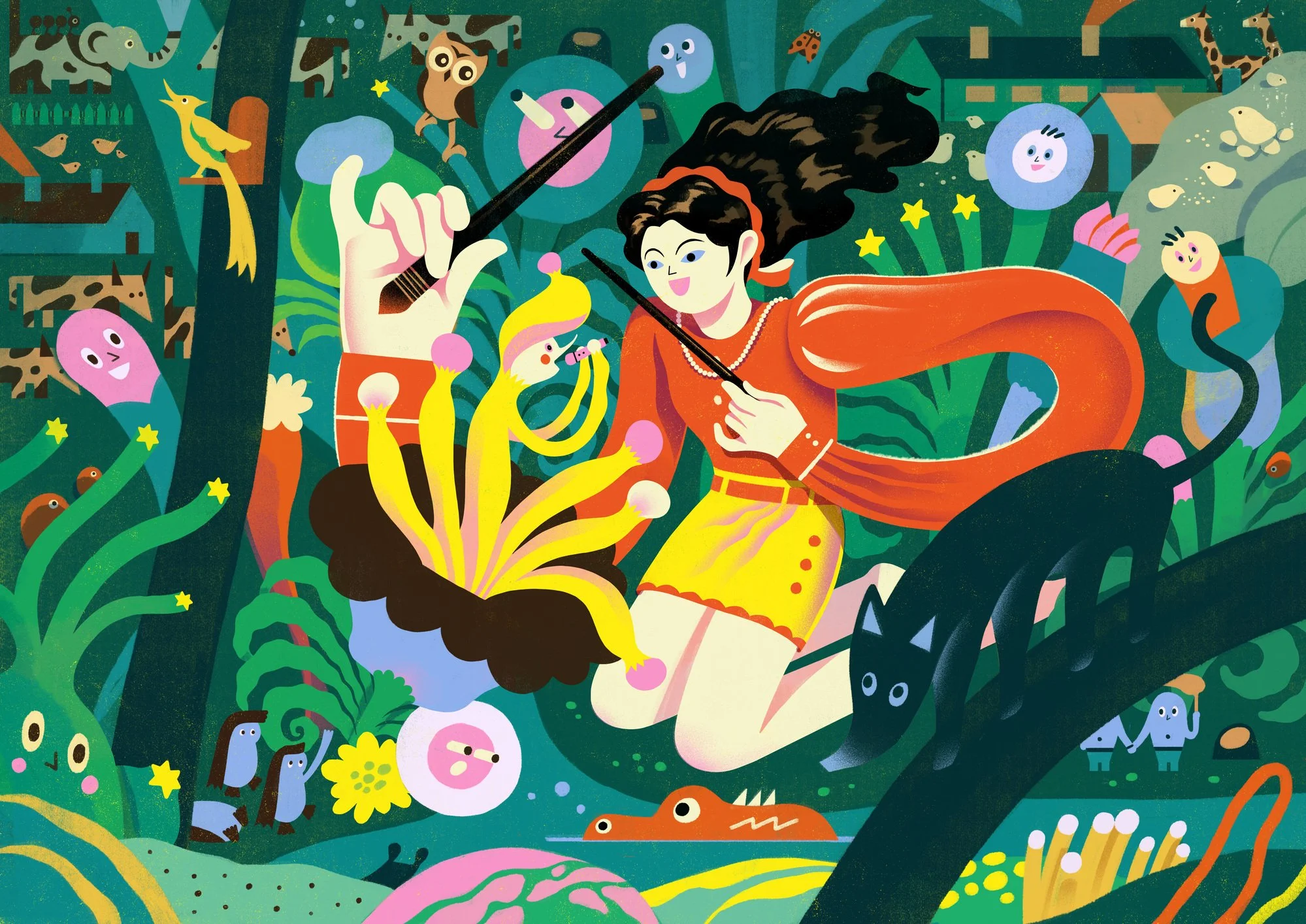
Beautiful World, Photoshop, 16.5x11.6 in, 2023 © Peilin Li
INTERVIEW
To start, you work across illustration, branding, and motion. How did your studies shape the way you move between these disciplines?
I completed my undergraduate studies in Illustration at the School of Visual Arts in New York. After graduating, I worked as a freelance illustrator, collaborating with creatives across different areas of visual design. Through those experiences, I began to understand how integrating multiple media can create richer and more layered forms of expression. I became especially drawn to the collaborative process of building cohesive visual systems.
This interest led me to pursue an MFA in Graphic Design at ArtCenter College of Design. There, I received structured training in branding and motion design. Branding taught me to think beyond a single image and consider how typography, layout, and visual identity work together as a system. Motion design further expanded my approach. Through rhythm and movement, I learned how to bring greater emotional depth into visual communication and make storytelling more dynamic and resonant.
Over time, my academic and professional experiences transformed me from someone focused on standalone illustration into a designer who integrates illustration, branding, and motion within cohesive visual systems to tell more layered stories.
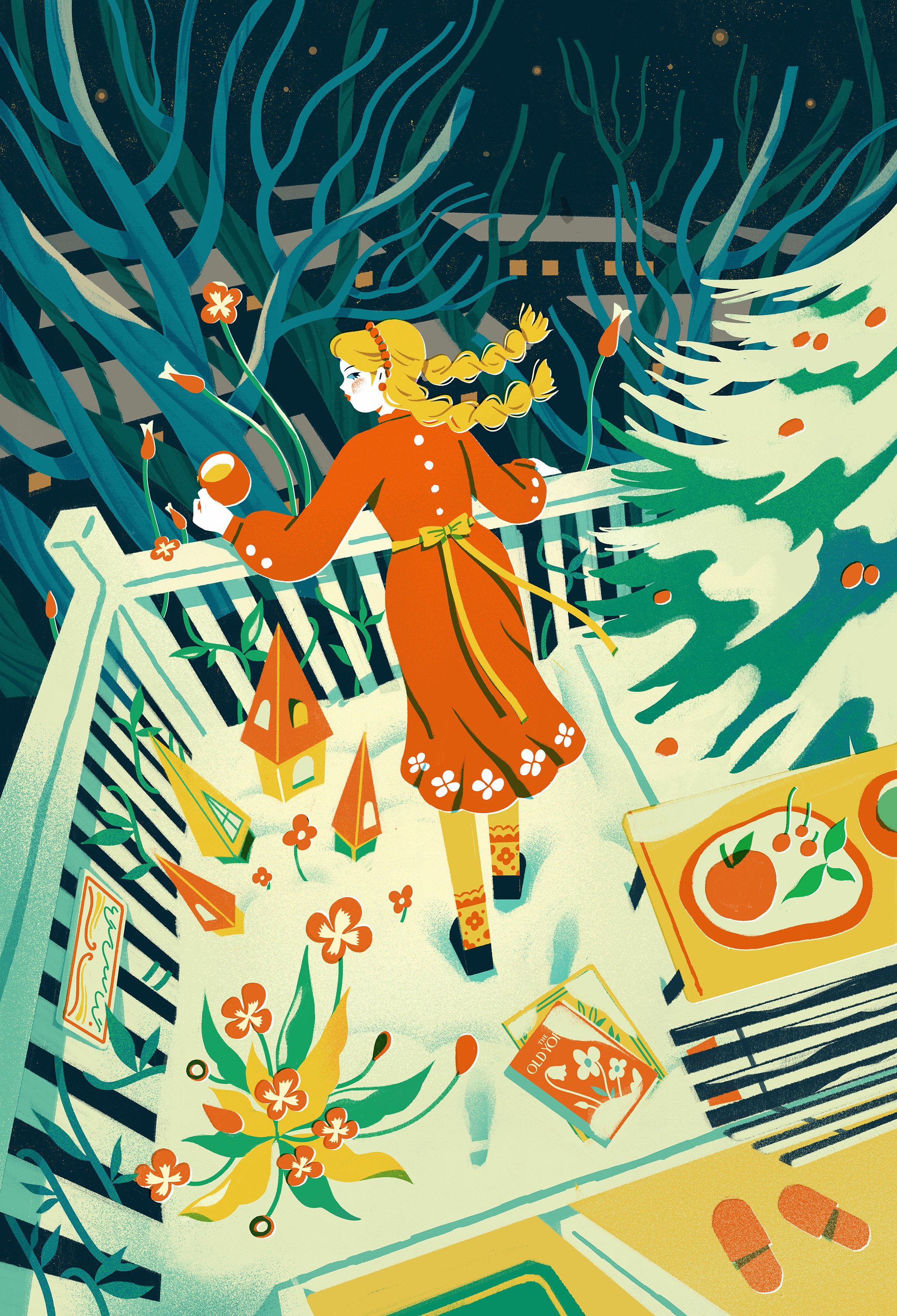
Winter on the Balcony, Photoshop, 7.353x10.787 in, 2022 © Peilin Li
What first drew you specifically to illustration rather than other visual fields?
Illustration was my entry point into the visual world. It has always felt like my most instinctive form of expression. Through illustration, I first understood that an image could carry a narrative on its own without relying on text. I became fascinated by how relationships, spatial tension, and small details can shape emotional depth within a single frame. Storytelling through images feels deeply intuitive to me.
Compared to other visual disciplines, illustration feels closer to a personal perspective. It begins with observation, especially those small everyday moments. It shaped my early understanding of narrative as something that can be gradually discovered rather than directly explained.
Later, studying branding and motion design taught me to think more systemically about structure, rhythm, and how visual language extends across different media. Even as my practice expanded, my instinct for storytelling has always come from illustration. In many ways, it remains the foundation of everything I create.
Picture books and comics seem to influence your visual language. What do you think those formats taught you about storytelling?
Picture books and comics first taught me that an image can carry a sense of time. Even a single static frame can suggest what happened before and what might happen next through posture, spatial relationships, and small details. Narrative does not always need to be fully explained; it can exist quietly within structure and detail.
They also made me realise that the viewer is part of the storytelling. An image does not have to clarify everything. It can leave space and allow meaning to be gradually assembled through observation. That sense of discovery has deeply influenced me. I am not drawn to overly direct storytelling. Instead, I prefer images that invite viewers to pause, look closely, and enter the story on their own.
Comics, in particular, changed the way I see text. I began to understand that typography is not separate from the image. It carries emotion and can be reshaped, distorted, or integrated into the visual space itself. Realising that text is not only informational but also expressive later had a strong impact on how I approach branding and type design.
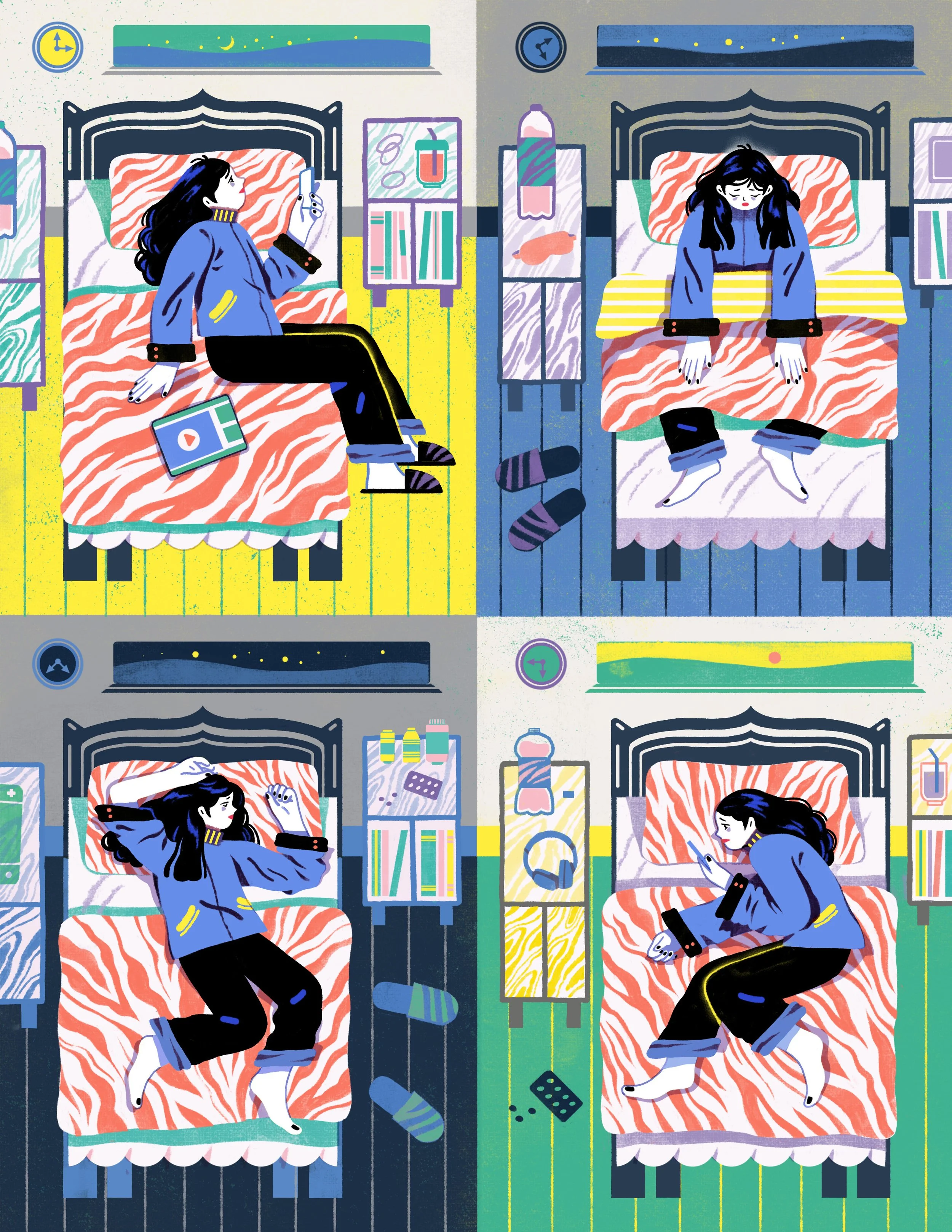
Somnia, Photoshop, 8.5x11 in, 2024 © Peilin Li

Spring, Photoshop, 18x24 in, 2023 © Peilin Li
Your work focuses on small, everyday moments. What makes an ordinary scene feel worth turning into an image?
For me, whether a scene is worth turning into an illustration doesn’t depend on how extraordinary it is, but on whether it carries a subtle emotion or relationship. Take a messy dining table, for example. Plates are slightly misaligned, a chair hasn’t been fully pushed back, and water is beginning to bubble in a kettle. On the surface, it looks ordinary, but the order, distance, and traces within the space quietly suggest that something has just happened or is about to happen. The emotional tension is embedded in those details.
I’m especially drawn to moments that feel like they are in the middle of happening. The second someone turns away, the threshold just before water boils, or the unsettled atmosphere of a room that hasn’t been tidied. These moments are brief and unstable, but that’s precisely what makes them alive and full of narrative potential.
When I create, I don’t simply record reality. I reorganise it. Through composition and shifts in proportion, I amplify relationships that were only faintly present. By carefully arranging space and detail, I bring forward the quiet tension and subtle emotions that are often overlooked, giving viewers a chance to pause and look again at the everyday moments they might otherwise pass by. For me, every day isn’t ordinary; we just tend to look at it too quickly.
You’re interested in relationships between people, objects, and spaces. How do you build those dynamics within a single frame?
For me, people, objects, and space are never separate. They exist within the same small universe, constantly influencing one another. The way someone stands or moves can shift the feeling of a space, and the placement of an object can quietly reveal emotion. So I don’t draw a character first and then add a background. I think of everything as a whole from the beginning.
In composition, I guide the viewer’s eye through direction, movement, and spatial structure. The illustration might appear chaotic, but there is always an underlying rhythm. Space itself also carries emotion. A tight room can feel tense, while openness can suggest distance or solitude.
For me, building dynamic relationships is not about adding complexity, but about ensuring every element has a purpose and breathes within the same narrative.
There’s often humour and chaos in your compositions, but also tenderness. How do you balance exaggeration with emotional subtlety?
I don’t see humour and tenderness as opposites. I think they can coexist. The sense of chaos and exaggeration in my work is often a kind of visual amplification. I might push gestures, facial expressions, or the tilt of objects slightly further to make a scene feel more dramatic and full of tension. But that exaggeration is always grounded in a real emotion. It’s not about being funny for its own sake.
Emotion is always the core for me. I might depict a character in a slightly frantic moment, or a cat knocking over a table with objects flying through the air. The outer contours of movement can be exaggerated and dynamic. At the same time, I pay close attention to subtle expressions and small bodily details, especially the gestures of hands and feet. I think it’s this combination of bold motion and delicate emotional detail that allows the illustration to feel both humorous and tender.
In a way, humour makes the image more approachable and visually engaging, while tenderness is what encourages viewers to slow down and look more closely.

Happy Snake Year, Photoshop, 11x17 in, 2025 © Peilin Li

Ultraman, Photoshop, 8.5x11 in, 2025 © Peilin Li
Your scenes feel spontaneous, yet carefully constructed. What does your process look like from observation to final image?
I usually start with observation. I’m drawn to small everyday moments that feel visually charged. Often, I don’t draw them right away. I store them mentally or jot down a few quick sketches as a kind of material library for later.
When I begin developing a piece, I ask myself what’s really pulling me in. Is it the scene, the character’s state, or the emotion underneath? Once I find that core, I shift into a more analytical stage and start composing. I make lots of small thumbnails, testing the composition, the distance and relationships between figures, and the placement of objects. The final illustration may feel spontaneous, but everything is placed with intention. I want the illustration to carry tension while still feeling believable and close to real life.
As I move into colour and finishing, I loosen control a bit. I don’t polish every line, and I intentionally keep small “accidents,” details that feel slightly off or a bit mismatched. I’m not chasing perfection. Those imperfect edges make the illustration feel more alive, like it’s still breathing.
Overall, my process moves from intuitive observation to careful construction, and then back to intuition in the final stage. It may look spontaneous, but it’s built through deliberate refinement.
Your work has been recognised by institutions like the Society of Illustrators and the World Illustration Awards. How has that reception influenced your confidence or direction as an artist
When my work was recognised by institutions such as the Society of Illustrators and the World Illustration Awards, my first reaction was happiness. It also felt like being truly seen. That recognition reassured me that my way of expressing everyday moments can be understood and appreciated.
In many ways, it strengthened my confidence in my own visual language. I used to question whether my themes were too personal, not grand enough, or whether my style was too complex or not widely appealing. But that experience reminded me that sincerity and attention to detail have their own power. I don’t need to chase trends or make my work “safer” to fit expectations.
It helped me let go of the anxiety around being interesting or popular enough and return to a simpler question: Am I genuinely moved by this moment? I’ve realised that when I’m truly moved by the work, that authenticity naturally resonates with others.

1980s New York, Photoshop, 7.873x5.413 in, 2023 © Peilin Li
If there were no constraints for budget, format, or client, what would your dream project look like?
If there were no constraints, I would love to create a very long, potentially ever-expanding picture book. It wouldn’t follow a traditional linear structure from the first page to the last. Instead, it would be an evolving world. Each chapter would be a distinct scene, yet all the scenes would be interconnected. Characters would reappear across different spaces, and every object within the environment would function as a narrative clue.
Readers could begin from any page and return to it multiple times. The book would be dense with detail, almost like a city that can be entered again and again. Within it, each reader could form their own interpretation, connect it to personal memories, and construct meaning in their own way.
For me, the ideal form of storytelling is not one-directional. I’m interested in a structure where the creator and the audience complete the story together. When viewers become participants in the narrative, the experience feels more open, layered, and truly complete.
Lastly, looking ahead, are there particular collaborations, mediums, or long-form projects you hope to explore in the near future?
I’m especially interested in participating in long-term, system-driven projects, such as developing a complete series or building a cohesive brand world.
Compared to creating a single illustration, I’m more drawn to visual systems that can grow over time. From character development and spatial structure to defining a visual language and its rules, I’m fascinated by how a world can expand and evolve across different media. I really enjoy the process of world-building rather than simply completing an individual image.
The idea of constructing a full visual ecosystem from the ground up truly excites me. It requires both imagination and systematic thinking. For me, that kind of project would be both deeply challenging and a meaningful way to continue growing as a designer.
Artist’s Talk
Al-Tiba9 Interviews is a curated promotional platform that offers artists the opportunity to articulate their vision and engage with our diverse international readership through insightful, published dialogues. Conducted by Mohamed Benhadj, founder and curator of Al-Tiba9, these interviews spotlight the artists’ creative journeys and introduce their work to the global contemporary art scene.
Through our extensive network of museums, galleries, art professionals, collectors, and art enthusiasts worldwide, Al-Tiba9 Interviews provides a meaningful stage for artists to expand their reach and strengthen their presence in the international art discourse.


Peilin Li is an illustrator and designer at BUCK, based in Los Angeles. She works across illustration, branding, and motion. Inspired by picture books, comics, and everyday life, she creates lively, character-driven scenes that capture the humor, chaos, and warmth of ordinary moments.