

10 Questions with Hanke Wang
Hanke Wang is a U.S.-based new media artist and game designer working across character design, illustration, and interactive visual systems. He holds a BFA in Animation from the Savannah College of Art and Design. His practice focuses on creating fictional characters and narrative worlds, often through a hybrid process that blends 3D character construction with 2D hand-drawn imagery.
Drawing inspiration from classical fairy tales, visual culture, and personal memory, Wang explores how play, storytelling, and symbolic figures can function as contemporary artistic language. His character design project, Nut – The Nutcracker Boy, received a Gold Award at the London Design Awards. His current ongoing project, Battle of the Mouse King, expands this research into a card-based system that merges illustration, character design, and narrative structure.
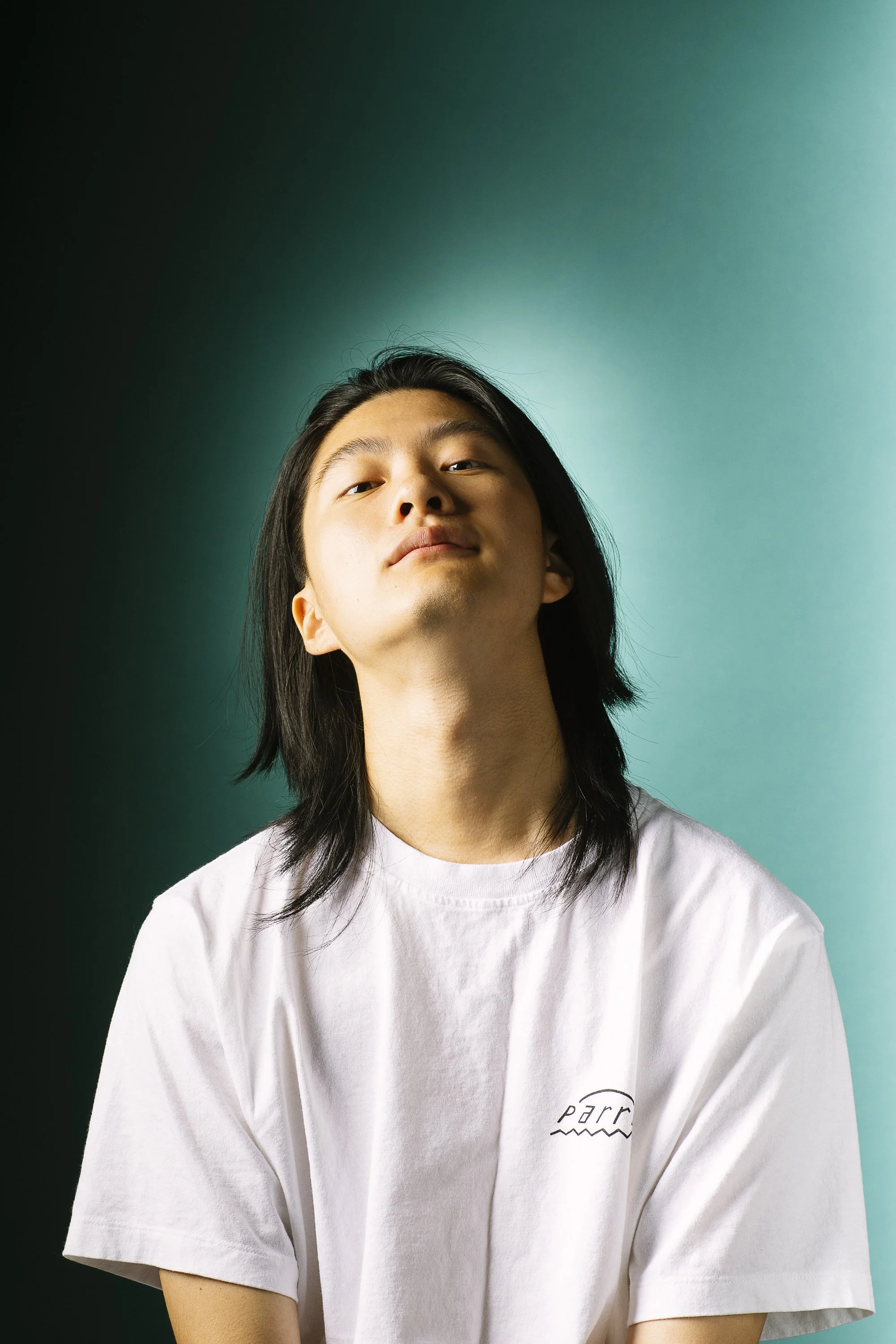
Hanke Wang - Portrait
Battle of the Mouse King | Project description
Battle of the Mouse King is a narrative-driven card-based art project by Hanke Wang, inspired by Pyotr Ilyich Tchaikovsky’s classical ballet The Nutcracker. Drawing from the ballet’s enduring cultural presence and its association with childhood, family, and the Christmas season, the project reinterprets its imagery into a contemporary visual system centred on character design and play.
The creative process began with three-dimensional character studies, through which the core figures were sculpted to establish form, costume logic, and emotional presence. These 3D constructions were then translated into two-dimensional illustrations, forming the foundation of the card designs. All card imagery is created through a fully hand-drawn watercolor process, emphasizing material texture, imperfection, and human touch. This deliberate choice establishes a dialogue between classical illustration traditions and contemporary design frameworks.
Rather than functioning solely as a game, Battle of the Mouse King positions cards as narrative and emotional carriers. Through its visual language, the project seeks to reconnect viewers with childhood memories, evoke the atmosphere of seasonal storytelling, and encourage parent–child interaction. By merging classical references with new media processes, Wang explores how play can become a contemporary artistic method for revisiting tradition, imagination, and intergenerational bonds.

Battle of the Mouse King Cover © Hanke Wang
INTERVIEW
First of all, can you tell us about your background and how you came to work in new media?
My name is Hanke Wang, and I am a new media artist and animator currently based in Las Vegas, where I work in game animation and character-driven projects. I have been passionate about animation since childhood, and entering this field felt like a natural extension of that lifelong interest. I was always drawn to animated worlds and storytelling, and I wanted to create imaginative universes of my own.
With this goal in mind, I chose to study animation at college, which marked the beginning of my professional journey in the field. Throughout my education and practice, I have continued to explore and expand into different creative media, allowing my work to evolve beyond animation alone and into broader forms of new media and visual storytelling.
You work across illustration, 3D character design, and interactive systems. How do these different media come together in your practice?
I’ve loved animation since childhood, and drawing has always been my primary way of expressing ideas. This naturally led me to focus on characters and storytelling in my work. When I entered university, I chose to study 3D animation in order to deepen my understanding of character, space, and movement. Alongside animation, I systematically learned modeling, rigging, rendering, and visual effects, which helped me think about characters from a structural and emotional perspective. The character Nut was born during this period, and I developed him independently from initial design to movement and expression.
Later, while living in Las Vegas, I became deeply involved with board games and card games. Through this experience, I realised that cards are not only a game format but also a powerful medium for storytelling and human connection. This led me to rethink how Nut’s story could be shared in a warmer, more interactive way. Eventually, I chose the card game format as a space where illustration, 3D character design, and interaction could come together, allowing the narrative to unfold through play and shared experience.
Whole Cards of Battle of the Mouse King © Hanke Wang
Storytelling and fictional worlds are central to your work. What attracts you to narrative as an artistic tool?
As I mentioned earlier, I’ve loved animation since childhood, and storytelling has always been a way for me to step into another world and experience a different life. That sense of immersion is what first drew me to narrative as an artistic approach. I find it genuinely fascinating.
I also believe that storytelling doesn’t exist in only one form. Some people prefer to listen, some to watch, and others to interact or play. In today’s fast-paced world, not everyone has the time to sit down and watch a full animation or series. With this project, I wanted to explore a different way of telling a story, one that allows people to engage with the narrative through cards, interaction, and play, while still preserving the emotional core of a fictional world.
Your projects often draw from fairy tales, classical references, and personal memory. How do these influences shape your visual language?
I’ve read many fairy tales and classical stories, and I deeply admire the imagination behind them. In many ways, those ideas have shaped me. Since my own life experience is still limited, engaging with the thoughts and visions of people from different times allows me to learn, reflect, and connect beyond my own moment. I find that sense of dialogue across time especially meaningful.
Rather than simply referencing these sources, I absorb and reinterpret them, allowing them to inform my visual language. Through this process, I gradually build stories of my own, ones that carry traces of these influences while becoming personal, contemporary narratives shaped by my own perspective.
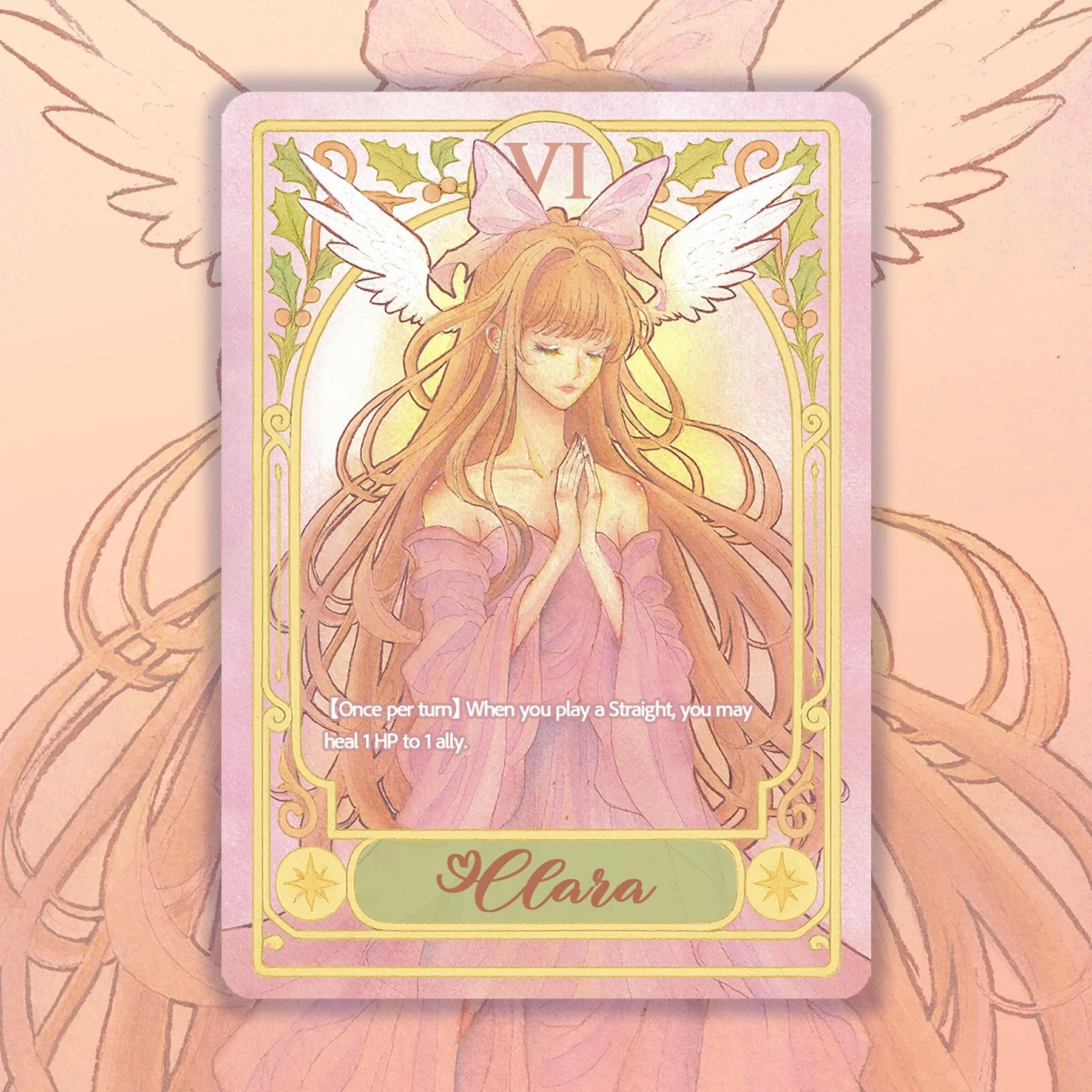
Clara Leader Card © Hanke Wang

The Mouse King Leader Card © Hanke Wang
Battle of the Mouse King is inspired by The Nutcracker. What motivated you to revisit this story, and why did it feel relevant today?
I’ve always loved Christmas. It's a season that feels warm and emotionally meaningful to me. Over time, however, I began to notice that the festive atmosphere had faded in some places. That feeling motivated me to revisit The Nutcrackerand think about how its spirit could be reactivated today.
With Battle of the Mouse King, I wanted to create an experience that brings people together in real life. Rather than spending the holiday absorbed in phones or screens, the game invites participants to sit together, step into a fairy-tale world, take on roles, and engage with one another. It transforms the act of play into a shared ritual.
I didn’t aim to change the original story of The Nutcracker. Instead, I introduced my own interpretation, allowing the classic narrative to remain intact while connecting it to contemporary ways of gathering, playing, and celebrating together.
The project moves from 3D character studies to hand-drawn watercolour cards. Can you describe this creative process and why materiality is important to you?
This project originally began with 3D character design. The 3D characters formed the foundation of the world-building, and they themselves evolved from earlier watercolor character sketches. The card characters are not simple translations of the original designs, but entirely new interpretations: Nut is reimagined in human form, while Clara and the Mouse King are also redesigned as new characters. In the future, I plan to develop these card characters back into 3D and further expand the project into an animation connected to the game.
When it came to materials, I deliberately returned to watercolour as a traditional medium and committed to a fully hand-drawn process, without using AI. For me, material choice is not only technical, but also conceptual. Watercolour has a soft and fresh visual quality that naturally resonates across different age groups. I also believe it’s important for children to encounter art that feels genuine and handmade, as this helps preserve sensitivity to visual quality. By combining watercolour with a contemporary card game system, I aim to create a quiet but lasting dialogue between tradition and the present.

Watercolor Drawing for Battle of the Mouse King © Hanke Wang
Rather than being only a game, the cards act as emotional and narrative objects. How do you hope audiences engage with the project?
I hope the project is experienced collectively, especially within a family setting. Ideally, players would gather together during the Christmas season, around a tree or a shared space, and step into a playful, dreamlike battle inspired by fairy tales. While the game includes a point-based system and small rewards for the winner, the focus is not on competition itself, but the shared experience of play.
Through this process, I hope the cards encourage conversation, imagination, and a renewed interest in storytelling. Much like watching a stage performance or a ballet, the game creates a moment where people temporarily enter a fictional world together. With both three-player and four-player versions available, the project is designed to be flexible.
How has Battle of the Mouse King been received so far by viewers, collectors, or players?
Battle of the Mouse King has not been officially released yet. At this stage, I’ve only shared previews and demo versions and tested the game with friends and small groups. The feedback so far has been very encouraging; people have responded positively to both the visual world and the idea of experiencing the story through play.
This early response has given me a lot of motivation and confidence. It also pushes me to refine the project further and do my best to make the final version as thoughtful and complete as possible.
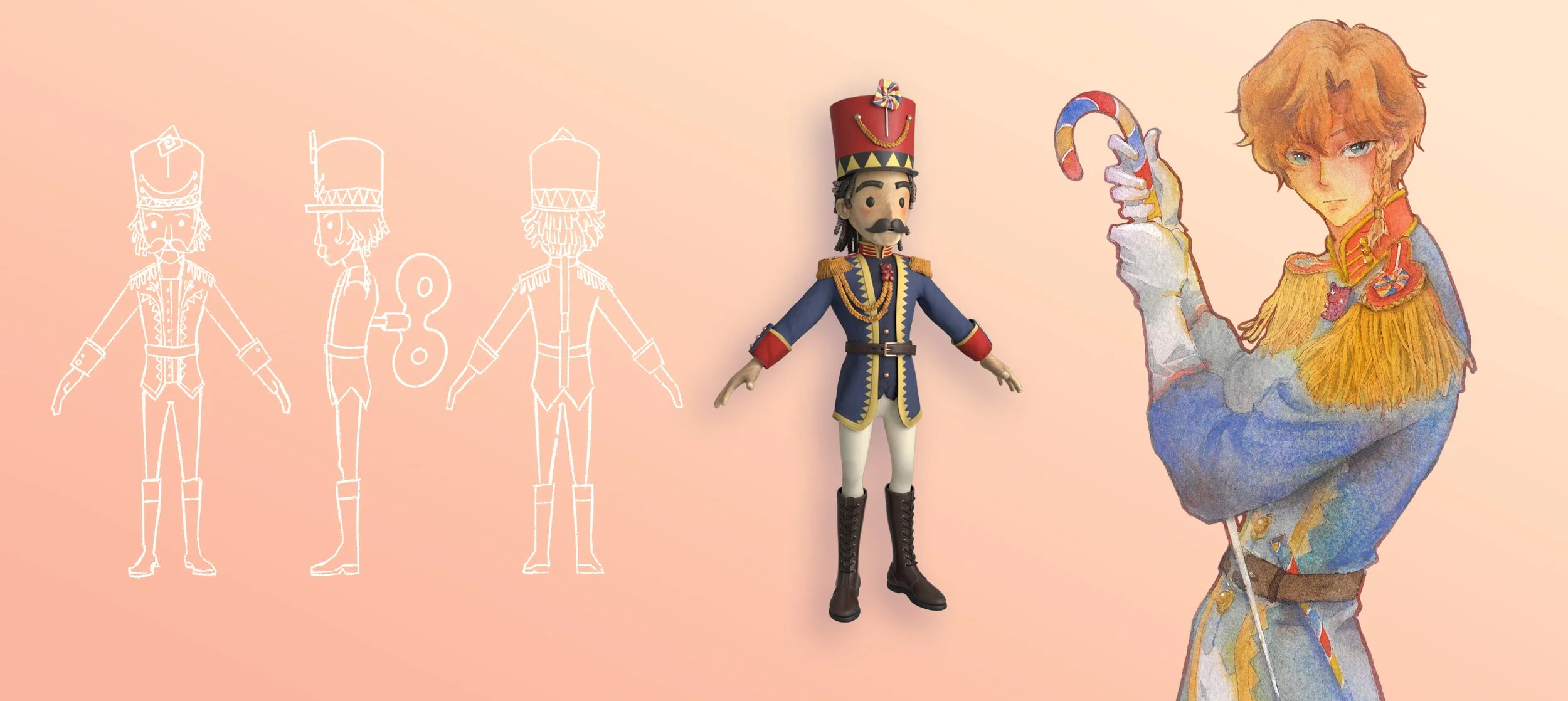
Nutcracker character design © Hanke Wang
Your work often connects play with memory and intergenerational exchange. Why is this theme important in your practice?
My time with family has always been warm and meaningful, and I truly value those moments. In today’s information-driven world, one of my main concerns is how children can still have a joyful and emotionally rich childhood. This question naturally became central to my practice.
I’m also aware that many parents struggle with communication, not because they don’t care, but because they may not have fully learned how to express themselves before becoming parents. Coming from a family where communication was not always easy, I wanted to create a platform that could act as a bridge. In that sense, this game is not only for children, but also for parents, offering them a shared space where interaction, play, and storytelling can open up new ways of connecting across generations.
Lastly, what future projects or new directions are you currently exploring?
At the moment, I’m also exploring AI as a new form of expression. I’m interested in how emerging technologies might open up different narrative possibilities and offer new ways of telling emotionally resonant stories.
At the same time, I remain committed to the current skills and traditional media I truly believe in. Hand drawing, physical materials, and tactile processes continue to play an essential role in my practice. For me, the future lies in understanding new tools without losing sensitivity to craft, intention, and human experience.
Artist’s Talk
Al-Tiba9 Interviews is a promotional platform for artists to articulate their vision and engage them with our diverse readership through a published art dialogue. The artists are interviewed by Mohamed Benhadj, the founder & curator of Al-Tiba9, to highlight their artistic careers and introduce them to the international contemporary art scene across our vast network of museums, galleries, art professionals, art dealers, collectors, and art lovers across the globe.
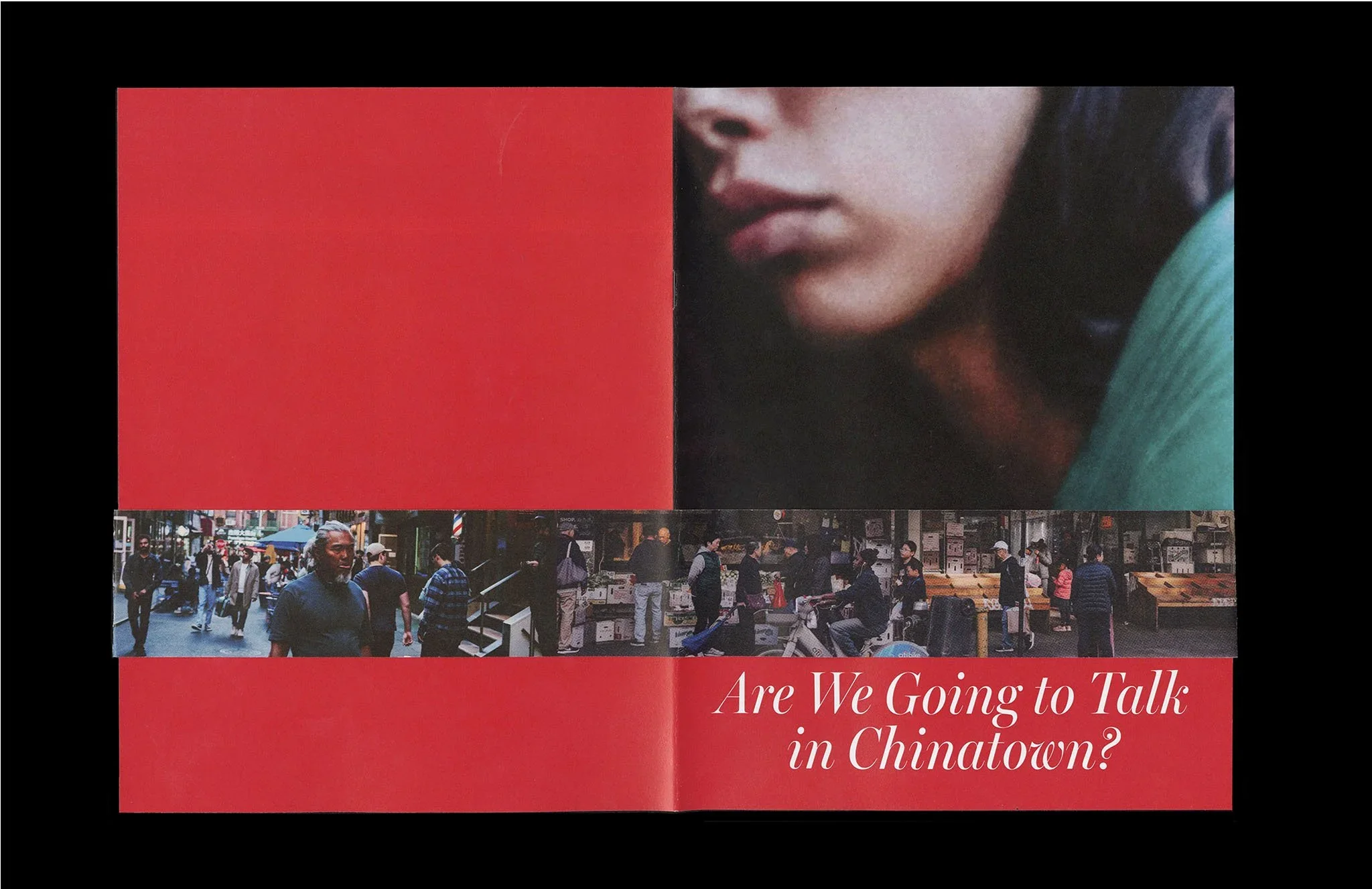


Jialiang Guo is a Dallas-based furniture designer whose practice explores the relationship between furniture, material, space, and human interaction. Guo’s work ranges from sculptural furniture and material-driven objects to modular systems that engage with the way people inhabit and interact within contemporary spaces.