

10 Questions with Andrea Ghidorzi
Al-Tiba9 Art Magazine ISSUE20 | Featured Artist
Andrea Ghidorzi, the mind behind Moan Studios, has created an artistic dimension where analogue and digital art converge through introspection, exploration and a look toward the future. He has exhibited works such as "Vanishing Persona" at galleries including On The Fringe in New York, showcasing his ability to blend diverse media and themes. Building on this foundation, Andrea's practice explores identity, perception and the evolving dialogue between the self and its environment. As creative director of Moan Studios, he not only develops his own artistic research but also helps other artists articulate what they hold within, promoting depth, authenticity and expressive freedom. Across both personal and curatorial projects, he approaches images, sound and mixed media as instruments for navigating inner transformation and the quiet mysteries of existence.

Andrea Ghidorzi - Portrait
ARTIST STATEMENT
Ghidorzi's vision explores the quiet spaces within a noisy society, where the self seeks refuge and protection. Through mixed media, he traces the evolution from the raw noise of analogue tools to the expansive consciousness of the digital age, capturing a journey of inner awakening.
Obscured Self, Mixed Media Art, 7.733 x 10.267 px, 2025 © Andrea Ghidorzi
AL-TIBA9 ART MAGAZINE ISSUE20
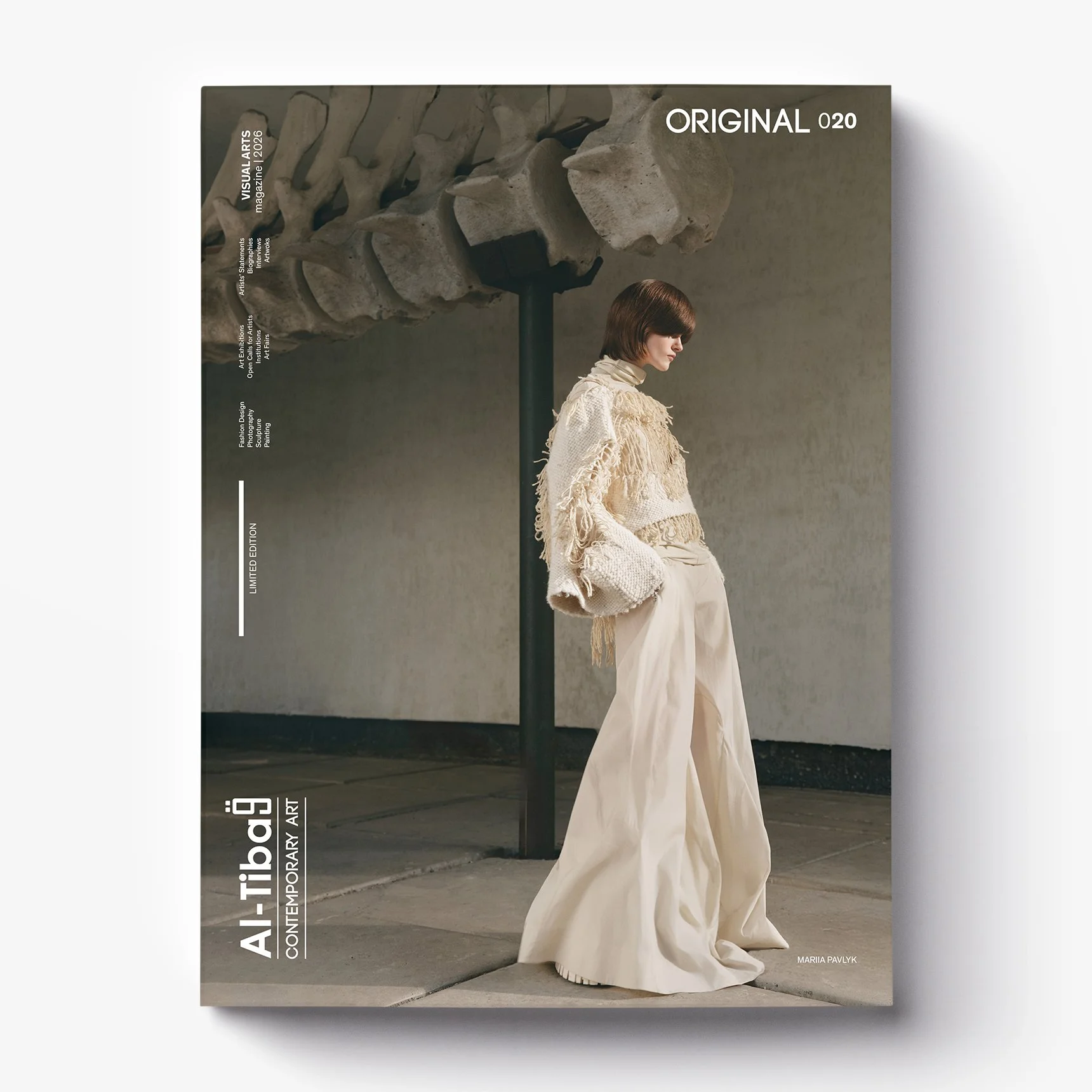
DISCOVER THE INTERNATIONAL ART SCENE WITH AL-TIBA9
LIMITED EDITION | Shipping worldwide.
Premium museum art paper.
Printed in London.
Grab 3 or more prints and get your FREE digital magazine.
Get your limited edition copy now
INTERVIEW
Can you tell us a bit about your background and how you first became interested in art?
Art has always moved through me, long before I could give it a name. As a child, I sang and danced instinctively, anywhere, without mediation. I needed sound, vibration, something that went beyond the surface of everyday life, which has always felt boring to me.
Music came first as a physical necessity, then as a language. I touched a classical guitar very early on, but it was never truly mine. I was already drawn to experimentation, distortion, and transformation. While others spoke about rules and technique, I followed intuition. That path led me to electronic music, to synthesis, to unheard melodies and invisible architectures of sound.
Art became my sacred space, my church, my refuge, my way of existing. I would dare say: my life itself.
What inspired you to start Moan Studios, and how does it reflect your artistic vision?
Moan Studios was not a project, but a necessity. At a certain point in my journey, I felt the need to detach from pre-existing structures and begin making decisions starting from my own mind, my own vision. I needed to direct, to fully believe in my ideas, to create without compromise. The name Moan comes from a track by an artist deeply close to me, Trentemøller, with whom I also had the privilege to collaborate. But beyond that, moan carries a double meaning: pleasure and pain. Light and darkness. Desire and fracture. Moan exists to explore inner and outer worlds through artistic languages, to give form to contrast, tension, and what cannot be simplified.

A Thought That Learned to Breathe, Mixed Media, 2024 © Andrea Ghidorzi
Your work blends analog and digital techniques. How do you decide which medium to use for a particular idea or piece?
I have always been fascinated by the digital realm, not as an opposition to the analog, but as its amplifier. I imagine it like this: starting from the roots of a tree and expanding into space through imagination, numbers, codes, and sound waves. What I seek is balance. I need contrast. I need to engage both body and mind. Many people fear the digital, or dismiss it. They fail to understand that the future is already here, increasingly virtual, increasingly intangible. To reject new languages is to reject evolution. This is why I am constantly searching for luminous people, artists who are open, curious, and unafraid of transformation.
Themes of identity and perception appear frequently in your practice. How do you explore these ideas through your art?
I believe we exist to know ourselves and to know the world. This is our mission. From a very young age, I questioned my presence, my purpose, my place within this reality. Who am I? Why am I here? What does this world mean? Identity is who we are in this life. Perception is what we believe reality to be. I feel deeply connected to both Earth and space, as if they were extensions of the same being. We are nature, and nature is us. When I look at the horizon, I see myself.
Let’s talk about your project Vanishing Persona. How did this project come about, and what were you hoping to communicate through it?
Vanishing Persona, exhibited in New York, reflects my vision of the dissolution of contemporary identity. We live in a time where individuality is sacrificed to mainstream forms, social validation, trends, and appearances. In the pursuit of visibility, people abandon themselves, and in doing so, they disappear. This work is an invitation to stop. To look at yourself in the mirror again. To breathe. To observe with your own eyes. To think with your own mind.

He, The Future, Mixed Media, 2025 © Andrea Ghidorzi

Seen, Never Fully Known, Mixed Media, 2025 © Andrea Ghidorzi
Sound, image, and mixed media all play roles in your work. How do these elements interact in your creative process?
As a teenager, I spent all my money on records. I bought them blindly, guided only by the cover art. Image and sound have always been inseparable in my vision. I mixed records, composed electronic music, then went to the sea to take photographs, without knowing why. It was an internal propulsion, something inevitable. For years, I chased only music, until visual art resurfaced: abstract painting, experimental design, and constant research. I read, I watch, I try. I never stop. I am a vortex searching for its own trajectory, and I found it in Moan.
Your statement mentions finding quiet spaces within a noisy society. What kind of impact do you hope your work has on viewers?
I hope art can still educate, toward respect, awareness, and depth. Today, people say education belongs only to parents. That is true. But art also educates: it teaches us how to see, how to feel, how to question. If a work, sonic or visual, does not move something inside you, then it is insignificant or pure entertainment. Art must be raw. True. Alive.
As both an artist and creative director, how does guiding other artists influence your own practice?
I have often felt strange, misunderstood. But when I see others experiencing similar intuitions, the same fractures, I realize I am not alone. Artists are time travelers. Art is a language capable of crossing planetary boundaries. I believe many creators speak through hidden messages embedded in their work, signals sent forward in time. Listening to and supporting other artists helps me grow. And I believe that if we all helped one another, the world would be a better place, not only in art, but also in the increasingly material and superficial world around us. We need more collectivism and less individualism, and Eastern philosophies have much to teach us in this regard.

Friction as Language, Mixed Media, 2025 © Andrea Ghidorzi

What Remains on Contact, Mixed Media, 2025 © Andrea Ghidorzi
Are there new techniques, themes, or technologies you are excited to experiment with in upcoming projects?
I am particularly fascinated by 3D art and augmented reality. How far can we go? Does a certain technology already exist in the universe? Will we ever be able to communicate, if we are not already doing so, with advanced civilizations?
If we began living multiple lives, it would be interesting. I wonder what could happen in a few years if, instead of video calls, we could transmit our presence elsewhere in the world through holograms, at the same instant, and if that presence could also act independently, through artificial intelligence programmed by us.
I recently read about the first encounters in New York between humans and digital beings, like in the film Her. What if we fell in love with a machine? What if advanced machines were already watching us? What if someone were already observing us?
Looking ahead, how do you see your work evolving over the next few years, and what are your main goals as an artist?
My goal is simple, and difficult: to always have the courage, determination, and strength to carry forward my ideas, my visions, my art, surrounded by the right people. I am in a phase of transformation. I realized that in the past, I accepted crumbs out of insecurity. That is no longer the case. I need light. I need people capable of receiving and expanding positive energy. I thank those who pushed me to create Moan. I thank those who always believed in me. I also thank those who did not believe and who, through my determination, pushed me to achieve what I wanted. Every day, I am ready to improve and to discover more and more of the visible and invisible reality. I thank those who are celebrating somewhere above me, in a blue sky. We will meet again in the universe.
Long live art.
Long live those who dare to believe in their dreams.
Artist’s Talk
Al-Tiba9 Interviews is a curated promotional platform that offers artists the opportunity to articulate their vision and engage with our diverse international readership through insightful, published dialogues. Conducted by Mohamed Benhadj, founder and curator of Al-Tiba9, these interviews spotlight the artists’ creative journeys and introduce their work to the global contemporary art scene.
Through our extensive network of museums, galleries, art professionals, collectors, and art enthusiasts worldwide, Al-Tiba9 Interviews provides a meaningful stage for artists to expand their reach and strengthen their presence in the international art discourse.


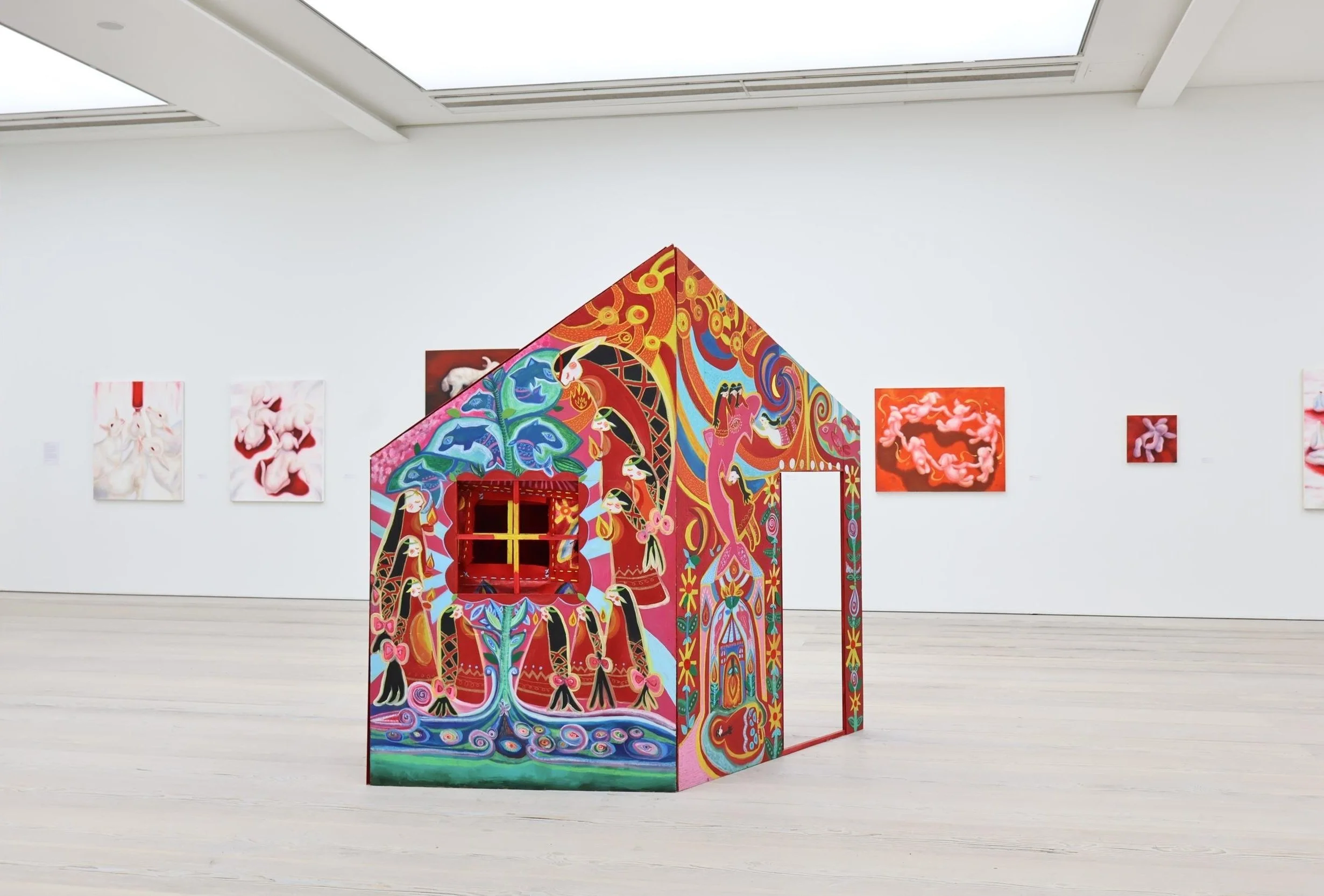


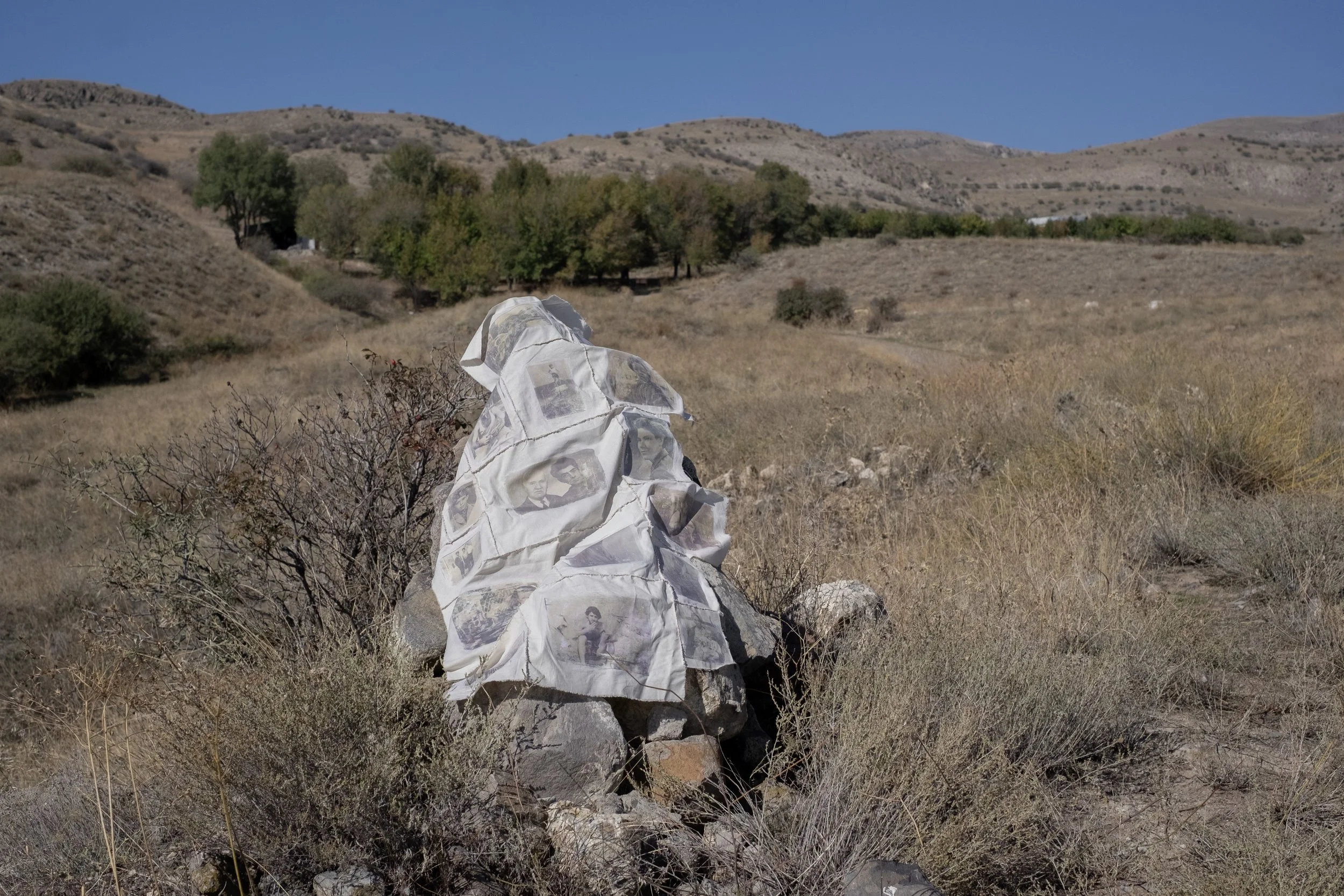

Yuhan Gu is a New York–based industrial designer whose work explores the intersection of function, emotion, and sculptural form. TACTO reflects Gu’s interest in the emotional relationship between people and the objects they keep close in their daily workspace. Designed as a cactus-shaped memo holder, the project transforms a familiar natural form into a playful and functional desktop object.