

10 Questions with Ye (Yolanda) Tian
Ye (Yolanda) Tian is a senior product and UX Designer whose work blends technology, visual storytelling, and problem-solving. With over five years of experience across healthcare, AI-driven products, and consumer platforms, she creates digital interfaces that simplify complexity and aim to make a social impact. Her projects have been recognized internationally with multiple design awards, including honors from MUSE, AIVA, UX Design Awards, and German Design Awards, etc. Her practice integrates user experience design principles with emerging AI-assisted tools to craft expressive experiences. Through her work, she invites users to explore, reflect, and engage deeply with the information that shapes their world.
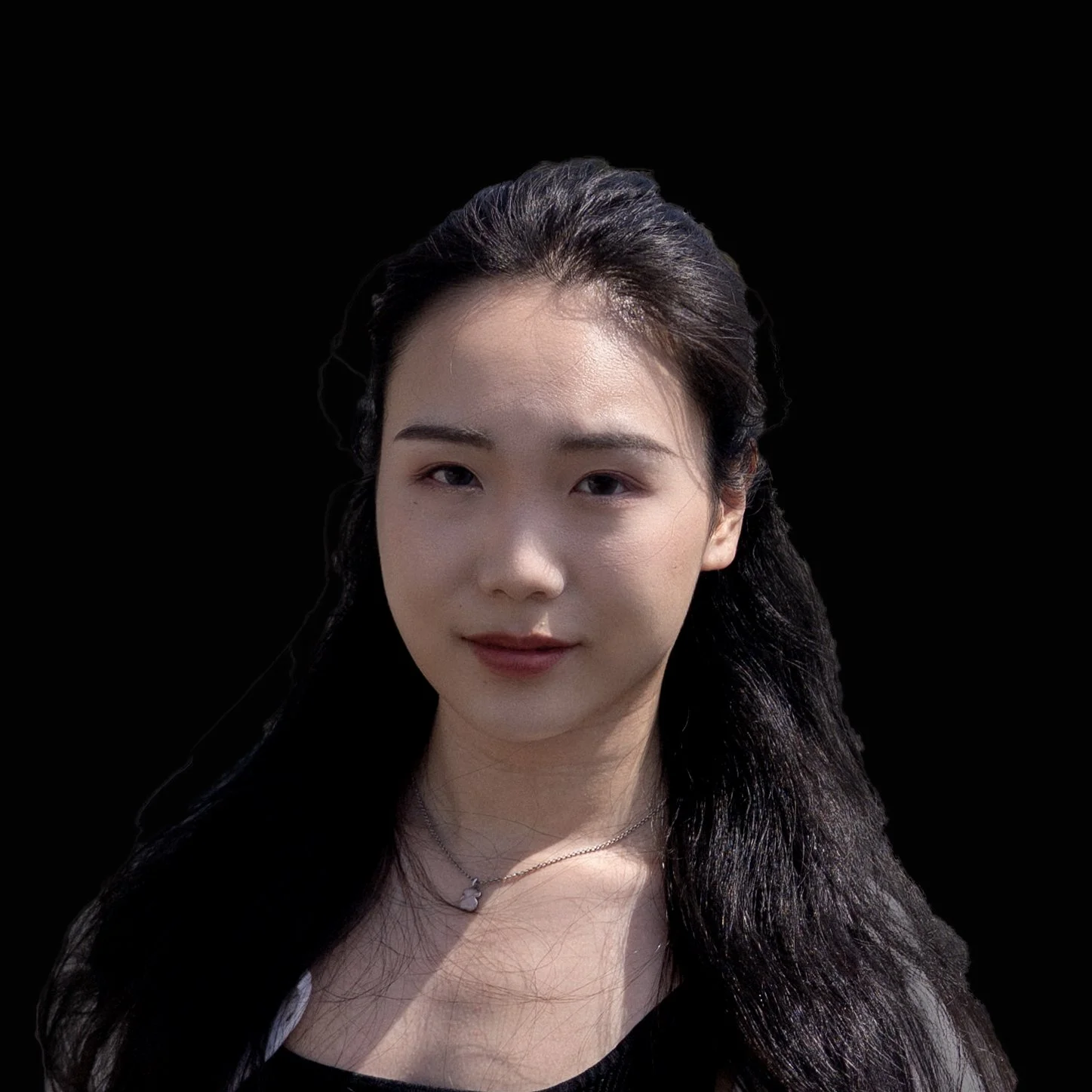
Ye (Yolanda) Tian - Portrait
ARTIST STATEMENT
Ye’s work lives at the intersection of art, technology, and human care. Raised in an artistic environment, she developed an early sensitivity to visual language and storytelling, learning to see design not just as form, but as a way to communicate feeling, intent, and meaning. Her interest shifted from art to design when she discovered that creativity could move beyond expression and into impact, transforming complex systems into tools that genuinely help people navigate their lives. Drawing from experiences in healthcare, her practice focuses on clarity, trust, and empathy, especially within high-stakes environments where design decisions carry real human consequences. Through both real-world products and conceptual explorations, Ye approaches design as a balance between problem-solving and self-expression. She believes thoughtful design can soften complexity, restore dignity, and make invisible systems feel more human.
Lexi, Digital Design, 1920x1080 px, 2025 © Ye (Yolanda) Tian
INTERVIEW
First off, can you tell us about your background and how growing up in an artistic environment shaped your approach to design?
I grew up in an artistic environment (my grandpa is a painter) where creativity was part of everyday life. Drawings and making things were always around me, so I learned early to observe closely how color, composition, and small details can communicate emotion or intention without words. That upbringing shaped the way I approach design today. I don’t see interfaces as purely functional objects. I see them as visual narratives that guide people through experiences. Even when I’m working on complex digital systems, that sensitivity to aesthetics and storytelling stays with me. It influences how I think about flow, hierarchy, and how an interface should feel, not just how it works.
What led you to shift from a more traditional art focus toward product and UX design?
The shift happened when I realized that design could directly help people. In high school, I was introduced to UX/UI through a graphic design club and a foundational design curriculum. For a final project, I collaborated with a classmate who loved coding, and we built a student-facing app to help classmates choose elective courses. The project wasn’t visually refined by today’s UX principles, but it was transformative for me. For the first time, I saw people actually use something I created and feel relieved or supported by it. That moment changed my relationship with creativity. I still value artistic expression deeply, but UX and product design gave me a sense of purpose where creativity meets impact.

Pebble, Digital Design, 2667x1500 px, 2025 © Ye (Yolanda) Tian
You work at the intersection of art, technology, and human care. How do these elements come together in your practice?
Art helps me think emotionally and visually, technology gives me the tools to scale ideas into reality, and human care grounds everything in empathy. In my practice, these three elements are inseparable. Technology alone can feel cold or overwhelming. Art alone can be expressive but disconnected from real needs. Human care is what connects the two. It asks "who we’re designing for and why". Especially in healthcare and AI-driven systems, my role is often to translate technical complexity into something understandable, reassuring, and humane.
With experience across healthcare, AI-driven products, and consumer platforms, how do different contexts influence your design decisions?
In healthcare or enterprise B2B systems, users are often under pressure, dealing with high-stakes decisions and dense information. In those environments, clarity, predictability, and trust matter more than novelty. Consumer platforms allow for more emotional expression and experimentation, but they still demand clarity and accessibility. Moving between these contexts forces me to constantly shift my design mindset, principles, and success metrics. I see that as a positive challenge. It keeps me adaptable and prevents my design thinking from becoming rigid.
Your work often focuses on clarity, trust, and empathy. Why are these values especially important to you?
These values come from seeing how design can either reduce stress or unintentionally add to it. In healthcare, especially, people are often vulnerable, anxious, or overwhelmed. A confusing interface doesn’t just slow someone down, but it can make them feel powerless. Clarity builds confidence. Trust builds safety. Empathy ensures we don’t forget the human on the other side of the screen. These values guide my decisions because I believe good design should support people, not test them.

RxReady, Digital Design, 1920x1080 px, 2025 © Ye (Yolanda) Tian

SipControl, Digital Design, 1920x1800 px, 2025 © Ye (Yolanda) Tian
How do you balance problem-solving with personal expression in your design process?
I see them as complementary rather than conflicting. Problem-solving gives structure and direction, ensuring the design can work. Personal expression gives the work character and soul, making it memorable and human. In practical projects, I prioritize user needs and outcomes first. But within those constraints, there’s always room for thoughtful visual choices, tone, and interaction patterns that reflect how I see the world. Outside of work, I also explore conceptual projects where I can push ideas more freely. That balance keeps me creatively fulfilled.
You integrate emerging AI-assisted tools into your practice. How do these tools expand or challenge your creative approach?
AI tools have dramatically sped up my exploration process. I can prototype ideas, test flows, or visualize concepts much faster than before, which is incredibly helpful in fast-moving teams. At the same time, AI challenges designers to be more intentional. Many AI-generated outputs look similar and lack deep context. That means designers need stronger judgment, taste, and ethical awareness. AI expands what’s possible, but it also reinforces the importance of human decision-making and craftsmanship.
Your projects have received international recognition and awards. How has this reception influenced your confidence or direction as a designer?
The recognition has been encouraging, and it reassured me that my instincts and values resonated beyond my immediate teams. But more importantly, it reinforced my belief that thoughtful, impactful design matters. Awards don’t define my direction, but they give me confidence to take on more socially-driven problems where the users are usually underrepresented, and advocate for design in spaces where it might be underestimated.

Voyce, Digital Design, 1543x1080 px, 2025 © Ye (Yolanda) Tian
How do you hope users feel or think differently after engaging with your work?
I hope users feel supported, understood, and delighted. Ideally, they leave feeling that something complicated became manageable, or that a system that once felt intimidating now feels approachable. If my work can reduce friction, restore a sense of control, or even bring a small moment of calm into someone’s day, that’s success to me.
And finally, what projects are you currently working on, and what themes or directions are you interested in exploring next?
One project I’m working on is RxReady, a concept that aims to turn the medication prior authorization process in the U.S into a simple "pizza tracking" experience. Today, patients often feel stuck in the dark while doctors and pharmacists manage endless calls, forms, and faxes behind the scenes. RxReady uses AI to predict approval timelines, flag missing documents, and suggest faster or more affordable alternatives when possible. It clearly shows where someone is in the process, what’s coming next, and who needs to take action. Patients, doctors, and pharmacies can message and share documents in one place, receive reminders, and explore lower-cost options. Moving forward, I’m especially interested in projects that sit at the intersection of AI, ethics, and care, spaces where design can help technology feel more responsible, transparent, and human.
Artist’s Talk
Al-Tiba9 Interviews is a promotional platform for artists to articulate their vision and engage them with our diverse readership through a published art dialogue. The artists are interviewed by Mohamed Benhadj, the founder & curator of Al-Tiba9, to highlight their artistic careers and introduce them to the international contemporary art scene across our vast network of museums, galleries, art professionals, art dealers, collectors, and art lovers across the globe.


Graphic designer and educator Lucy Zou specialises in branding, typography, and visual storytelling. She is invested in projects that work with cultural institutions, public systems and histories, and cross-cultural contexts. Some recurring themes in her work include notions of interpretation, navigation, and understanding, and how visual language around things can impact how we experience them.