
10 Questions with Yazhi Zheng
Yazhi Zheng is a Los Angeles–based illustrator, animator, and motion designer whose interdisciplinary practice explores the relationship between illustration, movement, and visual storytelling. She received her BFA in Illustration and MFA in Computer Arts from the School of Visual Arts (SVA) in New York.
Moving between personal practice and commercial design, Yazhi has collaborated with leading creative studios and global brands, creating animation and motion design for clients including Meta, Nickelodeon, ESPN, Pinterest, Café Bustelo, Tim Hortons, and Target. Her background in illustration continues to shape her approach to composition, color, and narrative, while motion has expanded her visual language through rhythm, sequence, and time.
Her work has been recognized by Communication Arts, American Illustration, the Society of Illustrators, Young Ones, Applied Arts, 3×3, the Telly Awards, the Collision Awards, and other international competitions, and has been featured in exhibitions and publications worldwide.
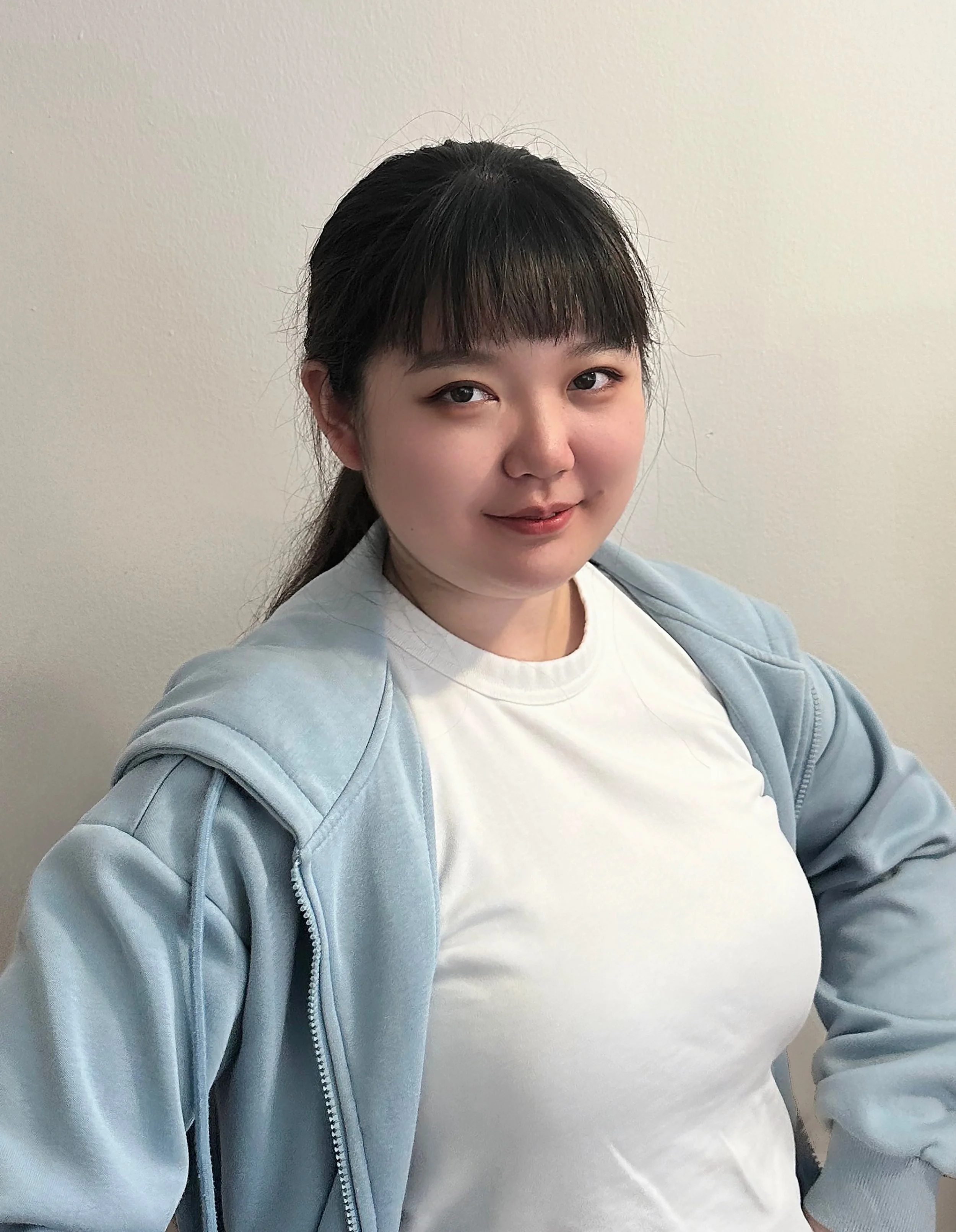
Yazhi Zheng - Portrait
ARTIST STATEMENT
Growing up by the sea in Dalian, China, Yazhi learned to see nature through movement. The rhythm of the waves, changing light, and endless horizon continue to shape her work. Rather than depicting nature literally, she uses it as an emotional language to express wonder, curiosity, peace, and imagination.
Yazhi’s artistic practice began with illustration, where she learned to think carefully about composition, color, narrative, and how to build a single image. As she moved into animation, she became interested not only in what happens within a frame, but also in what happens between frames and how an image can change and develop over time. Motion became a natural extension of her work, bringing rhythm, transitions, and sound into her visual language. To Yazhi, animation is not simply a way to make an illustration move. A still image can suggest a world, while movement allows that world to unfold. Working across both personal and commercial projects has also broadened the way Yazhi thinks about visual storytelling. Her commercial work challenges her to communicate with clarity and intention, while her personal practice gives her the freedom to explore atmosphere, color, emotion, and imagination. Moving between the two continues to shape her creative process, and ideas from one often find their way into the other.
Through both illustration and motion, Yazhi hopes to create work that feels immersive and emotionally connected. She wants to invite viewers into her visual world while leaving room for their own feelings and interpretations, and to bring a sense of wonder to moments that might otherwise be overlooked.
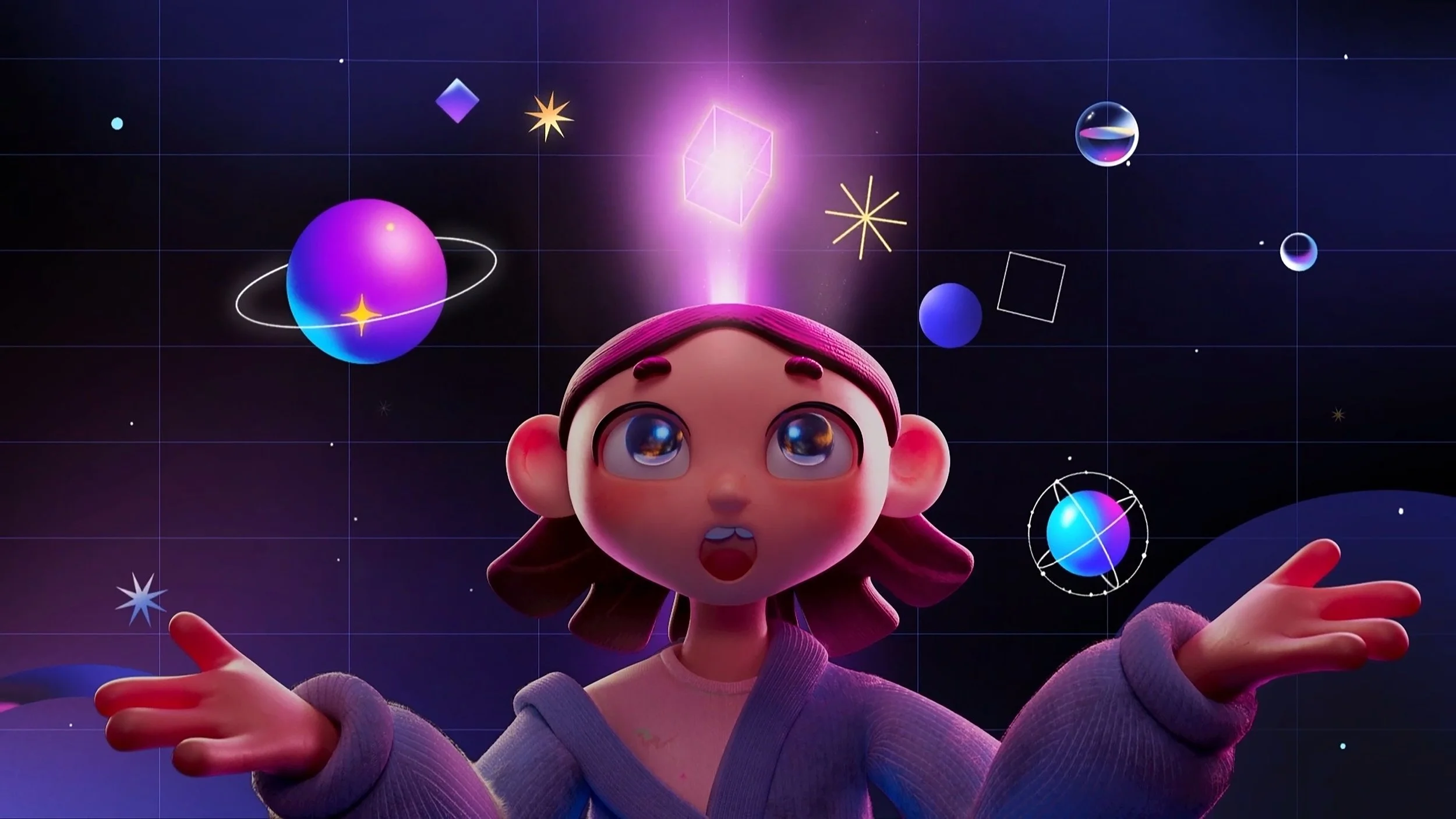
Deadline 1, Digital, 8000x4500 px, 2025 © Yazhi Zheng
INTERVIEW
First, you grew up by the sea in Dalian, China. How does that environment continue to influence the way you see and create images today?
I think what we see, hear, and feel growing up strongly shapes how we express ourselves as artists. I grew up in Dalian, in a home with the sea in front and mountains behind it. I could feel the ocean breeze on my face almost every day, and when I looked into the distance, the sea and sky seemed to blend together. I always found that view really peaceful.
I still remember the patterns the waves left on the sand and the feeling of the wind blowing through my hair. Those little things gave me a sense of movement and freedom that has stayed with me. Even now, when I draw, I naturally gravitate toward flowing shapes, colorful gradients, and compositions that feel light and full of life.
As I've gained more experience, especially through commercial projects, I've also learned to approach these ideas in a more thoughtful way. What started as a feeling has gradually become something I can develop through color, composition, and design. I think my work today is a mix of those early influences and everything I've learned along the way.
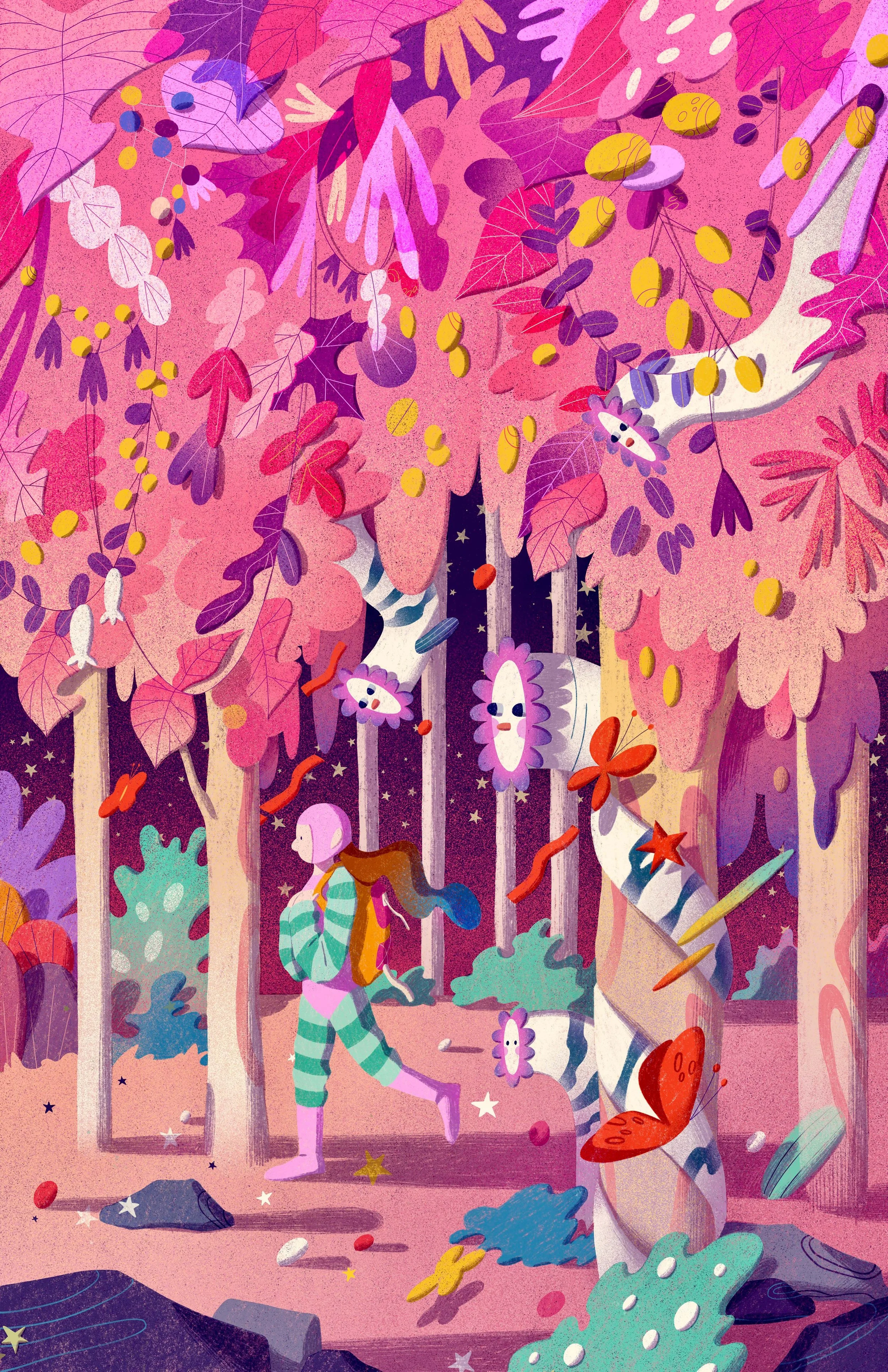
New World Adventure, Digital, 3300x5100 px, 2023 © Yazhi Zheng
Your practice began with illustration and later expanded into animation and motion design. What first attracted you to working with movement?
My interest in animation actually goes all the way back to my childhood. I used to look forward to watching cartoons on TV every evening. I loved the stories, the characters, the detailed backgrounds, and how some of those stories would stay in my mind long after I finished watching them.
I also grew up reading a lot of comics. I was fascinated by how artists could tell a story through a series of panels, how they used composition to guide the reader's eye, and how even a small change between images could suggest movement. Although I spent most of my early years focusing on drawing and illustration, I never really lost my interest in animation.
A turning point came in college when I took a class where we had to create animated illustrations. We added small movements to our drawings, like twinkling stars or floating objects. It was a pretty simple assignment, but I remember being really excited by it. I realized that illustration didn't have to stay completely still, and that animation could add something new to the images I was already making.
Around that time, short videos and digital content were becoming more popular, and I started paying more attention to motion design. What attracted me was how it brought together illustration, design, and animation, while also being able to communicate an idea in just a few seconds. I liked that you could use movement not only to tell stories, but also to introduce a product or give a brand its own personality. It felt like a natural direction for me because I could bring so many of my interests together.
How has thinking in sequences changed the way you approach composition and storytelling, compared to single illustrations?
When I first started making illustrations, I was really interested in art history. I loved looking at how Impressionist painters used light and color, and how Renaissance artists built their compositions and told stories through a single image. I wanted every illustration I made to feel complete, with carefully considered details, colors, and a clear focal point. Since people can spend as much time as they want looking at an illustration, I always felt that every little detail mattered.
But after working with animation for a while, I started thinking differently. I realized that not every frame needs to look perfect on its own. What's more important is how the frames work together and how the viewer experiences them over time.
When I watch animation frame by frame, I sometimes notice that a really powerful moment comes from a sudden change in scale, a dramatic movement, or even a surprisingly simple image. That frame might not look particularly impressive by itself, but when you see it in motion, it works beautifully.
That changed the way I approach my own work. Sometimes I'll make the main subject much bigger, simplify the background, or remove details that I would normally include in an illustration. I also think more about where I want people to look first and how I can guide their attention through the sequence.
With illustration, I often try to tell a whole story in one image. With animation, I can let that story develop across several moments. I don't need to fit everything into a single frame anymore, and I actually find that pretty freeing.
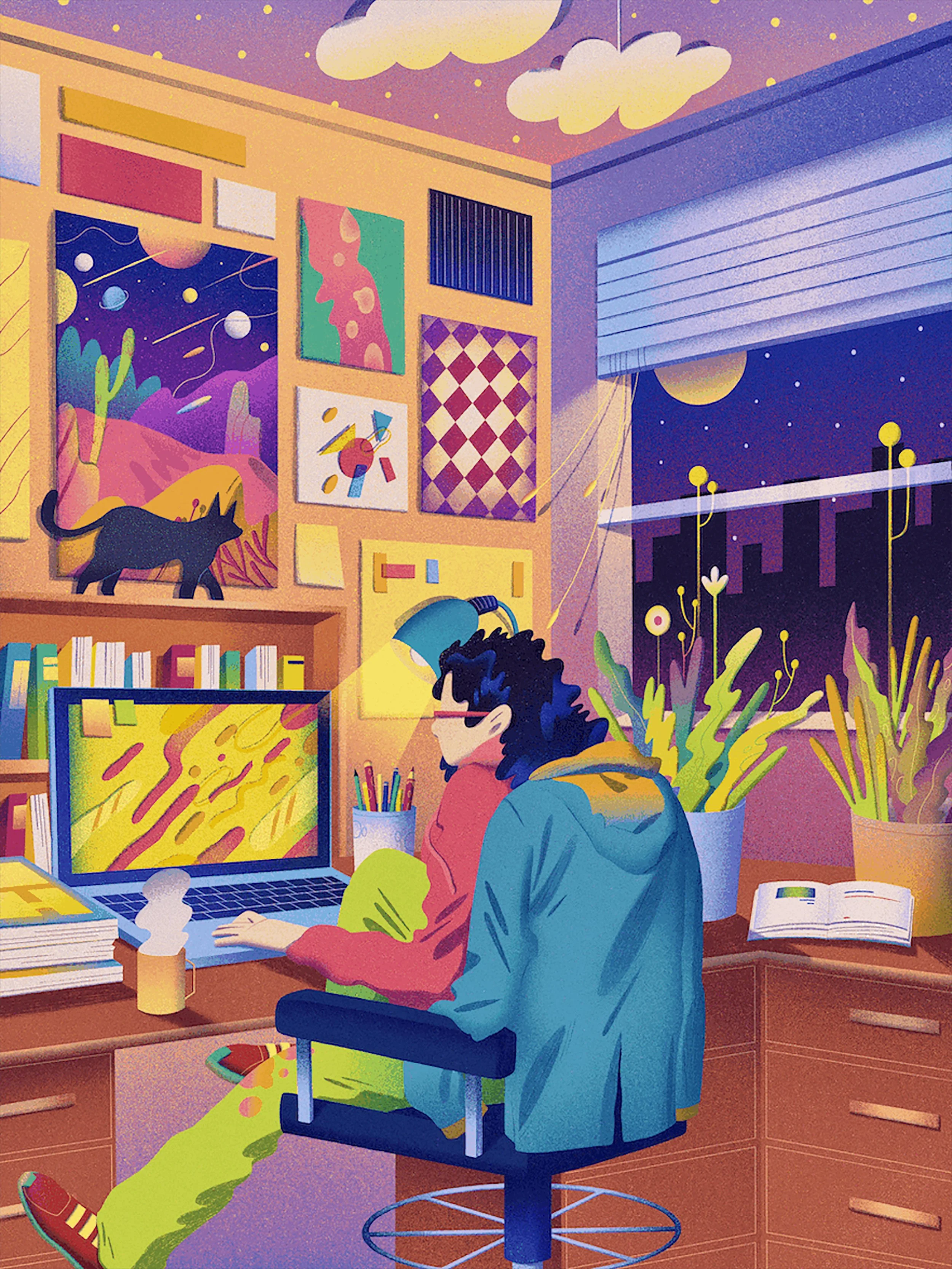
Warm Studio, Digital, 4500x6000 px, 2022 © Yazhi Zheng
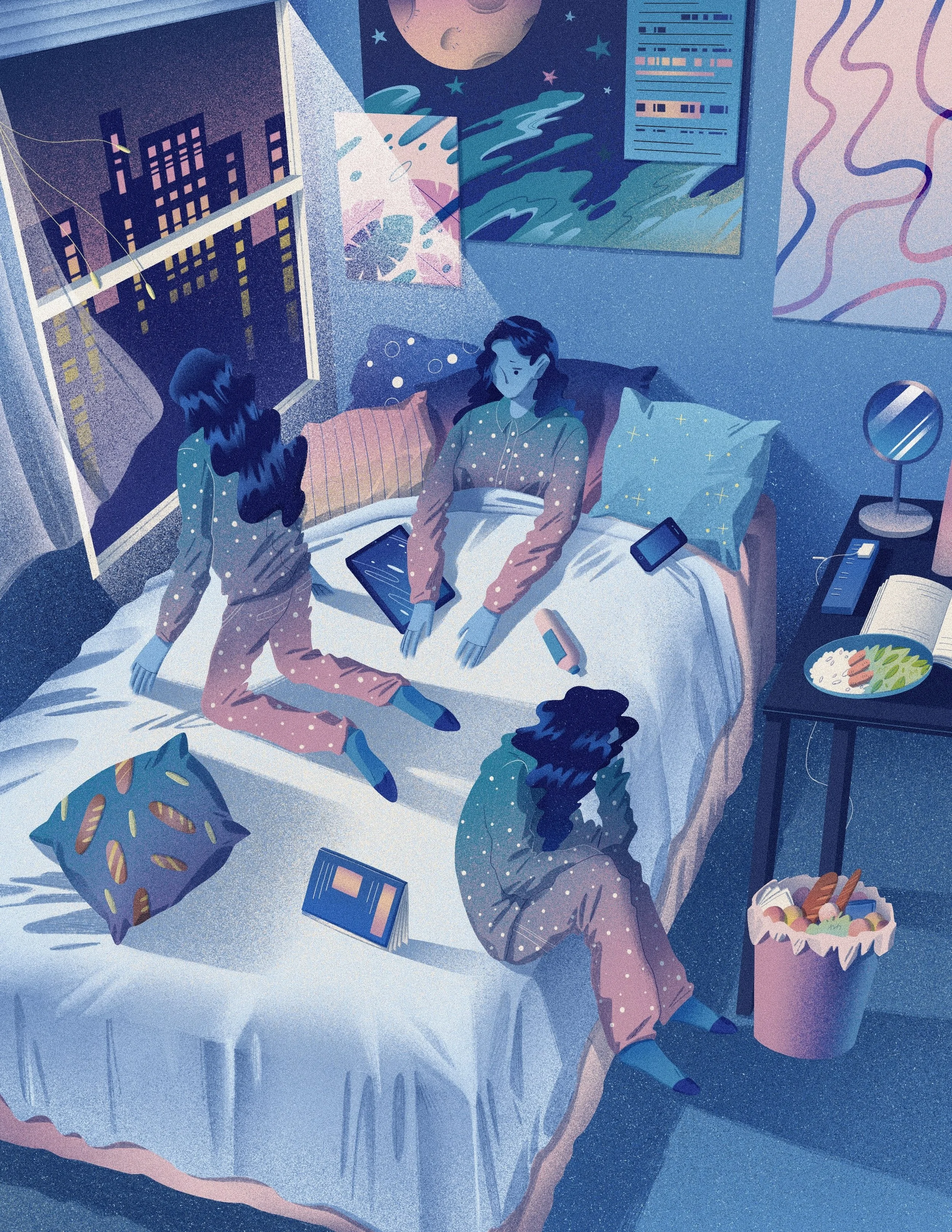
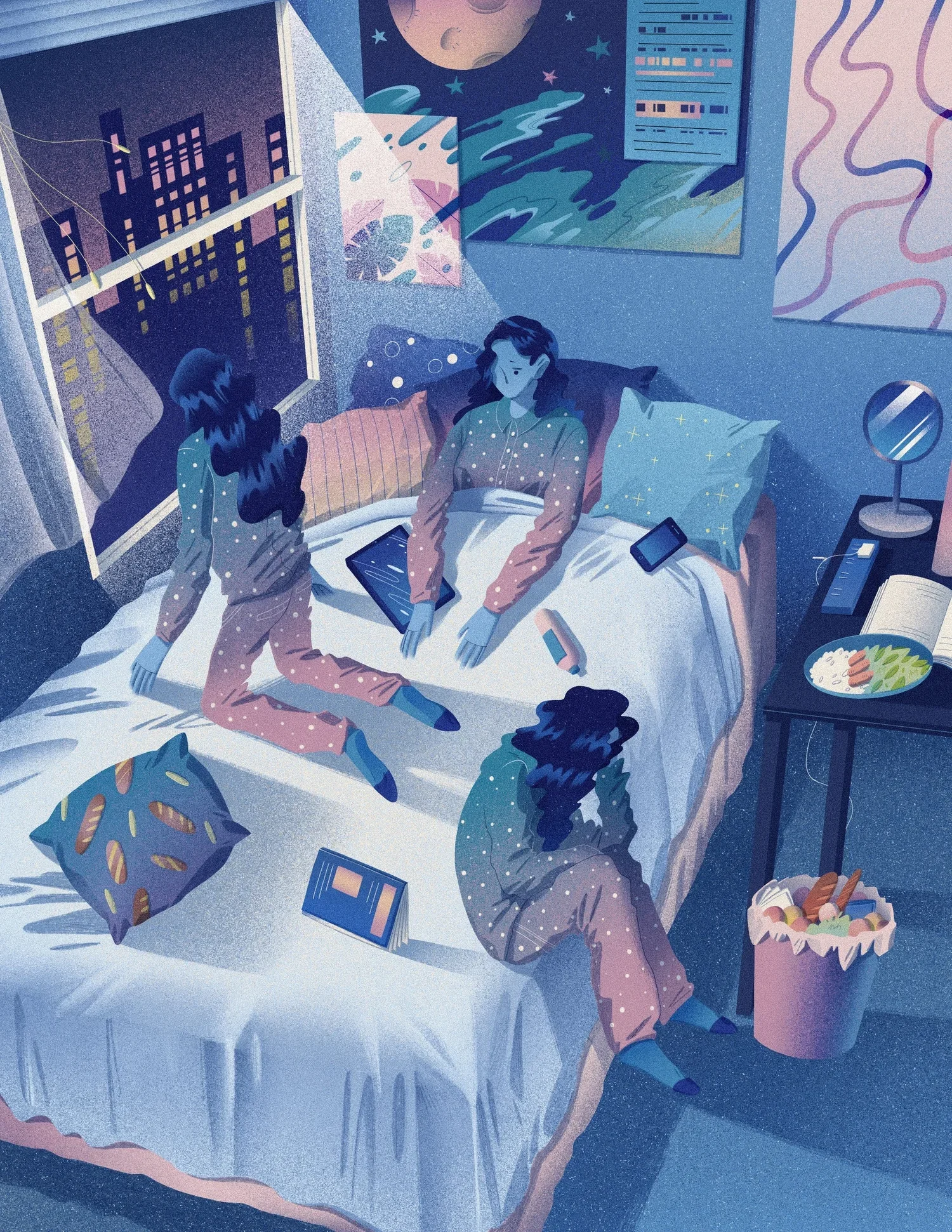
Insomnia, Digital, 2550x3300 px, 2022 © Yazhi Zheng
You have described animation as a way for an image to unfold over time. What can movement express that a still image cannot?
I think one of the most exciting things about animation is that you don't have to show everything at once.
In an illustration, everything is there for the viewer to discover. But with animation, you can decide when something appears, how long it stays, and what happens next. You can build anticipation, surprise someone, or completely change the mood of a scene just through timing and movement.
For example, a dramatic action scene or a colorful, dreamlike environment can feel completely different when it's moving. A sudden change in scale, a burst of color, or a smooth, continuous movement can make the whole scene feel much more energetic.
I wouldn't say animation is necessarily better at expressing emotions than illustration. They're just different. A still image gives people time to look around and notice the details, while animation lets you take them through an experience, moment by moment.
Rhythm, colour, and atmosphere are central to your work. How do you usually develop these elements when starting a new project?
I really enjoy combining people and nature to create spaces that feel alive but also have room to breathe. I like images that feel calm and a little dreamlike, but still have enough going on to make people want to look closer.
I've always loved using color. I often start with blues and pinks inspired by the ocean, then bring in some yellow or green to add little moments of brightness. I like the contrast between a large, colorful environment and the smaller details that catch your eye.
Composition is also something I pay a lot of attention to. Even when an illustration has lots of details, I want people to know where to look first. I usually try to balance busy areas with quieter ones so the image doesn't feel too crowded. I approach animation in a similar way, but through timing. Some moments can be slow and gentle, while others need to feel quick and exciting.
When I start a new project, I usually collect a lot of references and try out different ideas. I look at colors, compositions, textures, and sometimes even small details that might inspire a bigger idea. I don't always know exactly what the final piece will look like at the beginning. A lot of it comes together as I experiment.
Nature often appears in your work as an emotional subject. How do you translate feelings such as wonder, peace, or curiosity into visual forms?
I always want my work to have some kind of feeling behind it. Some of my pieces are bright and cheerful, while others are quieter or a little sad. I think color, shapes, and the way things are arranged can say a lot about how an image feels.
For example, if I want to create something peaceful, I might use open skies, the ocean, softer brushstrokes, and gentle movement. If I want something to feel more joyful or full of energy, I might add brighter colors, little glowing details, or plants and flowers growing throughout the scene.
I also try to put myself in the mood I'm creating. Instead of deciding that a certain color or shape has to represent a specific emotion, I usually start with the feeling and let the visual choices follow.
It's a pretty natural process for me. I've always felt connected to nature, so those images often come to mind without me having to think too hard about them.
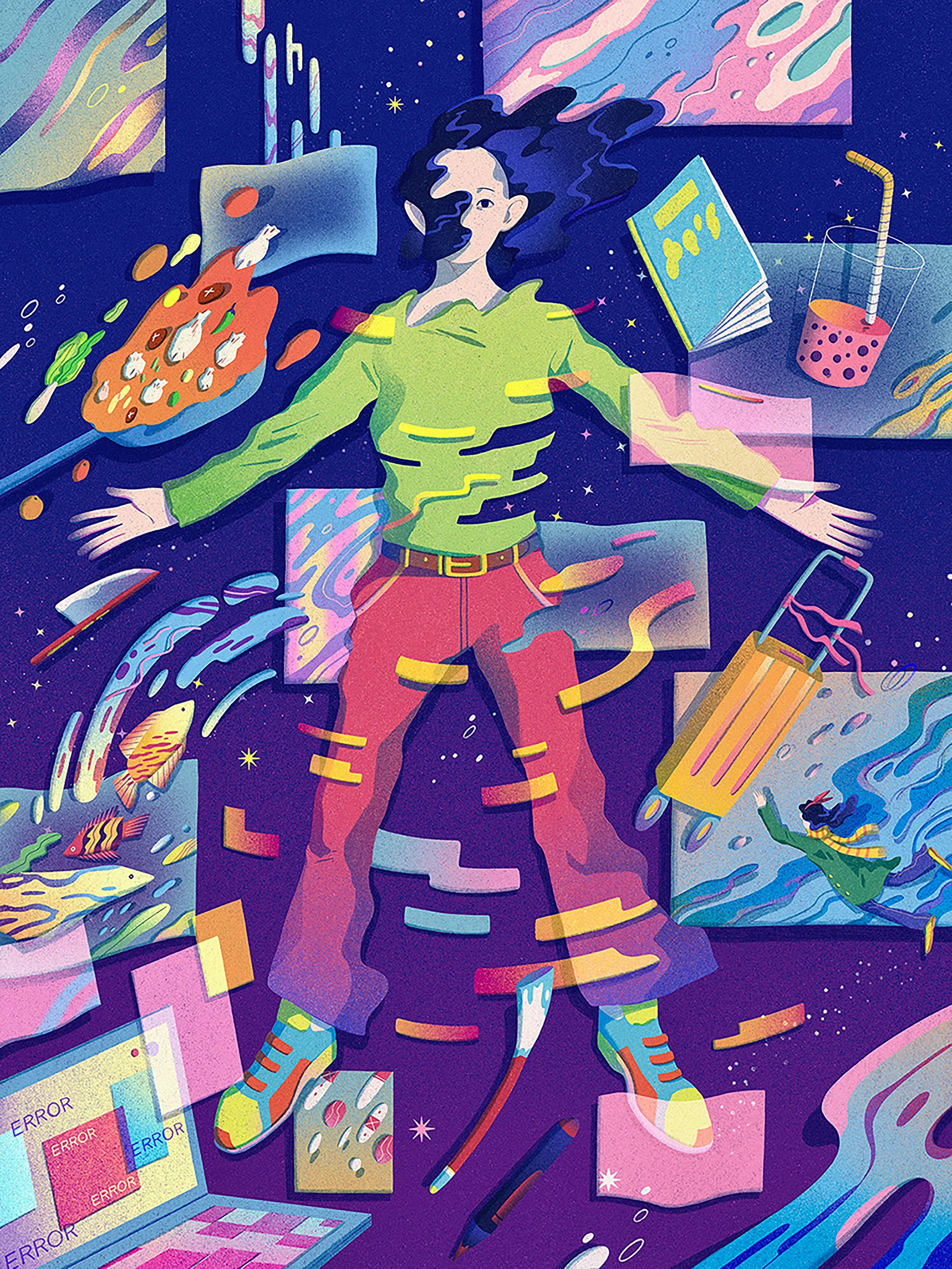
Flowing in the Ocean, Digital, 3908x5208 px, 2022 © Yazhi Zheng

Cosmo, Digital, 4500x5992 px, 2024 © Yazhi Zheng
Your work moves between personal projects and collaborations with major brands. How does working within a commercial brief affect your creative process, and what does it allow you to explore?
I still work on personal illustration and animation projects in my free time, but professionally, I'm currently a designer and animator at Brand New School. I've had the chance to work on projects for brands like WhatsApp, Facebook, Instagram, Meta AI, Café Bustelo, Tim Hortons, and Target.
My role changes depending on the project. Sometimes I'm creating style frames or storyboards, sometimes I'm illustrating or animating, and sometimes I'm involved in art direction. I really enjoy that variety because I get to use different skills and see how everything comes together.
One example is an ongoing series of promotional animations I've worked on for WhatsApp, highlighting different features and updates within the app. Over time, the visual style has changed quite a bit. We started with a more playful, illustration-based look, then moved toward a more tech-focused style combining UI and AI-generated imagery, and more recently started bringing back more creative and expressive elements. Each time the direction changes, we have to figure out what the client wants while still making sure everything feels like WhatsApp.
One of the trickiest parts is making UI-focused animation feel creative without losing accuracy. We've explored different approaches, from AI-generated imagery to hand-drawn elements, brush textures, and collage-style compositions. Some ideas work better than others, so there's always a lot of testing and adjusting. Through that process, we've built a really good working relationship with the client.
I think that's one of the things I enjoy most about commercial work. It pushes me to try things I might not normally explore in my personal projects. Of course, there are more rules and limitations, but I don't necessarily see that as a bad thing. Sometimes those limitations actually lead to more interesting ideas.
Your work often leaves space for viewers to bring their own feelings and interpretations to it. How important is ambiguity or openness in your visual storytelling?
It's really important to me. I think a good piece of art should make people feel something, whether that's happiness, sadness, curiosity, or even a feeling that's hard to explain.
I want my work to have an emotion behind it, but I don't want to tell people exactly what they're supposed to think or feel. I like the idea that someone can look at one of my illustrations and connect it to a memory or experience from their own life.
I think growing up near the ocean influenced that feeling too. I've always loved the openness of the sea and the sense of space it gives you. I try to bring some of that into my work through flowing shapes, open compositions, and environments that feel a little dreamlike.
Ideally, I want people to enjoy looking at my work, but also have the freedom to find their own meaning in it. I think that's what makes the connection between an artwork and its audience more personal.
Having worked across illustration, animation, and motion design, do you see these as separate disciplines, or increasingly as different parts of the same visual language?
I definitely see them as different parts of the same thing. I started with illustration, then got more involved in animation through animated illustration, and eventually moved into design and motion design. Looking back, I don't really feel like I was leaving one field behind to enter another.
They all share so much in common, like composition, color, rhythm, and storytelling. Of course, the way you approach those things changes depending on whether you're working with a still image or something that moves.
For me, they're just different ways of bringing an idea to life. Everything I've learned from illustration still influences my animation work, and working with motion has also changed how I think about illustration. I like being able to move between them rather than having to choose just one.
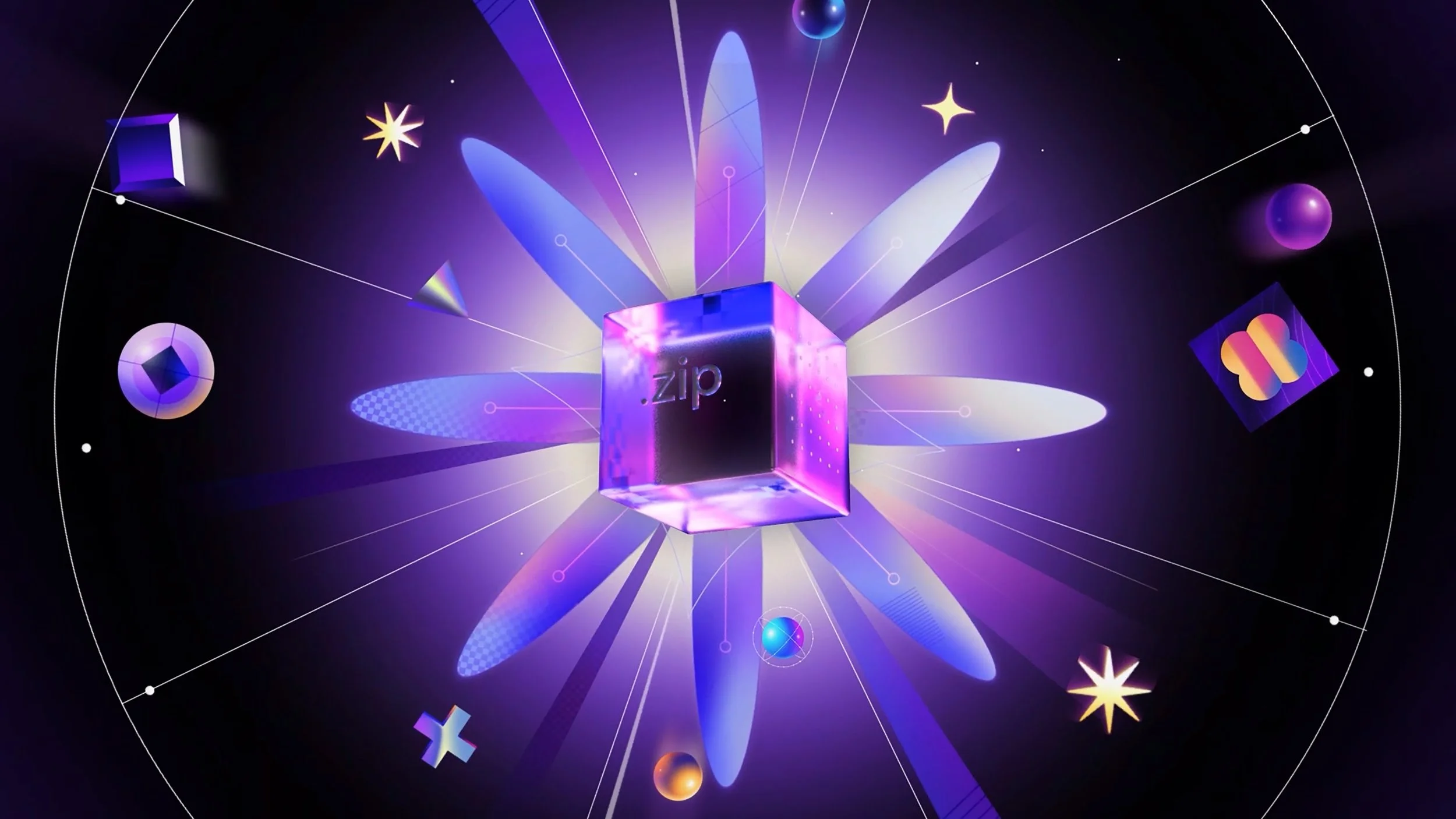
Deadline 2, Digital, 8000x4500 px, 2025 © Yazhi Zheng
And lastly, what are you currently curious about exploring, whether through new technologies, mediums, or forms of storytelling? And how do you see your practice evolve next?
The advertising and motion design industry moves really fast, and there's always something new happening. People are constantly trying out new tools and finding better ways to work, so I feel like there's always something new for me to learn.
Through different projects, I've had the chance to explore new workflows, including AI image generation. I'm also interested in tools like Rive and Cavalry, which offer different possibilities for animation and interactive design. Even the software we use every day keeps changing, so there's always a reason to keep learning.
I don't think I'll ever reach a point where I feel like I've learned everything, and I actually like that. Every new project brings a different challenge, and sometimes it pushes me to learn something I wouldn't have explored otherwise.
In the future, I'd love to keep working on different kinds of projects, learning new techniques, and finding new ways to combine illustration, design, and animation. I want to keep improving my skills while also making work that feels like my own.
Artist’s Talk
Al-Tiba9 Interviews is a curated promotional platform that offers artists the opportunity to articulate their vision and engage with our diverse international readership through insightful, published dialogues. Conducted by Mohamed Benhadj, founder and curator of Al-Tiba9, these interviews spotlight the artists’ creative journeys and introduce their work to the global contemporary art scene.
Through our extensive network of museums, galleries, art professionals, collectors, and art enthusiasts worldwide, Al-Tiba9 Interviews provides a meaningful stage for artists to expand their reach and strengthen their presence in the international art discourse.




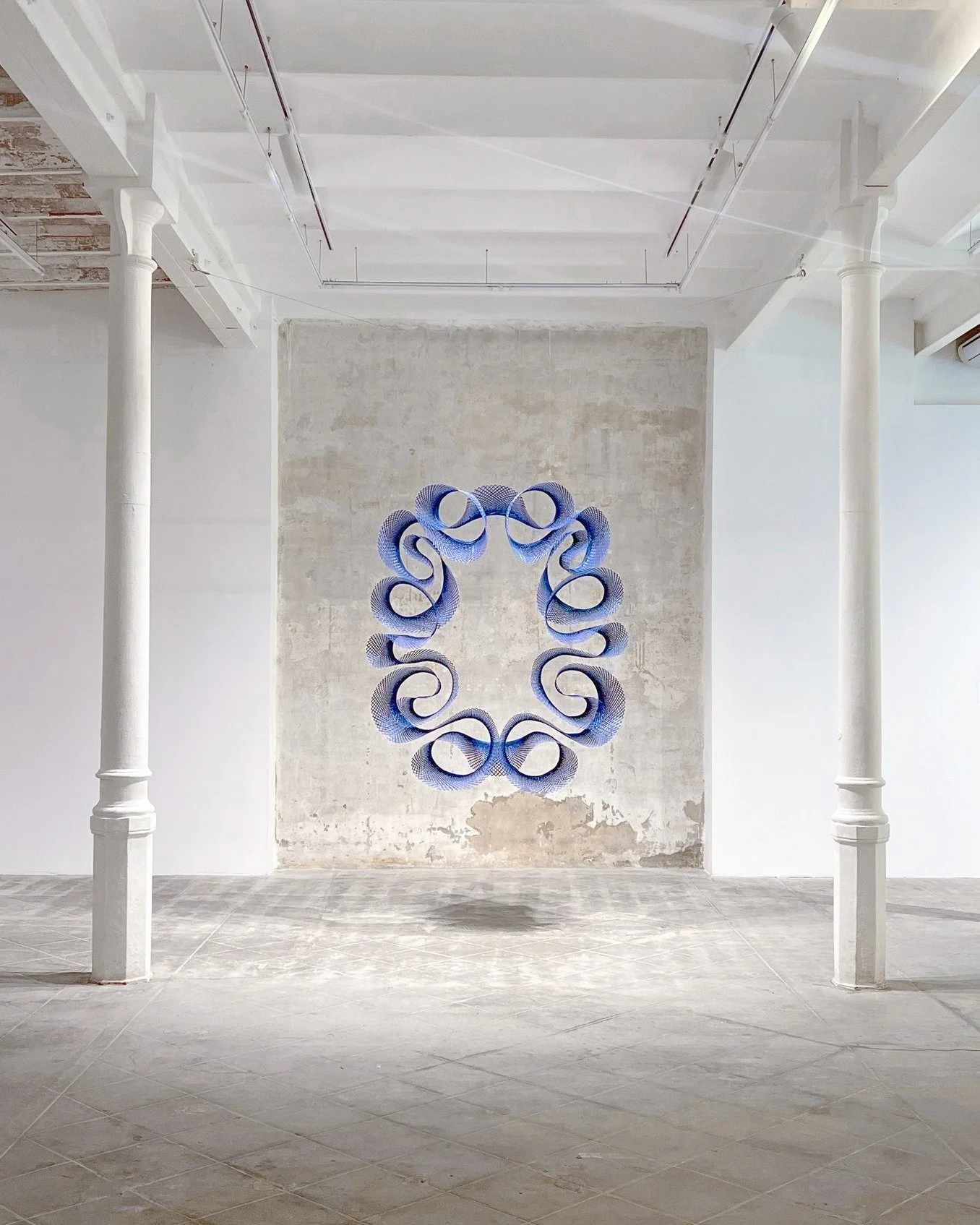
Run Wu is a Chinese Australian interdisciplinary digital artist, filmmaker, and signed commercial director currently based in Paris and London. Drawing inspiration from his multicultural background and experiences across continents, Run's work often reflects themes of displacement, transformation, and the human condition.